

TL;DR:
- Nature-based group travel involves organized trips that promote experiential learning and teamwork in natural environments. These trips feature small groups, professional guides, and slow-paced itineraries to deepen ecological understanding and social bonds. Proper planning and community involvement significantly enhance the educational impact and responsible engagement of participants.
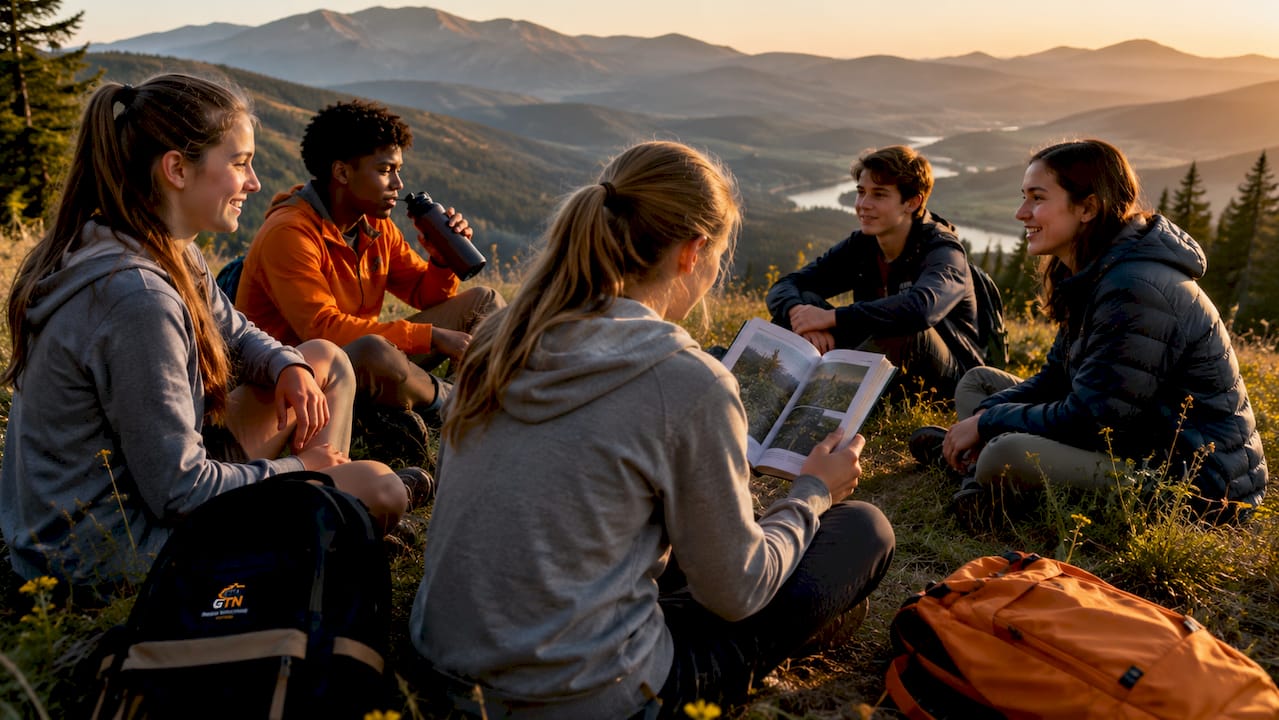
Nature-based group travel is defined as organized, small-group travel to non-urban natural environments, designed to promote experiential learning, teamwork, and direct engagement with wildlife, landscapes, and ecosystems. Unlike a solo hike or a resort vacation, these trips are built around shared discovery. Educators, youth leaders, and travel coordinators use them to connect students with the natural world in ways a classroom simply cannot replicate. With 8 billion visits (opens in a new tab) occurring annually to protected areas globally, the demand for structured nature travel experiences has never been stronger. This guide explains what sets these trips apart, why they work, and how to plan one that actually delivers.
What is nature-based group travel, and how does it work?
Nature-based group travel is the industry’s broader umbrella term for organized trips where the natural environment is the primary setting and subject. The more specific term you will encounter in academic and conservation circles is “nature tourism,” which the World Bank defines as travel focused on direct exploration of wildlife, landscapes, and ecosystems in protected or wild areas.
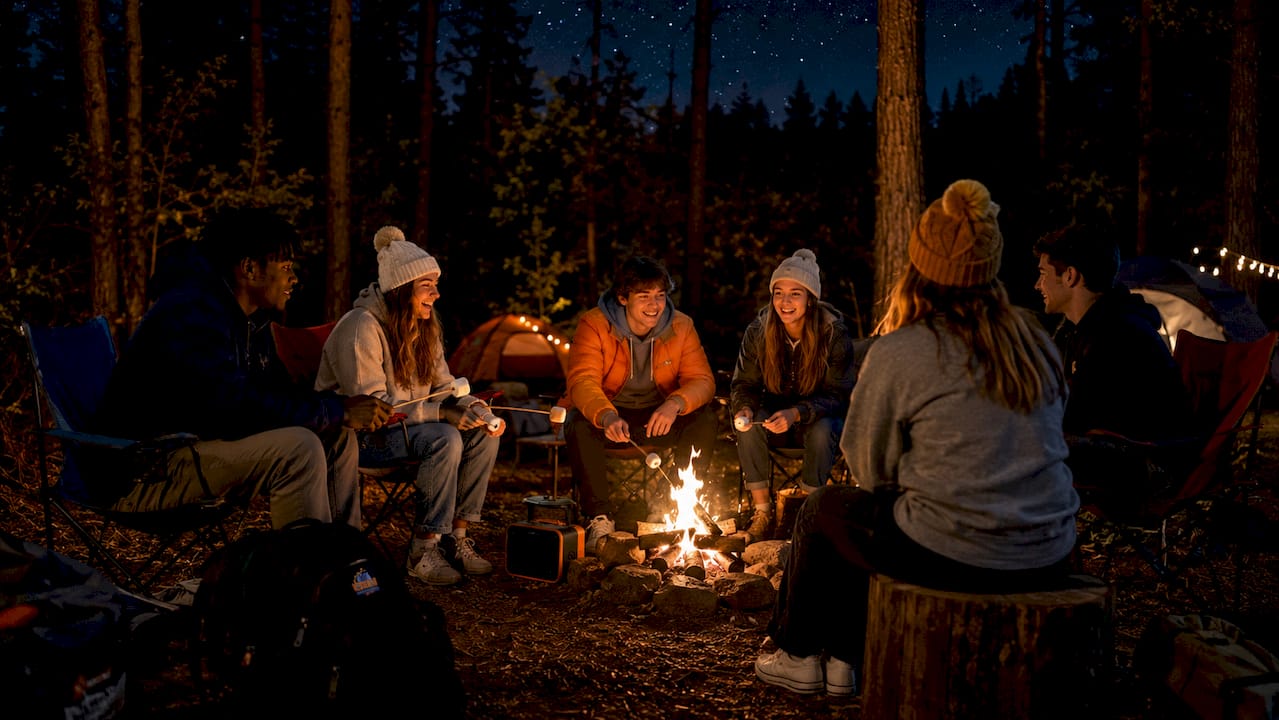
What makes group travel distinct is structure. A professional naturalist guide manages permits, transportation, lodging, meals, and safety, so coordinators can focus entirely on the group’s learning goals. Professional guides (opens in a new tab) convert what would otherwise be a logistics nightmare into a smooth educational experience. Without that expertise, coordinators spend the trip solving crises instead of facilitating learning.
Group size is the other defining feature. Small groups under 15 (opens in a new tab) allow for meaningful interaction between participants and their surroundings. Larger groups tend to move like crowds, which reduces personal connection and diminishes the educational impact. For school groups that exceed 15, splitting into smaller cohorts with separate guides preserves that intimacy.
How does nature-based group travel differ from other travel types?
The distinction between nature tourism and ecotourism trips up many coordinators. Nature tourism focuses (opens in a new tab) on enjoyment of natural attractions, while ecotourism has conservation and formal education as its core mandate. A birdwatching trip to a national park is nature tourism. A trip where students monitor bird populations and submit data to a conservation database is ecotourism. Both are valuable, but they serve different goals and require different program designs.
Solo nature travel and group eco-tourism also operate on completely different logistics models. Here is how the key categories compare:
| Feature | Nature-based group travel | Solo nature travel | General group tourism |
|---|---|---|---|
| Primary focus | Learning and nature immersion | Personal exploration | Sightseeing and leisure |
| Group size | Under 15 (or split cohorts) | Individual | 20 or more |
| Guide type | Professional naturalist | Self-guided or optional | General tour guide |
| Logistics | All-inclusive packages | Self-arranged | Partially bundled |
| Educational structure | Eco-journaling, debriefs, workshops | None required | Rare |
The all-inclusive package model matters more than coordinators often realize. Trips that bundle permits, lodging, meals, and gear into one contract eliminate the coordination gaps where things go wrong. A group arriving at a national park without the correct backcountry permit loses a full day and sometimes the entire itinerary. Professional operators prevent that.
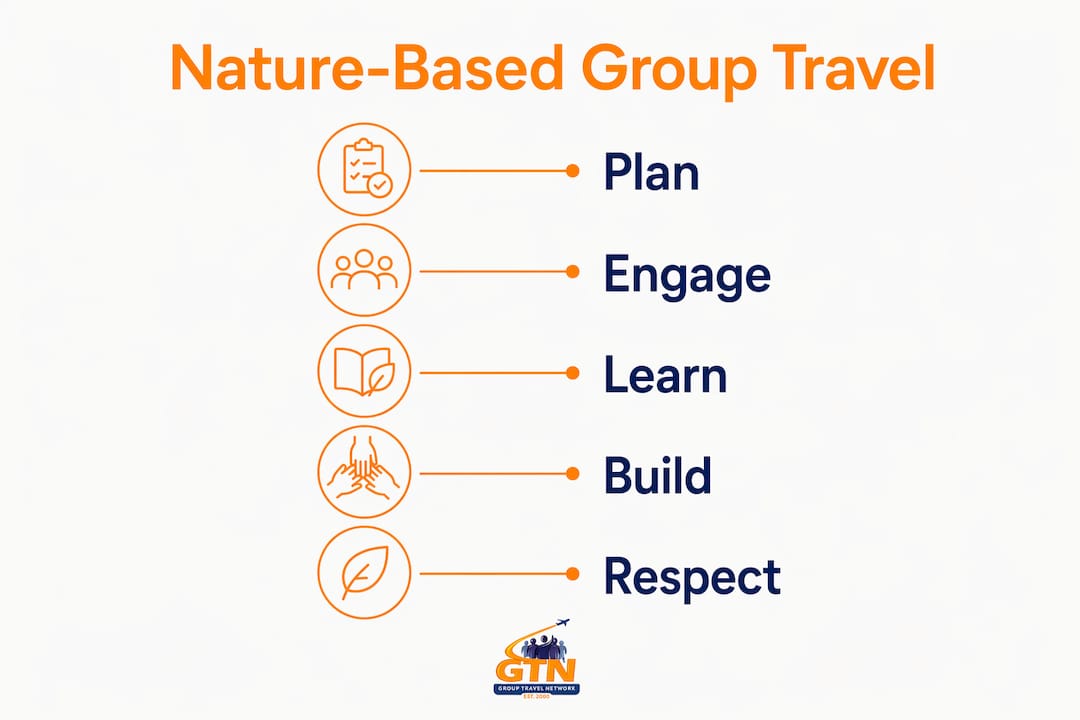
Nature-based travel activities also span a much wider range than most coordinators expect. Options include guided wildlife tracking, forest bathing, marine ecology surveys, river navigation, and geological field studies. The activity type should match the group’s curriculum goals, not just what looks exciting in a brochure.
What are the educational and team-building benefits of nature-based group travel?
Nature travel experiences produce learning outcomes that structured classroom instruction cannot. The environment itself becomes the teacher. Students who track animal prints in mud, identify plant species by leaf shape, or observe tidal patterns firsthand retain that knowledge far longer than students who read about the same topics in a textbook.
School and organization packages (opens in a new tab) with dedicated naturalist guides and customized team-building itineraries deliver outcomes that solo travel simply cannot match. The structured activities are what separate a memorable field trip from a transformative educational experience. The most effective programs include:
- Eco-journaling: Students document observations daily, building scientific literacy and reflective thinking skills.
- Guided wildlife tracking: Groups learn to read environmental signs together, which builds shared vocabulary and collaborative problem-solving.
- Group debriefs: Evening discussions connect the day’s experiences to curriculum standards and personal growth goals.
- Community workshops: Local experts share knowledge that no textbook contains, adding cultural and ecological depth.
- Trust-based challenges: Activities like navigating unfamiliar terrain as a team build communication and leadership faster than any classroom exercise.
The role of community in learning (opens in a new tab) extends beyond the classroom walls. When students engage with local guides and community members, they develop empathy and cross-cultural awareness alongside their ecological knowledge. That combination is exactly what youth development frameworks call for.
Pro Tip: Ask your program operator to align at least three activities directly with your school’s science or social studies standards before booking. This turns the trip from an enrichment add-on into a core curriculum event, which makes administrative approval far easier.
The benefits of nature travel (opens in a new tab) for students extend well beyond academics. Participants consistently report stronger peer relationships, greater environmental awareness, and improved confidence after nature-based group trips. Those outcomes compound over time, shaping how students engage with their communities long after the trip ends.
What practical planning considerations should group coordinators know?
Planning a nature-based group trip requires a longer runway than most coordinators expect. The logistics are more complex than a museum visit or a city tour, and the consequences of late planning are severe. Follow this sequence to keep the process on track.
- Set your educational objectives first. Define what students should know, feel, or be able to do after the trip. Every subsequent decision, from destination to itinerary length, flows from these goals.
- Book permits 6–12 months in advance. Trips to protected areas require advance permit planning, and popular destinations like national parks fill their group slots quickly. Missing this window forces you into less suitable alternatives.
- Select an eco-conscious operator with verified naturalist guides. Ask for guide credentials, safety protocols, and references from other school groups. A guide who specializes in wildlife interpretation delivers a fundamentally different experience than a general tour leader.
- Choose the right trip length. Programs range from intensive 4-day experiences to multi-week expeditions. For first-time groups, a 5 to 7 day itinerary balances depth of experience with manageable logistics and cost.
- Confirm the all-inclusive package scope. Verify that transport, accommodation, meals, gear, and permits are all covered. Hidden costs create budget problems and erode trust with school administrators.
- Build in reflection time. Itineraries packed with back-to-back activities undercut learning. Schedule at least one hour of unstructured observation or journaling per day.
Pro Tip: Request a sample daily itinerary from your operator before signing any contract. If the schedule has no downtime or reflection periods, the program prioritizes activity volume over learning depth. That is a red flag.
Coordinators who use a school tours planning guide (opens in a new tab) from the start avoid the most common pitfalls. The planning process itself is a teachable moment for student leaders who can take ownership of logistics under adult supervision.
How can groups maximize responsible nature engagement and community involvement?
Responsible engagement is not just an ethical obligation. It is what separates a trip that changes students from one they simply remember. The most impactful nature-based group travel programs treat the destination as a partner, not a backdrop.
Community-led workshops (opens in a new tab) transform tours from basic trips into profound learning experiences. When local community members serve as co-facilitators, they bring intergenerational and cross-disciplinary knowledge that no outside guide can replicate. A local elder explaining the cultural significance of a forest adds a layer of meaning that ecological data alone cannot provide.
Practical responsible engagement looks like this:
- Apply Leave No Trace principles on every outing, and teach students the reasoning behind each principle, not just the rules.
- Include at least one active conservation activity, such as tree planting, trail restoration, or species monitoring, to give students a sense of contribution.
- Source meals and supplies from local vendors to keep economic benefits within the community.
- Limit group movement to designated paths and avoid disturbing wildlife habitats, especially during breeding seasons.
Combining ecological exploration with community engagement amplifies trip impact and improves retention of educational outcomes. Students who plant trees alongside local farmers remember the lesson about deforestation far longer than students who only read about it.
Slow travel is the operating philosophy that ties all of this together. Immersive itineraries designed without rushing increase experience quality and group cohesion. Spending two full days in one forest ecosystem teaches more than a single afternoon each in five different locations.
“The goal is not to see as much nature as possible. The goal is to understand one piece of it deeply enough that students carry it home with them.”
Key Takeaways
Nature-based group travel delivers its strongest educational and team-building outcomes when small group sizes, professional naturalist guides, and slow-paced immersive itineraries work together as a system.
| Point | Details |
|---|---|
| Define objectives first | Set clear learning goals before choosing a destination or operator. |
| Plan permits early | Book protected area permits 6–12 months ahead to secure your preferred destination. |
| Keep groups small | Groups under 15 produce stronger learning outcomes and deeper nature connection. |
| Use professional guides | Naturalist guides manage logistics and interpretation, freeing coordinators to focus on students. |
| Prioritize slow travel | Fewer sites visited deeply outperforms many sites visited briefly for educational retention. |
Why nature-based group travel is the most underused tool in youth education
I have watched coordinators spend months planning trips that look great on paper and fall flat in practice. The pattern is almost always the same. The itinerary is too full, the guide is a generalist, and the group is too large to have any real experience of the place they traveled to see.
The trips that actually change students share three qualities. The group is small enough that every student has a direct encounter with the natural environment, not just a view of it from a path. The guide is a specialist who can answer the question a curious 14-year-old asks about why a particular bird behaves a certain way. And the schedule has breathing room, actual unscheduled time where students sit with what they are experiencing.
What I find most underappreciated is the team-building dimension. Educators often frame these trips as science or geography experiences. But the most lasting outcomes I have seen are relational. Students who navigate a river trail together, solve problems in an unfamiliar environment, and share a meal cooked over a fire come back to school with a different relationship to each other. That social cohesion carries into the classroom for the rest of the year.
My honest recommendation: if you are planning your first nature-based group trip, resist the urge to pack in as many destinations as possible. Pick one ecosystem, go deep, and let the place do the teaching.
— Donovan
Grouptravelnetwork’s resources for nature-based group trips
Planning a nature-based group trip involves more moving parts than most coordinators anticipate. Grouptravelnetwork specializes in exactly this kind of trip, supporting educators and youth leaders from the first destination conversation through to post-trip wrap-up.

The school group travel planning guide (opens in a new tab) on Grouptravelnetwork walks coordinators through every stage, from setting educational objectives and selecting eco-conscious operators to managing permits and building itineraries that actually teach. For coordinators planning 2026 trips, the site also offers outdoor learning trip ideas (opens in a new tab) tailored to different age groups and curriculum goals. Grouptravelnetwork’s dedicated trip coordinators handle vendor partnerships, payment plans, and travel protection so you can stay focused on your students.
FAQ
What is nature-based group travel?
Nature-based group travel is organized travel for small or medium-sized groups to natural environments, designed to promote experiential learning, teamwork, and direct engagement with ecosystems. It typically includes professional naturalist guides, all-inclusive logistics, and structured educational activities.
How is nature-based group travel different from ecotourism?
Nature tourism focuses on enjoyment of natural attractions, while ecotourism has conservation and education as its core mandate. Both involve natural settings, but ecotourism programs typically include formal data collection or conservation activities.
What group size works best for nature-based trips?
Groups under 15 produce the strongest learning and teamwork outcomes. Larger school groups should split into smaller cohorts, each with a dedicated naturalist guide, to preserve the quality of the experience.
How far in advance should coordinators plan a nature-based group trip?
Permit planning for protected areas requires 6–12 months of lead time. Popular national parks and wilderness areas fill group permit slots quickly, so early booking is the single most important planning step.
What activities are most effective for student learning on nature trips?
Eco-journaling, guided wildlife tracking, group debriefs, and community workshops consistently produce the strongest educational outcomes. Active participation, such as tree planting or species monitoring, improves retention compared to observation-only activities.
Recommended
- Nature Travel For Schools Explained: 2026 Planning Guide • Group Travel Network (opens in a new tab)
- What Is Community-Focused Travel? A 2026 Guide (opens in a new tab)
- What Is Performance Group Travel? Your 2026 Guide • Group Travel Network (opens in a new tab)
- Nonprofit Group Trip Guide For Youth Leaders 2026 • Group Travel Network (opens in a new tab)