

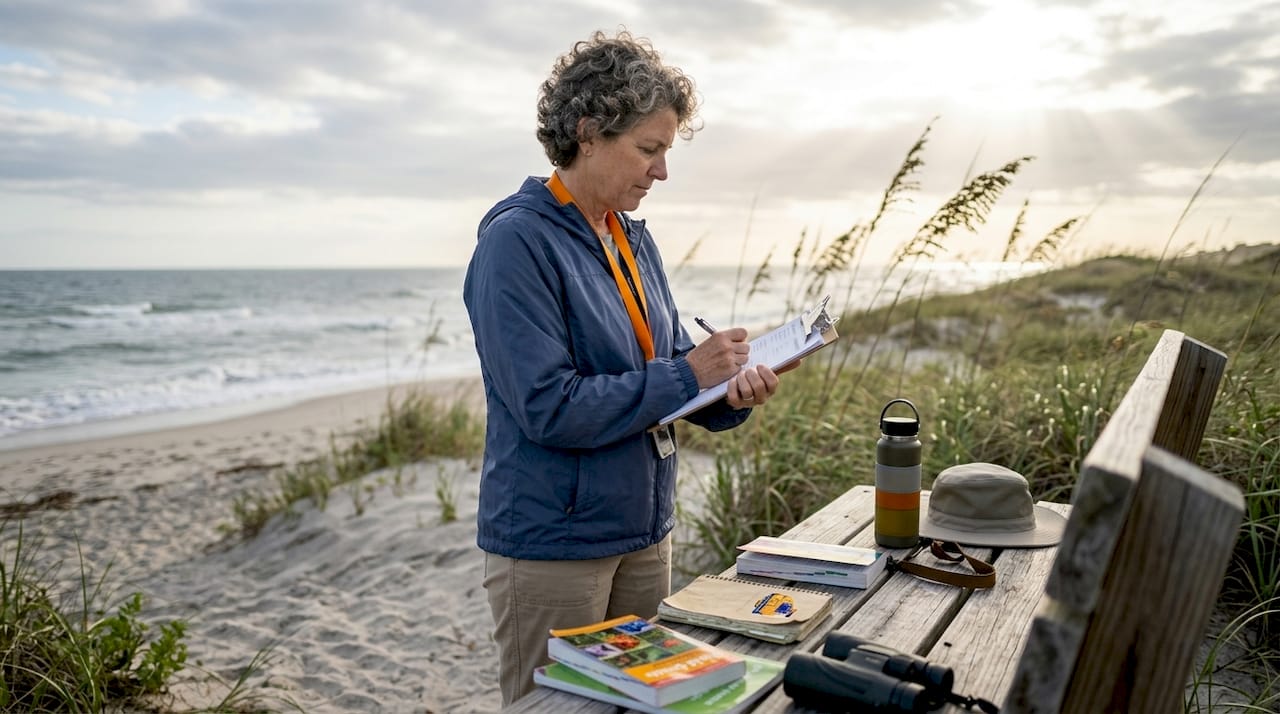
TL;DR:
- Outdoor learning trips immerse students in natural environments to foster hands-on understanding of ecosystems beyond classroom capabilities. Effective trips integrate place-based experiences with curriculum standards, reflection, and intentional planning for accessibility and student engagement. Leaving space for unstructured exploration and curiosity significantly enhances learning outcomes and student involvement.
Outdoor learning trips are educational excursions designed to immerse students in natural environments where they learn through direct experience, observation, and hands-on activities. The best outdoor learning trip ideas go far beyond a standard field trip. They connect science, math, and creative arts to real ecosystems, giving students a depth of understanding that no classroom can replicate. Programs like the SEEK initiative, Wolf Ridge Environmental Learning Center, and WildCare have demonstrated that place-based, curriculum-linked experiences produce measurably stronger student engagement. This guide gives you ten specific, practical options to plan your next excursion.
1. Top outdoor learning trip ideas for ecological exploration
The most educationally rich outdoor learning trips center on immersive ecological exploration. These are not passive tours. Students observe, measure, collect data, and draw conclusions in the field.
-
Isle Royale backpacking expeditions led by programs like Wolf Ridge place students inside a functioning predator-prey ecosystem. Students track wolf and moose interactions, study population dynamics, and connect their observations directly to biology and environmental science standards. Place-based learning (opens in a new tab) produces deeper curiosity than generic activity checklists, because students encounter phenomena they did not expect and must reason through them.
-
Guided nature hikes with WildCare support Next Generation Science Standards through sensory examination of animal signs, local plant identification, and ecosystem education. Nature hikes (opens in a new tab) give students direct exposure to local flora and fauna in ways that textbook diagrams simply cannot.
-
Coastal ecology adventures combine kayaking, habitat study, and conservation service projects. High school programs through Coastal Expeditions expose students to seabird conservation and habitat restoration (opens in a new tab), yielding real-world ecological knowledge tied to marine biology and environmental science curricula.
-
Science-focused day camps like the Lyon Arboretum Summer Nature Day Camp engage students with microscopy, terrarium building, and aquaponics (opens in a new tab), connecting ecological interdependencies through hands-on science and creative arts.
Pro Tip: Match trip scope to student age and physical ability before booking. A five-day backpacking trip suits high schoolers with baseline fitness, while guided day hikes work well for elementary groups. Mismatched scope is the most common reason outdoor trips underdeliver.
2. Guided nature hikes with sensory discovery
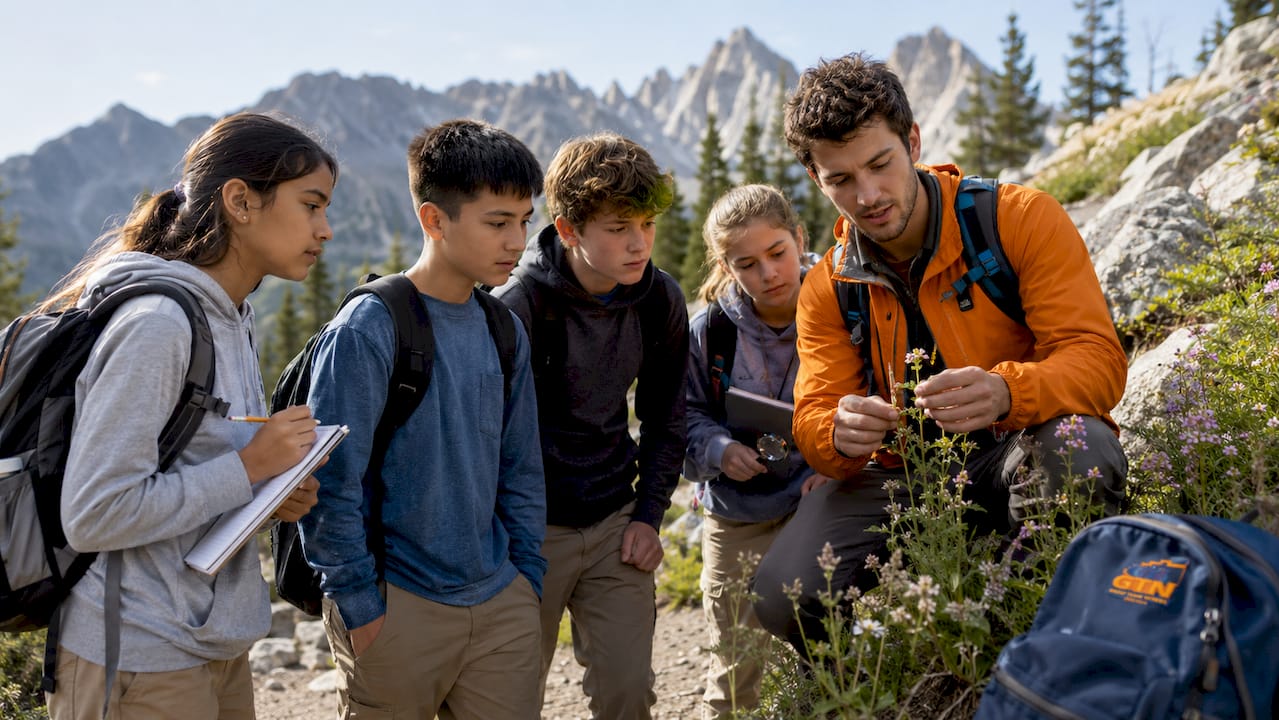
A well-designed guided nature hike is one of the most accessible and curriculum-rich options on any outdoor learning activities list. The key word is “guided.” A trained naturalist transforms a walk into a scientific investigation.
Students examine animal tracks, identify plant species by texture and smell, and record observations in field journals. These activities directly support science and language arts standards simultaneously. WildCare’s hike programs, for example, build sensory literacy by asking students to identify ecosystem clues rather than simply name what they see. That distinction matters. Naming is passive. Identifying clues is inquiry-based.
For coordinators working with younger students, a two-hour guided hike at a local nature preserve costs far less than a multi-day camp and can be repeated across the school year to show seasonal ecosystem changes. Seasonal repetition is an underused strategy. Students who visit the same site in fall and spring develop a longitudinal understanding of ecological change that no single trip can provide.
3. Coastal expeditions and marine ecology programs
Coastal ecology programs rank among the most memorable nature learning experiences available to secondary students. The combination of physical challenge, scientific observation, and conservation service creates a learning environment that is difficult to replicate elsewhere.
Coastal Expeditions’ Outdoor Leadership Program places students in kayaks on open water, then connects that physical experience to freshwater ecology, seabird conservation, and habitat restoration. Kayaking and trekking build confidence and teamwork while the discomfort of changing outdoor conditions promotes adaptability and problem-solving. That is not a side benefit. It is a core learning outcome.
For schools near coastlines, these programs often align with AP Environmental Science and marine biology electives. For inland schools, similar programs exist around large lakes and river systems. The ecological content transfers across aquatic environments, so geography is not a barrier to participation.
4. Adventure camps blending science labs and outdoor skills
Programs like Montgomery Whitewater’s Summer Outdoor Adventure Camp represent a model worth studying. Structured days rotate small groups through science labs, ecology exploration, and physical adventure activities, culminating in whitewater rafting. Small group rotations (opens in a new tab) build teamwork and confidence while keeping every student actively engaged throughout the day.
This format works because it prevents the passive observation problem that plagues poorly designed field trips. Every student is doing something at every point in the schedule. The science lab component grounds the adventure in curriculum, while the physical challenge component builds the resilience and social skills that educators consistently report as secondary outcomes of outdoor programs.
Pro Tip: Verify physical participation requirements months before the trip. Montgomery Whitewater’s Aerial Ropes Course, for example, requires a minimum weight of 75 lbs and a 6-foot reach. Last-minute exclusions damage student confidence and create logistical problems. Contact providers early and share requirements with families at registration.
5. Cross-disciplinary day trips to local ecological sites
Not every outdoor learning excursion requires overnight travel or a large budget. Local ecological sites, including urban parks, wetlands, and botanical gardens, support cross-disciplinary learning across science, math, and creative arts in a single visit.
Core outdoor learning activities like measuring tree circumference for math (opens in a new tab), pond dipping for science, and sun print art for creative arts can be organized into a structured 32-activity grid that covers multiple subjects in one location. This approach is particularly effective for elementary and middle school groups where cross-disciplinary integration is a curriculum priority. It also reduces planning complexity because one site serves multiple learning objectives.
Many botanical gardens and nature centers offer wheelchair-accessible trails and adaptive programming, making these sites among the most inclusive options on any environmental education trips list. Accessibility should be confirmed before booking, not assumed.
6. Backpacking and wilderness immersion programs
Multi-day wilderness immersion programs represent the highest-intensity option on this list and also the highest educational return for the right student group. Wolf Ridge Environmental Learning Center’s Isle Royale expeditions are a benchmark example of what this format can achieve.
Students spend a week inside a functioning wilderness ecosystem, studying predator-prey relationships, tracking animal behavior, and developing wilderness navigation skills. The extended time frame is the critical variable. One day in the field produces observations. One week produces understanding. Students begin to see patterns, form hypotheses, and revise their thinking based on new evidence. That is the scientific method practiced in its natural context.
These programs suit high school students with teacher-led preparation and post-trip reflection built into the curriculum. Without that framing, even the best wilderness experience risks becoming a memorable vacation rather than a transformative educational one.
7. Pollinator and habitat restoration service trips
Service learning trips that combine ecological education with active habitat restoration are gaining traction as one of the more forward-looking field trip ideas for 2026. Students plant native species, remove invasive plants, and monitor pollinator populations, connecting conservation science to direct community impact.
Programs focused on pollinators are particularly effective because the science is visible and immediate. Students can observe bee and butterfly behavior, collect data on species diversity, and connect their findings to broader climate and agricultural systems. This type of specialized themed camp ties directly to AP Biology, environmental science, and even statistics curricula through data collection and analysis components.
The service component also addresses a gap that purely observational trips leave open. Students do not just study the problem. They work on the solution. That shift in agency produces a different quality of engagement and a stronger sense of environmental responsibility.
8. Technology-integrated outdoor data collection trips
The integration of ecological data collection apps into outdoor trips is one of the most practical innovations available to educators in 2026. Apps like iNaturalist allow students to photograph and identify species in real time, contributing their observations to a global biodiversity database. Students are not just learning. They are doing real science.
This approach works across grade levels and trip formats. A guided hike becomes a citizen science expedition. A coastal ecology trip generates publishable data. A local park visit produces a species inventory that students can analyze back in the classroom. The technology does not replace the outdoor experience. It extends it by connecting students to a larger scientific community and giving their observations a purpose beyond the grade book.
For coordinators, technology-integrated trips require minimal additional planning. Most data collection apps are free, work on standard smartphones, and include educator guides aligned to science standards.
9. Climate change and sustainability stewardship programs
Programs explicitly framed around climate change and sustainability stewardship represent a growing category of outdoor adventure learning for 2026. These trips place students in ecosystems that are visibly affected by climate shifts, from retreating glaciers to shifting migration patterns, and ask them to document what they observe.
The educational power of this format lies in the specificity of place. A student who reads about coral bleaching in a textbook understands the concept. A student who snorkels over a bleached reef understands the reality. That distinction drives the kind of long-term retention and curiosity that educators consistently identify as the goal of experiential education.
These programs also connect naturally to social studies and civics curricula through discussions of policy, community response, and individual action. Climate-focused trips are not limited to coastal or mountain environments. Urban heat island studies, urban forestry programs, and local watershed restoration projects bring the same framework to any geography.
10. Cultural ecology and Indigenous knowledge trips
Cultural ecology trips combine environmental education with history, social studies, and cultural literacy by centering Indigenous knowledge systems as a framework for understanding local ecosystems. These programs are among the most underused options on any hands-on learning excursions list, and among the most intellectually rich.
Students learn how specific communities have managed land, water, and wildlife for generations, then compare those practices to contemporary conservation science. The comparison consistently produces surprising insights. Many Indigenous land management techniques, including controlled burns, rotational harvesting, and watershed protection, are now recognized as scientifically sound by mainstream ecology. Students who encounter that convergence develop a more nuanced understanding of both science and culture.
For trip coordinators, cultural ecology programs are available through tribal education departments, national parks with Indigenous interpretation programs, and university extension services. Many are low-cost or grant-funded, making them accessible to schools with limited travel budgets.
Key takeaways
The most effective outdoor learning trips combine place-based ecological immersion with cross-disciplinary curriculum integration and structured pre-trip and post-trip reflection.
| Point | Details |
|---|---|
| Place-based learning outperforms checklists | Trips tied to specific ecosystems produce deeper curiosity and stronger retention than generic activity lists. |
| Verify physical requirements early | Adventure activities like ropes courses require minimum weight and reach; confirm requirements at registration to prevent exclusions. |
| Budget options exist at every level | Sponsored programs like SEEK may be free; local ecological sites support multi-subject learning at minimal cost. |
| Technology extends the experience | Apps like iNaturalist connect student observations to real scientific databases, adding purpose and curriculum depth. |
| Reflection is non-negotiable | Without structured post-trip reflection, even the best outdoor experience risks becoming a memory rather than a learning outcome. |
Why I think most outdoor trips miss their biggest opportunity
I have seen hundreds of outdoor learning programs planned with genuine enthusiasm and executed with real effort, only to fall short of their potential. The reason is almost always the same. Educators over-schedule the day and under-invest in the moments between activities.
The most powerful learning I have witnessed on outdoor trips happened during unplanned pauses. A student who stopped to watch a hawk circle for ten minutes and then asked why it was flying in that specific pattern. A group that found an unexpected animal track and spent twenty minutes debating what made it. Those moments are not accidents. They are what happens when you leave space in the schedule for curiosity to operate.
My honest advice: cut one planned activity from every outdoor trip you organize. Use that time as open observation time with a single prompt, something like “find something that surprises you and be ready to explain why.” The quality of student engagement in that unstructured window will consistently outperform the structured activity you replaced. Outdoor discomfort and open time are not problems to manage. They are the conditions under which real learning happens.
The other thing I would push back on is the tendency to treat inclusivity as a logistical checkbox. Checking whether a trail is wheelchair accessible is necessary but not sufficient. Real inclusivity means designing the learning objectives so that every student, regardless of physical ability, can contribute meaningfully to the group’s understanding. That requires intentional design, not just accessible terrain.
— Donovan
Plan your next outdoor learning trip with Grouptravelnetwork
Grouptravelnetwork specializes in organizing educational group trips that connect students to the kinds of immersive, place-based experiences described in this article. From coastal ecology expeditions to wilderness immersion programs, the team builds customized educational itineraries (opens in a new tab) that align with your curriculum goals and budget.

Whether you are coordinating a middle school science trip or a high school environmental leadership program, Grouptravelnetwork provides dedicated trip coordinators, flexible payment plans, and travel protection options that take the logistical pressure off your team. Explore the full range of student field trip options (opens in a new tab) and request a customized itinerary for your group today.
FAQ
What makes an outdoor learning trip educational?
An outdoor learning trip is educational when it ties direct field experiences to specific curriculum standards and includes structured observation, data collection, or reflection activities. Programs that connect science, math, and creative arts to a single natural setting produce the strongest cross-disciplinary outcomes.
How much does an outdoor learning trip typically cost?
A standard five-day outdoor adventure camp costs around $375 per student, while sponsored programs like marine science initiatives through the SEEK program may be free. Local ecological day trips can cost significantly less, making outdoor learning accessible at most budget levels.
What age groups benefit most from outdoor learning trips?
Outdoor learning trips are effective across all K-12 grade levels when the program scope matches student age and physical ability. Guided day hikes suit elementary students, while multi-day wilderness immersion programs and coastal expeditions are best suited to high school groups with appropriate preparation.
How do I choose between a day trip and a multi-day program?
Day trips work well for introducing outdoor learning concepts and for schools with limited budgets or travel restrictions. Multi-day programs produce deeper learning because extended time in a single ecosystem allows students to observe patterns and revise their thinking, which is the core of scientific reasoning.
What should educators do before and after an outdoor learning trip?
Pre-trip preparation should include curriculum framing, safety briefings, and student goal-setting. Post-trip reflection, through journaling, presentations, or data analysis, is what converts field experience into lasting learning. Skipping reflection is the most common planning mistake in educational group trip (opens in a new tab) design.
Recommended
- 8th Grade Class Trip 2025: 6 Educational Destinations (opens in a new tab)
- Class Trips: Creating Inspiring Educational Adventures (opens in a new tab)
- Student Field Trips: Transforming Learning Beyond Classroom (opens in a new tab)
- Student Travel Orlando 2025: 7 Educational Gems Beyond Parks (opens in a new tab)