

TL;DR:
- Research shows that even brief outdoor experiences significantly reduce student stress and enhance focus by lowering cortisol levels. Biodiverse green spaces with trees offer the strongest cognitive and academic benefits, especially when integrated with curriculum activities. Nature trips promote social growth, resilience, and emotional well-being, making them valuable educational tools for all students.
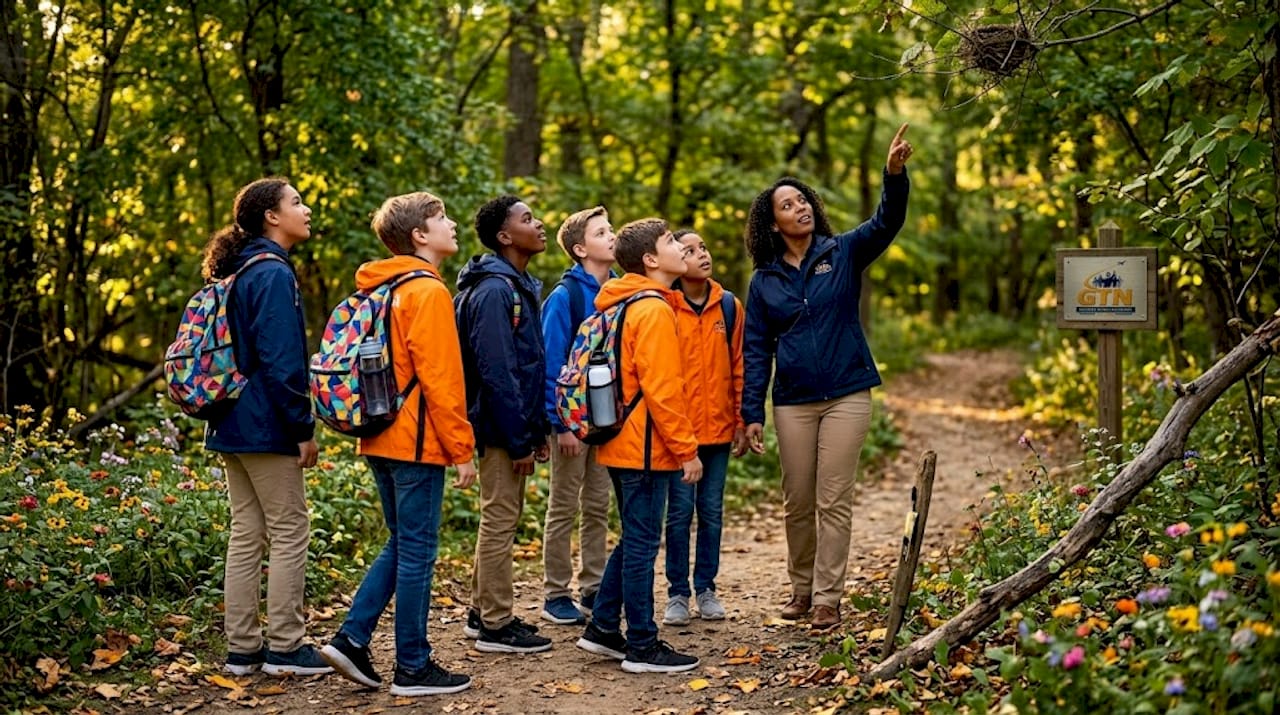
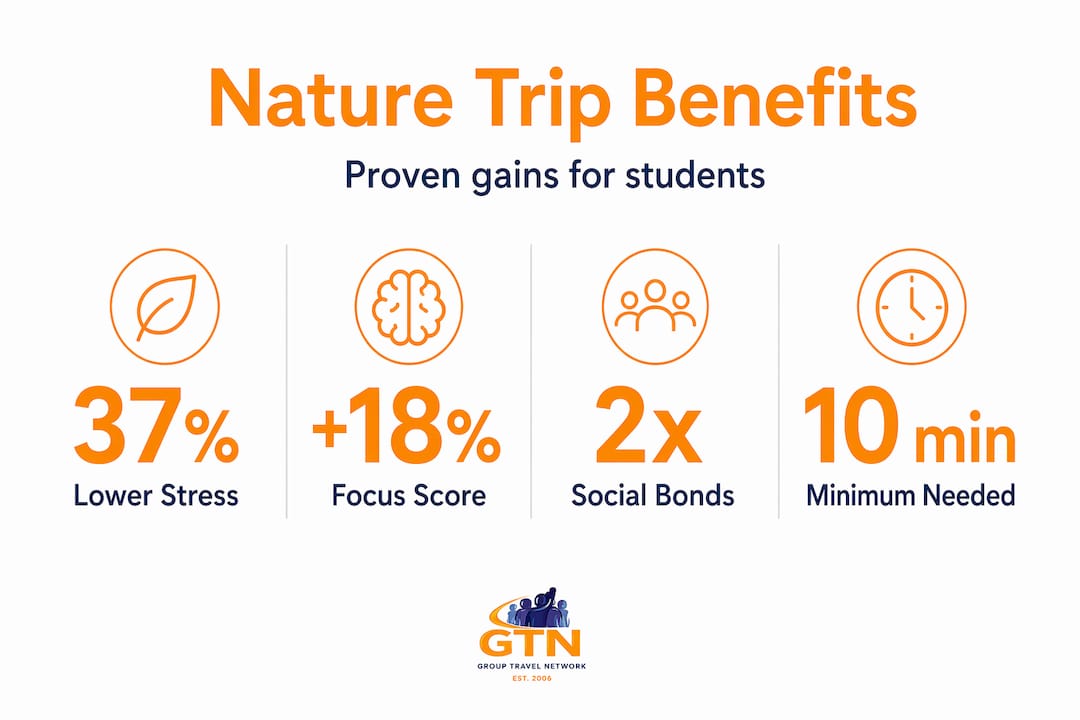
Most educators think of nature trips as a reward, a fun day out that briefly interrupts the real work of learning. The science says otherwise. Research on why nature trips for students are so impactful shows that even 15 to 20 minutes in a natural setting reduces cortisol by 15 to 20% (opens in a new tab), measurably cutting the stress that blocks memory formation and focus. These trips are not pauses from education. They are education, delivered in a format the human brain is actually built for.
Table of Contents
- Key takeaways
- Why nature trips for students restore attention and reduce stress
- Academic gains from nature-based learning
- Social and personal growth benefits
- Practical steps to maximize nature trip benefits
- My honest take on what nature trips actually do for kids
- Plan a nature trip your students will remember
- FAQ
Key takeaways
| Point | Details |
|---|---|
| Nature lowers student stress fast | Just 15 to 20 minutes outdoors cuts stress hormones significantly, restoring attention for learning. |
| Biodiversity matters more than greenness | Tree cover and plant diversity drive academic gains more than simple grass or open lawns. |
| Nature trips support social growth | Students build cooperation, self-regulation, and confidence in ways structured classrooms rarely allow. |
| Curriculum integration preserves learning time | Pre- and post-trip lessons turn nature excursions into academic anchors, not instructional gaps. |
| Shorter breaks still deliver restoration | Even 5 to 10 minutes in a semi-outdoor space near a classroom meaningfully improves cognitive performance. |
Why nature trips for students restore attention and reduce stress
Every teacher knows what directed attention fatigue looks like, even if they do not use that term for it. By mid-afternoon, students stare blankly at their desks, fidget, and lose the thread of a lesson they understood an hour earlier. This is not laziness. It is a neurological limit.
Attention Restoration Theory (opens in a new tab) explains the mechanism clearly. Classroom learning demands sustained, effortful focus. Over time, the prefrontal cortex becomes fatigued, and performance drops. Nature operates differently. Natural environments engage what researchers call “soft fascination.” A rippling creek, rustling leaves, and the texture of tree bark hold attention gently, without requiring mental effort. This allows the effortful attention system to recover.
The physiological evidence is equally compelling. Brief nature exposure reduces cortisol by 15 to 20% within 15 to 20 minutes. Lower cortisol does not just mean a calmer student. It means a student whose hippocampus, the brain region responsible for encoding new memories, is no longer suppressed by chronic stress hormones.
Here is what makes this practical for educators:
- A 20-minute outdoor break is not lost instructional time. It is preparation for the next 90 minutes of effective learning.
- Semi-outdoor spaces like shaded courtyards also work. Cognitive performance improves (opens in a new tab) after as little as 5 to 10 minutes in these semi-natural environments.
- Longer outdoor exposure at 10 minutes produces stronger restoration than 5 minutes, so even marginal increases in time outdoors compound in benefit.
- Students who struggle most with focus, often those with attention difficulties or high stress at home, benefit disproportionately from these restorative breaks.
Pro Tip: If a full nature trip is not immediately feasible, schedule a 10-minute structured outdoor break between your two most cognitively demanding lessons each day. The attention gains will show up in the quality of student work that follows.
Academic gains from nature-based learning
The link between nature experiences and academic outcomes is more direct than most parents and educators realize. It is not simply that relaxed students learn better, though that is true. It is that nature changes how the brain processes and stores information.
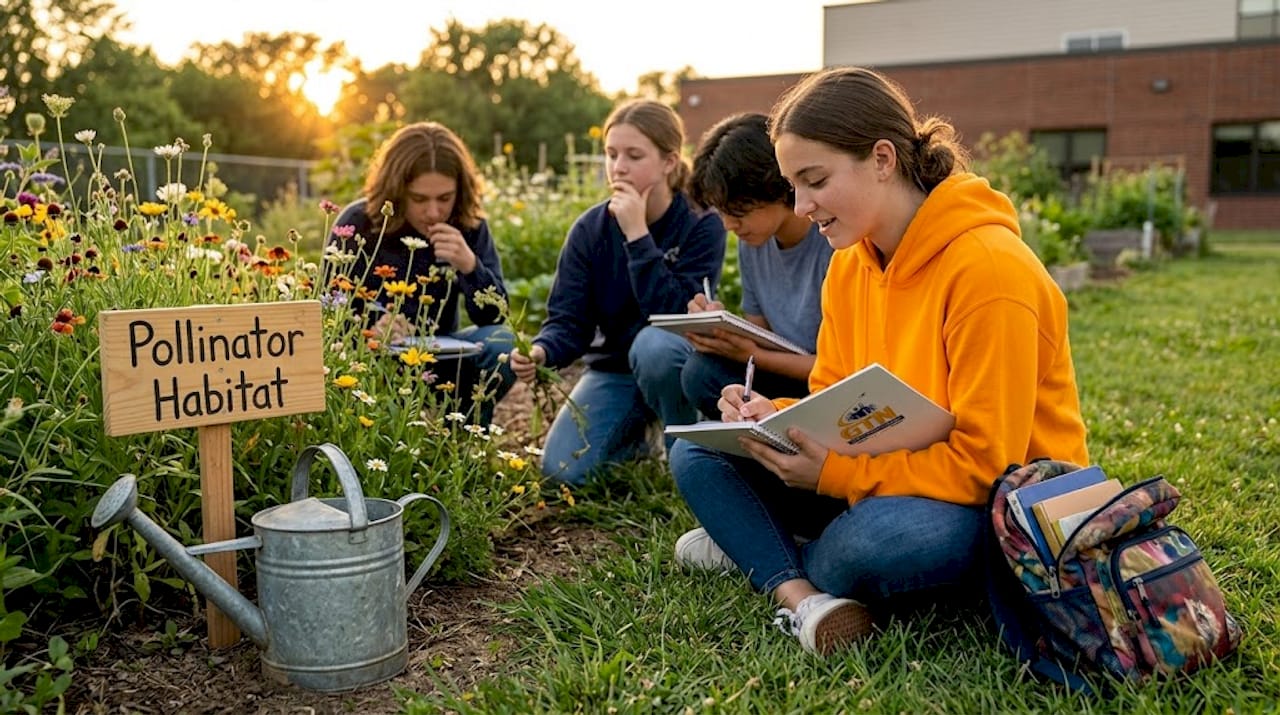
Physical engagement with natural environments, balancing on rocks, identifying plants, navigating trails, activates what cognitive scientists call embodied cognition. When the body is involved in learning, physical engagement with nature (opens in a new tab) activates neurological systems beyond just thought, deepening memory encoding. A student who learns about ecosystems while standing inside one remembers that lesson differently than a student who read about it in a textbook.
The data on green space proximity backs this up at scale. Having a public park within 800 meters (opens in a new tab) of a school increases the percentage of students meeting proficiency in both language arts and math. That is a structural finding, meaning the mere proximity of quality green space correlates with measurable academic gains across an entire student population.
But not all green space is equal. This is a point worth emphasizing because many schools treat any outdoor area as sufficient. Research shows that tree cover and biodiversity (opens in a new tab) predict better academic outcomes more reliably than simple lawns or open fields. Here is a direct comparison:
| Environment type | Academic and cognitive benefit |
|---|---|
| Open lawn, minimal shade | Minimal cognitive restoration or engagement |
| Mixed green space with tree cover | Moderate attention restoration, some engagement |
| Biodiverse space with trees, varied plants | Strongest link to academic gains and memory encoding |
| Semi-outdoor courtyard near classroom | Measurable short-term cognitive improvement in 5 to 10 minutes |
Curriculum integration amplifies these effects. Schools that align outdoor education with curriculum goals (opens in a new tab) report that students retain concepts longer and apply them more flexibly than peers who received only classroom instruction. Pre-trip preparation and post-trip reflection are not optional add-ons. They are the mechanism that converts a great experience into durable academic learning.
You can read more about how field trips transform learning (opens in a new tab) when they are designed with intentionality rather than treated as a one-off event.
Social and personal growth benefits
The importance of nature for students extends well beyond academics. What happens socially and emotionally during educational outdoor excursions is equally significant, and in many cases even harder to replicate inside a classroom.
Natural settings shift the social dynamics of a group of students in ways that are genuinely surprising. Outdoor environments facilitate creative, flexible social play in ways structured indoor spaces simply do not. There is no assigned seating in a forest. There is no preset hierarchy on a trail. Students negotiate, lead, follow, problem-solve, and cooperate based on the demands of the situation rather than the conventions of a classroom.
Research confirms that nature trips support collaboration and self-regulation (opens in a new tab) without sacrificing progress in reading or math. That matters because one of the most common objections from administrators is the fear of instructional trade-offs. The evidence does not support that fear.
Here is a breakdown of the personal development gains that nature experiences for learning consistently produce:
- Confidence and autonomy. Students who navigate physical challenges outdoors, even simple ones, develop a felt sense of capability that carries back into the classroom.
- Anxiety reduction. Nature acts as a multisystem agent (opens in a new tab) that particularly benefits disadvantaged youth, reducing anxiety and behavioral difficulties at rates that exceed what comparable indoor programs achieve.
- Motivation. Students who associate learning with positive emotional experiences return to school more willing to engage. Emotional engagement from nature experiences anchors learning in memory more effectively than indoor lectures.
- Long-term mental health. Children with the highest levels of green space exposure have up to 55% lower risk (opens in a new tab) of developing psychiatric disorders later in life.
Pro Tip: For students showing signs of social withdrawal or persistent anxiety, prioritize small-group nature experiences over large group outings. Smaller natural settings give quieter students space to lead and connect without the pressure of performing in front of the whole class.
Practical steps to maximize nature trip benefits
Knowing the benefits of nature trips is only half the equation. Here is how educators and parents can turn that knowledge into results that actually show up in student outcomes.
-
Choose environments with real ecological features. A manicured park lawn is not enough. Prioritize destinations with tree canopy, plant diversity, and natural terrain. These structural attributes are what drive both cognitive and emotional benefits.
-
Build curriculum connections before and after the trip. Assign pre-trip reading or inquiry questions tied to what students will observe. Debrief with writing, discussion, or project work after returning. This is what converts experience into academic gains.
-
Use the outdoor break strategy for restoration. Even without a full-day trip, schedule 10-minute semi-outdoor breaks between demanding lessons. A shaded courtyard or school garden delivers measurable cognitive restoration. You do not need a forest to start benefiting students today.
-
Address the instructional time objection directly. Share the research with administrators and parents. Nature learning supports holistic development without academic trade-offs. Students who spend time in nature do not fall behind. They often pull ahead.
-
Plan for safety and accessibility. Identify any mobility, allergy, or health considerations early. Work with experienced trip organizers to handle permits, transportation, supervision ratios, and emergency protocols. A poorly managed trip undermines the benefits, so logistics matter.
-
Involve parents in the learning framework. When parents understand that a nature trip is an educational outdoor excursion (opens in a new tab) with specific learning outcomes, not a day off, their support increases and students arrive better prepared.
My honest take on what nature trips actually do for kids
I have seen a lot of educational trips, and I will be direct about something the research confirms but most educators are not saying out loud. The brain did not evolve for classrooms. Desks, fluorescent lights, and 45-minute blocks are a very recent invention. When we send students outside, we are not giving them a break from learning. We are putting them back in the environment their cognition was actually shaped for.
What I find most compelling is not the cortisol data or the test score correlations, impressive as those are. It is the emotional dimension. I have watched students who rarely spoke in class become the natural leaders of a trail group. I have seen a student who struggled with fractions grasp ratios immediately when asked to measure rainfall in a stream. These are not anecdotes. They reflect what happens when emotional engagement locks in learning, something nature uniquely delivers (opens in a new tab).
The mistake most schools make is treating nature trips as optional enrichment, a reward for good behavior or an end-of-year tradition. That framing undersells what these experiences actually are. They are co-teachers. They build things no worksheet can: resilience, curiosity, the ability to sit with uncertainty and solve it. If you are an educator or parent debating whether a nature trip is worth the logistics, the answer is yes. Plan it well, connect it to your curriculum, and watch what your students do with it.
— Donovan
Plan a nature trip your students will remember
Organizing an educational outdoor excursion takes more coordination than most educators anticipate, especially when you factor in transportation, supervision ratios, curriculum alignment, and safety planning. That is exactly where Grouptravelnetwork makes the difference.

Grouptravelnetwork specializes in supporting schools, teachers, and youth organizations with the full logistics of student group travel. From custom itinerary design to dedicated trip coordinators and flexible payment plans, every detail is handled so you can focus on the learning. Whether you are planning a local nature immersion or a multi-day educational tour, their school group travel planning guide (opens in a new tab) walks you through every step. You can also explore the full benefits of group travel (opens in a new tab) to build the case with your administration. Start planning the trip that will stick with your students for years.
FAQ
Why are nature trips beneficial for student learning?
Nature trips reduce stress hormones, restore attention, and engage embodied cognition. These combined effects improve memory encoding, focus, and academic performance beyond what classroom instruction alone delivers.
How long does a nature exposure need to be to benefit students?
Even 10 to 15 minutes in a natural or semi-outdoor environment produces measurable cognitive and emotional benefits. Longer exposures of 20 minutes or more deliver deeper attention restoration and greater cortisol reduction.
Do nature trips hurt academic performance or waste instructional time?
No. Research shows that nature-based learning supports collaboration, self-regulation, and motivation without reducing reading or math outcomes. Many studies show academic gains, particularly in schools with nearby green spaces.
What type of outdoor environment works best for student benefits?
Biodiverse environments with tree cover and varied plant life deliver the strongest academic and cognitive benefits. Simple lawns or open fields provide minimal restoration compared to structurally rich natural settings.
Are the benefits of nature trips the same for all students?
Nature benefits all students, but disadvantaged youth and those with anxiety or behavioral difficulties show particularly strong improvements. Smaller group nature experiences can further amplify benefits for quieter or more anxious students.
Recommended
- Student Educational Trips 2025: 5 Keys For Success (opens in a new tab)
- Top Student Travel Trends In 2026 For School Groups (opens in a new tab)
- Group Travel For Students 2025: Building Lifelong Memories (opens in a new tab)
- Youth Travel: 7 Experiences Every Student Deserves In 2025 (opens in a new tab)