

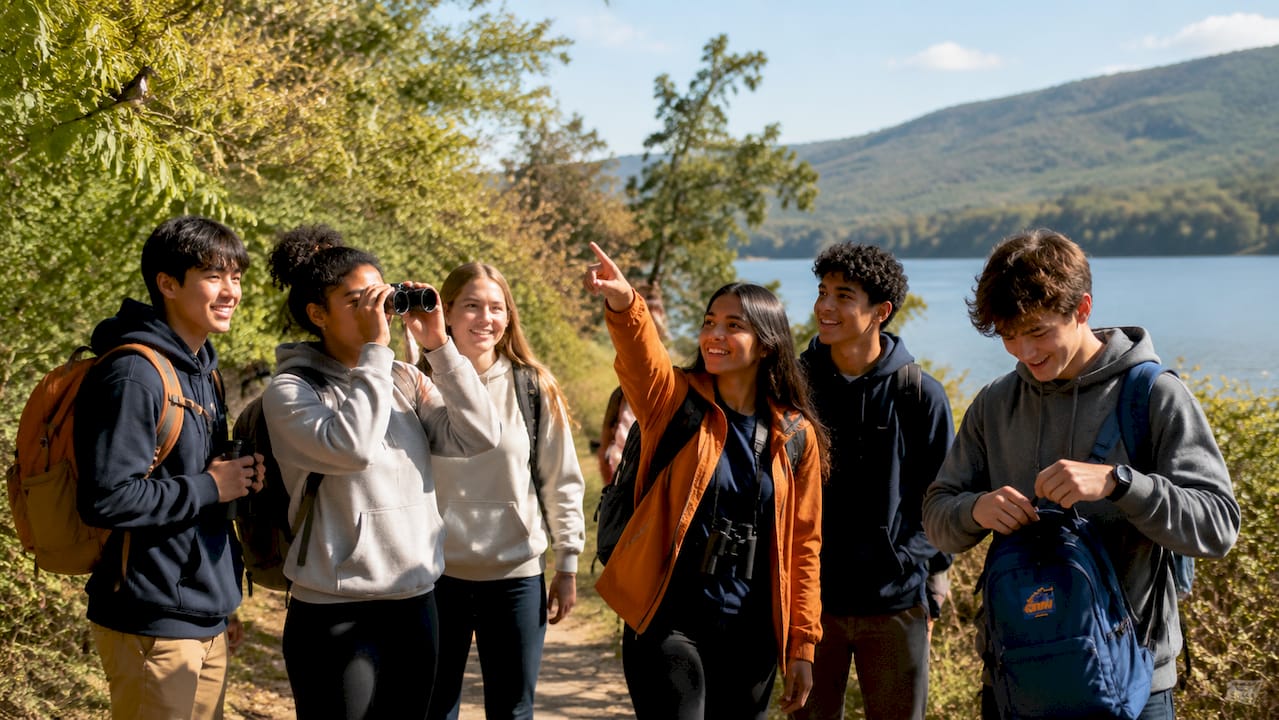
TL;DR:
- Nature travel for schools involves structured outdoor experiences aligned with curriculum standards to enhance learning. It offers significant cognitive, physical, and social-emotional benefits that surpass traditional classroom instruction. Proper planning, accreditation, and early funding are essential for successful and impactful outdoor educational programs.
Nature travel for schools is defined as a structured educational approach where planned outdoor experiences connect students to natural environments to support curriculum goals, foster social-emotional learning, and build environmental awareness. Unlike a standard day out, these programs align directly with academic standards such as the Next Generation Science Standards (NGSS) and the CASEL social-emotional learning framework. The California Department of Education classifies outdoor learning as an embedded educational environment (opens in a new tab), not an extracurricular add-on. That distinction matters. It means nature travel belongs in your annual academic calendar, not as a reward at the end of term, but as a core delivery method for science, ecology, and social development.
What is nature travel for schools explained?
Nature travel for schools is the practice of taking students into natural settings, such as forests, wetlands, national parks, or environmental learning centers, to deliver curriculum-aligned instruction. The industry term for this broader practice is outdoor education or environmental education, and it encompasses everything from single-day field trips to nature (opens in a new tab) to multi-day residential programs at accredited learning centers.
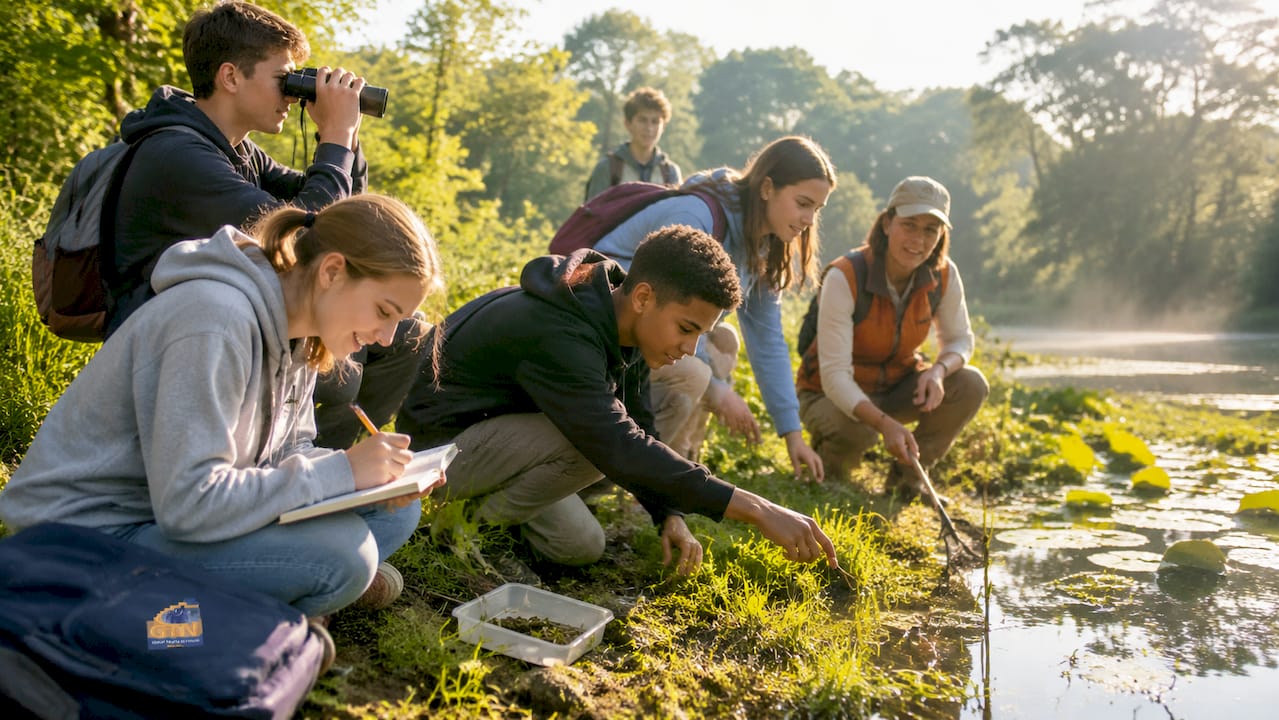
The core educational outcomes of these programs focus on biodiversity, phenology, water quality, and ecology. These are concepts that textbooks describe but outdoor settings make real. A student who collects a water sample from a stream and tests it on-site retains that lesson far longer than one who reads about water quality in a classroom. Programs aligned with K-8 standards can be free or subsidized (opens in a new tab) when booked at least two weeks in advance through national parks and environmental centers.
The distinction between a recreational outing and a true educational nature trip comes down to planning and intent. Nature trips must be planned learning tours with curriculum-aligned activities replacing traditional lectures. When that standard is met, the results are measurable in student engagement, retention, and behavior.
What educational benefits does nature travel provide for students?
Nature-based school programs deliver benefits across three categories: cognitive, physical, and social-emotional. Each category produces outcomes that classroom instruction alone cannot replicate.
Cognitive benefits are the most documented. Nature trips improve attention span (opens in a new tab), creativity, and a sense of awe that deepens learning. That boost in curiosity directly supports academic growth, particularly in science and environmental studies. Students who observe invasive species in a real habitat, track phenological changes across seasons, or analyze local biodiversity develop scientific thinking skills that transfer back to classroom performance.
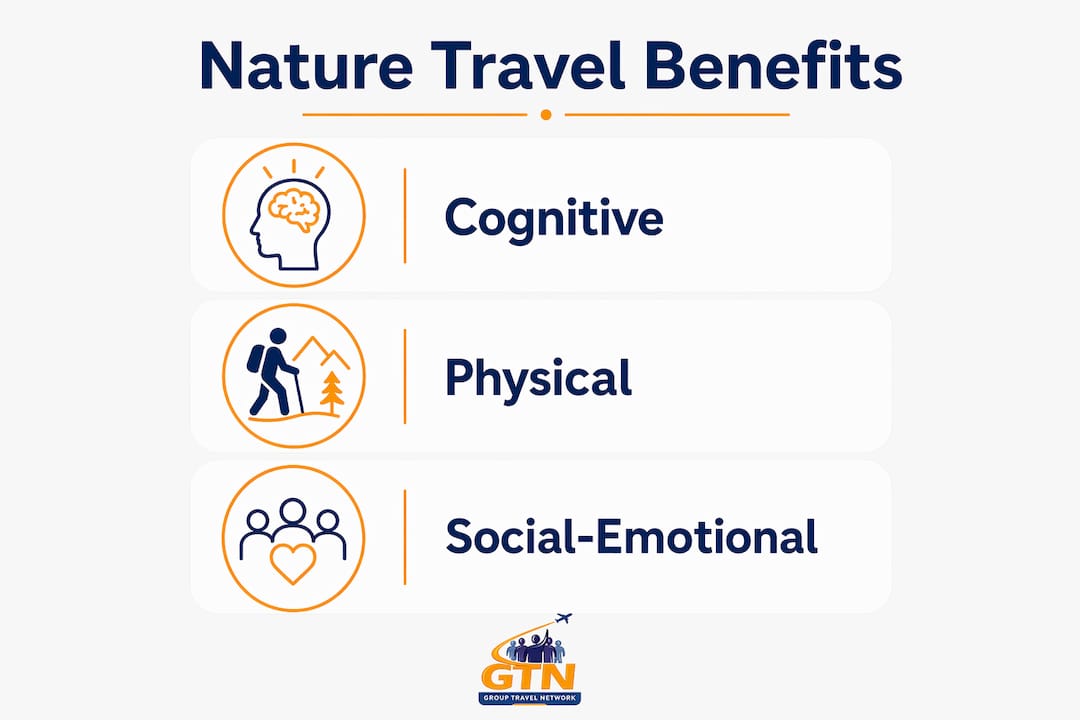
Physical and sensory engagement is the second major benefit. Outdoor environments require students to use their bodies and senses in ways that seated instruction does not. This physical engagement reduces stress and improves focus when students return to the classroom.
Social-emotional learning is where nature travel produces some of its most lasting results. Wolf Ridge Environmental Learning Center, which received a $262,625 grant (opens in a new tab) through Minnesota’s Outdoor School for All program, integrates SEL directly with academic standards in outdoor settings. Students build teamwork, self-reliance, and a positive environmental identity through shared challenges in natural settings.
“Social and emotional learning outcomes are as important as academic ones. Nature travel strengthens positive social-environmental identity in ways that traditional classrooms cannot replicate.” — Wolf Ridge Environmental Learning Center
The benefits listed below summarize what research-backed programs consistently produce:
- Stronger grasp of ecology, phenology, and water quality concepts aligned with NGSS
- Increased attention span and creative thinking
- Greater student engagement and reduced behavioral issues
- Improved teamwork and communication skills
- Development of a lasting environmental identity
How to plan a successful school nature travel experience
Effective nature trips use a 5-step planning process that covers research, accredited site selection, logistics, student preparation, and post-trip reflection. Starting this process 3–6 months in advance is the standard recommendation for multi-day programs.
-
Research destinations and align with curriculum. Identify which science or social studies units the trip will support. Match those units to sites that offer structured programs. National parks, state environmental learning centers, and accredited residential facilities all offer curriculum-mapped programs.
-
Select an accredited site. Sites carrying the LOtC Quality Badge or equivalent regional accreditation meet vetted risk management standards (opens in a new tab) and employ professional educators. Accreditation also simplifies the approval process with school administrators and parents.
-
Manage logistics early. Book transportation, accommodation, and program slots as soon as the destination is confirmed. Programs at popular sites fill quickly, especially in spring and fall. Confirm student-to-staff ratios, dietary requirements, and accessibility needs at the time of booking.
-
Prepare students before departure. Pre-visit resource packs that include academic trip journals improve retention (opens in a new tab) and reduce behavioral issues during the trip. Assign pre-visit lessons that introduce key vocabulary and concepts students will encounter on-site. This preparation turns arrival into activation rather than introduction.
-
Build in post-trip reflection. Structured reflection, whether through journal completion, class discussion, or a follow-up project, consolidates what students learned. Without this step, much of the experiential learning fades within two weeks.
Pro Tip: Send home a one-page parent brief at least three weeks before departure. It reduces last-minute permission slip delays and cuts the volume of coordinator emails by a significant margin.
The step-by-step planning guide (opens in a new tab) from Grouptravelnetwork offers a practical framework that maps each of these stages to real timelines and checklists for school coordinators.
What logistical and safety considerations should educators know about?
Logistics and safety are the two areas where well-intentioned trips most often fall apart. Addressing them early protects students and protects coordinators from liability.
The key logistical and safety areas to address before any nature excursion include:
- Transportation: Book coaches or charter vehicles at least 8 weeks in advance for spring trips. Confirm that vehicles meet your district’s safety standards and that drivers hold appropriate licenses.
- Risk assessments: Complete a written risk assessment for every site, including trail conditions, water access points, and weather contingencies. Duty-of-care standards require documentation, not just awareness.
- Site accessibility: Confirm that the site accommodates students with mobility limitations or medical needs. Request a site map and emergency contact protocol from the facility before finalizing the booking.
- Permissions paperwork: Collect signed permission slips and medical forms at least two weeks before departure. Build in a buffer for late returns.
- Evening program structure: Structured evening programs led by naturalists deepen SEL outcomes and prevent the student fatigue that derails multi-day trips. Unstructured evening time is the single biggest source of behavioral issues on residential trips.
Pro Tip: Assign a dedicated staff member to track all paperwork and communications separately from the lead coordinator. Splitting those roles prevents critical details from falling through the gaps when planning pressure peaks.
For coordinators managing group travel logistics for the first time, the group travel logistics guide (opens in a new tab) from Grouptravelnetwork covers the practical details that most planning checklists miss.
How do educators secure funding and align nature travel with standards?
Funding is the most common barrier educators cite when nature-based school programs stall at the proposal stage. The good news is that grant programs and subsidies exist at federal, state, and regional levels, and many can cover program costs entirely.
Minnesota’s Outdoor School for All program awarded $262,625 to Wolf Ridge Environmental Learning Center through 2028. At the federal level, a fully grant-funded program at a national park site ran on a $540,932 budget in 2023–24, with zero cost to participating schools. These examples show that full funding is achievable when applications align with education department priorities and are submitted on schedule.
The table below outlines the main funding and standards alignment pathways available to most U.S. educators:
| Funding or Standards Source | What It Covers | Key Requirement |
|---|---|---|
| Federal grants (e.g., Title IV-A) | Transportation, program fees, materials | Alignment with academic improvement goals |
| State outdoor education grants | Full program costs at accredited sites | State-specific application deadlines |
| Regional environmental consultants | Biodiversity grant access and site connections | LOtC or equivalent site accreditation |
| NGSS alignment | Science standards justification for admin approval | Documented curriculum mapping |
| CASEL framework | SEL outcomes justification for funding applications | Pre and post assessment documentation |
Aligning your trip proposal with NGSS and CASEL frameworks does more than satisfy grant requirements. It gives school administrators a clear academic rationale for approving the trip and the budget. Environmental education activities tied to state science and social studies standards are far easier to fund than trips framed as enrichment. For students studying environmental systems at an advanced level, resources like environmental systems study benefits (opens in a new tab) provide academic context that strengthens curriculum alignment arguments.
What are the most effective activities during a school nature trip?
The activities that produce the strongest learning outcomes are hands-on, data-driven, and directly tied to the curriculum units students are studying before and after the trip.
The most effective nature exploration activities for students include:
- Water quality sampling: Students collect samples from streams or ponds and test for pH, turbidity, and biological indicators. This directly supports NGSS Earth and Life Science standards and produces data students can analyze back in the classroom.
- Phenology observation: Students record the timing of natural events, such as leaf budding, bird migration, or insect emergence, and compare their data to historical records. This builds scientific thinking and connects students to long-term environmental change.
- Invasive species mapping: Students identify and map non-native plant or animal species in a defined area. This activity works well for middle and high school groups and connects to ecology, conservation, and human impact on ecosystems.
- Wildlife observation with scientific tools: Binoculars, field microscopes, and data sheets turn passive observation into active scientific inquiry. Students record species, behaviors, and habitat characteristics using the same methods professional ecologists use.
- Naturalist-led evening programs: Structured night hikes or stargazing sessions led by on-site naturalists extend learning beyond daylight hours. These programs also serve as the most effective tool for group bonding and SEL development during multi-day trips.
- Trip journal completion: Students record observations, sketches, and reflections throughout the trip. Journals serve as both a learning tool and an assessment artifact that teachers can evaluate after the trip.
Integrating technology, such as species identification apps or digital data loggers, adds a layer of engagement for older students. The key is that every activity connects to a specific learning objective, not just to the experience of being outdoors.
Key Takeaways
Nature travel for schools produces the strongest outcomes when it is planned as a curriculum-aligned educational program, not a recreational outing, with accredited sites, structured activities, and post-trip reflection built in from the start.
| Point | Details |
|---|---|
| Define it as education, not recreation | Nature travel must align with NGSS, CASEL, or state standards to justify funding and admin approval. |
| Plan 3–6 months in advance | Early booking secures accredited sites, transportation, and grant-eligible program slots. |
| Use accredited sites | LOtC Quality Badge sites meet vetted risk management and professional staffing standards. |
| Fund through grants | Federal and state programs have fully funded nature education programs exceeding $500,000 in a single year. |
| Structure every hour | Pre-visit prep, daytime activities, and evening programs each serve distinct learning and behavioral goals. |
Why nature travel is the classroom educators keep underestimating
I have worked with enough school coordinators to know that nature trips are almost always proposed too late and planned too lightly. The conversation usually starts with “we want to do something outdoors” and ends with a scramble to book a site six weeks before the intended date. By then, the best accredited facilities are full, the grant window has closed, and the trip becomes a day hike with no curriculum connection.
The shift that changes everything is treating nature travel as an instructional method, not an event. The California Department of Education’s position that outdoor learning is an embedded educational environment is not just policy language. It reflects what actually happens when students spend two or three days in a structured natural setting. They learn differently. They pay attention differently. Students who struggle in traditional classrooms often find their footing outdoors, and that matters for the whole group dynamic.
Evening programs are the piece most coordinators cut when budgets tighten. That is the wrong call. Unstructured evenings on multi-day trips produce the behavioral issues that make coordinators reluctant to run them again. A 90-minute naturalist-led program costs less than the administrative headache of managing overtired, unsupervised students. Structure the evenings and the whole trip runs better.
The environmental identity that students build on well-designed nature trips is not a soft outcome. It is the foundation for science engagement, environmental stewardship, and the kind of curiosity that drives academic motivation for years. Coordinators who treat it as a bonus are leaving the most durable benefit of the entire program on the table.
— Donovan
How Grouptravelnetwork supports school nature travel planning
Planning a school nature trip involves more moving parts than most coordinators anticipate the first time. Grouptravelnetwork specializes in exactly this kind of group travel, offering customized itineraries, vendor partnerships, and dedicated trip coordinators who handle the logistics so educators can focus on the learning.
From destination selection and accredited site connections to online registration and flexible payment plans, Grouptravelnetwork builds the infrastructure around your trip so nothing falls through the gaps. Whether you are planning a single-day field trip or a multi-day residential program, the educational group trip planning guide (opens in a new tab) gives you a clear starting point. For coordinators ready to move from planning to booking, the student group trips page (opens in a new tab) outlines the full range of services available for nature-focused school travel in 2026.
FAQ
What is nature travel for schools?
Nature travel for schools is a structured educational approach where students visit natural environments to engage in curriculum-aligned activities. Programs align with standards such as NGSS and CASEL and are designed to deliver academic and social-emotional learning outcomes.
How far in advance should schools plan a nature trip?
The standard recommendation is 3–6 months in advance for multi-day programs. Booking early secures accredited sites, transportation, and access to grant-funded program slots that fill quickly in spring and fall.
How can schools fund nature travel programs?
Federal grants such as Title IV-A, state outdoor education grants, and regional environmental programs can cover full program costs. A federally funded national park program ran on a $540,932 budget in 2023–24 at no cost to participating schools.
What makes a nature trip site safe and educationally credible?
Sites carrying the LOtC Quality Badge or equivalent regional accreditation meet vetted risk management standards and employ professional educators. Accreditation also simplifies administrative approval and parent confidence.
What activities produce the best learning outcomes on nature trips?
Water quality sampling, phenology observation, invasive species mapping, and naturalist-led evening programs consistently produce the strongest academic and social-emotional outcomes. Each activity should connect directly to a specific curriculum objective.
Recommended
- How To Organize School Tours: 2026 Planning Guide • Group Travel Network (opens in a new tab)
- Student Educational Travel: Ultimate 2025 Guide For Schools (opens in a new tab)
- Youth Group Travel Planning 2026: The Educator’s Guide • Group Travel Network (opens in a new tab)
- School Group Travel Planning: A Step-by-step Guide • Group Travel Network (opens in a new tab)