


TL;DR:
- Safe travel planning involves thorough documentation, health preparations, and emergency protocols to protect students and reduce chaos.
- Effective management relies on clear communication, technology use, and rehearsed procedures to ensure group safety at every stage.
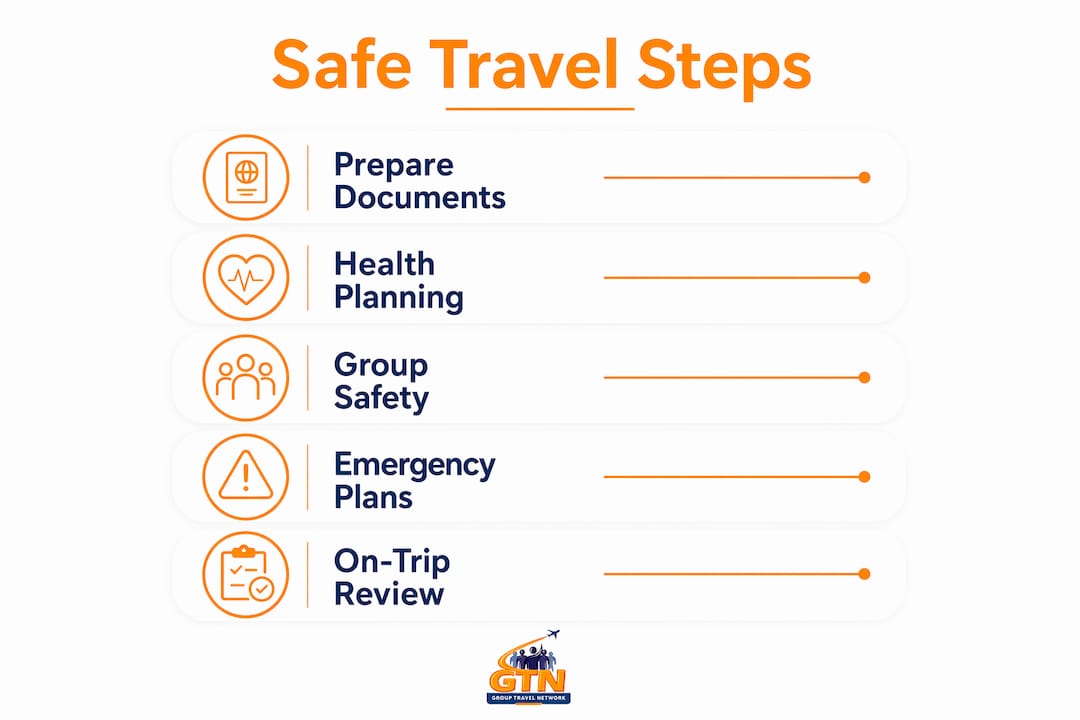
Safe travel planning steps are the structured set of actions that protect students, reduce liability for organizers, and prevent the logistical breakdowns that turn educational trips into crises. For school administrators, band directors, and youth group leaders, the stakes are higher than for solo travelers. You are responsible for dozens of young people in unfamiliar places, often across international borders. The U.S. Department of State, CDC travel health guidelines, and Grouptravelnetwork all identify advance preparation as the single greatest factor separating smooth group trips from chaotic ones. Get the steps right before departure, and the trip runs itself.
What are the essential documents and registrations needed for safe group travel?
Documentation is the foundation of every safe group trip. Missing a single requirement can result in denied boarding, refused entry at customs, or a student stranded without medical coverage.
Start with passports. Every student’s passport must be valid for at least 6 months beyond the return date. Many countries enforce this rule strictly at the border, and airlines will deny boarding if the passport fails the check. Build a passport audit into your planning calendar at least six months before departure.
Visas require separate attention. Visa processing times (opens in a new tab) can run 2–4 weeks or longer depending on the destination country and season. Apply early and track each student’s application individually. A single delayed visa can hold up the entire group’s departure.
Register the group with the Smart Traveler Enrollment Program (opens in a new tab) (STEP), run by the U.S. Department of State. Registration takes about two minutes and gives the nearest U.S. embassy your group’s location and contact details. In a genuine emergency, that information can be the difference between a fast response and a prolonged search.
Travel insurance and medical documentation round out the paperwork. Collect signed medical consent forms for every student, list all known allergies and medications, and keep copies in at least three places: the lead chaperone’s carry-on, a secure cloud folder, and a contact back home.
Pro Tip: Photograph every document and upload them to a password-protected shared folder. If a student loses their passport abroad, having a digital copy speeds up the emergency replacement process significantly.
How to prepare health and safety measures before the trip
Health preparation for group travel follows a strict timeline. Start at least 8 weeks before departure to allow vaccines to take full effect and to handle any multi-dose schedules that require weeks between injections. Missing this window is one of the most common and most avoidable mistakes group organizers make.
Key health preparation steps include:
- Schedule a travel medicine appointment for all students and chaperones at least 8 weeks out
- Confirm which vaccines are required versus recommended for the destination country
- Collect a list of every student’s current medications, dosages, and prescribing physician
- Pack a small emergency kit (opens in a new tab) in every chaperone’s carry-on bag, not in checked luggage
- Research the location of local clinics, hospitals, and pharmacies near your accommodation
Medications must travel in carry-on bags without exception. Checked luggage can be delayed or lost, and a student who needs daily medication cannot wait 24 hours for a bag to be located. This applies to prescription medications, EpiPens, inhalers, and any other critical supplies.
Knowing local emergency numbers before you land is a concrete safety measure, not a formality. In European Union countries, 112 connects to emergency services. Researching local pharmacies and clinics (opens in a new tab) before arrival reduces stress and improves response time if a student falls ill. Write these numbers into your group’s printed itinerary so every chaperone has them without needing a phone.
Mental health is part of the health picture too. Students traveling internationally for the first time can experience anxiety, homesickness, or culture shock. Reviewing mental health support strategies for students and teachers abroad helps chaperones recognize warning signs early and respond with confidence.
Pro Tip: Create a one-page medical summary for each student and laminate it. Chaperones can hand it directly to medical staff in an emergency, even in a country with a language barrier.
What are the best strategies for managing group safety during travel and at the destination?
On-trip safety management is where planning meets reality. The most thorough safe travel checklist means nothing if chaperones do not execute it consistently on the ground.
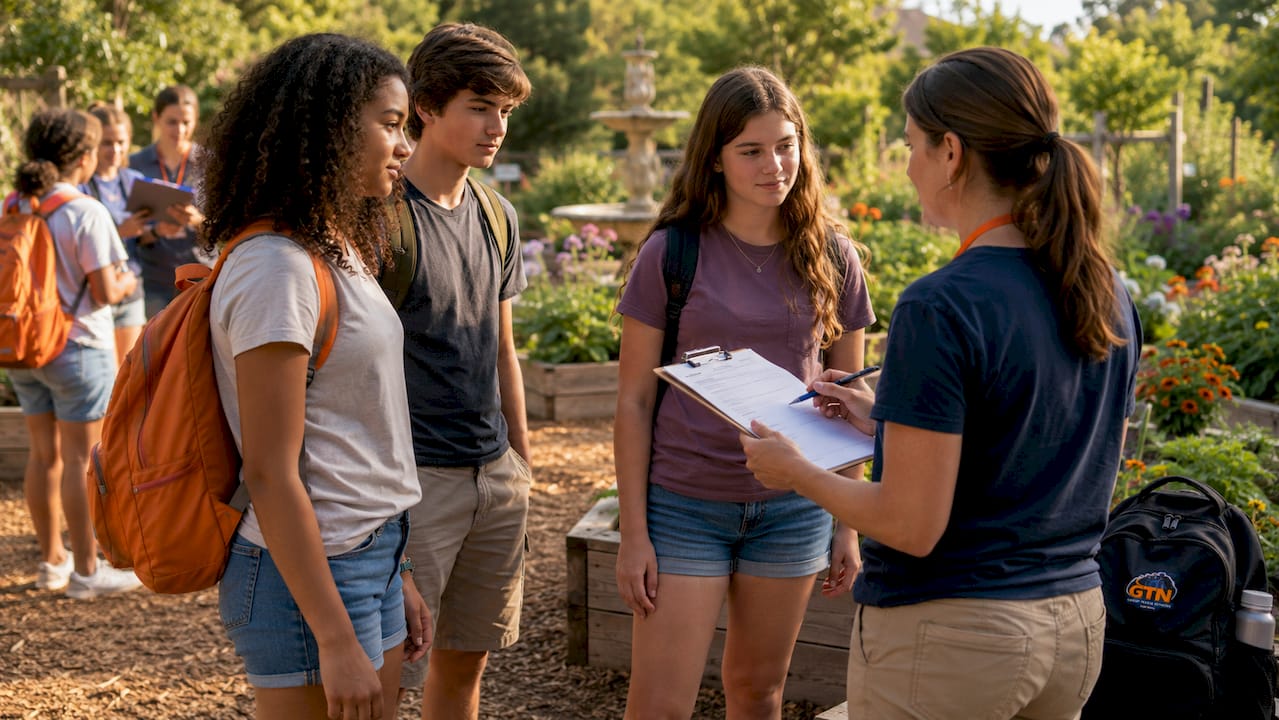
Keep the group together through regular headcounts. Assign each chaperone a fixed subgroup of students and make them responsible for that group at every transition point: boarding, arriving, entering attractions, and leaving restaurants. A headcount at every door prevents the slow drift that leads to separated students.
Technology supports safety when used correctly. Set up a group messaging thread before departure and confirm every student and chaperone has data access or a local SIM card. Location-sharing apps give lead coordinators a real-time view of where subgroups are at any moment. Set travel notifications on bank apps (opens in a new tab) 1–2 weeks before departure to prevent card freezes, and configure biometric locks and remote wipe on every student’s phone before leaving home.
Scam awareness is a specific skill, not general caution. Fixed-fare taxi apps (opens in a new tab) eliminate the risk of fare overcharging, which is one of the most common tourist scams globally. Brief students on this before arrival. At ATMs, unsolicited help from strangers near the machine is almost always a distraction tactic. Use bank-affiliated ATMs during business hours only, and ignore anyone who approaches unprompted.
Hotel security deserves specific attention for group trips. Assign rooms in pairs or small groups, never single occupancy for students. A hand towel placed over the security swing bar on a hotel door prevents the bar from being pushed open from outside, a simple trick most travelers never learn. Brief chaperones on this before check-in.
Pro Tip: Use a VPN on any public Wi-Fi connection, including hotel networks. Even with a VPN active, avoid logging into bank accounts or school administrative systems on public networks.
How to plan for emergencies and unexpected changes during educational trips
Emergency planning is not pessimism. It is the professional standard for anyone responsible for students abroad. Build your emergency response framework before the trip, not during it.
Every group coordinator needs a printed emergency contact list that includes:
- The nearest U.S. embassy or consulate and its after-hours emergency line
- Local police, fire, and ambulance numbers for the destination city
- The travel insurance provider’s 24-hour claims and assistance line
- The school’s main administrative contact and a backup contact
- Each student’s emergency contact at home, with time zone noted
Flight delays and lost luggage are the most common disruptions, and they feel catastrophic when you are managing 40 students. Download a real-time flight tracking app before departure and check flight status 24 hours before travel. Keep the group’s itinerary flexible enough to absorb a two-hour delay without missing a critical connection.
Share the full itinerary with at least two trusted contacts who are not traveling. Include hotel addresses, flight numbers, and a daily schedule. If communication goes down, those contacts can coordinate with authorities or the school on your behalf.
“The groups that handle emergencies best are the ones that rehearsed the response before anything went wrong. A five-minute briefing with chaperones on day one, covering what to do if a student goes missing or gets injured, is worth more than any app.”
Staying calm is a leadership skill, not a personality trait. Students take their emotional cues from the adults around them. Chaperones who follow established protocols without visible panic keep the group stable while the situation is resolved. Practice the protocol at home so it becomes automatic under pressure.
Key takeaways
Safe group travel for students requires documented preparation, health planning, and on-trip protocols executed consistently by trained chaperones.
| Point | Details |
|---|---|
| Start documentation early | Passports need 6+ months of validity; visa processing can take 2–4 weeks. |
| Health prep begins 8 weeks out | Vaccines need time to work; medications must travel in carry-on bags, not checked luggage. |
| Register with STEP | The U.S. Department of State’s STEP program gives embassies your group’s location for emergencies. |
| Use technology and protocols together | Biometric phone locks, location sharing, and fixed-fare apps reduce on-trip risk significantly. |
| Build an emergency framework before departure | Printed contact lists, shared itineraries, and rehearsed protocols keep chaperones effective under pressure. |
What I’ve learned from planning student trips that most guides skip
After years of working with educational group travel, the pattern I see most often is not a failure of planning. It is a failure of communication between planners. A school administrator builds a thorough safe travel checklist, but the band director who is actually chaperoning the trip has never read it. The documents exist. The protocols exist. Nobody briefed the people who need to execute them.
The second overlooked issue is the gap between international travel’s perceived danger and its actual risk. International travel is statistically safer than a daily commute when standard safety practices are followed. That fact matters because fear-based planning leads to over-restriction, which kills the educational value of the trip. Students who spend a European tour locked in supervised museum visits with no free time learn less and remember less than students who have structured independence with clear safety boundaries.
The third thing most guides miss is the value of local knowledge. No checklist replaces a trip coordinator who has been to the destination before and knows which neighborhoods to avoid, which taxi services are reliable, and which local contacts to call when something goes wrong. That is exactly the kind of expertise that separates a well-run student educational trip (opens in a new tab) from a stressful one. Use it.
— Donovan
How Grouptravelnetwork supports safe student group travel planning
Planning a student group trip involves more moving parts than most organizers anticipate until they are already in the middle of it. Grouptravelnetwork specializes in exactly this work, providing dedicated trip coordinators, built-in travel protection options, and customized itineraries for educational institutions, bands, sports teams, and youth organizations.

Every Grouptravelnetwork package includes vendor partnerships, online registration, and flexible payment plans that reduce the administrative load on school staff. For groups planning international trips, the student educational travel guide covers destination options, safety frameworks, and step-by-step planning timelines. If you are coordinating a school group trip (opens in a new tab) and want expert support from coordinators who have done this before, Grouptravelnetwork is built for that exact need.
FAQ
What documents does a student need for international group travel?
Every student needs a passport valid for at least 6 months beyond the return date, any required visas for the destination country, travel insurance documentation, and a signed medical consent form held by the lead chaperone.
How far in advance should health planning start for a student group trip?
Health planning should begin at least 8 weeks before departure. Some vaccines require multiple doses spaced weeks apart, and visa processing can add additional lead time.
What is the STEP program and why does it matter for school trips?
STEP is the Smart Traveler Enrollment Program run by the U.S. Department of State. Registering your group takes about two minutes and gives the nearest U.S. embassy your location and contact details for use in emergencies abroad.
How should chaperones handle a student going missing at the destination?
Chaperones should immediately contact local emergency services using the pre-printed emergency number list, notify the lead coordinator, and contact the nearest U.S. embassy or consulate using the after-hours emergency line.
What is the safest way to manage student phones and data security during travel?
Configure biometric locks and remote wipe on every student’s phone before departure. Use a VPN on public Wi-Fi networks, and set bank travel notifications 1–2 weeks before the trip to prevent card freezes.
Recommended
- Step-by-step Group Travel Planning For School Trips • Group Travel Network (opens in a new tab)
- Top Student Travel Trends In 2026 For School Groups (opens in a new tab)
- School Group Travel Planning: A Step-by-step Guide • Group Travel Network (opens in a new tab)
- Student Educational Travel: Ultimate 2025 Guide For Schools (opens in a new tab)