

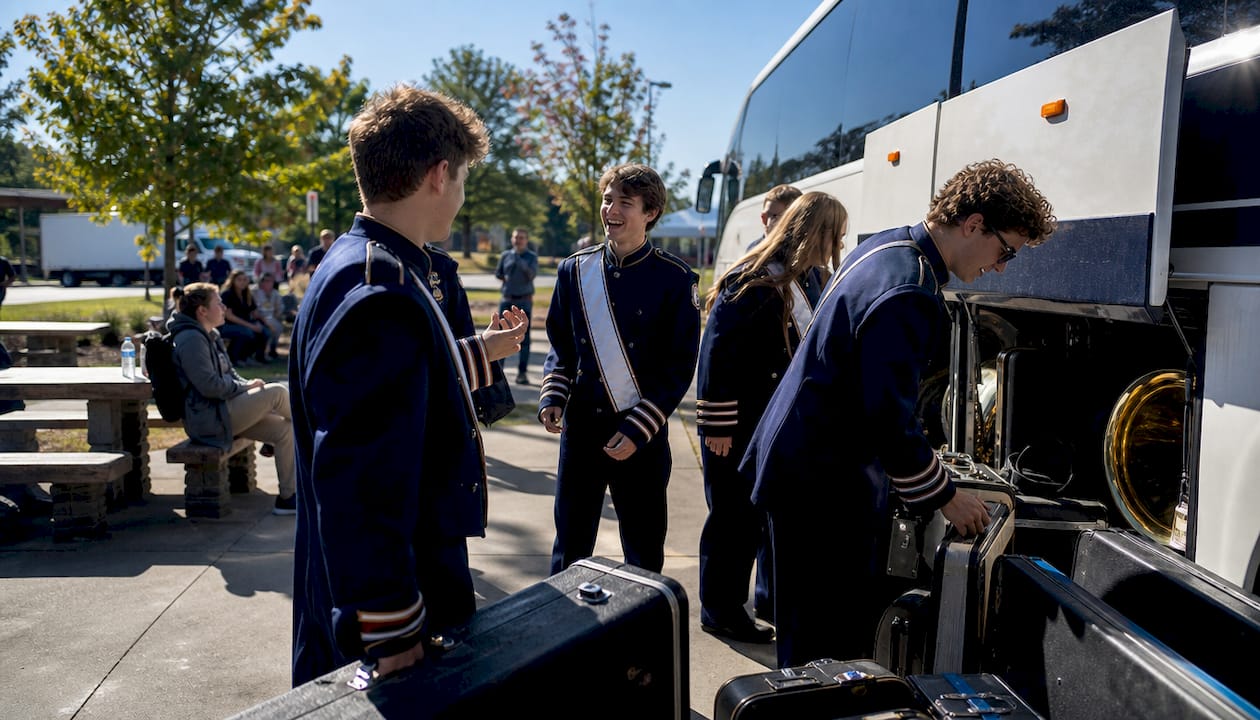
A bowl game band trip is realistic for most well-organized programs this season, provided you start planning at least six to nine months out and lock in a specialist coordinator early. The biggest risk isn’t the performance. It’s underestimating the lead time and logistics.
Here’s what to do right now:
- Timeline: Start outreach and internal approvals 6 to 9 months before the target bowl date, longer if you’re pursuing an audition-based parade slot.
- Cost range: Expect roughly $800 to $1,800 per student depending on distance, lodging, and whether your district or booster program covers a share of transportation.
- Next step: The band director or a designated booster liaison should contact a group travel planner like Group Travel Network (opens in a new tab) this week to check bowl availability and get a preliminary quote.
Whoever owns the trip, director, activities coordinator, or booster club president, needs to be the single point of contact. Bowl committees and travel vendors move fast once a program shows interest, and a fragmented decision chain is the number one reason promising bowl invitations stall out.
Key Takeaways
A bowl game band trip succeeds when directors start planning 6 to 9 months out, budget $800 to $1,800 per student, and hand logistics to a dedicated coordinator early.
| Point | Details |
|---|---|
| Start early | Begin outreach and internal approvals 6 to 9 months before your target bowl date. |
| Budget realistically | Plan for a moderate per-student amount depending on distance, lodging, and air travel needs. |
| Design a short show | Build arrangements for a 3 to 6 minute field window, not a full competition-length show. |
| Confirm district policy first | Get board approval and clarify student-hour rules before signing any vendor contract. |
| Use a dedicated planner | Group Travel Network pairs each trip with a coordinator, online registration, and payment plans. |
Table of Contents
- Why Book a Bowl Game Band Trip?
- What Types of Bowl Game Performance Opportunities Exist?
- How Far in Advance Should You Start Planning?
- What Does a Bowl Game Band Trip Typically Cost?
- What Logistics Does a Bowl Trip Require?
- Why Work With a Group Travel Planner?
- What Does a Sample Bowl Game Trip Itinerary Look Like?
- How Do You Plan a Bowl Game Performance?
- What Approvals and Policies Do You Need to Confirm?
- What Makes a Bowl Trip Plan Trustworthy?
- Where Can You Find More Bowl Game Planning Resources?
- What Band Directors Get Wrong About Bowl Trips
- Ready to Plan Your Bowl Game Trip?
- Sources
- FAQ
Why Book a Bowl Game Band Trip?
The payoff isn’t just a highlight reel. A bowl game performance trip delivers three things school boards actually track: student experience, program visibility, and donor engagement.
Performing in a nationally televised bowl game or parade gives students a career-defining memory and a concrete goal that sharpens rehearsal focus for months beforehand. Programs that have performed at high-profile bowls report a visible bump in recruitment the following year, since incoming middle schoolers see older students on television or in local news coverage. Alumni and booster donations often follow the same pattern. Athletic band travel research shows that away-game and bowl-game trips tend to energize supporters and encourage donor contributions (opens in a new tab) that help underwrite the travel itself, a dynamic that applies just as directly to high school booster fundraising.
Concrete outcomes worth flagging to your school board:
- Increased freshman-class interest in band the semester after a bowl trip airs on regional or national television.
- Booster club fundraising totals that historically spike around a marquee performance opportunity.
- Community goodwill from local news coverage, which pays off during your next budget request.
- A recruiting story for younger feeder programs that competing extracurriculars can’t easily match.
If your program is weighing whether the investment is worth it, the case gets stronger once you frame the trip as a student performance travel (opens in a new tab) opportunity rather than a one-off expense.
What Types of Bowl Game Performance Opportunities Exist?
Most bowl-related band opportunities fall into six categories: parades, pregame shows, halftime shows, mass band performances, pep rallies, and fan fest sets. Each has different application requirements and different payoffs for your students.
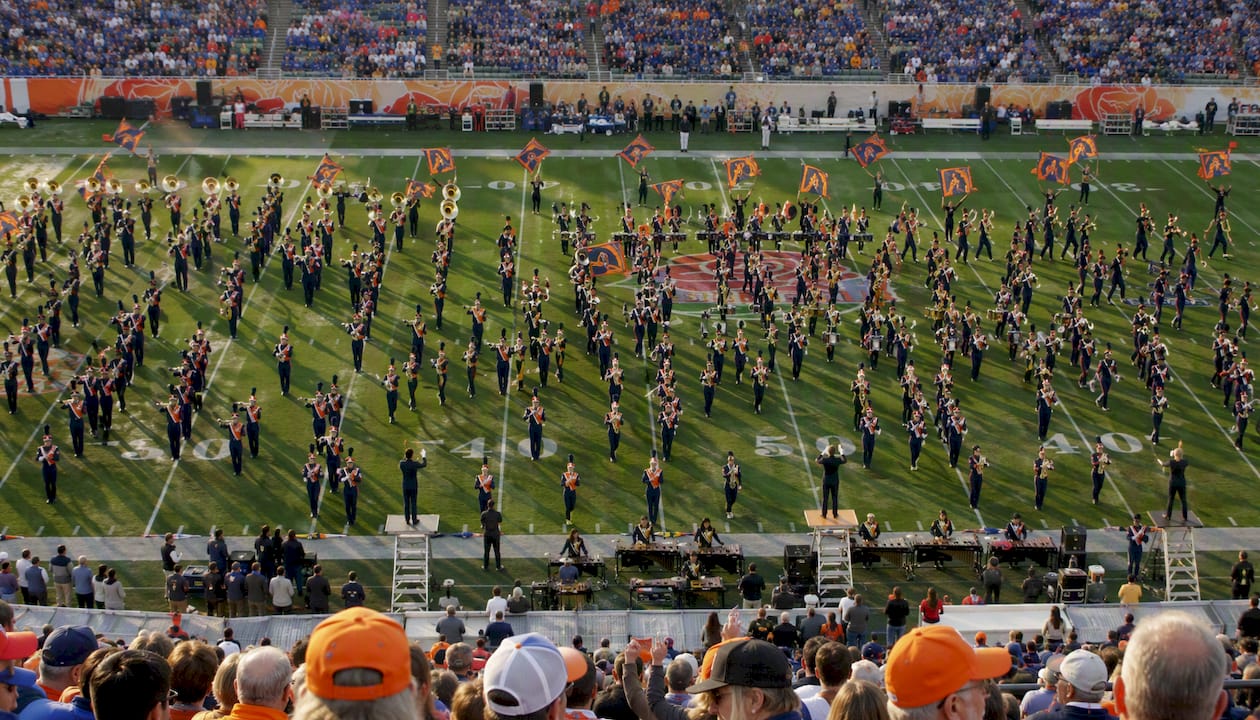
Parade slots are usually the most visible to the public but also the most competitive, often audition-based and booked a year or more ahead. Pregame and halftime windows are typically reserved for the two competing schools’ own bands, with mass band or exhibition slots opened to visiting high school programs during pregame ceremonies or between-quarter breaks. Pep rallies and fan fest performances are lower-pressure, shorter-commitment options that some bowls use to involve local or touring school groups without requiring a formal audition process.
Bowls that regularly build in outside-band or parade participation include:
- Fiesta Bowl, which publishes event-level schedules (opens in a new tab) covering parade routes and fan fest participation windows.
- Military Bowl, known for community and youth-group involvement around the game weekend.
- Larger New Year’s Six bowls, which more often reserve on-field time for the participating universities’ own bands but sometimes open mass-band or exhibition slots.
On-field performance windows at the college level run remarkably short. Marching band coverage of one Big Ten bowl trip noted pregame and halftime blocks of about five minutes each (opens in a new tab), which means any visiting high school slot will likely be even tighter. Build your expectations, and your show design, around minutes, not a full field show.
Restrictions vary by venue: some bowls limit props, flag size, or amplified sound, and a few restrict field access to credentialed performers only. Confirm these details directly with the bowl’s event operations office before finalizing your show concept.
How Far in Advance Should You Start Planning?
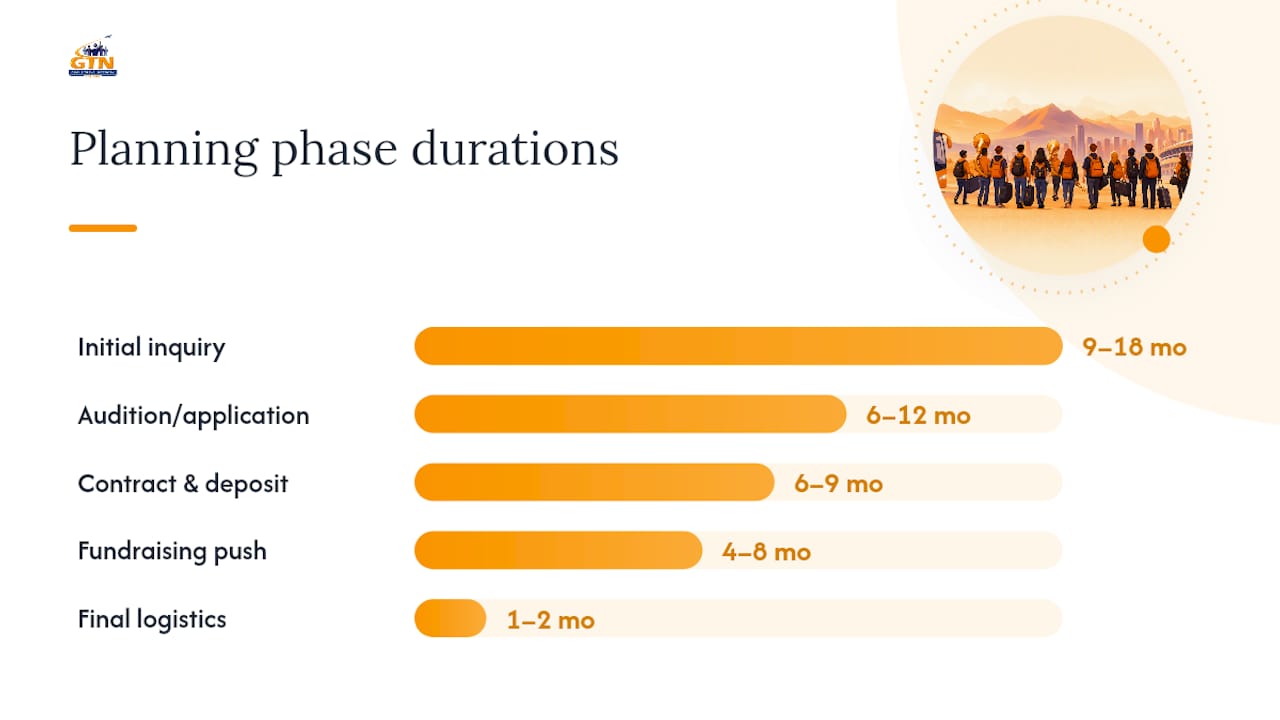
Start the planning process at least 6 to 9 months before your target bowl date, and up to 18 months out if you’re chasing a competitive, audition-based parade slot. Band directors who’ve run these trips consistently say the same thing afterward: they wish they had started sooner, especially balancing travel logistics with finals schedules and instrument transport.
| Phase | Timing Before Trip | What Happens |
|---|---|---|
| Initial inquiry | 9-18 months | Contact bowl organizer or travel planner; confirm interest and rough eligibility |
| Audition/application | 6-12 months | Submit video, roster size, or written application depending on the event |
| Contract & deposit | 6-9 months | Sign with the bowl and your travel vendor; lock hotel and transport blocks |
| Fundraising push | 4-8 months | Run booster campaigns, payment plans, sponsor outreach |
| Final logistics | 1-2 months | Finalize rooming lists, meal counts, medical forms, packing lists |
| Travel & performance | Trip week | Execute the itinerary |
| Post-trip wrap-up | 1-4 weeks after | Reconcile payments, collect feedback, document for next year’s pitch |
Pro Tip: Cross-check your target bowl date against your district’s final exam calendar before you commit to anything. Bowl games cluster around late December and early January, exactly when many schools run finals, and a scheduling conflict discovered in month eight is far harder to fix than one caught in month one.
Must-have milestone dates to calendar immediately: your bowl’s audition or application deadline, your school board’s travel-approval meeting date, your deposit due date with the travel vendor, and your fundraising campaign kickoff. Miss the board-approval window and everything downstream slips.
What Does a Bowl Game Band Trip Typically Cost?
Expect a per-student cost somewhere between $800 and $1,800 for a typical multi-day bowl trip, with the wide range driven mostly by travel distance, lodging class, and whether your group needs air travel or can charter buses. College programs sometimes have most costs covered directly by the athletic department (opens in a new tab) for bowl travel, but high school and youth groups almost always work from a custom, itemized package built around fundraising and family contributions.
The major line items in any honest budget:
- Lodging: Usually the single biggest cost after transportation, priced per room per night across the trip.
- Transportation: Charter buses for regional trips, or a bus-plus-flight combination for cross-country bowls.
- Equipment truck: A dedicated truck for instruments, uniforms, and props, separate from student transport.
- Registration or performance fees: Charged by some bowls or parade organizers for participation.
- Chaperone costs: Lodging, meals, and sometimes a stipend for required adult supervision ratios.
- Meals: Either bundled into a package rate or budgeted per diem.
- Travel protection and insurance: Trip cancellation and medical coverage for the group.
- Contingency and tipping: Bus driver gratuities, incidentals, and a buffer for last-minute cost changes.
Illustrative budget scenarios (per student, four-night trip):
- Low-cost scenario (regional bus trip, shared quad rooms): roughly $800-$1,000.
- Mid-range scenario (500-750 mile trip, double occupancy): roughly $1,100-$1,400.
- High-cost scenario (cross-country trip with air travel): roughly $1,600-$1,800 or more.
Booster and donor support routinely offset a meaningful share of these totals. Florida State’s Marching Chiefs travel program is funded largely through donor gifts, and the same fundraising logic scales down to high school booster clubs running smaller campaigns around a single bowl trip. A fundraising checklist worth running early: sponsor letters to local businesses, a payment-plan option for families, a booster gala or restaurant night, and a dedicated GoFundMe or crowdfunding push timed to your deposit deadline.
What Logistics Does a Bowl Trip Require?
Logistics, not the performance itself, is where bowl trips most often go wrong, and every category below needs a named owner and a written checklist, not a verbal understanding.
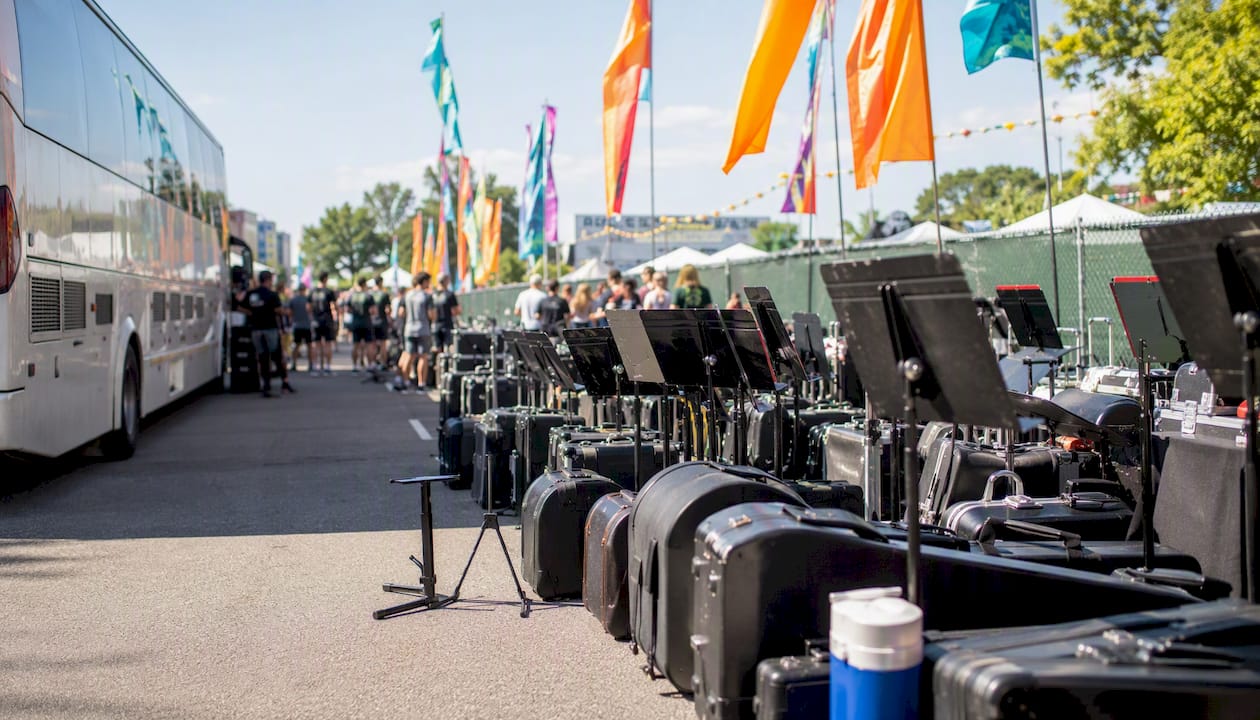
- Instrumentation and crates. Inventory every instrument, case, and prop before departure, and label crates by section so unloading at the venue doesn’t turn into chaos.
- Equipment trucks. Large programs sometimes need a full-size equipment truck. One Big Ten band trip involved roughly 400 students on eight chartered buses plus a 126-foot equipment truck, which shows how fast fleet needs scale with group size.
- Student transportation. Confirm bus capacity, seating charts, and a backup vehicle plan in case of mechanical issues.
- Hotel rooming lists. Finalize room assignments at least two weeks out, and build in gender and grade-level groupings that match your chaperone policy.
- Chaperone assignments and training. Confirm required supervision ratios and brief every chaperone on emergency procedures before departure.
- Medical and insurance forms. Collect signed medical release forms and confirm travel protection coverage for every traveler, staff included.
- Meal plans. Lock in group meal reservations or per diem amounts, and flag dietary restrictions two weeks ahead.
- Emergency plans. Write a one-page emergency protocol with hospital locations, embassy or district contacts, and a communication tree.
- Communication protocols. Set a single group text or app for real-time updates and designate who speaks for the group with venue staff.
Pro Tip: Do a full equipment inventory the week before departure, not the morning of. Programs that skip this step almost always discover a missing mallet bag or a cracked case at the worst possible moment, usually during load-in at the venue with a rehearsal clock running.
Staging at the venue deserves its own plan. Bowl venues typically give visiting groups a narrow load-in and staging window, and arriving without a clear map of where buses park, where instruments stage, and where students line up before the field call wastes minutes you don’t have. A travel logistics guide built for school groups (opens in a new tab) can help you build this out before you ever leave campus.
Why Work With a Group Travel Planner?
Working with a specialist planner saves months of vendor research, catches hidden costs before they hit your budget, and gives you access to vetted hotel, bus, and venue relationships you can’t build from scratch in a single season. That’s the practical argument for not doing this alone.
A capable planner typically handles:
- Custom itineraries built around your bowl’s specific schedule and performance windows.
- Vendor contracting for buses, hotels, and equipment trucks at negotiated rates.
- Instrument and equipment logistics coordination with the venue.
- A dedicated trip coordinator who serves as your single point of contact throughout.
- Online registration so families can sign up and pay without paper forms.
- Flexible payment plans that ease the burden on individual families.
- Travel protection and insurance options built into the package.
Before you sign with anyone, ask these questions: How many bowl or large-scale performance trips have you coordinated? Who is my dedicated coordinator, and are they reachable during the trip itself? What exactly is included in the quoted price, and what counts as an add-on? What happens if the bowl cancels or reschedules? Red flags include vague pricing that changes after deposit, no named point of contact, and an unwillingness to share references from past school clients.
Group Travel Network (opens in a new tab) has coordinated performance trips for school and youth groups across a range of destinations, pairing every group with a dedicated coordinator and building in online registration and payment plans from day one.
| Point | Details |
|---|---|
| Planner value | A specialist handles vendor contracting and logistics you’d otherwise build from zero. |
| Key question | Ask who your named coordinator is and confirm they’re reachable during travel. |
| Red flag | Vague pricing that shifts after deposit is a warning sign of a poorly run vendor. |
What Does a Sample Bowl Game Trip Itinerary Look Like?
A typical five-day bowl trip balances two travel days with rehearsal time, fan events, and one tightly scheduled performance window. Here’s a compact version you can adapt:
- Day 1: Depart campus early morning, travel most of the day, arrive at hotel by evening, quick equipment unload and check-in.
- Day 2: Morning rehearsal at a local field or gym space, afternoon free time or sightseeing, evening pep rally or fan fest performance.
- Day 3: Field rehearsal at or near the bowl venue if access is granted, afternoon uniform and instrument prep, early dinner.
- Day 4 (game day): Early call time, load-in and staging window, five-to-ten-minute performance block, postgame recovery time, celebration dinner.
- Day 5: Morning departure, full travel day home.
Build in generous travel buffers on both ends. Bowl coverage regularly notes two full days of travel each direction for cross-country trips, and treating that as a hard floor rather than a best-case estimate keeps your itinerary from collapsing the first time a bus hits weather delays.
How Do You Plan a Bowl Game Performance?
Short, high-energy arrangements with clear visual staging consistently work better than ambitious full-length shows when your total field window runs three to six minutes. This is not the setting to premiere a complex competition show.
On the artistic side, favor a tight medley over a narrative arc, keep transitions simple enough to execute without a full rehearsal week, and build the drill around visuals that read well on television and from the upper deck, since most of your audience won’t be at field level. A technical checklist matters just as much as the music: confirm microphone needs for any featured soloists, identify the field crew contact who controls load-in timing, and map out staging zones before you arrive so students know exactly where to line up.
Coordinate directly with event staff on load-in windows, rehearsal field access if any is offered, sound and PA availability, and a single production liaison who can answer questions in real time on game day. Get that contact’s name and number in writing before you travel.
What Approvals and Policies Do You Need to Confirm?
Confirm your district’s travel policy, board approval process, and any local rules governing student hours and travel during finals before you finalize a single bowl commitment. This is the step that derails otherwise well-planned trips.
Required documents almost always include:
- School board or superintendent travel approval.
- Signed parental permission forms for every traveling student.
- Medical release and insurance forms.
- Signed vendor contracts with your travel planner and bowl organizer.
- Background checks for all traveling chaperones.
Some university programs operate under specific institutional rules, like the Michigan Marching Band’s policy that defined performance blocks travel to away and postseason games (opens in a new tab) while other members do not. K to 12 programs should not assume college-level rules apply. Verify your own district’s student-hour policies, sometimes referred to informally as an “8-hour rule” governing maximum daily activity hours, directly with your administration rather than assuming a neighboring district’s policy matches yours.
What Makes a Bowl Trip Plan Trustworthy?
A trustworthy bowl trip plan rests on dedicated coordinators, vetted vendor relationships, and written safety and communication protocols, not a verbal handshake with a bus company. That’s the standard worth holding any planner to, including us.
A typical Group Travel Network package for a performance trip includes a dedicated trip coordinator assigned for the full planning cycle, online registration so families can enroll and pay directly, flexible payment plans that spread costs over months rather than one lump sum, and travel protection options covering cancellation and medical needs.
Programs that document past performances and collect director testimonials build a stronger case with their own school boards the next time they pitch a trip. Notre Dame’s band travel page, for example, lists past bowl and neutral-site venues (opens in a new tab) going back several seasons, giving prospective travelers a concrete sense of scale and precedent before they commit.
Ask any planner you’re considering for references from past school clients and a list of comparable trips they’ve coordinated.
Where Can You Find More Bowl Game Planning Resources?
These sources matter because bowl rules, deadlines, and performance specs change from one season to the next, and no article can substitute for checking directly with the organizer running your target event.
- Fiesta Bowl official event site (opens in a new tab) for parade routes and fan fest schedules.
- Notre Dame Band travel page (opens in a new tab) for examples of past bowl and neutral-site venues.
- Group Travel Network’s band trip planning guide (opens in a new tab) for a step-by-step planning framework.
- Trailmark Yearbooks’ guide to documenting group trips (opens in a new tab) for turning your bowl trip into lasting program marketing material.
Always verify audition deadlines, field access rules, and instrumentation restrictions directly with the bowl organizer before finalizing your itinerary.
What Band Directors Get Wrong About Bowl Trips
The conventional advice treats a bowl game band trip like a scaled-up field trip: get permission slips signed, book a bus, show up. That undersells what’s actually a full logistics operation with a hard, unmovable deadline, the kickoff time, and no room to slip.
What’s overrated is the performance itself. Directors pour weeks into arranging the perfect five-minute show and comparatively little time into the boring parts: rooming lists, equipment inventories, and confirming who exactly represents your group when something goes wrong at 2 a.m. in an unfamiliar city. The show will be fine. Bands are good at shows. It’s the unglamorous logistics work that actually determines whether the trip feels triumphant or chaotic.
If I had to name the single highest-leverage move, it’s this: get a dedicated coordinator involved before you finalize your show concept, not after. A planner who knows the venue’s staging quirks and load-in timing will shape your arrangement decisions in ways a director working blind never would.
Ready to Plan Your Bowl Game Trip?
Group Travel Network exists for exactly the scenario this article walks through: a school music program that needs vetted vendors, transparent pricing, and one accountable coordinator instead of a patchwork of individually booked buses and hotels.

What sets this apart from piecing a trip together yourself is the coordinator model. You get one dedicated point of contact who manages vendor contracts, tracks payments through online registration, and stays reachable through the actual travel days, not just during the sales call. Families get flexible payment plans instead of a single intimidating invoice, and your group travels with travel protection built in rather than added as an afterthought. For a trip with a fixed kickoff time and zero room for a scheduling error, that kind of single-threaded accountability is worth more than any discount a self-booked itinerary might save.
Start the process now: request a quote through Group Travel Network’s school group travel planning guide (opens in a new tab) and get a coordinator assigned to your program before your target bowl’s deadline closes.
Sources
- Marching Band and Pep Band | Department of Performing Arts and Technology (opens in a new tab)
- News-gazette (opens in a new tab)
- Donor Support to Send Marching Chiefs on the Road for Three Games in 2026 – Florida State University (opens in a new tab)
- Travel | Notre Dame Band (opens in a new tab)
- Frequently Asked Questions — Michigan Marching Band (opens in a new tab)
FAQ
What Is the 8-Hour Rule for Marching Band Practices?
The “8-hour rule” refers to district-level policies capping the number of hours students can be engaged in school-sponsored activity, including rehearsal and travel, in a single day. Rules vary by district, so confirm your own school’s specific policy with your administration rather than assuming a standard figure applies everywhere.
How Much Does It Cost to Go to a Bowl Game?
For a high school band, expect roughly $800 to $1,800 per student for a multi-day bowl trip, depending on travel distance, lodging, and whether air travel is required. College programs sometimes have travel costs covered directly by the athletic department, but school and youth groups typically work from a custom package supplemented by fundraising.
What Is the Biggest College Marching Band in the US?
Band sizes vary by season and program, and rankings shift year to year, so no single band holds a fixed, permanent title as largest. Several major university programs, including bands that travel to multiple bowl and away games each season, regularly field several hundred members.
What Are the Top High School Marching Bands in the US?
Rankings of high school marching bands vary by competition circuit, region, and year, so there’s no single agreed-upon top-three list. Programs that perform well at state and national competitions, and that travel regularly to showcase events, tend to build the strongest reputations over time.
How Do I Choose a Bowl Game Trip Planner?
Look for a planner offering a dedicated trip coordinator, transparent all-inclusive pricing, online registration, and travel protection, then ask for references from past school clients. Group Travel Network provides each of these as standard parts of a performance trip package.
Recommended
- Music Band Travel For School Directors: 2026 Guide • Group Travel Network (opens in a new tab)
- Band Trip Planning Guide: Organize Student Music Travel (opens in a new tab)
- What Is Travel For School Bands: A Director’s Guide • Group Travel Network (opens in a new tab)
- Team Travel Coordination Tips For Schools In 2026 • Group Travel Network (opens in a new tab)