

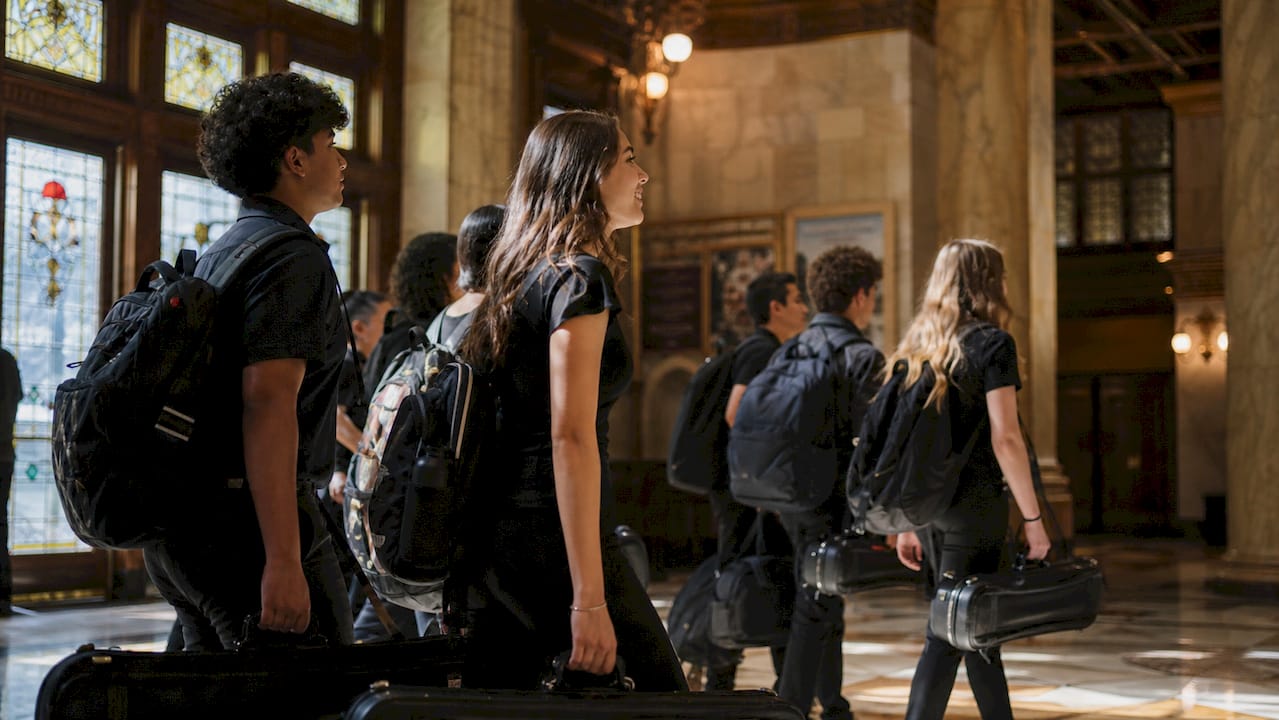
If you need a big touring show, the Auditorium Theatre or Chicago Theatre are your best bets. Student and community performances fit best in mid-size halls like the Harris Theater or neighborhood houses like the Goodman. Intimate jazz belongs at the Green Mill, and experimental or black-box theater lives at The Den. Success for visitors means locking in the right seat and show; for organizers, it means confirming capacity, accessibility, and loading logistics before the bus ever leaves the lot.
TL;DR:
- Chicago’s major venues vary by event type, with auditoriums like the Harris Theater and Auditorium Theatre suited for large-scale, acoustic, or dance performances.
- The Salt Shed and Wrigley Field serve as large indoor and outdoor venues for touring bands and stadium concerts, respectively, with capacities exceeding 3,600.
- Booking requires early coordination on logistical details such as loading zones, accessibility, and rental costs, often six months to a year in advance for student groups.
- Smaller black-box and neighborhood venues like The Den Theatre offer flexible, intimate spaces ideal for experimental, school, or fringe productions.
- Confirming current capacity, technical needs, accessibility options, and rental terms directly with the venue ensures smooth planning and avoids last-minute surprises.
Table of Contents
- Best Performance Venues Chicago Has for Every Type of Show
- Which Venue Type Fits Your Event
- Booking a Chicago Venue: Steps and Group Logistics
- Finding Rehearsal Space and Short-Term Rentals
- Accessibility Features Across Chicago Venues
- Parking and Getting to the Show
- What Chicago Venues Typically Charge to Rent
- Sound, Lighting, and Staging Equipment to Expect
- Catering, Merchandise, and Insurance Rules to Know
- Why Booking a Chicago Venue Takes More Than a Phone Call
- Where to Verify Venue Details
- Sources
- FAQ
Best Performance Venues Chicago Has for Every Type of Show
Chicago’s performance scene splits cleanly into a few categories: historic grand halls, flexible mega-venues, neighborhood black boxes, and a handful of clubs that have outlived every trend since the 1900s. Below are the nine venues that come up again and again when people search for the best theaters in Chicago, live music venues Chicago, or top concert halls Chicago, plus a few neighborhood picks worth knowing.
Harris Theater for Music and Dance
The Harris Theater seats 1,499 and anchors Chicago’s dance and classical music scene, supporting more than 30 resident companies (opens in a new tab) that use it as a home stage throughout the year. It sits in Millennium Park, walkable from most downtown hotels, and its walk-up box office opens 60 minutes before curtain. Ask about resident-company rental terms if you’re bringing a school ensemble. It’s the pick for orchestral, choral, or dance programs that need real acoustics without arena-scale overhead.
Auditorium Theatre for Historic Large-Scale Productions
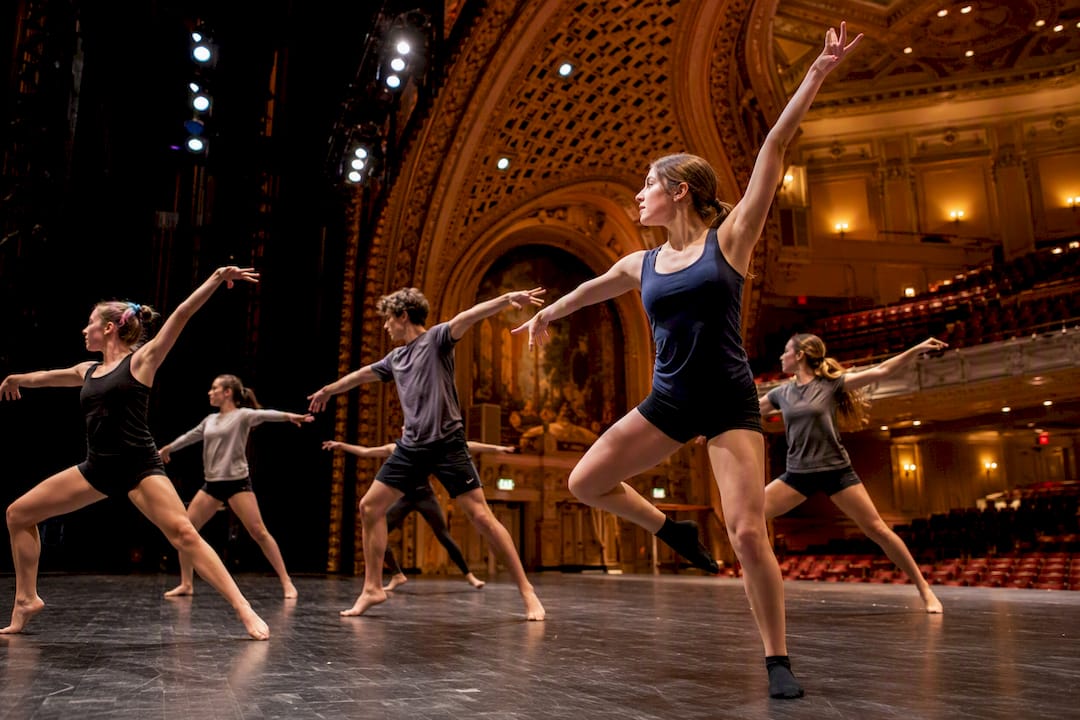
Opened in 1889, the Auditorium Theatre is Chicago’s grande dame, a landmark hall built for opera and still hosting Broadway tours, ballet, and large-scale concerts. Box office hours run Monday through Friday, 12:00 PM to 5:00 PM (opens in a new tab), with the window opening two hours before any performance on show days. Located in the South Loop near Roosevelt Road, it’s the venue to book when a production needs grandeur and a few thousand seats.
The Salt Shed for Large Indoor or Outdoor Events
A former industrial salt storage facility on the North Side, The Salt Shed (opens in a new tab) now runs anywhere from 3,600 people indoors to 5,500 outdoors, making it Chicago’s go-to for touring bands that have outgrown clubs but aren’t quite arena acts yet. It’s a favorite among people searching live music venues Chicago, thanks to its riverside outdoor stage and warehouse-scale indoor hall.
The Den Theatre for Black-Box and Experimental Work
Wicker Park’s Den Theatre (opens in a new tab) runs multiple small rooms under one roof, hosting comedy, fringe theater, and interdisciplinary rentals. Its intimate scale (rooms generally seat under 300) makes it the natural home for experimental theatre, storefront companies, and student showcases that want a real stage without a 1,000-seat house around them.
Goodman Theatre for Community and Youth Programming
The Goodman, in the Loop, is one of Chicago’s flagship resident theater companies and runs youth programming and community partnerships that make it unusually accessible to school groups. Its two stages (the Albert and the Owen) split large mainstage productions from smaller studio work.
Chicago Theatre for Iconic Big-Name Shows
The Chicago Theatre’s marquee on State Street is one of the most photographed venue fronts in the country, and inside it seats several thousand for touring comedians, concerts, and one-night specials. It’s the closest thing Chicago has to a mid-size arena in the heart of the Loop.
Thalia Hall for Rock, Indie, and Alt Bookings
Built in 1892 as a Pilsen community hall, Thalia Hall now runs as a mid-size concert venue with a capacity in the 800 range, favored by touring indie and rock acts who want ornate architecture over a generic black room.
Green Mill Cocktail Lounge for Classic Jazz
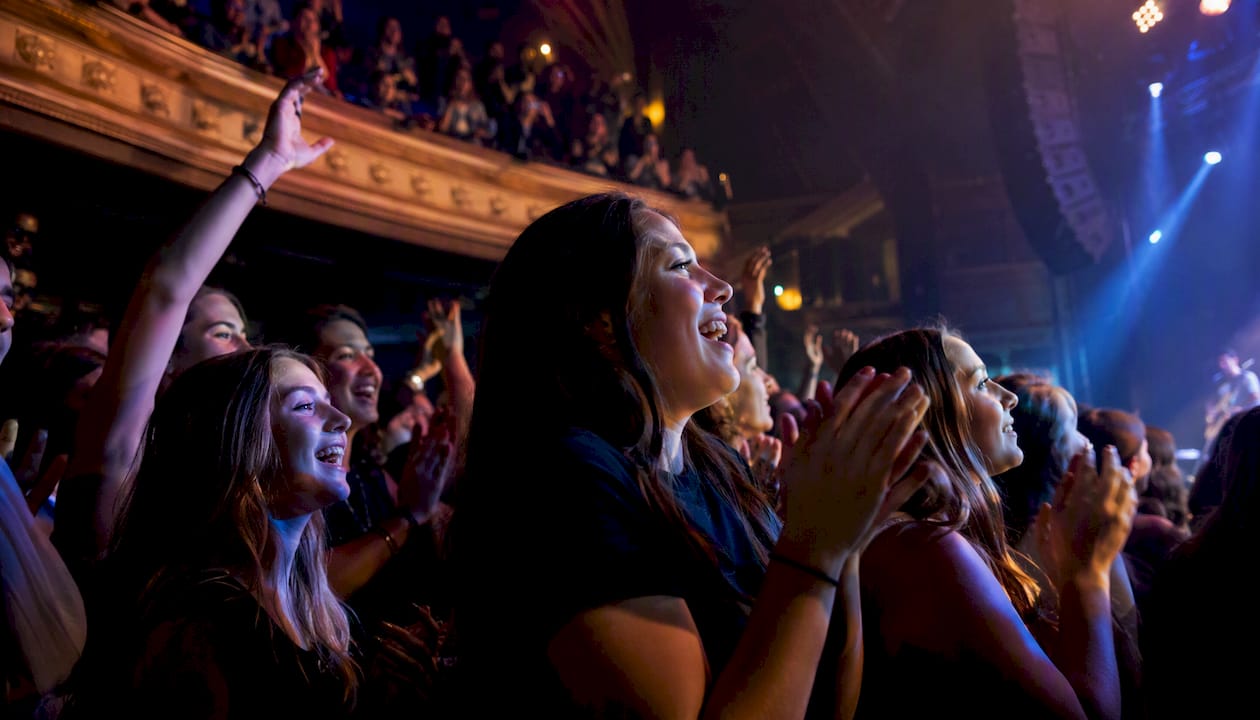
Open since 1907 in Uptown, the Green Mill is Chicago’s most storied jazz club, small enough (under 200 capacity) that every seat feels close to the stage. No booking department to negotiate with here: it’s a nightly cover-charge club, not a rental venue, but it belongs on every performing arts Chicago list.
Wrigley Field for Stadium Concerts
Wrigley Field hosts a short slate of stadium concerts each summer, seating tens of thousands for arena-scale tours that no theater in the city could hold. It’s the extreme end of the venue spectrum, useful context when you’re scaling a booking decision up or down.
Neighborhood houses like Porchlight Music Theatre, Court Theatre, TimeLine Theatre, and Theater Wit round out the list for anyone comparing Chicago’s community and educational theater options (opens in a new tab), especially useful if you’re planning a student trip built around live performance Chicago experiences.
Which Venue Type Fits Your Event
Matching the event to the room matters more than picking a famous name. Here’s how the categories break down:
- Stadium or arena (Wrigley Field): audiences in the tens of thousands, built for amplified sound over live acoustics, best for major touring acts.
- Concert hall or historic theater (Auditorium Theatre, Chicago Theatre): 2,500 to 4,000 seats, built acoustics, ideal for touring productions and orchestral work.
- Mid-size theater (Harris Theater, Thalia Hall): 800 to 1,500 seats, strong for dance, chamber music, and indie concerts.
- Black-box or studio space (The Den Theatre): under 300 seats, flexible staging, best for experimental work and student showcases.
- Jazz or blues club (Green Mill): under 200 capacity, nightly programming, not typically available for outside rentals.
- Outdoor shed or flex space (The Salt Shed): 3,600 to 5,500 capacity, weather-dependent, suited to large touring bands.
Before you shortlist anything, run through five criteria: expected audience size, technical needs (rigging, AV, and stage depth), acoustics and sightlines, ADA compliance, and how easily a bus or group can access the neighborhood. A tech-heavy rock show needs rigging points a black box may not have; a spoken-word student showcase needs neither rigging nor 3,000 seats.
Booking a Chicago Venue: Steps and Group Logistics
Booking any of these venues starts the same way: contact the venue’s rental or group sales office, confirm lead times, and get every fee in writing before you commit a deposit.
- Confirm box office hours and whether the venue uses AXS, Ticketmaster, or an in-house ticketing partner, since the Auditorium and similar halls often shift ticketing platforms by event.
- Ask about deposit percentage, cancellation terms, and whether general liability insurance is required from your group or covered by the venue.
- Nail down arrival windows and bus-loading zones well ahead of the date. Loading docks at historic theaters are often narrow, and permitted drop-off spots downtown can be blocks from the stage door.
- Confirm chaperone ratios and mobility needs with venue staff in advance, since accessible seating and backstage access sometimes require separate booking.
- Ask specifically about subsidized rental rates or resident-company discounts. Harris Theater and Auditorium Theatre both work with resident and community organizations on reduced terms, and it never hurts to ask even if you’re not a resident company.
Pro Tip: Call the box office directly rather than emailing a general inbox. Historic venues like the Auditorium route rental inquiries through a small events team, and a five-minute call often gets you a straight answer on availability that an email chain won’t.
Organizers frequently underestimate how much time on-site logistics eat up. Locking in loading zones, mobility accommodations, and chaperone coverage a full season ahead, not a few weeks out, is what separates a smooth performance day from a scramble.
Finding Rehearsal Space and Short-Term Rentals
Need a room for a week of rehearsals, not a full production run? Start with the League of Chicago Theatres’ Space Available page (opens in a new tab), which lists rehearsal rooms and short-term rentals posted directly by venues and companies across the city.
- The Den Theatre and similar multi-room venues rent individual studios for rehearsals, workshops, and small productions, often by the day or week.
- Bramble Arts Loft and comparable multidisciplinary spaces offer flexible black-box rooms sized for anywhere from a dozen performers to a full ensemble.
- When negotiating a short-term rental, ask specifically about insured rental agreements, what’s included in the tech package, and whether nonprofit or educational rates apply. Booking these rooms usually means contacting an artistic director directly rather than going through a standard ticketing office.
Accessibility Features Across Chicago Venues
Most established Chicago venues, including the Auditorium Theatre, Harris Theater, and Chicago Theatre, offer wheelchair-accessible seating, accessible restrooms, and assistive listening devices available at the box office or house management desk. Larger historic houses typically have designated accessible entrances separate from the main lobby doors, which matters for group timing since those entrances can require extra walking distance or a different drop-off point.
Assistive listening systems (usually infrared or FM headsets) are standard at the major halls but need to be requested in advance for larger groups, since venues often stock a limited number of units. Sign language interpretation and audio description are typically available for select performances rather than every show, so confirm the specific date rather than assuming a general accessibility policy covers it.
Smaller neighborhood venues and black-box spaces vary more widely. Some historic buildings, including a few in Pilsen and Wicker Park, have limited elevator access due to their age, so if your group includes wheelchair users, call ahead rather than assume. This is one area where a five-minute phone call saves an organizer from a genuinely bad surprise on performance day.
Parking and Getting to the Show
Downtown venues like the Auditorium Theatre and Chicago Theatre sit within a few blocks of multiple CTA train lines, and for solo visitors, the train is usually faster and cheaper than driving into the Loop. Parking garages near the Auditorium and Harris Theater run standard downtown event pricing, and rates spike on nights with overlapping shows, so booking a garage spot in advance through a reservation app saves both money and stress.
Groups arriving by bus face a different set of constraints. Loading zones near Loop venues are tightly regulated, and drop-off often happens a block or more from the venue entrance depending on street closures that night. The Salt Shed and Thalia Hall, both outside the immediate downtown core, tend to have more flexible bus access but less immediate CTA coverage, so budget extra walking time or arrange group transit from the nearest station.
For any group larger than a single bus, confirm the exact drop-off and pickup location with the venue’s operations team, not just the box office, since those are often two different departments with different information.
What Chicago Venues Typically Charge to Rent
Rental costs vary enormously by venue class, and few venues publish flat rate cards since pricing depends on date, run length, and whether you need staff or equipment beyond the base rental.
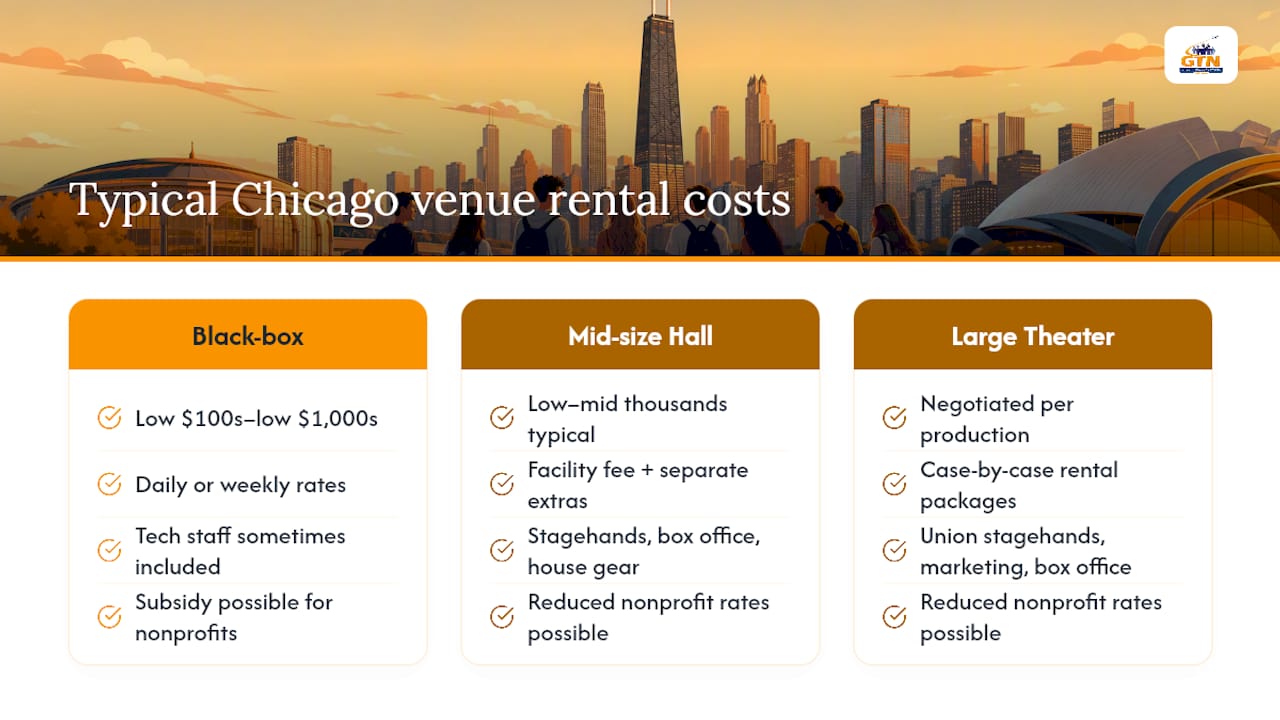
Black-box and neighborhood spaces like rooms at The Den Theatre tend to run on daily or weekly rates, often in the low hundreds to low thousands of dollars depending on room size and whether tech staff is included. Mid-size halls like Thalia Hall or Harris Theater typically charge a flat facility fee plus separate charges for stagehands, box office staff, and any house equipment beyond what’s already installed. Large historic theaters like the Auditorium negotiate rental packages case by case, factoring in union stagehand requirements, marketing support, and box office services, which is why a rental quote for a full production run can look dramatically different from a single-night booking.
Across every tier, ask for a full breakdown that separates the base facility fee from add-ons: security, ushers, box office staff, and cleaning are common line items that get missed in a first quote. Educational and nonprofit groups should always ask directly whether subsidized rates apply, since several major venues, including Harris Theater, offer reduced pricing for resident or community organizations that isn’t advertised publicly.
Sound, Lighting, and Staging Equipment to Expect
Historic houses like the Auditorium Theatre and Chicago Theatre come with in-house sound systems, house lighting rigs, and fly systems built for touring productions, but touring shows almost always bring supplemental gear and require certified union stagehands to operate house equipment. Confirming load-in door dimensions and available rigging points early avoids a scheduling problem that surfaces during tech week rather than during booking.
Mid-size venues like Harris Theater and Thalia Hall typically offer a house PA, a basic lighting rig, and a stage manager’s console, adequate for most concerts and dance programs without additional rental gear. Black-box spaces such as The Den Theatre run leaner: expect a modest lighting grid, a portable sound system, and flexible staging risers rather than a fixed proscenium setup, which is exactly what makes them useful for experimental staging.
Outdoor and flex venues like The Salt Shed bring their own production infrastructure but require touring acts to plan around weather contingencies and outdoor power needs that indoor venues never have to consider. Whatever the venue, ask for a tech spec sheet before finalizing a booking, not after signing the contract.
Catering, Merchandise, and Insurance Rules to Know
Most Chicago venues restrict outside catering, either barring it entirely or requiring it to go through an approved in-house vendor, particularly at venues with existing food and beverage concessions like the Chicago Theatre and Auditorium. If your group plans a reception or post-show gathering, confirm the catering policy before booking, not after signing.
Merchandise sales for touring acts and student groups alike typically require a cut of gross sales paid to the venue, along with advance notice of what’s being sold, since fire code and space constraints limit table placement in most lobbies. Insurance requirements are close to universal across professional venues: expect to provide a certificate of general liability insurance naming the venue as an additional insured party, particularly for any rental involving a school or youth group. Smaller black-box rentals sometimes bundle a basic policy into the rental fee, but larger halls almost always require the renting organization to carry its own coverage.
Why Booking a Chicago Venue Takes More Than a Phone Call
Most groups planning a Chicago performance trip assume the hard part is picking the venue. It isn’t. The hard part is everything downstream of that choice: timing a bus arrival around a loading dock that only opens for a 20-minute window, making sure a student who uses a wheelchair has a confirmed accessible route to backstage, and knowing which venue actually answers rental emails versus which ones need a phone call.
That’s where a dedicated trip coordinator earns their keep. Group Travel Network builds itineraries around the realities of performance-day logistics, not just the booking confirmation, coordinating vendor contacts, flexible payment plans, and performance-specific scheduling so band directors and school administrators aren’t chasing five different departments at five different venues the week before a show.
— Donovan
Where to Verify Venue Details
Always confirm current capacity, box office hours, and rental terms directly with the venue. Start with the Harris Theater, Auditorium Theatre, and the League of Chicago Theatres’ Space Available listings for rehearsal and rental space.
Planning a school performance trip built around one of these venues? Group Travel Network’s performance tours page (opens in a new tab) walks through how coordinators handle venue booking, transportation, and lodging as one connected itinerary rather than separate headaches, and pairs well with guidance on planning a school music tour (opens in a new tab) or organizing student performance tours (opens in a new tab). Bands and dance ensembles coordinating rehearsal schedules around a trip can also find useful scheduling tactics in StudioFlare’s guide to managing studio attendance (opens in a new tab).
Sources
- Harris Theater | Resident companies (opens in a new tab)
- The Auditorium | Buy tickets / box office info (opens in a new tab)
- The Den Theatre | Comedy & Live Shows in Chicago (opens in a new tab)
- Space Available – League of Chicago Theatres (opens in a new tab)
- The Salt Shed — Wikipedia (opens in a new tab)
FAQ
What are the big concert venues in Chicago?
The largest and most prominent concert venues in Chicago include the Auditorium Theatre, Chicago Theatre, The Salt Shed, and Wrigley Field, ranging from roughly 3,600 seats indoors to tens of thousands for stadium shows.
What are the top concert venues in the US?
Rankings vary by source, but Chicago consistently places among the top American cities for live music thanks to venues like the Auditorium Theatre, The Salt Shed, and Thalia Hall, alongside comparable landmark halls in cities like New York, Nashville, and Los Angeles.
What concerts are happening in Chicago in 2026?
Concert calendars change constantly and vary by venue, so check the official listings pages for the Auditorium Theatre, Chicago Theatre, and The Salt Shed directly for the current schedule.
What is the largest concert venue in Illinois?
Wrigley Field is the largest performance venue in Illinois by capacity when hosting stadium concerts, far exceeding any indoor theater or hall in the state. Among dedicated indoor and flexible event spaces, The Salt Shed’s outdoor configuration, holding up to roughly 5,500 people, ranks among the largest in Chicago.
How far in advance should I book a Chicago venue for a student group?
Most historic and mid-size venues recommend booking six months to a year ahead for student and group performances, especially during spring and fall school-trip season when calendars fill quickly.
Recommended
- Student Travel Agent • Group Travel • Destination Chicago (opens in a new tab)
- Performance Tour Destinations Explained For Educators In 2026 • Group Travel Network (opens in a new tab)
- Student Travel Agency • Group Travel • Performance Tours (opens in a new tab)
- How To Select Performance Trip Destinations: 2026 Guide • Group Travel Network (opens in a new tab)