


TL;DR:
- Selecting the right tour depends on educational goals, ensemble size, budget, and safety considerations.
- Traditional ensemble tours are inclusive and scalable, while boutique tours offer personalized, high-level experiences.
- Multi-ensemble tours maximize participation but involve higher logistical complexity and planning detail.
Planning a student performance tour is one of the most rewarding and complex decisions a school administrator or band director will make. You have to weigh educational goals, student safety, ensemble size, funding realities, and venue requirements all at once, often with limited time and support. The right tour format can transform a school music program, give students a defining experience, and build community across grade levels. The wrong choice can drain budgets, frustrate parents, and leave students without the meaningful outcomes the trip was supposed to deliver. This guide breaks down each major tour type so you can match the format to your school’s specific needs.
Table of Contents
- Key criteria for selecting student performance tours
- Traditional ensemble tours
- Boutique and audition honor tours
- Combined multi-ensemble and collaborative tours
- Comparison of performance tour types
- Our perspective: the format is not the destination
- Plan your next performance tour with Group Travel Network
- Frequently asked questions
Key Takeaways
| Point | Details |
|---|---|
| Tour selection framework | Identify clear educational goals and logistical limits before choosing a tour type. |
| Three main tour types | Traditional, boutique, and collaborative tours each offer unique benefits for different school needs. |
| Funding and inclusion | Title I schools must plan for funding gaps; collaborative tours can maximize inclusion and participation. |
| Venue and repertoire | Check all venue restrictions and repertoire requirements early to avoid rejections. |
Key criteria for selecting student performance tours
Before reviewing the tour types themselves, every administrator and educator needs a clear framework for evaluating options. Jumping straight to destinations and price quotes without this foundation is one of the most common planning mistakes.
Educational objectives come first. What do you want students to gain? Cultural exposure, adjudication experience, collaborative performance, or professional-level presentation skills? Your answer shapes everything from destination to itinerary structure. A tour built around festival adjudication looks completely different from one designed around community engagement in a new city.
Ensemble makeup matters more than most people realize. A tour designed for a 120-piece marching band has different venue requirements, transportation needs, and repertoire demands than a tour for a 20-voice chamber choir. You also need to think carefully about repertoire. As noted in a detailed breakdown of tour rejections (opens in a new tab), some venues enforce strict sacred or secular repertoire restrictions, and performing the wrong type of music can get a group turned away entirely, even after the trip is already booked.
Budget and access are not secondary concerns. They are often the deciding factor. Coordinating school tours for Title I schools or under-resourced programs requires a fundamentally different approach than planning for a well-funded district. Fundraising capacity, payment flexibility, and grant eligibility all need to factor into which tour format is realistic.
Safety, inclusivity, and scalability are the three filters every option must pass. Can this tour safely accommodate your full student population? Does it exclude students based on audition or income? Can it grow if more students want to participate?
Here are the core criteria to evaluate before choosing a tour type:
- Learning outcomes and cultural exposure goals
- Ensemble size and instrumentation
- Repertoire type (sacred, secular, mixed)
- Budget per student and fundraising runway
- Safety protocols and chaperone ratios
- Venue requirements and itinerary completeness
- Inclusivity and accessibility for all students
- Scalability for larger or smaller group sizes
Pro Tip: Always ask tour providers whether their packages support multi-ensemble combinations. Many schools have both a band and a choir, and finding a provider who can handle both groups on one itinerary saves significant cost and planning time. Strong music tour opportunities are designed with this flexibility built in.
One statistic worth noting: tours that lack complete, documented itineraries face a measurably higher rate of venue rejections. Incomplete paperwork, missing safety plans, and unconfirmed performance slots are among the top reasons tours get turned away before students ever board a bus.
Traditional ensemble tours
Traditional ensemble tours are the backbone of student performance travel. These are the classic band trip, choir festival tour, and orchestra showcase formats that most directors have experienced themselves as students. They work for good reasons, but they also come with real trade-offs worth understanding.
Large ensemble tours are built for scale. A traditional band tour might include 80 to 200 students, full instrumentation, and a performance schedule built around regional or national music festivals. Destinations often include historically significant cities like Washington D.C., Boston, New Orleans, or Chicago, where students can connect music performance with broader cultural and historical learning. Theme parks with dedicated music festival programs are also extremely popular because they combine performance with recreation, which helps with student buy-in and parent support.
These tours typically center on adjudicated festivals, where ensembles receive ratings and written feedback from professional judges. That structure creates a high-stakes performance context that motivates serious preparation and rewards disciplined ensemble work. Some directors find that nothing else motivates a section like knowing their performance is being evaluated on record.
There is an ongoing debate in music education about whether this presentation model serves students best. As discussed in a piece on music education’s purpose (opens in a new tab), traditional ensembles scale inclusively and serve broad student populations, but boutique or contemporary formats may offer more personal relevance for individual students. High-stakes adjudication builds one set of skills. Joy-focused, participatory performance builds another. Neither is inherently better, but they serve different goals.
Advantages of traditional ensemble tours:
- Scalable to large groups, making them more cost-effective per student
- Inclusive, since most students can participate regardless of skill level
- Easier to fundraise for because of widespread community familiarity
- Strong itinerary templates from experienced providers
- Excellent for building program reputation and community support
Disadvantages:
- Logistical complexity increases significantly with group size
- Venue restrictions can be hard to meet for mixed repertoire programs
- Diverse skill levels within a large ensemble can create tension
- Less personalized experience for advanced students
If your priority is reaching as many students as possible and building a program-wide experience, the traditional ensemble tour is the right tool to showcase student talent. The tour group advantages in shared travel experiences, especially for first-time travelers, are hard to replicate in smaller formats.
Boutique and audition honor tours
Not every performance tour is designed for the full ensemble. Boutique tours and honor tours serve a fundamentally different purpose: they offer a more intensive, selective, and often internationally focused experience for students who are ready for that level of challenge.
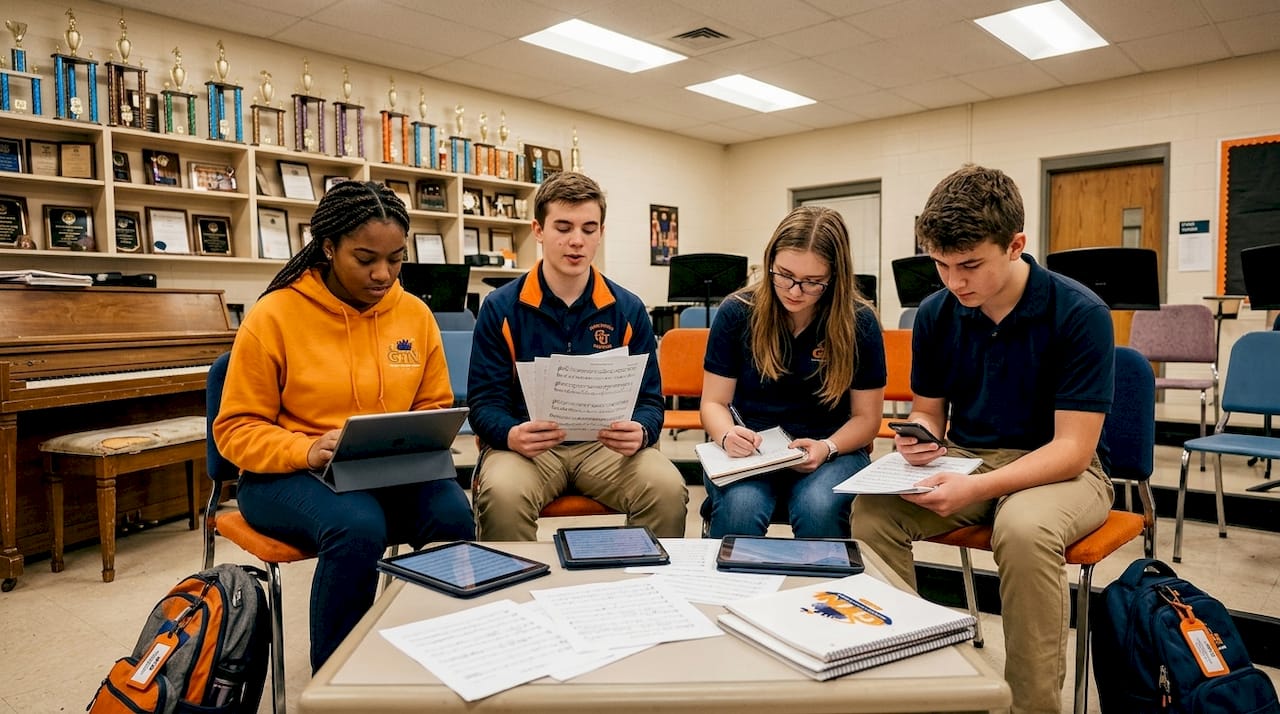
Honor tours typically require an audition process. Students submit recordings or perform live for a panel, and only selected musicians participate. These tours often affiliate with state or national music organizations and carry significant prestige. Destinations tend to be high-profile: New York City’s Carnegie Hall, Vienna’s Musikverein, or major European music capitals. The experience is curated for serious musicians, and the cultural depth of the itinerary reflects that.
Boutique tours serve a similar population but are usually organized directly by the school rather than through an honor organization. A director might take their top jazz combo to a professional recording studio in Nashville, or bring a select wind ensemble to perform at a major university music department. The group size is small, typically 10 to 30 students, which allows for a level of personalization that large ensemble tours simply cannot provide.
As tour planning research highlights, boutique and audition-based tours offer heightened relevance and deeper engagement, but they sacrifice scalability and can create real equity concerns. When only 15 students out of a 90-person band get to go on the “special trip,” the students left behind notice. Directors need to be thoughtful about how they communicate the purpose and selection process.
“The most meaningful performance experiences are those where students feel both challenged and seen. A boutique tour done right gives students a professional context they can grow into for the rest of their lives.” This is the argument for boutique formats, and it is a compelling one when the conditions are right.
Advantages of boutique and honor tours:
- Deeply personalized and culturally immersive experiences
- High artistic relevance for advanced students
- Strong resume and college application value
- Opportunities for mentorship with professional musicians
Disadvantages:
- Funding challenges, especially for students from lower-income families
- Audition requirements limit access and can feel exclusionary
- Less scalable, so most of your program does not benefit directly
- Higher cost per student than large ensemble formats
To explore what performance travel looks like at this level of customization, it helps to work with providers who specialize in building these kinds of curated itineraries rather than adapting a standard package.
Combined multi-ensemble and collaborative tours
The most complex and potentially most rewarding format is the combined multi-ensemble tour, where your band, choir, orchestra, or jazz ensemble travel together and share the performance experience. This format is growing in popularity because it maximizes participation while building cross-ensemble community within a school’s music program.
A combined tour might feature a joint concert in a historic venue where the choir performs one set, the band performs another, and they close together with a combined piece. That kind of performance requires coordination that does not happen by accident. It requires detailed scheduling, clear venue agreements, and a provider with genuine experience managing multiple groups simultaneously.
The planning challenges are real. As documented in a review of common tour rejection reasons, multi-ensemble combinations are among the most frequently rejected tour formats at certain venues, not because of the groups themselves, but because the itineraries submitted are incomplete or fail to account for combined sound requirements, stage dimensions, or setup time between ensembles. Venues that can accommodate a 60-voice choir may not have the stage depth for a full concert band, and providers who do not check these details in advance can create serious problems on the day of performance.
Working with a provider experienced in group tour coordination is not optional for this format. It is essential.
Advantages of combined multi-ensemble tours:
- Most inclusive format, reaching the widest range of students
- Builds cross-program relationships and school music community
- Maximizes educational and cultural outcomes per dollar spent
- Memorable shared experiences across different ensemble types
- Stronger fundraising case because more families are invested
Disadvantages:
- Logistical complexity is significantly higher than single-ensemble tours
- Higher risk of venue rejections without careful itinerary planning
- Scheduling conflicts between rehearsals and travel can be harder to manage
- Requires a provider with specific multi-group experience
Pro Tip: When planning a combined tour, ask your provider for a venue-by-venue breakdown of stage dimensions, sound system specs, and setup/breakdown time windows. Any provider worth working with should have this information readily available and should have confirmed it directly with the venue before presenting you with an itinerary.
Comparison of performance tour types
Now that each format has been outlined in detail, here is a side-by-side comparison to support your school’s decision-making process.
| Feature | Traditional ensemble | Boutique or honor | Multi-ensemble collaborative |
|---|---|---|---|
| Group size | Large (80 to 200+) | Small (10 to 30) | Varies (combined) |
| Inclusivity | High | Low (audition-based) | Very high |
| Cost per student | Lower | Higher | Moderate to high |
| Educational depth | Moderate to high | Very high | High |
| Cultural exposure | Good | Excellent | Good to excellent |
| Scalability | Excellent | Limited | Moderate |
| Logistical complexity | Moderate | Moderate | High |
| Best for | Whole-program participation | Advanced or elite students | Multi-department programs |
| Funding access | Easier | Harder | Moderate |
| Title I suitability | Most accessible | Challenging | Varies by provider |
As noted in research on tour rejection edge cases, Title I schools and under-resourced programs face specific barriers across all three formats. Funding gaps, limited fundraising capacity, and reduced access to experienced travel vendors can affect the quality and feasibility of any tour type. Schools in this category should prioritize providers who offer flexible payment plans, scholarship options, and experience working with grant-funded travel programs.
For schools considering their first international experience, international student tour benefits are well-documented, particularly for cultural exposure and student growth outcomes.
Our perspective: the format is not the destination
After working with hundreds of school music programs, we have seen one pattern repeat itself: directors choose the tour format based on what they experienced as students, not what their current program actually needs. That instinct is understandable but limiting.
A director who grew up going to Disney-style festival tours defaults to that format even when their ensemble is small, advanced, and would benefit enormously from a boutique experience in a professional venue. A director who did an honor tour in high school assumes that model is out of reach for their Title I program and never investigates whether it could work with the right funding partner.
The uncomfortable truth is that the right tour format is rarely obvious without honest self-assessment. It requires you to look at your ensemble as it actually exists today, not as you hope it will be in three years. What do your students need right now to grow as musicians and as people? That question, answered honestly, should drive the format decision. Everything else, destinations, vendors, budgets, flows from there.
We also believe strongly that no tour format is inherently more valuable than another. A well-executed traditional ensemble festival can be just as transformative as a boutique Carnegie Hall performance, if the preparation is right and the students are genuinely invested. Format matters less than intention.
Plan your next performance tour with Group Travel Network
Choosing the right tour format is only the first step. Executing it well requires a partner who understands both the educational stakes and the logistical realities of moving student musicians from a school building to a performance stage in another city or country.
At Group Travel Network, we specialize in exactly that. Our team has experience coordinating traditional ensemble tours, boutique honor trips, and complex multi-ensemble itineraries for schools of all sizes and funding levels. We handle venue confirmations, itinerary documentation, transportation logistics, and safety protocols so you can focus on preparing your students to perform at their best. Whether you are planning your program’s first major tour or looking to take an established trip to the next level, we are ready to help you build something your students will remember for the rest of their lives. Reach out today to start the conversation.
Frequently asked questions
What are the main differences between traditional, boutique, and collaborative school performance tours?
Traditional tours are inclusive and scalable for large ensembles, boutique and honor tours serve smaller, audition-selected groups with deeper customization, and collaborative tours combine multiple ensembles for the widest participation. As explored in the music education debate, each format serves a distinct educational goal, and the right choice depends on your program’s current needs.
How can Title I schools overcome funding challenges for performance tours?
Title I schools should actively seek dedicated music education grants, build multi-year fundraising timelines, and work with tour providers who offer installment payment plans and scholarship support. Research on tour access barriers confirms that specialized providers with equity-focused services make the biggest difference for under-resourced programs.
Are there repertoire restrictions for school music tours?
Yes. Some venues have firm policies requiring exclusively sacred or exclusively secular repertoire, and performing outside those guidelines can result in rejection or cancellation. Always confirm venue repertoire rules before finalizing your performance program.
What are best practices for planning multi-ensemble tours?
Multi-ensemble tours require fully documented itineraries, confirmed stage specifications from every venue, and clear performance scheduling for each group. Incomplete planning is one of the primary reasons these complex tours face rejections, so working with a provider who has direct experience managing multi-group logistics is essential.