


TL;DR:
- A complete youth travel packing list helps prevent lost gear and reduces trip disruptions through proper preparation.
- It emphasizes layered clothing, labeled items, safety documents, and activity-specific gear tailored to each trip type.
A complete youth travel packing list is the single most effective tool for preventing lost gear, health emergencies, and trip disruptions on school trips, educational tours, and youth sports events. The difference between a smooth trip and a chaotic one often comes down to preparation before departure. Guardians and young travelers who follow a structured packing checklist report fewer lost items, faster morning routines, and better focus on the experience itself. Grouptravelnetwork recommends treating the packing list as part of your overall youth travel safety checklist (opens in a new tab), not an afterthought.
1. What goes on a youth travel packing list for clothing?
Clothing is the foundation of any teen travel packing list, and the layering system is the most practical framework to follow. Youth adventure camp packing (opens in a new tab) requires weather-appropriate layered clothing as a core essential for daily activities. That means three distinct layers: a moisture-wicking base layer, an insulating mid layer like a fleece, and a waterproof outer shell.
Pack at least one outfit per day plus two extras for spills or unexpected weather changes. Sturdy, broken-in footwear matters more than most guardians realize. A blister on day two of a five-day tour can derail a student’s entire experience. Bring one pair of athletic shoes, one pair of comfortable walking shoes, and sandals for downtime.
- Moisture-wicking t-shirts (one per day plus two extras)
- Fleece or light jacket for cool evenings
- Waterproof rain jacket or poncho
- Comfortable pants and shorts
- Extra underwear and socks (at least two extra pairs beyond the trip length)
- Sun hat and sunglasses
- Swimsuit if water activities are planned
Pro Tip: Write your child’s name on every clothing tag with a permanent laundry marker before the trip. Iron-on labels work even better for shoes and water bottles.
2. Which personal care items are must-haves for teen travelers?
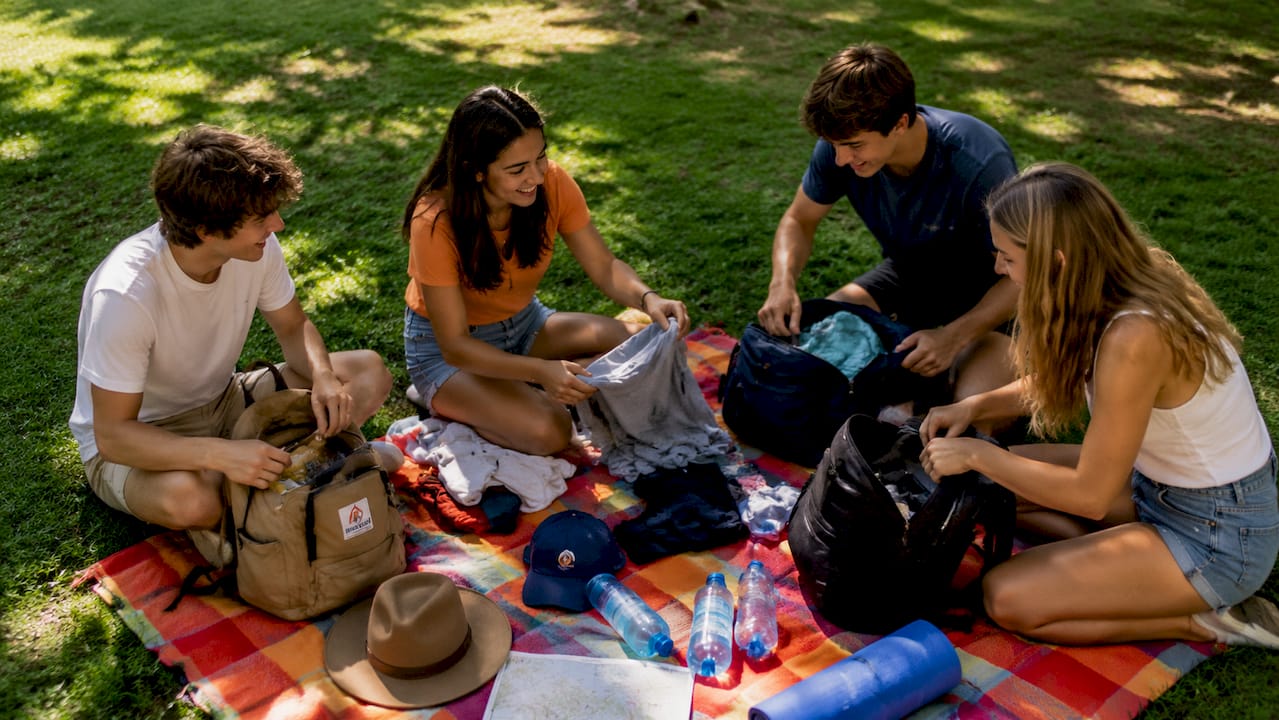
Personal hygiene items are non-negotiable travel essentials for teens, especially on multi-day trips with shared accommodations. A basic hygiene kit should include a toothbrush, toothpaste, deodorant, shampoo, body wash, and a small microfiber towel. Travel-size products save space and comply with airline liquid rules.
Medication management is where many guardians make mistakes. All prescription medications must travel with a copy of the prescription and a doctor’s note explaining the condition. Over-the-counter basics like pain relievers, antihistamines, antidiarrheal tablets, and motion sickness medication belong in every kit. Teenage travelers who menstruate should pack a full supply of menstrual products plus extras, since access varies widely by destination.
- Toothbrush, toothpaste, and floss
- Deodorant and body wash
- Sunscreen (SPF 30 or higher)
- Insect repellent with DEET or picaridin
- Prescription medications with documentation
- Over-the-counter pain reliever and antihistamine
- Menstrual products (if applicable, pack more than needed)
- Small microfiber towel
Pro Tip: Buy one multi-use product where possible. A 2-in-1 shampoo and conditioner cuts bottle count in half, and a tinted lip balm with SPF replaces two separate products.
3. How to keep gear organized and safe during the trip
Organization is the skill that separates experienced youth travelers from first-timers. Packing cubes or labeled gallon-sized freezer bags group items by category, such as daily wear, sleepwear, and hygiene, so students find what they need without unpacking everything. This matters most in cramped shared dorm rooms or bus luggage compartments where chaos spreads fast.
Unlabeled clothing and gear are the most frequently lost items at youth camps and group trips. Label everything: shoes, water bottles, sleeping bags, and electronics cases. Iron-on labels or laundry markers are the most durable options.
Waterproofing is an overlooked step. Heavy-duty contractor garbage bags (opens in a new tab) used as inner liners inside backpacks protect gear from unexpected rain more effectively than external pack covers alone. This is a budget-friendly solution that costs almost nothing.
| Organization Tool | Best Use | Cost Level |
|---|---|---|
| Packing cubes | Sorting clothing by day or type | Low |
| Labeled freezer bags | Grouping toiletries and small items | Very low |
| Contractor garbage bag liner | Waterproofing backpack contents | Very low |
| Iron-on labels | Permanent ID on clothing and gear | Low |
| Headlamp | Hands-free lighting in shared rooms | Low |
Place heavier items like shoes and water bottles at the bottom of the bag near the back panel. Lighter items go on top. This weight distribution reduces back strain on long walking days.
Pro Tip: Pack a small reusable tote bag inside the main luggage. It works as a day bag for excursions, keeping the main backpack at the hotel or base camp.
4. What safety and health items belong on a youth travel packing list?
Safety preparation is the part of a youth adventure checklist that guardians most often underestimate until something goes wrong. Schedule vaccinations 6–8 weeks before departure (opens in a new tab) to allow full immune response. Passports must have at least 6 months of validity remaining beyond the return date to avoid entry denial at international borders.
Travel insurance covers medical evacuation costs that can exceed $50,000. That number makes the cost of a travel insurance policy look trivial by comparison. Grouptravelnetwork includes group travel insurance options (opens in a new tab) as part of its trip planning services for exactly this reason.
Register the trip with the U.S. State Department’s STEP program (opens in a new tab) (Smart Traveler Enrollment Program) before any international departure. STEP allows the nearest U.S. embassy to contact travelers during emergencies and provides updated safety alerts for the destination country. Set a daily check-in schedule so guardians know the student is safe.
- First aid kit with bandages, antiseptic wipes, and blister pads
- Copy of health insurance card and travel insurance policy
- Printed emergency contact list (not just stored on a phone)
- Passport and a separate photocopy stored in a different bag
- Digital copies of documents stored in an encrypted cloud service
- Personal whistle or safety alarm
- Portable phone charger and international adapter
Liability waivers (opens in a new tab) do not fully protect institutions since minors retain legal rights in most jurisdictions. Vetting the trip leadership and reviewing the organization’s safety protocols matters more than signing paperwork and assuming coverage.
5. How to adapt the packing list for different trip types
A one-size-fits-all approach to packing fails young travelers. A day trip to a city museum requires a completely different kit than a five-day wilderness camp or a performance tour abroad. Matching the packing list to the trip type prevents both overpacking and critical gaps.
For day trips and short excursions:
- Small daypack with water, snacks, and a light jacket
- Phone, ID, and emergency contact card
- Comfortable walking shoes
For overnight camps and multi-day educational tours:
- Full clothing rotation plus two extra outfits
- Sleeping bag rated for the expected temperature range
- Toiletry kit and medications
- Entertainment items for downtime (book, cards, journal)
For youth sports events:
- Sport-specific gear and uniform (pack two sets)
- Athletic tape, compression socks, and extra insoles
- Recovery items like a foam roller or resistance bands
For performance tours (band, choir, theater):
- Performance attire in a garment bag to prevent wrinkles
- Instrument accessories and spare parts
- Formal shoes stored in a separate bag from casual footwear
Trip length directly affects clothing quantity. Add one extra outfit for every three days beyond the first week. For trips longer than ten days, plan to do laundry rather than packing for every single day.
6. How to plan safe and impactful student group travel
The most overlooked part of youth travel risk management is the pre-trip documentation process. Every student traveling internationally needs a completed medical information form on file with the trip leader. This form should list allergies, current medications, blood type, and the name of the student’s primary care physician.
Safe and impactful student group travel (opens in a new tab) requires vetting program leadership as carefully as you vet the destination. Ask the organizing institution for their emergency response plan, their staff-to-student ratio, and their protocol for medical incidents. A well-run trip has written answers to all three questions before departure day.
Communication devices are a practical safety layer. A basic international SIM card or a prepaid data plan for the destination country costs far less than roaming charges and keeps students reachable at all times. Pair that with a scheduled daily check-in time, and guardians have a reliable wellness check protocol without constant monitoring.
Key takeaways
A complete youth travel packing list combines layered clothing, labeled gear, safety documentation, and trip-specific items to protect young travelers and reduce disruption from day one.
| Point | Details |
|---|---|
| Layer clothing for all weather | Pack base, mid, and outer layers to handle temperature changes on any trip. |
| Label every single item | Use iron-on labels or laundry markers on clothes, shoes, and water bottles to prevent loss. |
| Waterproof your backpack | Line the inside with a heavy-duty garbage bag to protect gear from unexpected rain. |
| Prepare safety documents early | Schedule vaccinations 6–8 weeks out and confirm passport validity exceeds 6 months post-trip. |
| Match the list to the trip type | Day trips, sports events, and performance tours each need different gear and clothing quantities. |
What I’ve learned from watching youth trips go sideways
The packing mistakes I see most often are not about forgetting a toothbrush. They are about skipping the safety layer entirely. A guardian spends an hour debating which jacket to pack and then sends their student abroad without a copy of the health insurance card or a single emergency contact written on paper.
The second most common mistake is treating the packing list as a solo task. The best trips I have seen organized involve the student building the list alongside the guardian. When a teenager helps choose what goes in the bag, they know where everything is and they take ownership of keeping track of it. That independence is actually part of the educational value of the trip.
My honest advice: print the list, check it twice, and then add one comfort item the student chose themselves. A familiar book, a small photo, or a favorite snack from home does more for morale on day three of a tough trip than any piece of gear. The logistics matter, but so does the human side of travel.
— Donovan
How Grouptravelnetwork supports your trip preparation
Planning a school trip, sports event, or educational tour involves far more than packing. Grouptravelnetwork provides dedicated trip coordinators, flexible payment plans, and travel protection options built specifically for youth groups.

The youth group travel planning guide (opens in a new tab) from Grouptravelnetwork covers safety protocols, itinerary building, and vendor coordination in one place. Whether you are organizing a band performance tour, a class trip, or a multi-day sports event, Grouptravelnetwork handles the logistics so educators and guardians can focus on the experience. Explore student travel packages (opens in a new tab) designed to cover every detail from departure to return.
FAQ
What should every youth travel packing list include?
Every youth travel packing list should include layered clothing, personal hygiene items, a first aid kit, safety documents, and organizational tools like packing cubes. Add trip-specific gear based on the activity type and destination.
How early should guardians start preparing the packing list?
Start at least three weeks before departure. Vaccinations require a 6–8 week window before travel, so health preparation should begin even earlier.
How do you prevent lost items on a youth group trip?
Label every item with the student’s name using iron-on labels or a permanent laundry marker. Packing cubes and labeled freezer bags also help students locate gear without unpacking everything.
Is travel insurance necessary for youth school trips?
Travel insurance is necessary for any youth trip, especially international ones. Medical evacuation costs can exceed $50,000, making insurance one of the highest-value items on any youth travel safety checklist.
What safety steps should guardians take before an international youth trip?
Register the trip with the U.S. State Department’s STEP program, confirm passport validity extends at least 6 months beyond the return date, and store digital copies of all documents in a secure, encrypted cloud service.
Recommended
- Youth Group Travel Planning 2026: The Educator’s Guide • Group Travel Network (opens in a new tab)
- Top Student Travel Trends In 2026 For School Groups (opens in a new tab)
- News • Group Travel Network (opens in a new tab)
- Student Tours Abroad 2025: 9 Steps For International Success (opens in a new tab)