


TL;DR:
- Travel destination scouting is a structured process that evaluates whether a location can meet a group’s educational or performance goals using verified data. It involves remote research, in-person visits, and systematic documentation to ensure operational, safety, and budget requirements are met. Proper scouting increases trip success, reduces costs, and improves overall satisfaction by aligning logistics with objectives.
Travel destination scouting is the methodical evaluation of a location’s suitability to meet the operational, educational, and logistical goals of group travel planners. Unlike casual browsing or picking a city based on reputation, scouting is a structured, evidence-based process that replaces assumptions with verifiable data. For event planners organizing educational field trips, band tours, or performance group travel, this process determines whether a destination can actually deliver on its promise. 68% of travelers remain undecided (opens in a new tab) on their destination when booking flights. That figure shows how rarely structured pre-planning happens, and why planners who do it gain a real competitive edge.
What is travel destination scouting, and what does the process involve?
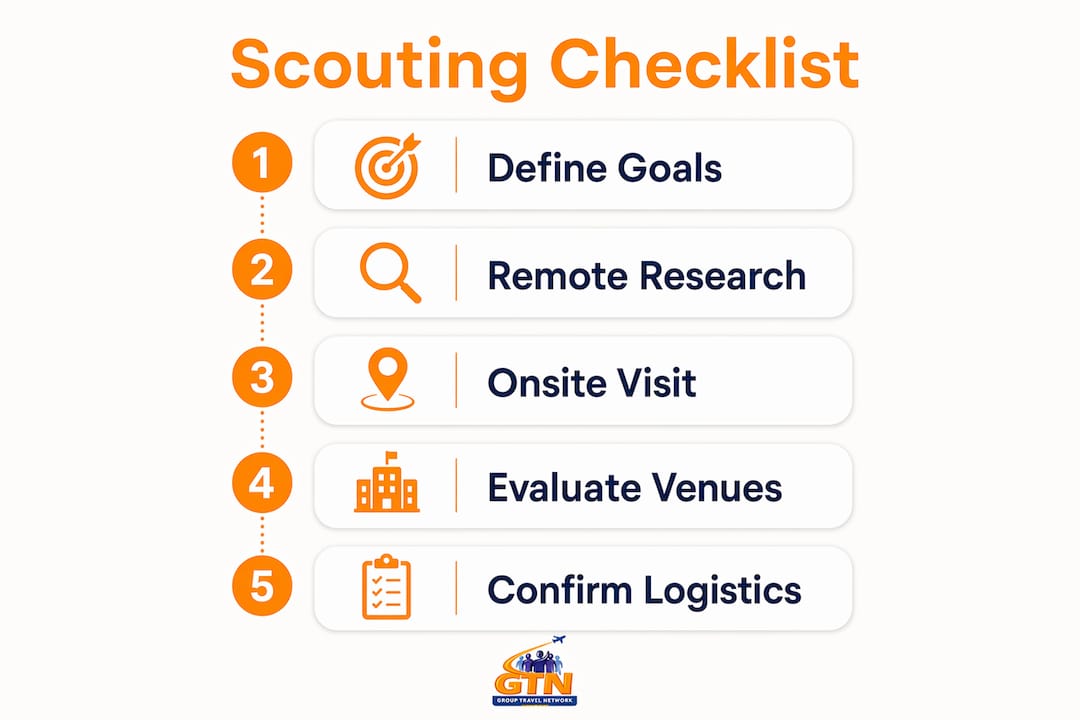
Travel destination scouting is the industry term for what film and event production professionals call “location scouting.” Applied to group travel, it means systematically assessing whether a destination can support your group’s specific goals before you commit a budget or sign contracts. The process moves through four clear stages.
-
Define goals and constraints first. The critical mistake planners make (opens in a new tab) is selecting a destination before defining key objectives and budget limits. Reverse that sequence. Write down the group’s educational or performance goals, maximum travel time, budget ceiling, and any accessibility requirements before you look at a single destination.
-
Remote research and virtual assessment. Use destination websites, government travel advisories, Google Street View, and 360° virtual tours (opens in a new tab) to evaluate multiple locations without leaving your desk. This stage narrows a long list of candidates to a shortlist of two or three serious contenders.
-
Operational audit via in-person visit. A physical visit is non-negotiable for any destination that makes your shortlist. Professional scouting visits (opens in a new tab) typically require 3–5 days to assess a destination thoroughly. During that time, you check transit routes, venue dimensions, power availability, sound conditions, permit requirements, and local service providers.
-
Document and score findings systematically. Every observation goes into a written report with photos, measurements, and cost estimates. Scoring each criterion on a consistent scale lets you compare destinations objectively and present findings to school administrators or band directors with confidence.
Pro Tip: Visit your top candidate during its worst expected weather conditions. Experts advise scouting in adverse conditions (opens in a new tab) to reveal infrastructure and accessibility realities that a sunny-day visit will never show.
Why is destination scouting crucial for educational and performance group trips?
Scouting directly determines whether a trip achieves its stated purpose. For a band director planning a performance tour, a venue with poor acoustics or no loading dock for equipment is a trip-ending problem. For a school administrator running a history-focused field trip, a site with no accessible entry points fails the group before it arrives. These are not edge cases. They are the kinds of details that only a structured scouting process catches.
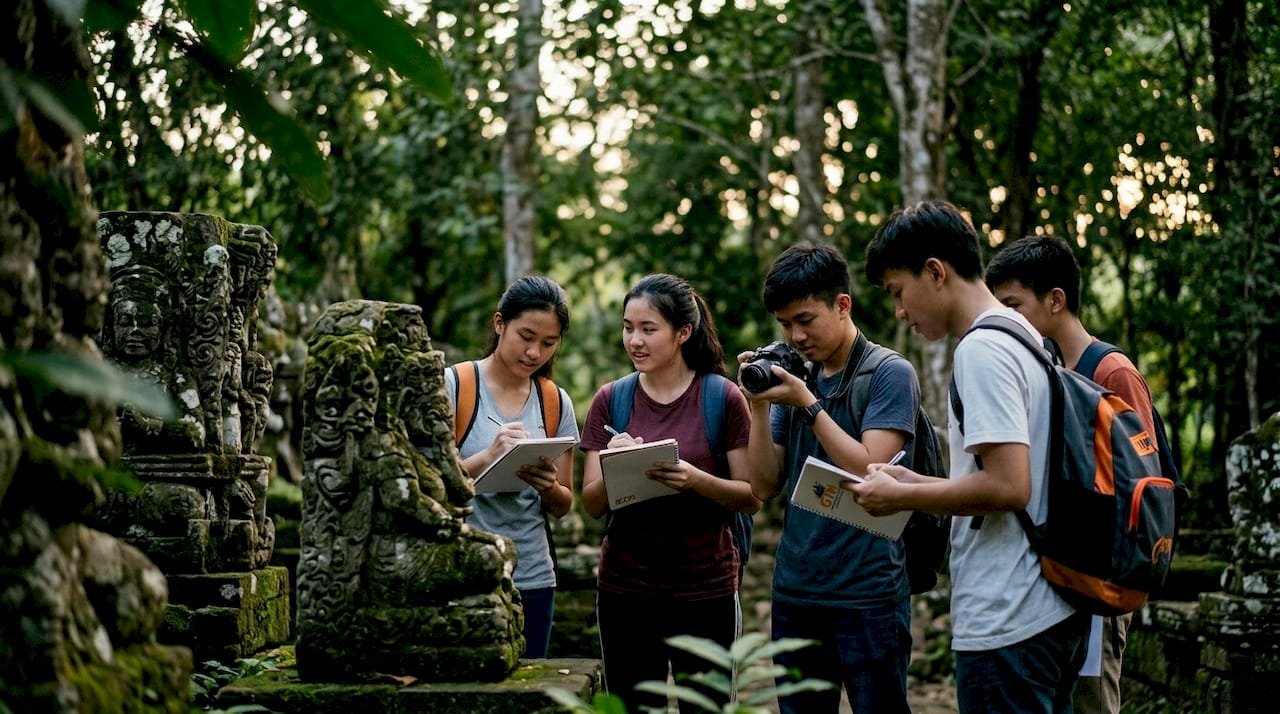
The satisfaction data is clear. Travelers who align destinations with specific goals report 40% higher satisfaction than those who choose randomly. That gap is even wider for group travel, where one poor logistical decision affects every participant simultaneously.
Scouting also protects your budget. Hidden costs, such as permit fees, equipment rental gaps, or expensive local transportation, surface during a proper audit. Catching them before contracts are signed gives you negotiating power and prevents mid-trip budget overruns.
- Logistics alignment: Scouting confirms that group transportation, hotel proximity, and venue access all work together without requiring expensive workarounds.
- Safety verification: You physically confirm emergency access routes, medical facility locations, and crowd management capacity at each site.
- Cultural and educational fit: You assess whether the destination’s programming, guides, and on-site resources match the group’s curriculum or performance objectives.
- Vendor reliability: Meeting local vendors in person lets you evaluate their experience with student or youth groups before you commit.
“True scouting replaces romanticized fantasies with verifiable data such as transit time and local service availability. A destination that looks perfect in photos may be operationally impossible for a group of 60 students with instruments and luggage.”
This mindset shift, from aesthetic appeal to operational reality, is the single most valuable thing a planner can take from the scouting process. The educational group trip planning (opens in a new tab) resources from Grouptravelnetwork reinforce this approach by centering logistics and goal alignment from the first planning step.
What criteria and checklists are essential for effective destination scouting?
A scoring framework turns subjective impressions into objective comparisons. The bottom-up approach works best: define your experience goals and constraints first, then filter destinations through a scored checklist. Rate each criterion from 1 to 5, then total the scores to rank your candidates.
| Scouting criterion | Remote assessment | Onsite assessment |
|---|---|---|
| Transportation access | Check transit maps and airline routes | Walk routes, time transfers, test loading areas |
| Venue capacity and dimensions | Review floor plans or virtual tours | Measure spaces, confirm stage or classroom fit |
| Sound environment | Review noise complaint records | Record ambient noise (opens in a new tab) for 10 minutes at peak hours |
| Safety and emergency access | Review local crime and health data | Locate hospitals, fire exits, and crowd control points |
| Permits and insurance | Research local regulations online | Confirm requirements with local authorities in person |
| Budget and hidden costs | Request preliminary quotes | Audit all vendor fees and local service rates |
| Cultural and educational fit | Review curriculum alignment online | Meet local guides and program coordinators |
The sound environment row deserves special attention for performance groups. Recording ambient baseline noise for 10 minutes is a standard technical scouting practice. It captures audio challenges that are not obvious to the human ear but become critical problems during a live performance or recorded event.
Remote assessment handles roughly half of this checklist efficiently. Using 360° virtual tours allows planners to evaluate multiple locations remotely, saving time and cost by focusing physical visits only on top-ranked candidates. A thorough onsite visit then confirms or overturns what remote research suggested.
Pro Tip: Build your checklist before you start researching destinations, not after. Planners who create the criteria first evaluate every location on the same terms. Those who build the list after visiting a favorite destination unconsciously weight criteria to favor what they already liked.
How can planners apply scouting insights to improve trip planning?
Scouting data is only valuable if it flows directly into your planning documents. The findings from your visit should shape four specific outputs: the itinerary, the risk management plan, the vendor contracts, and the budget.
- Itinerary design: Use transit times and venue operating hours confirmed during scouting to build a realistic daily schedule. Planners who rely on estimated times from websites routinely build itineraries that collapse on day one.
- Risk management: Document every safety gap identified during scouting and assign a mitigation action. If the nearest hospital is 45 minutes away, your medical response plan changes. If a venue has one loading entrance, your equipment arrival schedule changes.
- Vendor negotiations: Scouting gives you specific knowledge that vendors cannot easily counter. When you know the exact dimensions of a performance space, you can negotiate equipment rental with precision rather than accepting a vendor’s standard package.
- Stakeholder communication: A written scouting report with photos and scored criteria gives school administrators and parent committees a clear, professional basis for approving a destination. Decisions made on documented evidence move faster and face less resistance.
- Budget accuracy: Every cost confirmed during scouting replaces an estimate. Replacing estimates with confirmed figures reduces budget variance and protects you from mid-trip surprises.
The school group travel planning (opens in a new tab) guide from Grouptravelnetwork integrates these scouting outputs directly into a step-by-step planning framework. Planners who follow a structured process from scouting through execution consistently deliver trips that meet their stated educational or performance goals. For groups traveling internationally, the student travel Europe 2025 (opens in a new tab) resource adds destination-specific scouting considerations for overseas trips.
Key Takeaways
Effective travel destination scouting requires defining group goals before researching locations, conducting both remote and onsite assessments, and translating findings into documented planning outputs that protect budget, safety, and trip objectives.
| Point | Details |
|---|---|
| Define goals before scouting | Set educational or performance objectives and budget limits before evaluating any destination. |
| Use remote tools first | Virtual tours and online research narrow a long list to a shortlist before costly in-person visits. |
| Onsite visits take 3–5 days | A thorough boots-on-the-ground assessment requires dedicated time to audit all operational criteria. |
| Score destinations consistently | A scored checklist removes bias and gives stakeholders an objective basis for destination approval. |
| Translate findings into planning | Scouting data must directly update the itinerary, risk plan, vendor contracts, and budget to have value. |
Why planners underestimate scouting, and what I’ve learned from it
Most event planners I’ve worked alongside treat scouting as a luxury step they cut when time or budget gets tight. That is exactly backwards. Scouting is the step that makes every other planning task faster and cheaper. When you know a destination’s real transit times, real permit costs, and real sound conditions, you stop rebuilding your itinerary three times and start building it once, correctly.
The shift toward virtual scouting tools has genuinely changed what’s possible in the first phase of research. A planner can now evaluate a performance venue in Prague or a national park in Utah with the same depth of visual detail from a laptop. That said, virtual tools have a ceiling. They cannot tell you what a loading dock smells like at 7:00 AM, whether the local event coordinator actually returns calls, or how the acoustics behave when 200 students fill a space. Those answers only come from being there.
The planners who get the best results treat scouting as an investment with a measurable return. Every hour spent on a structured site visit saves multiple hours of crisis management during the trip itself. The group travel agents (opens in a new tab) who specialize in educational travel understand this instinctively. They build scouting into every engagement because they have seen what happens to trips that skip it.
My honest advice: stop viewing scouting as a preliminary step and start treating it as the foundation of the entire trip. Everything else, the itinerary, the budget, the vendor relationships, builds on what scouting reveals.
— Donovan
How Grouptravelnetwork supports your destination scouting process
Planning a student or performance group trip involves more destination variables than most planners anticipate on their first attempt. Grouptravelnetwork specializes in exactly this kind of complex, multi-criteria trip planning for educational institutions, band programs, and youth organizations.
The team at Grouptravelnetwork provides destination insights, logistical support, and vendor coordination that complement your own scouting work. Whether you are organizing a first-time class trip or a multi-city performance tour, their dedicated trip coordinators help you translate scouting findings into a trip that actually works. The student educational travel guide (opens in a new tab) is a strong starting point for planners who want a structured framework covering destination selection, safety planning, and itinerary design for school groups in 2025.
FAQ
What is travel destination scouting?
Travel destination scouting is the structured process of evaluating a location’s operational, logistical, and educational suitability before committing to it for a group trip. It replaces assumptions with verified data covering transit, safety, permits, costs, and venue conditions.
How long does a destination scouting visit take?
Professional in-person scouting visits typically require 3–5 days to conduct a thorough assessment of a destination’s logistics, venues, and service providers.
Why is scouting especially important for performance group travel?
Performance groups require venue-specific assessments of acoustics, stage dimensions, power availability, and equipment access that general travel research cannot provide. Missing any of these factors can make a venue unusable for a live performance.
Can virtual tools replace in-person scouting visits?
Virtual tools like 360° tours effectively handle the first phase of remote research, but they cannot verify acoustic conditions, vendor reliability, or real-time logistics. In-person visits remain necessary for any destination that reaches your shortlist.
How does scouting improve group trip satisfaction?
Goal-aligned destination selection produces 40% higher traveler satisfaction compared to random destination choice. Scouting is the process that confirms a destination actually aligns with your group’s specific goals before you commit.
Recommended
- School Group Travel Planning: A Step-by-step Guide • Group Travel Network (opens in a new tab)
- How To Organize School Tours: 2026 Planning Guide • Group Travel Network (opens in a new tab)
- Student Educational Travel: Ultimate 2025 Guide For Schools (opens in a new tab)
- Group Travel Agencies: Complete 2025 Guide For Excellence (opens in a new tab)