


TL;DR:
- Effective student travel management involves thorough preparation, clear routines, and emotional intelligence. Leaders who monitor group dynamics closely, communicate transparently, and adapt quickly, ensure safe and engaging trips. Growth as a leader occurs through experience, reflection, and learning to read and respond to student needs under pressure.
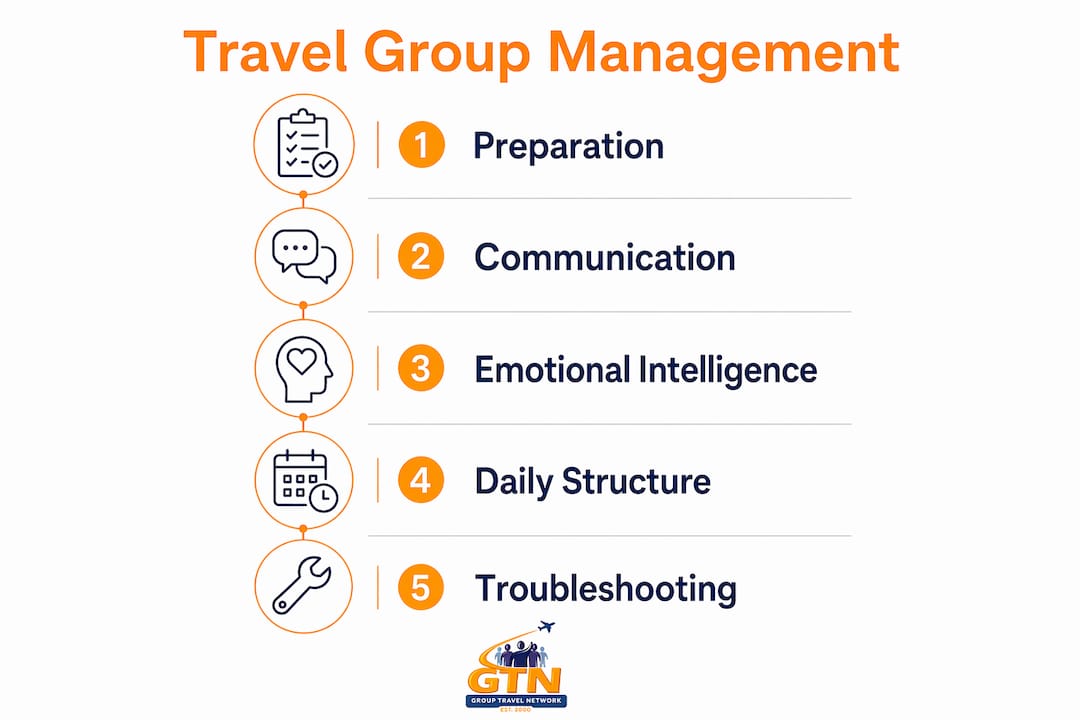
Student travel group dynamics management is the process of guiding, organizing, and harmonizing student interactions during educational trips to ensure safety, engagement, and positive outcomes. The formal term used by educational travel professionals is “group cohesion management,” and both terms describe the same core challenge: keeping diverse students focused, safe, and learning while away from school. For educators, school group leaders, and youth organization coordinators, mastering this process is the difference between a transformative trip and a logistical crisis. Grouptravelnetwork works with hundreds of school groups each year and consistently identifies preparation, emotional intelligence, and clear communication as the three pillars that determine trip success.
What are the essential tools for student travel group dynamics management?
Preparation is the foundation of effective group dynamics in travel. Without it, even experienced leaders find themselves reacting to problems rather than preventing them.

The first tool every leader needs is a pre-departure database. Safety protocols (opens in a new tab) must be embedded in the operating plan, including a record of each student’s medical needs, dietary restrictions, and behavioral considerations accessible to authorized chaperones. This database does more than protect students physically. It gives chaperones the context they need to respond calmly and correctly when a student has a reaction, a meltdown, or a medical episode far from home.
Rooming lists are a second critical tool that most leaders underestimate. Last-minute changes to rooming lists (opens in a new tab) affect logistics, pricing, and supervision in ways that ripple through the entire trip. Leaders should finalize room assignments with safety and medical needs as the primary criteria, not student preferences. A student with a severe allergy should not room with someone who brought peanut butter snacks, regardless of who their best friend is.
Communication plans form the third pillar of preparation. Families’ trust grows from transparent communication about expectations and safety before and during travel. Send parents a written briefing before departure that covers daily schedules, emergency contacts, and the protocol for reaching their child. Consistent updates during the trip reduce parental anxiety and free you to focus on managing the group.
| Preparation Tool | Purpose | Key Action |
|---|---|---|
| Pre-departure medical database | Protect student health and safety | Collect and share with all chaperones |
| Finalized rooming list | Prevent supervision gaps | Prioritize safety over preferences |
| Parent communication plan | Build family trust | Send briefing before departure |
| Chaperone duty assignments | Distribute supervision load | Assign headcounts, meds, and check-ins |
| Realistic itinerary | Maintain energy and engagement | Build in downtime between activities |
Pro Tip: Create a one-page chaperone reference card with each student’s name, photo, room number, and any medical flag. Laminate it. Chaperones who can glance at a card during a headcount catch problems faster than those scrolling through a phone.
How can leaders use emotional intelligence to shape group dynamics?
Emotional intelligence (EI) is the primary tool for managing group dynamics during travel, particularly in international or high-pressure settings. EI means reading the emotional state of the group, responding with empathy, and knowing when to intervene versus when to let students work things out themselves.
Emotional intelligence helps leaders observe, manage conflicts, and promote student growth simultaneously. A leader with strong EI notices when two students are avoiding each other at dinner before the tension becomes a public argument. That early awareness creates space for a quiet, private conversation rather than a group disruption.
Balancing intervention with autonomy is the hardest EI skill to develop. Students on educational group trips (opens in a new tab) grow most when they solve small problems themselves. A missed bus connection or a disagreement over a shared room is an opportunity for students to practice negotiation and resilience. Your job is to monitor the situation and step in only when safety or group cohesion is genuinely at risk.
Clear and authoritative communication with empathy supports a calm atmosphere and deters conflicts before they escalate. Speak directly and calmly. Avoid sarcasm, public corrections, or raised voices. Students mirror the emotional register of their leader. When you stay composed under pressure, the group tends to follow.
Key EI practices for travel group leadership:
- Observe before acting. Watch group energy levels, body language, and social clusters at each stop.
- Name the emotion, not the behavior. Say “I can see you’re frustrated” before addressing what a student did wrong.
- Recognize individual strengths. Assign informal roles that match student personalities, such as navigator, timekeeper, or cultural ambassador.
- Model adaptability. When plans change, respond with calm problem-solving. Students watch how you react to setbacks.
Pro Tip: At the end of each travel day, spend five minutes checking in with your chaperones privately. Ask what they noticed. Chaperones often catch interpersonal friction before it reaches the leader.
What are the daily best practices for managing group logistics on the trip?
Daily structure is what keeps student group coordination from breaking down. Without a clear routine, even well-prepared groups drift into fatigue, conflict, and disengagement.
A well-planned itinerary balances key learning experiences with sufficient downtime to maintain energy and engagement. Over-scheduling is one of the most common mistakes in student travel logistics. When students are exhausted, minor irritations become major conflicts. Build at least one unstructured hour into each afternoon.
Assigning specific duties among chaperones, such as headcounts and medication management, strengthens group supervision. Shared responsibilities prevent the “someone else will handle it” problem that causes students to slip through the cracks. Every chaperone should know their exact role before the day begins.
Daily management steps for travel team leaders:
- Morning briefing (10 minutes). Gather chaperones before students wake. Review the day’s schedule, assign positions for each activity, and flag any student concerns from the previous day.
- Departure headcount. Count students before leaving every location, not just at the hotel. Use a numbered roster, not a visual scan.
- Midday check-in. Pause after the morning activity to assess group energy. Adjust the afternoon schedule if fatigue is visible.
- Conflict triage. Address interpersonal issues privately and immediately. Unresolved tension compounds quickly in close-quarters travel.
- Evening debrief. Gather students for a brief reflection on the day. This builds group identity and surfaces concerns before they become overnight problems.
- Chaperone debrief. After students are in rooms, review the day with your chaperone team. Note anything that needs follow-up the next morning.
Pro Tip: Use a group messaging app to send chaperones real-time location updates during large venue visits. A simple “Group A at exhibit 3, Group B at café” message every 20 minutes prevents the frantic searching that disrupts everyone.
How do you troubleshoot common group dynamic challenges during student travel?
The most common group dynamic problems in student travel are roommate conflicts, fatigue-driven irritability, and schedule overruns. Each has a predictable pattern and a practical fix.
Roommate conflicts peak on nights two and three, once the novelty of the trip wears off. The fix is not to immediately reassign rooms. Instead, have a chaperone facilitate a five-minute conversation between the students to establish basic agreements about noise, lights, and space. Most conflicts resolve at this level. Reserve room reassignment for situations involving safety or genuine incompatibility.
Unexpected disruptions such as late buses or weather changes require backup plans rather than attempts to eliminate all problems. Build two contingency activities into your itinerary before departure. When a museum closes unexpectedly, you pull out the backup, not a blank stare. Students respect leaders who adapt quickly and confidently.
Schedule overruns are almost always caused by underestimating transition time. Add 15 minutes to every transition between activities when planning. Groups of 20 or more students move significantly slower than individuals. That buffer prevents the cascading delays that turn a manageable afternoon into a chaotic evening.
Communication do’s and don’ts for managing travel group challenges:
- Do address conflicts privately before they become public.
- Do keep parents informed of significant changes to the schedule.
- Do give students advance notice before transitions. “We leave in 10 minutes” prevents the scramble.
- Don’t make examples of students in front of the group.
- Don’t promise outcomes you cannot control, such as “the bus will definitely be on time.”
- Don’t ignore low-level tension hoping it resolves itself. It rarely does.
For deeper guidance on safe travel planning steps (opens in a new tab), Grouptravelnetwork offers detailed frameworks built specifically for school group coordinators.
Key Takeaways
Effective student travel group dynamics management requires pre-departure preparation, daily structure, emotional intelligence, and clear contingency plans working together as a system.
| Point | Details |
|---|---|
| Pre-departure database | Document every student’s medical needs and share with all chaperones before departure. |
| Rooming list control | Finalize rooms based on safety and medical needs, not student social preferences. |
| Emotional intelligence | Observe group tension early and intervene with empathy before conflicts escalate. |
| Daily structure | Use morning briefings, numbered headcounts, and evening debriefs to maintain group cohesion. |
| Contingency planning | Build two backup activities into every itinerary to handle unexpected disruptions calmly. |
What managing group dynamics actually teaches you as a leader
I have watched educators arrive at the airport with color-coded binders and leave the trip realizing the binder was never the point. The real work happens in the moments the binder does not cover: the student who cries at dinner on day two, the chaperone who freezes when a student gets sick, the group that fractures along social lines by Wednesday.
What I have learned from working with school groups is that the leaders who manage group dynamics in travel (opens in a new tab) best are not the ones with the most detailed plans. They are the ones who read people accurately and stay calm when the plan falls apart. Preparation matters enormously, but it is a platform for judgment, not a substitute for it.
The other thing most articles will not tell you: student travel changes the leader as much as it changes the students. You learn your own stress responses, your blind spots, and your capacity to hold a group together under pressure. That growth does not happen in a classroom. It happens on a delayed train in a foreign city with 24 teenagers looking at you for direction.
My honest recommendation is to treat your first trip as a learning experience, not a performance. Debrief yourself as rigorously as you debrief your students. The leaders who grow fastest are the ones who ask “what would I do differently?” before the plane lands home.
— Donovan
How Grouptravelnetwork supports your trip planning
Planning a student trip involves dozens of moving parts, and the group dynamics piece is only one of them. Grouptravelnetwork specializes in taking the logistical weight off educators so they can focus on leading their students rather than managing spreadsheets.

From school group travel planning (opens in a new tab) to customized itineraries that build in the right balance of learning and downtime, Grouptravelnetwork provides dedicated trip coordinators, flexible payment plans, and travel protection options designed for school groups. Their team understands the specific pressures that educators face, including chaperone coordination, parent communication, and real-time problem-solving on the road. If you are organizing a student trip and want a partner who has done this hundreds of times, Grouptravelnetwork is worth a conversation.
FAQ
What is student travel group dynamics management?
Student travel group dynamics management is the process of guiding student interactions, behavior, and cohesion during educational trips to maintain safety and positive outcomes. It combines logistical planning, communication, and emotional intelligence skills.
How do you handle roommate conflicts on student trips?
Have a chaperone facilitate a brief conversation between the students to establish shared agreements before reassigning rooms. Reserve room changes for situations involving safety or genuine incompatibility.
Why does over-scheduling hurt group dynamics?
Over-scheduling leads to fatigue, which makes minor irritations escalate into real conflicts. A well-planned itinerary includes unstructured downtime to maintain student energy and engagement throughout the trip.
What role do chaperones play in managing group dynamics?
Chaperones handle specific assigned duties such as headcounts, medication management, and small-group supervision. Shared, clearly defined responsibilities prevent supervision gaps and strengthen overall group control.
How should leaders communicate with parents during a student trip?
Send a written briefing before departure covering the daily schedule, emergency contacts, and communication protocols. Consistent updates during the trip reduce parental anxiety and build the trust that makes future trips easier to organize.
Recommended
- Team Travel Supervision Guide For Coaches In 2026 • Group Travel Network (opens in a new tab)
- Safe Travel Planning Steps For Student Groups In 2026 • Group Travel Network (opens in a new tab)
- Team Travel Coordination Tips For Schools In 2026 • Group Travel Network (opens in a new tab)
- Role Of Guides In Student Travel: Administrator’s Guide • Group Travel Network (opens in a new tab)