

September 3, 2026
Passport Validity: Six Months for U.S. Students, With School Checklist
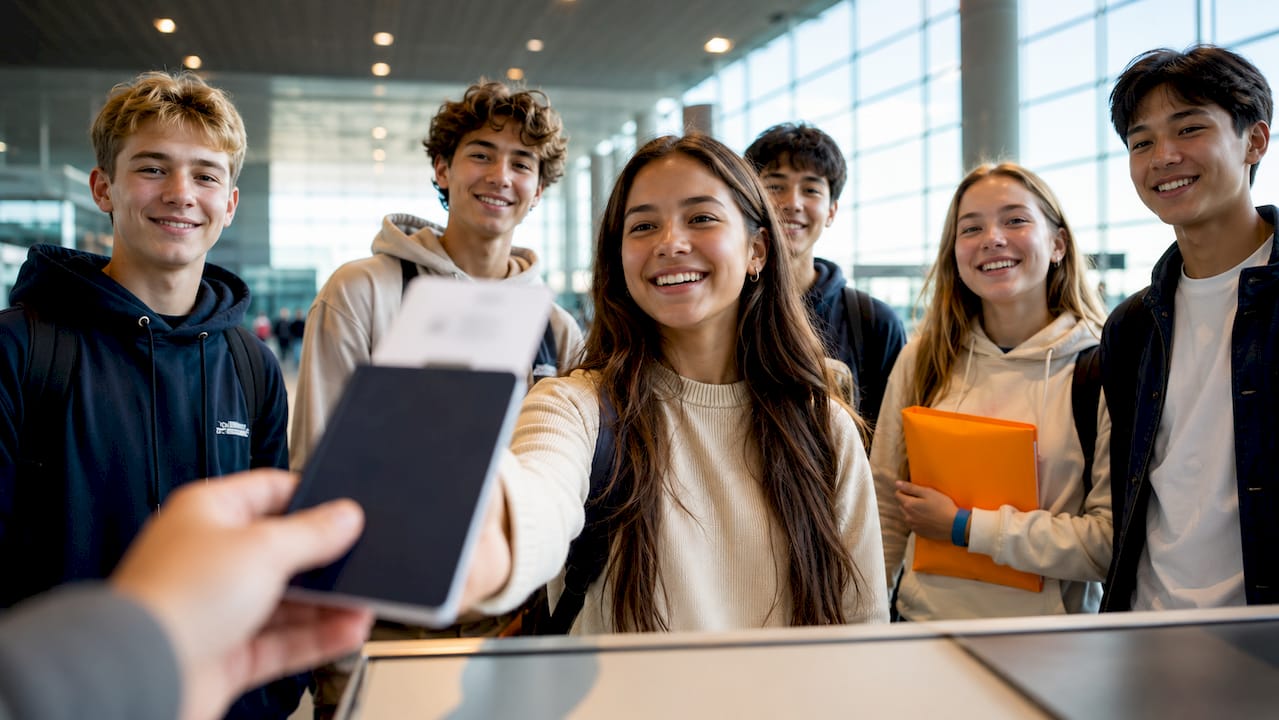
Your passport needs at least six months of validity beyond your program’s end date, a signature in ink, and no water damage, tears, or mold. Without all three, you cannot start your student visa paperwork. If your passport expires within a year, apply for a new one or renew it today before the I-20 and DS-160 process even begins.
TL;DR:
- Students should ensure their passport has at least six months of validity beyond their program’s end date to avoid visa processing delays.
- An unsigned, damaged, or water-stained passport is invalid, requiring immediate renewal or reapplication before starting visa paperwork.
- Applying for or renewing a U.S. passport involves specific forms and documentation, with mail renewal recommended if the passport is in good condition and closed to five years expired.
- In case of lost or stolen passports abroad, students must report to local authorities, contact their embassy for emergency documents, and notify their school’s international office promptly.
- The six-month validity rule is non-negotiable and enforced at the visa interview, so applying early and tracking passport expiration is critical to avoid last-minute delays.
Table of Contents
- Student Passport Requirements: Validity, Signature, and Condition
- How to Apply for or Renew a U.S. Passport
- Processing Times and What to Do About a Lost or Damaged Passport
- Where Your Passport Fits in the Student Visa Process
- A Pre-Departure Passport Checklist That Actually Prevents Problems
- Passport Rules Change Once You Leave U.S.-Focused Guidance
- Dual Citizens and Students With More Than One Passport
- Lost or Stolen Passport While Studying Abroad: What to Do Immediately
- How Group Travel Network Helps Schools Manage Passport Logistics
- Consider Group Travel Network Instead of Managing Passports Alone
- Where to Verify Current Passport Rules
- A Straight Answer on the Six-Month Rule and Why It’s Not Optional
- Sources
- FAQ
Student Passport Requirements: Validity, Signature, and Condition
Most students trip up on one of three things: how long the passport stays valid, whether it’s signed, and whether it’s in decent physical shape. Get these wrong and your entire student visa timeline slips.
The six-month validity rule is the one that catches the most people off guard. The State Department requires international students on a student visa to hold a passport valid for at least six months beyond their intended period of stay. Some countries have bilateral agreements that shorten this window, but you shouldn’t assume you’re covered by one. If you’re a non-U.S. citizen heading to study in the United States, check your home country’s exemption status with your own consulate before you plan around a shorter buffer.
A blank signature line is a surprisingly common problem. An unsigned U.S. passport is considered incomplete, and airline staff or immigration officers can flag it. Damage voids a passport just as fast: water stains, mold, torn pages, taped repairs, or anything that looks like an unofficial marking can force the document to be treated as invalid, which means you can’t simply renew by mail. You’ll need to reapply in person.
A few quick facts worth locking in:
- U.S. citizens need at least six months of validity beyond their program end date for most destinations.
- Non-U.S. citizens should confirm their own country’s passport rules with their consulate, not assume U.S. guidance applies.
- Applicants ages 16 and 17 face additional steps, including proof of citizenship and evidence that a parent or guardian is aware of the application.
- University study-abroad offices consistently recommend applying well before program acceptance, since processing windows fluctuate.
Pro Tip: Check your passport’s expiration date against your program’s end date right now, not next month. If the gap is under six months, start your renewal today.
How to Apply for or Renew a U.S. Passport
Two forms matter here, and picking the wrong one wastes weeks.
Form DS-11 is for first-time applicants, minors, and anyone whose passport is expired by more than five years, lost, stolen, or damaged. It requires an in-person visit to an acceptance facility or passport agency. Form DS-82 is for adults renewing a passport that’s still in good condition, expired less than five years ago, and issued in their current name (or with a legal name-change document attached). DS-82 can go in by mail, which is faster and less hassle if you qualify.
Whichever form applies, bring these items:
- Proof of U.S. citizenship — a certified birth certificate or previous U.S. passport.
- A valid photo ID, such as a driver’s license.
- Photocopies of both the front and back of your ID and your citizenship document.
- One passport photo meeting State Department specs (2×2 inches, white background, taken within the last six months).
- Payment for both required fees.
That last point trips people up. There are two separate fees: the State Department’s application fee and a separate acceptance facility fee, often around $35, charged by the post office or clerk’s office processing your paperwork. Renewing by mail with DS-82 skips the facility fee since there’s no in-person visit.
Passport photos are stricter than most people expect. Drugstores like CVS and Walgreens offer compliant photo services, and many library and post office acceptance facilities can print one on the spot. Don’t smile with teeth showing, don’t wear glasses, and don’t use a selfie against a bedroom wall. Photos rejected for background color or head positioning are one of the most common reasons applications bounce back.
Pro Tip: If you’re not sure whether you qualify for mail renewal, call the acceptance facility first. Submitting DS-82 when you actually needed DS-11 adds weeks to your timeline.
Processing Times and What to Do About a Lost or Damaged Passport
Routine processing typically runs several weeks, and expedited service cuts that down for an added fee. If your travel is within two weeks or you have an imminent visa appointment, you can book an appointment at a regional passport agency, but slots fill fast and require documented proof of urgent travel.
Damaged, lost, or stolen passports don’t follow the mail-in path no matter how close your old passport was to renewal. You have to apply in person with Form DS-11, and you may need to submit a written statement explaining the loss or damage. This single issue is one of the most common reasons students end up scrambling right before a visa interview.
A few habits protect your timeline:
- Keep a digital scan of your passport’s photo page stored somewhere you can access from your phone.
- Track your application status online instead of guessing.
- Hold onto your submission receipt. You’ll need the number if anything gets delayed.
- Notify your school’s international office the moment you know your passport will be late. Many programs can adjust orientation dates for documented delays.
Pro Tip: A damaged passport discovered a week before your visa interview is a fixable problem, but only if you act immediately. Call the nearest regional agency the same day, not after checking every other website first.
Where Your Passport Fits in the Student Visa Process
Your passport isn’t the finish line. It’s step one of a longer sequence, and skipping ahead causes most of the delays students run into.
- Secure a valid passport before doing anything else on this list.
- Get accepted and receive Form I-20 from a SEVP-approved school.
- Pay the SEVIS I-901 fee, which is tied to your I-20 and required before your visa interview.
- Complete Form DS-160, the online visa application, entering your passport number and details exactly as they appear on the document.
- Schedule and attend your consulate interview with your passport in hand.
A consular officer checks passport validity at the interview, and if it doesn’t cover your intended stay with enough buffer, that interview can end without a visa stamp. Bring your acceptance letter, financial proof (bank statements or a sponsor letter), academic transcripts, and your SEVIS fee receipt alongside your passport.
Don’t start the DS-160 with a passport you’re still waiting on. The form asks for your exact passport number, issue date, and expiration date, and correcting those fields later adds friction you don’t need. If your program is vocational, like flight training, the visa category itself may differ. Programs approved for M-1 status carry their own specific documentation requirements worth reviewing early.
A Pre-Departure Passport Checklist That Actually Prevents Problems
Most passport failures aren’t dramatic. They’re small oversights that snowball because nobody caught them early enough.
- Sign your passport in ink the day it arrives.
- Confirm your expiration date is six months beyond your program’s end date.
- Make color photocopies of your photo page, both hard copy and digital.
- Save emergency contact information, including your country’s nearest embassy, somewhere accessible offline.
- Check your passport for water damage, torn pages, or excessive stamps before you assume it’s fine.
| Mistake | Why It Happens | Fix Right Now |
|---|---|---|
| Applying too late | Waiting until after program acceptance | Apply the moment you decide to study abroad |
| Unsigned passport | Overlooked after pickup | Sign it immediately upon receipt |
| Damage discovered late | Passport unused for years | Inspect it now, not at the airport |
| Insufficient validity | Miscounting the six-month buffer | Check the exact expiration date against your program end date today |
Add passport deadlines directly into your program’s planning timeline rather than treating them as a side task, and collect copies from every traveler well before visa interviews start.
Passport Rules Change Once You Leave U.S.-Focused Guidance
The six-month rule isn’t universal. It’s common, but plenty of destinations set their own standards, and assuming U.S. guidance applies everywhere is a mistake that catches students studying in a third country.
Some nations require only that a passport be valid through the actual dates of stay, with no extra buffer. Others demand a full year of remaining validity, particularly for longer academic programs or countries with stricter entry screening. Schengen Area countries generally expect three months of validity beyond your departure date, a different formula entirely from the U.S. six-month standard. A handful of countries also require a minimum number of blank visa pages, which older, well-traveled passports can run out of even when the expiration date looks fine.

If you’re studying in the U.S. as an international student, your home country’s passport rules govern your own document, but the destination country, in this case the United States, still enforces its own entry standards on top of that. Double citizenship or a study-abroad program routed through a second country multiplies these variables fast. The safest habit: check the specific destination’s consulate or embassy website for their stated passport validity policy rather than relying on what worked for a previous trip. Rules also shift with little warning after policy changes, so a rule that applied two years ago isn’t guaranteed to apply now.
Dual Citizens and Students With More Than One Passport
Holding two passports isn’t a problem by itself, but it does change how you should plan your travel documents.
The core rule: use the passport that matches the citizenship under which you’re entering a country whenever that country requires it. Some nations mandate that their own citizens enter and exit on that country’s passport even if you hold a second one. Others don’t care which passport you present, as long as it meets validity standards. Entering the United States as a dual citizen with U.S. citizenship generally means using your U.S. passport, since immigration officers expect citizens to present the document matching their status.
Visa considerations complicate things further. A U.S. student visa is stamped into the passport used during the DS-160 and interview process, so if you switch passports afterward, that visa may not transfer automatically. If you renew or change passports after your visa is issued, keep both the old and new documents together when traveling, since some border agents want to see the original visa alongside the new passport number.
Dual citizens studying abroad should also check whether their second country of citizenship requires military service registration, exit permits, or other formalities tied to that nationality. These requirements exist independently of anything the U.S. State Department governs, so they won’t show up in typical student visa guidance. When in doubt, contact both consulates rather than guessing which set of rules takes priority.
Lost or Stolen Passport While Studying Abroad: What to Do Immediately
A missing passport overseas feels like a crisis, but the fix is a known process, not a mystery.
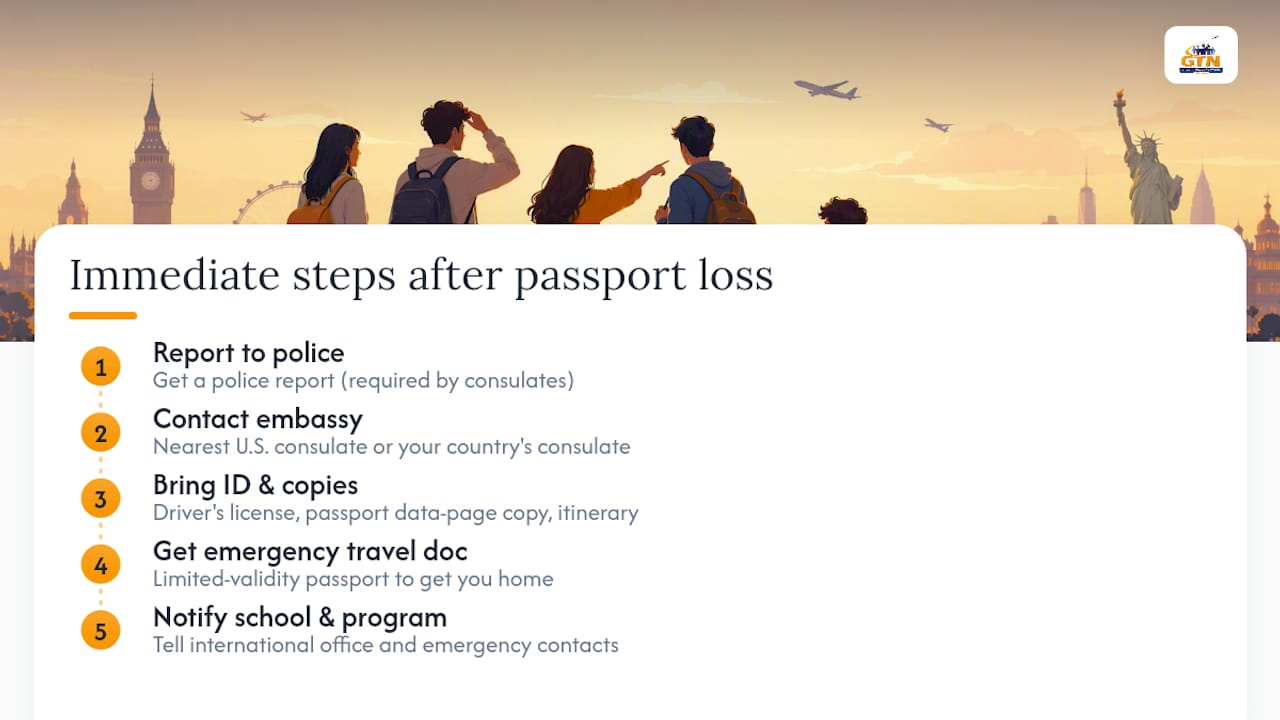
Report the loss or theft to local police first and get a police report. Most consulates ask for one before issuing anything new. Next, contact the nearest U.S. embassy or consulate directly. If you’re a non-U.S. citizen, contact your own country’s embassy or consulate in that country instead. Embassies can issue an emergency travel document, sometimes called a limited-validity passport, that gets you home or to your next destination even when a full replacement isn’t possible before you need to travel.
Bring whatever identification you still have: a driver’s license, a photocopy of your old passport’s data page (this is exactly why you made one before leaving), and your travel itinerary. Students who followed the earlier advice to keep digital and hard copies of their passport’s photo page will move through this process considerably faster than students who didn’t.
Tell your school’s international office the moment this happens. Many study-abroad programs have handled this before and can help coordinate with the embassy or adjust your program schedule if a replacement takes several business days. Also notify your program’s emergency contact and, if you’re on a group trip, your trip coordinator, since visa or re-entry complications from a lost passport can affect group travel logistics for everyone traveling with you.
How Group Travel Network Helps Schools Manage Passport Logistics
Chasing down forty student passports by email is nobody’s idea of a good semester. Trip coordinators work with school administrators on document checklists and deadline tracking so passport problems surface early rather than at the last minute. The school admin playbook walks organizers through the same collection process: gather photo-page scans early, log expiration dates against the group’s actual departure date, and build reminders instead of relying on memory. Centralized tracking is the difference between catching an unsigned passport in September and discovering it at the airport.
Consider Group Travel Network Instead of Managing Passports Alone
Chasing signatures, expiration dates, and photocopies across an entire group is a full-time job on top of everything else a trip organizer already handles. A dedicated service exists as the alternative to managing these tasks solo: specialized trip coordinators, document checklists designed for student groups, and flexible payment plans that help manage trip logistics effectively.

To be clear about where the lines fall: individual students and families are still responsible for their own passports and visas. What Group Travel Network takes off your plate is the administrative weight around it, tracking who’s submitted what, flagging gaps before they become departure-day emergencies, and keeping your group’s paperwork organized against a real timeline instead of a spreadsheet nobody updates. If you’re planning a student trip and want that burden handled by people who do it for a living, visit the student group trips planning page and request a planning call to see how it fits your program.
Where to Verify Current Passport Rules
- Student Visa overview, U.S. Department of State
- Apply for a U.S. passport, USA.gov
- Study abroad travel documents checklist, Illinois State University
- Confirm destination-specific validity exceptions directly with that country’s embassy or consulate.
A Straight Answer on the Six-Month Rule and Why It’s Not Optional
Here’s what most passport guides get wrong: they treat the six-month rule like a suggestion. It isn’t. It’s a hard gate that a consular officer checks at your visa interview, and if your passport doesn’t clear it, you don’t get a warning, you get sent home to reapply and rebook.
What surprises me most, looking at how often this trips up otherwise well-organized students, is that the fix costs nothing but time. There’s no fee waiver you’re missing, no loophole, no shortcut. The only variable you control is when you start. Students who apply for a passport the same week they get accepted into a program almost never hit this wall. Students who wait until they’re booking flights almost always do. That gap between “found out I needed to renew” and “actually renewed” is where nearly every delayed visa interview I’ve seen in this research originates, not from confusing paperwork, but from simple procrastination dressed up as busyness.
The other pattern worth naming: schools that centralize passport tracking catch problems months earlier than schools that leave it to individual students. That’s not a knock on students. It’s just that a 17-year-old juggling AP exams and college applications is not going to independently notice their passport expires in five months and four weeks. Somebody needs to be checking dates against a calendar, and that somebody is rarely the student.
— Donovan
Sources
- Student Visa
- Apply for a U.S. passport
- Apply for Your Passport as a 16-17 Year Old
- Study abroad travel documents checklist
FAQ
What does a 17-year-old need to get a U.S. passport?
A 17-year-old applies as a minor under the 16 to 17 age bracket, providing proof of citizenship, a valid photo ID, and evidence that a parent or guardian is aware of the application, along with the standard passport photo and fees.
What are the new rules for student visas in the USA?
The core requirements remain consistent: a valid passport with six months of validity beyond your intended stay, an I-20 from a SEVP-approved school, payment of the SEVIS I-901 fee, and a completed DS-160 before your consulate interview.
Can students get a free passport?
No. Students pay the standard State Department application fee plus an acceptance facility fee when applying in person, and there’s no student-specific fee waiver for passport applications.
What five documents do I need for a passport?
You need proof of citizenship, a valid photo ID, photocopies of both, one compliant passport photo, and payment for the application and acceptance facility fees.
Do I need a new passport if mine is damaged but not expired?
Yes. A damaged passport, whether from water exposure, torn pages, or mold, is treated as invalid regardless of its printed expiration date, and it requires an in-person application using Form DS-11 rather than mail renewal.
Recommended

Relax with our Student Travel Expertise .
We deliver stress-free student trips backed by an exceptional array of services you won’t find anywhere else:
- Stress-free, creative planning of customized itineraries
- Dedicated GTN Service host on every trip
- Extensive travel protection plan options
- Online, individual registration system
- Flexible payment plans and online payment options
- Bulk buyer discounts for great trips that cost less
Inclusion into #MyGTNFamily for life! (you don’t even have to remember our birthday!)
Spain
There is no place like Spain to offer a student performance opportunity or cultural student trip.
Myrtle Beach
All students love the beach! Especially a beach known for its 60 miles of pristine coastline.
Boston
Have your students experience colonial charm in the city that is considered the hub of New England.
London
Provide your student group with the “Royal” treatment! One of the world’s most recognized cities.
See What People Are Saying
“What wonderful trip we had to NYC! Our group of 51 never missed a beat because of Group Travel Network and our wonderful guide, Tim. It was truly a theatre trip to remember! If you are looking for a travel company who really cares about the details, Group Travel Network is for you!”
“This was my first time using a company to plan our band trip. It was so easy working with Justin and Group Travel Network. We had to make several changes along the way, but they were accommodating changes and worked everything out for us. I would highly recommend using Group Travel Network.”
“It has been my privilege to use Group Travel Network as the exclusive travel coordinator for my band for over 10 years. I can say, without doubt or hesitation, that GTN is, by far, the best travel company for student groups currently in existence. I have often said that I wouldn’t take my band across the street without GTN and that’s not far from the truth!”