


TL;DR:
- School trip planning is complex and often managed with limited tools, leading to safety gaps and stress. A travel network offers a vetted, organized ecosystem that streamlines logistics, enhances safety, and maximizes educational value. Fully utilizing these networks involves ongoing collaboration, curriculum integration, and early planning to create memorable, safe, and impactful student experiences.
Student group travel represents a massive undertaking for schools across the country. The U.S. student group travel market (opens in a new tab) accounts for $5.6 billion in direct expenditure annually, yet most school administrators and trip coordinators still attempt to manage the entire process with limited tools, fragmented vendor relationships, and no centralized support. The result is predictable: stress, missed details, safety gaps, and trips that fall short of their educational potential. This guide walks you through exactly how travel networks change that equation, giving you a clear path to safer, more educational, and far less stressful group travel.
Table of Contents
- What is a travel network and why does it matter?
- Key components of an effective student travel network
- Safety, accreditation, and risk management: The backbone of trust
- How travel networks simplify planning and boost educational value
- Why most schools underuse travel networks (and how to avoid common pitfalls)
- Take the next step: Make school group travel effortless
- Frequently asked questions
Key Takeaways
| Point | Details |
|---|---|
| Travel networks simplify planning | They connect schools with vetted providers to streamline group travel logistics. |
| Safety and standards are critical | Top networks follow established standards and have third-party accreditations for peace of mind. |
| Turn-key support boosts learning | Networks offer custom, educationally focused itineraries with administrative tools for trip coordinators. |
| All school sizes benefit | Travel networks scale their solutions for both large and small group educational travel. |
| Evaluate networks for credibility | Check for accreditations, safety frameworks, and transparent planning processes. |
What is a travel network and why does it matter?
A travel network, in the context of student group travel, is an organized system of vetted providers, planning resources, and expert coordinators working together to support schools from the first planning conversation through the final day of the trip. It is not simply a booking platform or a single agency. It is a structured ecosystem built specifically around the needs of educational institutions.
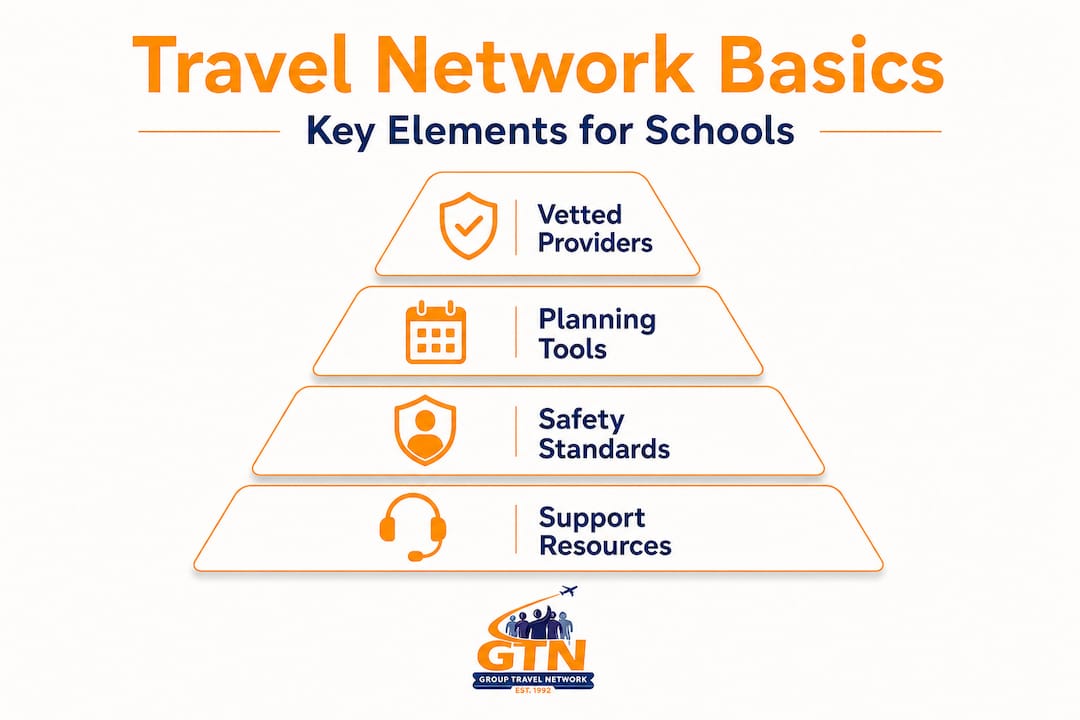
Think of it this way: planning a school trip without a travel network is like building a house without a general contractor. You might find a plumber and an electrician separately, but coordinating them, ensuring their work meets code, and managing timelines on your own is an enormous burden. A travel network is your general contractor, except the “house” is a safe, memorable, and educationally rich experience for your students.
Here is what a quality travel network typically connects you to:
- Vetted transportation and accommodation providers who meet established safety and quality benchmarks
- Destination-specific educational partners such as museums, historic sites, and performance venues
- Dedicated trip coordinators with experience managing the specific needs of student groups
- Pre-built planning tools including itinerary templates, permission slip frameworks, and budget calculators
- Risk management resources tailored to youth travel compliance
“SYTA is the premier professional trade association (opens in a new tab) promoting student and youth travel worldwide, establishing quality and safety standards for every organization in the network.”
Understanding what travel networks offer is the first step. The next is recognizing that not all networks are equal. Exploring Group Travel Network solutions gives you a practical sense of what a purpose-built network looks like in action. When you choose a travel network for student trips, you are choosing a system designed to remove the guesswork and replace it with a clear, supported process.
Key components of an effective student travel network
Once you understand what travel networks are, the practical question becomes: what should a good one actually include? Not every network delivers equal value, so knowing the foundational components helps you evaluate your options quickly and confidently.
| Component | What it includes | Why it matters to coordinators |
|---|---|---|
| Provider vetting | Background checks, safety audits, licensing verification | Reduces liability and parent concerns |
| Custom itinerary tools | Learning objective alignment, destination-specific options | Keeps trips educational, not just recreational |
| Centralized communication | Single platform for coordinators, vendors, and chaperones | Eliminates miscommunication and duplicated effort |
| Turnkey documentation | Permission forms, medical records, emergency contacts | Saves hours of administrative prep time |
| Flexible billing and payments | Installment options, group rate management | Makes trips accessible for more students |
Effective school group travel planning depends on having these components working together. When one piece is missing, the entire system becomes fragile. For example, a network with excellent vendors but no centralized communication tool often leads to coordinators spending hours chasing confirmations and managing conflicts across email chains, phone calls, and spreadsheets.
The SYTA framework emphasizes that comprehensive support networks connect administrators to vetted providers while custom itineraries prioritize safety and learning over pure tourism. That distinction matters enormously. A tourism-first itinerary fills time. An education-first itinerary builds on your curriculum, reinforces classroom concepts, and creates experiences students will reference for years.
Pro Tip: Before selecting a travel network, ask specifically how they align itinerary elements to learning standards. A quality network will have a clear answer. A vague response is a red flag worth noting.
To plan safe student travel, you need all five components above working as a cohesive system, not as isolated features bolted together. When they work in tandem, the administrative burden on coordinators drops significantly, and the overall quality of the trip rises in proportion.
Safety, accreditation, and risk management: The backbone of trust
Parents trust you with their children. That trust is not abstract; it demands concrete, verifiable commitments to safety. This is where accreditation and formal risk management standards become non-negotiable.
The ISO 31031 standard (opens in a new tab) addresses a long-standing confusion in youth travel risk management by providing a benchmark framework for operators. Implementation varies across providers, but top-tier operators integrate it into their audit processes and use it to strengthen their credibility with schools and parents. Knowing whether a network follows ISO 31031 tells you a great deal about how seriously they take risk.
| Feature | Accredited network | Non-accredited network |
|---|---|---|
| Third-party safety audits | Regular, documented | Rare or self-reported |
| Incident response protocols | Formal, tested procedures | Informal, ad hoc |
| Provider vetting | Standardized criteria | Varies widely |
| Insurance requirements | Clearly defined minimums | Often unclear |
| Training for chaperones | Structured programs offered | Usually absent |
The differences in that table are not minor. They represent the gap between a trip that goes smoothly even when something unexpected happens and a trip that unravels when it does.
Key questions every coordinator should ask a prospective travel network:
- What third-party bodies have audited your safety protocols?
- How do you respond to a medical emergency mid-trip?
- What training do you provide to chaperones and group leaders?
- What is your communication protocol if a student is separated from the group?
- How do you handle cancellations or force majeure events?
SYTA establishes quality and safety standards while providing education, training, and networking for all members organizing group excursions. Membership in SYTA is not a guarantee of perfection, but it is a meaningful signal that an organization has committed to ongoing professional development and peer accountability.
Understanding group travel insurance is another layer of protection that complements safety accreditation. Even the best-planned trip can encounter weather disruptions, health issues, or logistical failures. A strong network proactively connects you with appropriate insurance coverage rather than leaving that as an afterthought. Reviewing step-by-step planning for school group travel will show you exactly where insurance and safety documentation fit into a well-structured planning timeline.
How travel networks simplify planning and boost educational value
The practical, day-to-day value of a travel network is where most coordinators feel the difference most acutely. The reduction in administrative friction is real, measurable, and significant.
Here is how a quality travel network supports you from start to finish:
- Initial planning consultation. A dedicated coordinator reviews your educational objectives, group size, budget, and dates before any itinerary is built. This ensures the trip is designed around your goals, not around available inventory.
- Itinerary development. The network draws on destination expertise and curriculum alignment tools to build an itinerary that maximizes learning time without sacrificing student engagement or enjoyment.
- Vendor coordination. Transportation, accommodations, meals, venue bookings, and guided experiences are all confirmed and managed through the network. You receive updates without having to chase them.
- Documentation management. Permission forms, medical release forms, rooming lists, and emergency contact databases are handled within a centralized system. Nothing gets lost in someone’s inbox.
- Payment and billing. Installment plans, group rate negotiations, and budget tracking are managed through the network’s financial tools, reducing the burden on school finance departments.
- On-trip support. A dedicated point of contact is available during the trip itself, not just during planning. If something goes wrong, you have direct access to someone who can act immediately.
- Post-trip follow-up. Quality networks provide feedback tools, final billing reconciliation, and documentation packages that help you report outcomes to parents, school boards, and administrators.
Coordinating educational group journeys through a network means you spend your energy on students, not on logistics. That shift matters. When coordinators are not buried in spreadsheets and vendor emails, they can focus on the educational framing of the trip: pre-trip classroom preparation, on-trip learning activities, and post-trip reflection exercises that consolidate the experience.
Group travel agents specializing in educational trips understand that the trip is a teaching tool, not just a reward. The best ones push back constructively if an itinerary is leaning too heavily toward entertainment and not enough toward meaningful curriculum connection.
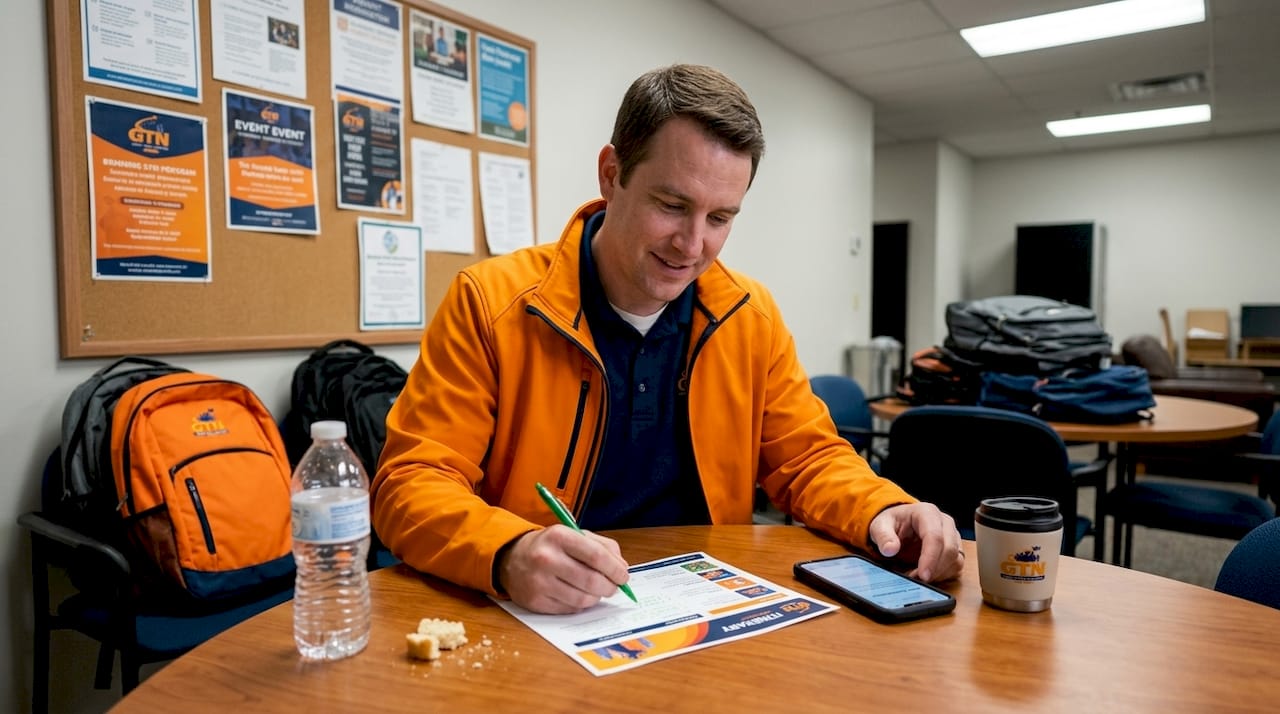
Pro Tip: Ask your travel network for a sample itinerary from a comparable school trip they have organized. The level of educational specificity in that itinerary will tell you immediately whether they think like educators or like tour operators.
Custom itineraries that prioritize safety and learning over generic tourism represent the highest form of value a travel network can deliver. They are the difference between a trip students talk about vaguely as “fun” and one they reference specifically as the moment history, science, or art became real to them.
Why most schools underuse travel networks (and how to avoid common pitfalls)
Here is an uncomfortable truth that most articles in this space will not say directly: the majority of schools that use travel networks still significantly underuse them.
They call the network when they need to book transportation and accommodations. They confirm the itinerary. They handle the paperwork. Then they largely stop engaging with the network’s expertise until the next booking cycle. This is a significant waste of a resource that can do far more.
Travel networks offer pre-built checklists, compliance guides, training resources for chaperones, curriculum integration frameworks, and direct access to destination experts. Most coordinators never ask for any of it because they do not realize it exists or they do not want to feel like they are admitting they need help. That instinct, while understandable, costs schools real value.
The other common pitfall is treating the network relationship as purely transactional. You get better outcomes when you treat your travel network contact as a genuine collaborator. Share your curriculum goals early. Be specific about what you want students to walk away understanding. Push back on itinerary elements that do not serve your learning objectives. A good network welcomes that conversation. A mediocre one will not know how to respond, and that response itself is important information.
Exploring school group travel solutions available through a purpose-built network, or reviewing a complete guide to group travel agencies, will show you how much more is available beyond simple booking support.
The schools that extract the most value from travel networks are the ones that start the planning conversation six to twelve months in advance, involve the network in curriculum planning, and treat the relationship as ongoing rather than transaction-by-transaction. That approach costs nothing extra. It just requires a shift in how you use the resource already available to you.
Take the next step: Make school group travel effortless
Planning a school group trip does not have to mean months of stress, fragmented vendor relationships, and hoping nothing falls through the cracks. With the right network behind you, the entire process becomes structured, supported, and genuinely manageable.
Group Travel Network exists specifically to give school administrators and trip coordinators the professional support that transforms good intentions into exceptional student experiences. From the comprehensive school trip planning guide that walks you through every stage of preparation, to resources that highlight the real benefits of group travel for students, everything you need to take the next step is already in place. Start your planning conversation today and give your students the trip that will actually matter.
Frequently asked questions
What is the main benefit of using a travel network for school trips?
Travel networks connect schools with vetted, experienced providers to ensure safety, quality, and administrative support at every stage of trip planning, removing the burden of managing vendors and logistics independently.
How do travel networks address safety concerns for student groups?
Top travel networks follow rigorous standards like the ISO 31031 benchmark framework and maintain third-party accreditations, giving parents and school boards confidence through documented, audited oversight rather than self-reported claims.
Can travel networks assist with fully customized educational itineraries?
Yes, professional networks provide tools and direct support for building custom itineraries tailored to specific learning outcomes, ensuring the trip reinforces curriculum rather than simply filling time with tourist attractions.
Are travel networks only useful for large schools or can smaller schools benefit too?
Travel networks offer scalable solutions across all school sizes. Tour operators and networks are structured to support both large group logistics and smaller, highly tailored excursions with the same level of professional coordination.
How do I evaluate if a travel network is reputable?
Look for industry memberships, third-party certifications, and clear documentation of safety protocols. Networks that establish quality and safety standards and invest in ongoing member training demonstrate the kind of accountability that distinguishes serious operators from casual ones.