

April 10, 2026
Travel management for teams: How schools plan smart group trips
TL;DR:
- Effective school trip planning involves managing safety, curriculum, budgets, and real-time communication.
- Managed travel programs reduce costs, increase transparency, and enhance safety protocols.
- Successful trips integrate educational goals, sustainability practices, and strict safety measures.
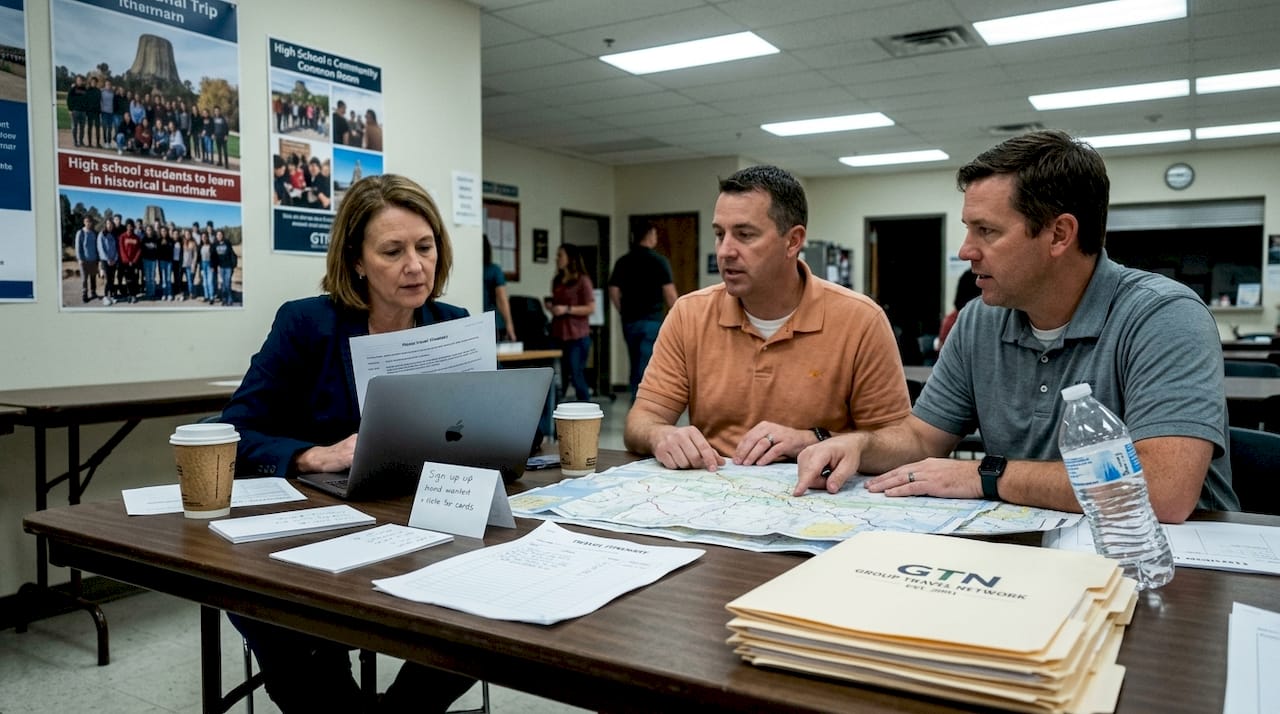
Most school administrators assume that planning a group trip means booking transportation, reserving hotel rooms, and handing out permission slips. In reality, the process runs far deeper. Coordinating a student group trip means managing duty of care, budget transparency, real-time communication, safety protocols, and curriculum alignment, all at once. One missed detail can derail the entire experience or, worse, put students at risk. This guide breaks down exactly how travel management for educational teams works, what separates a well-run trip from a chaotic one, and the strategies that experienced coordinators use to keep everything on track.
Table of Contents
- What is travel management for teams?
- Core elements of successful team travel management
- Cost control and transparency in group travel
- Integrating curriculum, safety, and sustainability
- Our perspective: Why thoughtful travel management transforms educational trips
- Get expert support for your next group trip
- Frequently asked questions
Key Takeaways
| Point | Details |
|---|---|
| Team travel requires oversight | Travel management for school teams involves more than logistics—it prioritizes safety, transparency, and educational value. |
| Professional management saves money | Managed programs typically save 20-30 percent in travel spend and reduce the risk of costly mistakes. |
| Parent trust is crucial | Transparent, all-inclusive pricing boosts parent and school board confidence in educational trips. |
| Sustainability is rising | Schools increasingly track carbon, choose rail when possible, and align travel with their environmental values. |
What is travel management for teams?
After highlighting why school trip planning can be complex, it’s crucial to define exactly what travel management for teams means and why it matters in education.
Travel management for educational teams is not simply booking flights and hotels. It is the structured process of overseeing every moving part of a group trip, from initial planning through safe return. For schools, this means managing group itineraries, controlling budgets, enforcing travel policies, and identifying risks before they become problems.
At its core, educational journey coordination involves three foundational responsibilities:
- Duty of care: Schools are legally and ethically responsible for every student in their charge. This means having emergency protocols, insurance coverage, and real-time tracking in place before anyone boards a bus.
- Compliance and policy: School boards and state regulations often dictate what vendors can be used, what insurance is required, and how funds must be documented.
- Support services: Unlike a family vacation, a school trip needs 24/7 access to support staff who can handle anything from a lost passport to a medical emergency.
What separates managed travel from a DIY approach is accountability. When a teacher tries to coordinate everything independently, there is no safety net. When a professional travel operator is involved, risk is distributed, documented, and mitigated.
93% of school trips are teacher-initiated, yet the most complex logistics, including vendor negotiations and compliance bookings, are handled by operators in 44% of cases.
Here is how roles typically break down across a managed school trip:
| Role | Primary responsibilities |
|---|---|
| Teacher or administrator | Trip concept, parent communication, student supervision |
| Travel operator | Vendor sourcing, itinerary design, compliance, emergency support |
| Travel manager | Budget oversight, policy enforcement, reporting, risk assessment |
Understanding group travel planning for schools through this lens makes it clear: the goal is not just a smooth trip. It is a defensible, transparent, and educationally sound experience. Following academic travel management best practices means treating student safety and learning outcomes with the same rigor that corporations apply to employee travel.
Core elements of successful team travel management
With a working definition of travel management, let’s dive into the essential elements that make educational group trips successful and safe.
Successful school group travel does not happen by accident. It follows a repeatable process that experienced coordinators refine over time. Here is how a well-managed trip comes together:
- Needs analysis: Identify the trip’s educational purpose, student demographics, budget range, and any special requirements like accessibility needs or dietary restrictions.
- Supplier sourcing: Vet vendors for safety records, licensing, and experience with student groups. Never choose based on price alone.
- Risk assessment: Map out potential hazards at the destination, including weather, political climate, health concerns, and transportation reliability.
- Detailed itinerary design: Build a day-by-day schedule that balances structured learning with appropriate downtime, keeping chaperone-to-student ratios in mind.
- Pre-trip briefings: Hold separate sessions for students, parents, and chaperones. Each group needs different information and different levels of detail.
- Ongoing support: Maintain open communication channels throughout the trip. A single point of contact for emergencies is non-negotiable.
Schools face unique pressures that corporate travel programs do not. Parents expect transparency. Students require supervision. Educators carry legal responsibility. Duty of care in this context means 24/7 support, emergency protocols, real-time tracking, and comprehensive insurance, all coordinated before departure.
Pro Tip: Before you sign any vendor contract, document your emergency contact chain and duty of care protocols in writing. Share this with your school board and every chaperone attending the trip.
Tracking systems matter more on school trips than on standard leisure travel because the stakes are higher. If a student goes missing or a medical situation arises, minutes count. Real-time location sharing and instant alert systems are not optional extras. They are baseline requirements. Reviewing educational travel advantages shows that schools with structured management report significantly fewer incidents and higher satisfaction from both parents and students.
Cost control and transparency in group travel
After learning what successful management looks like, it’s important to see how travel management can save money while building parent and school leadership trust.
Budget is always a pressure point for school trips. Parents scrutinize every line item. School boards want accountability. And unexpected costs can quickly turn a well-planned trip into a financial headache.

Managed travel programs address this directly. Corporate programs save 20 to 30% on travel spend through negotiated vendor rates, consolidated purchasing, and policy enforcement. Schools that apply the same discipline see comparable results.
Here is how managed and unmanaged school travel compare:
| Factor | Unmanaged travel | Managed travel |
|---|---|---|
| Cost visibility | Fragmented, often unclear | All-inclusive, itemized |
| Vendor negotiation | Limited or none | Bulk rates, preferred partners |
| Budget overruns | Common | Controlled with contingency planning |
| Oversight and reporting | Minimal | Full documentation for boards |
| Stress on coordinators | High | Significantly reduced |
The top sources of unexpected costs in school trips include:
- Last-minute transportation changes due to poor vendor vetting
- Medical or emergency expenses not covered by base insurance
- Meals and activities not included in quoted packages
- Currency fluctuation on international trips
- Cancellation penalties from non-flexible booking terms
Transparent, all-inclusive pricing is not just a financial tool. It is a trust-building tool. When parents see a clear breakdown of what their money covers, skepticism drops and participation increases. Simplifying group travel planning through a managed program means fewer surprises for everyone involved.
Working with trusted travel partners who specialize in student groups also means you benefit from their existing relationships with hotels, attractions, and transportation providers, relationships that take years to build independently.
Integrating curriculum, safety, and sustainability
While cost and logistics are key, the best group travel programs excel at integrating curriculum, prioritizing safety, and embracing new sustainability goals.
A school trip that does not connect to classroom learning is a missed opportunity. The most effective programs are built around specific learning outcomes. A history class visiting Washington D.C. should have pre-trip lessons, on-site guided discussions, and post-trip reflection assignments built into the itinerary. A science group visiting a national park should have field research components tied to their coursework.
Curriculum-aligned itineraries are not just educationally sound. They are also easier to get approved by school boards because they demonstrate clear academic value. When you can show exactly how a trip reinforces learning outcomes, administrators and parents are far more likely to support it.
Safety protocols specific to student groups include:
- Verified chaperone-to-student ratios (typically 1:10 for middle school, 1:12 for high school)
- Comprehensive travel insurance that covers medical evacuation and trip cancellation
- Emergency communication apps that allow instant contact between chaperones and coordinators
- Clear protocols for students with medical needs or allergies
- Destination-specific safety briefings before departure
Sustainability is becoming a real factor in school travel decisions. Many districts now require environmental reporting as part of trip approval. Choosing rail over air travel where possible, scheduling trips during off-peak seasons to reduce congestion, and selecting vendors with documented sustainability practices all contribute to a lower environmental footprint.
Pro Tip: Ask your travel operator for a carbon tracking report and sustainability summary. More operators now offer this as a standard feature, and it can be a powerful tool when presenting your trip proposal to school leadership.
Software portals that allow parents to access real-time itinerary updates, emergency contacts, and payment schedules also reduce the administrative burden on coordinators. When parents can log in and see exactly where their child’s group is and what they are doing, the volume of anxious phone calls drops dramatically. Academic travel management increasingly relies on self-service portals and carbon tracking tools as standard features, not premium add-ons.
Our perspective: Why thoughtful travel management transforms educational trips
After covering the nuts and bolts of travel management, here is our frank take on what most schools miss and how real change happens.
Many schools treat travel management as a checkbox exercise. They fill out forms, hire a bus, and call it planning. What they miss is the deeper opportunity: a well-managed trip can strengthen student relationships, deepen classroom learning, and build institutional trust in ways that no textbook can replicate.
The schools that see the most transformative outcomes are the ones that treat travel as a strategic extension of their educational mission, not a reward or a field trip. They involve students in destination selection, build in reflection time, and measure outcomes the same way they measure classroom performance.
We have also seen firsthand how strong duty of care protocols make a real difference when something goes wrong. Not if. When. A well-designed emergency response system means a coordinator can reach every chaperone, notify every parent, and contact local support within minutes. That is not a luxury. That is the baseline.
Our advice: stop treating sustainability and student voice as optional extras. Make them part of your planning process from day one. Explore the ultimate educational travel guide to see how leading programs are building these values into every trip they run.
Get expert support for your next group trip
If you are ready to apply these insights, connect with specialized group travel resources that bring these strategies to life.
Planning a student group trip that is safe, curriculum-aligned, and budget-transparent is a significant undertaking. You do not have to figure it out alone.

At Group Travel Network, we specialize in exactly this kind of work. Our educational group travel solutions are built around your school’s specific goals, safety requirements, and budget realities. Whether you need a custom itinerary, compliance-ready documentation, or a dedicated coordinator, our comprehensive school travel guide is a strong starting point. Ready to take the next step? Explore our safe journey coordination services and see how we can make your next trip the one students talk about for years.
Frequently asked questions
What are the biggest risks in school group travel, and how are they managed?
The largest risks are medical emergencies, lost students, and transportation failures. These are managed through 24/7 support protocols, real-time tracking systems, and comprehensive insurance that covers evacuation and cancellation.
How does travel management software support school teams?
Travel management software gives coordinators, parents, and chaperones access to live itineraries, cost breakdowns, emergency alerts, and carbon tracking tools, reducing administrative burden and improving communication throughout the trip.
Why do schools prefer managed travel programs?
Managed programs reduce coordinator stress, save 20 to 30% on travel costs, and provide the compliance documentation and safety infrastructure that school boards and parents expect. Teachers initiate most trips but rely on operators for the complex logistics.
What are the main differences between educational and leisure group travel?
Educational group travel requires curriculum alignment, strict safety ratios, parent communication systems, and regulatory compliance that leisure group travel simply does not demand. The accountability level is fundamentally different.
Recommended
- Step-by-step Group Travel Planning For School Trips • Group Travel Network
- Group Travel Services: 8 Ways To Simplify Planning In 2025
- School Group Travel: Safe Educational Journey Coordination
- Student Educational Travel: Ultimate 2025 Guide For Schools
- Corporate Travel Explained: Smarter Management and Safer Rides
- Travel itinerary guide: plan trips efficiently in 2026 – Around Travel

Relax with our Student Travel Expertise .
We deliver stress-free student trips backed by an exceptional array of services you won’t find anywhere else:
- Stress-free, creative planning of customized itineraries
- Dedicated GTN Service host on every trip
- Extensive travel protection plan options
- Online, individual registration system
- Flexible payment plans and online payment options
- Bulk buyer discounts for great trips that cost less
Inclusion into #MyGTNFamily for life! (you don’t even have to remember our birthday!)
Spain
There is no place like Spain to offer a student performance opportunity or cultural student trip.
Myrtle Beach
All students love the beach! Especially a beach known for its 60 miles of pristine coastline.
Boston
Have your students experience colonial charm in the city that is considered the hub of New England.
London
Provide your student group with the “Royal” treatment! One of the world’s most recognized cities.
See What People Are Saying
“What wonderful trip we had to NYC! Our group of 51 never missed a beat because of Group Travel Network and our wonderful guide, Tim. It was truly a theatre trip to remember! If you are looking for a travel company who really cares about the details, Group Travel Network is for you!”
“This was my first time using a company to plan our band trip. It was so easy working with Justin and Group Travel Network. We had to make several changes along the way, but they were accommodating changes and worked everything out for us. I would highly recommend using Group Travel Network.”
“It has been my privilege to use Group Travel Network as the exclusive travel coordinator for my band for over 10 years. I can say, without doubt or hesitation, that GTN is, by far, the best travel company for student groups currently in existence. I have often said that I wouldn’t take my band across the street without GTN and that’s not far from the truth!”