

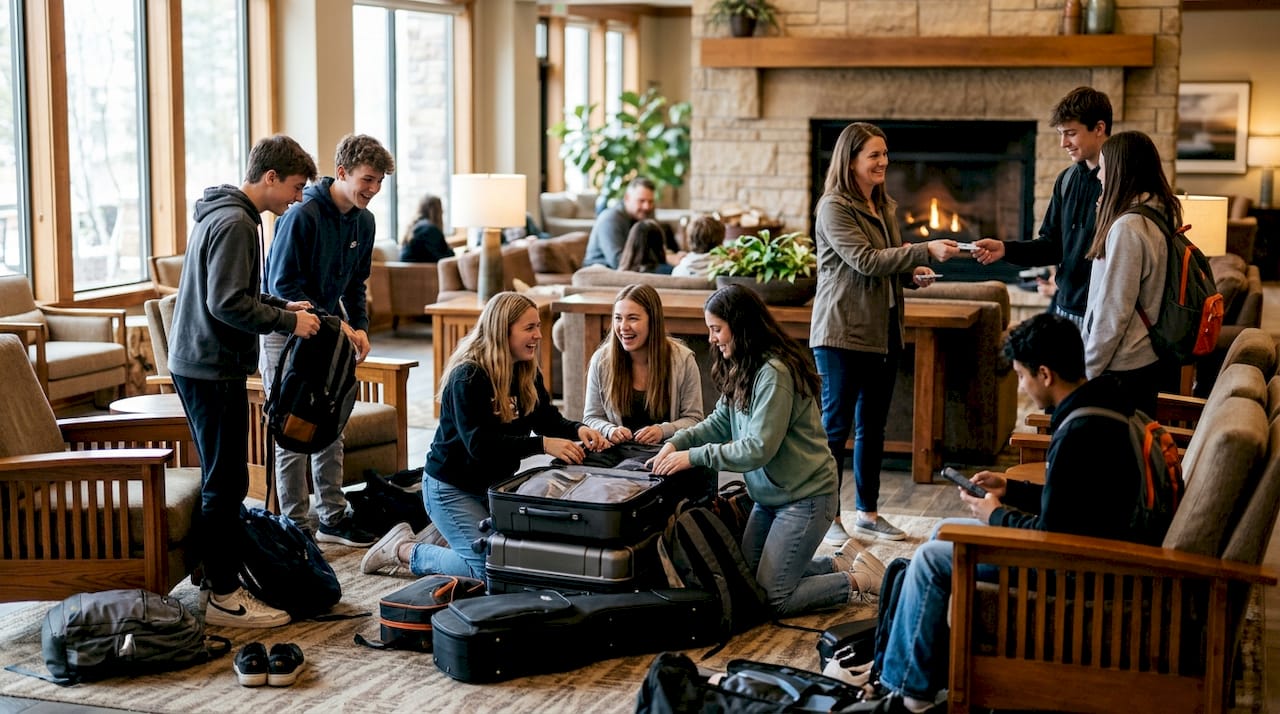
Before you sign anything, know this: a hotel stay for a youth group only works safely when five things are locked down before check-in. You need a documented adult supervision ratio, age and gender rooming rules, occupancy and key limits per room, signed parental consent with a leader acknowledgement, and a clear incident-reporting chain. Miss any one of these and you are relying on luck, not policy.
The group leader, not the hotel, is the default responsible party for enforcing these rules. Most properties that regularly host school, sports, or ministry groups will ask you to sign a group-hotel agreement covering occupancy, chaperone ratios, and financial responsibility for damage. A sample of this kind of language appears in the Hampton group policy (opens in a new tab), which spells out registered-guest age minimums and leader liability in plain terms.
Insurer guidance on youth overnight events is blunt about the baseline: you need at least two screened, unrelated adults supervising activities, and no adult should ever be alone with a child in an enclosed space, according to Brotherhood Mutual’s safety guidance (opens in a new tab).
Before you leave for the hotel, make sure you have:
- A signed group-hotel agreement matching your chaperone ratio and rooming plan
- A printed rooming list with ages and room assignments
- Signed parental consent and medical forms for every minor
- A leader acknowledgement form outlining behavior and financial responsibility
- Emergency contact numbers for every chaperone and every guardian
Pro Tip: Print two copies of your rooming list and signed agreement. Hand one to the front desk at check-in and keep one with your lead chaperone for room checks.
Key Takeaways
Safe youth group hotel stays depend on enforcing supervision ratios, rooming rules, key control, signed consent, and a clear incident-reporting process before the group ever checks in.
| Point | Details |
|---|---|
| Set the chaperone ratio first | Use roughly 1:8 for ages 11 to 13 and up to 1:20 for older teens, tightening for higher-risk activities. |
| Enforce the two-adult rule | Insurer guidance requires at least two screened adults supervising, with no adult ever alone with a minor. |
| Control keys and rooming | Leaders hold all keys, roommates stay within a two-year age range, and rooms follow the hotel’s occupancy cap. |
| Collect consent before departure | Gather signed medical consent, medication authorization, and a conduct agreement for every participant. |
| Consider a coordinator for complex trips | Group Travel Network assigns a dedicated coordinator to manage rooming, hotel agreements, and travel protection for larger or multi-night groups. |
Table of Contents
- Adult Supervision Ratios and Chaperone Rules for Hotel Stays
- Rooming Assignments, Occupancy Limits, and Key Control
- Facility Rules Every Organizer Must Confirm Before Arrival
- Organizer Responsibilities, Conduct Rules, and Financial Liability
- A Sample Hotel Group Agreement and Check-In Checklist
- Consent Forms, Medical Information, and Leader Acknowledgement
- Incident Reporting and Emergency Procedures
- How Group Travel Network Supports Safe, Compliant Hotel Stays
- Booking and Reservation Rules That Apply Specifically to Youth Groups
- Accessibility and Special Needs Provisions for Youth Groups
- Staff Training and Support for Managing Youth Groups
- Balancing Strictness With Practicality on the Ground
- Let Group Travel Network Handle the Hotel Logistics for You
- Sources
- FAQ
Adult Supervision Ratios and Chaperone Rules for Hotel Stays
Getting the ratio wrong is the single most common reason youth group hotel stays go sideways. Younger groups need tighter coverage than teenagers, and the ratio should shift depending on whether kids are in a supervised activity or free time in their rooms.
Conference and outdoor education providers, who host youth overnight groups constantly, generally use a 1:20 baseline for older teens with unrestricted stricter numbers for higher risk settings. NatureBridge’s youth group expectations (opens in a new tab) specify a minimum of one adult per 20 youth, tightening to roughly 1:10 for higher risk activities like beach time or water access. For younger groups, ages 11 to 13 on an overnight trip, a 1:8 ratio is a safer working number, especially during unstructured evening hours in a hotel.
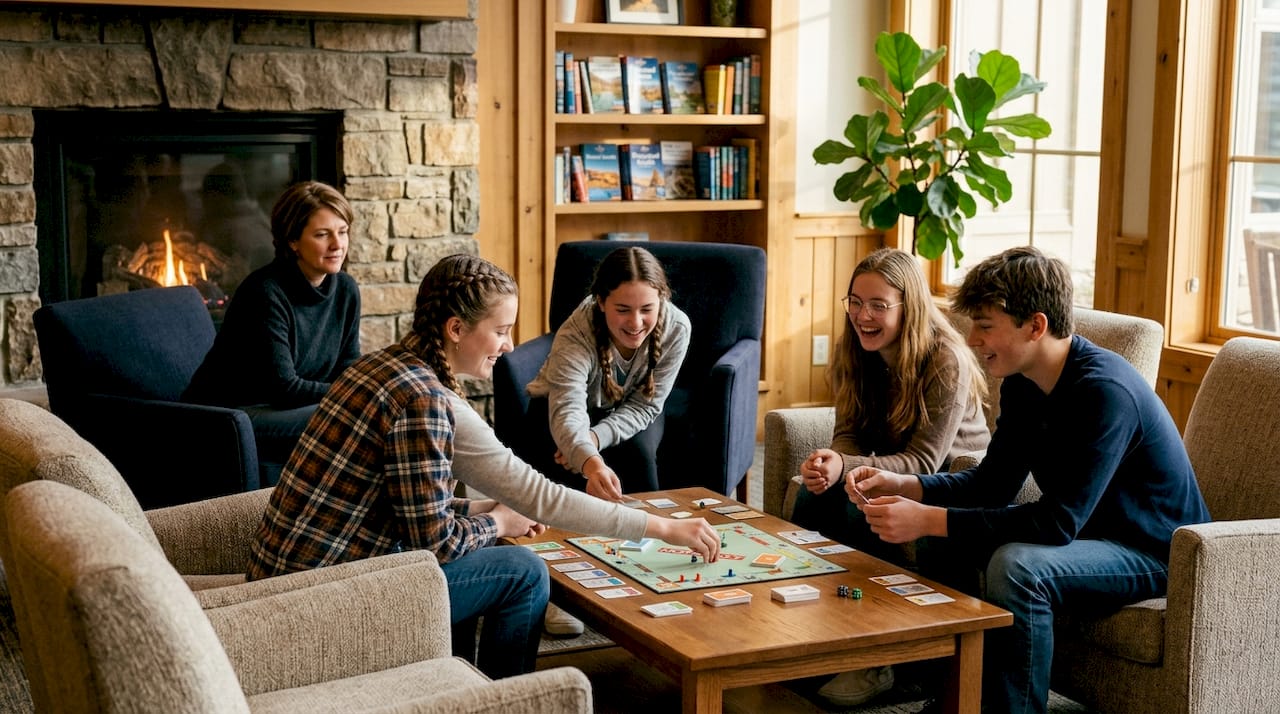
Chaperones should be at least 21 years old, screened in advance, and matched to cover both genders in the group. Insurer guidance is explicit that groups need at least two screened, unrelated adults supervising at any given time, and that no single adult should ever be alone with a minor behind a closed door, per Brotherhood Mutual. That single rule prevents more liability exposure than almost anything else in this article.
In practice, this means:
- Assign one male and one female chaperone whenever the group includes both genders
- Keep an open-door policy during any one-on-one interaction between an adult and a minor
- Run staggered room checks at set times, not just once before lights-out
- Designate one chaperone as the transport and arrival lead so hotel staff know who to call
Rooming and supervision only work when one person owns the whole plan. Reviewing the chaperone role guide (opens in a new tab) before you finalize assignments helps you catch gaps, like an unaccompanied gender group or a chaperone without a clear duty window, before they turn into problems on the road.
Rooming Assignments, Occupancy Limits, and Key Control
Room assignments are where hotel youth group policies get specific fast, and where organizers most often improvise instead of planning. Most youth-serving programs follow a two-year age rule: kids should not be roomed with peers more than two years apart in age, and never mixed by gender past early childhood. A 12-year-old and a 15-year-old sharing a room is a mismatch in maturity and supervision needs, even if both are technically “middle schoolers.”
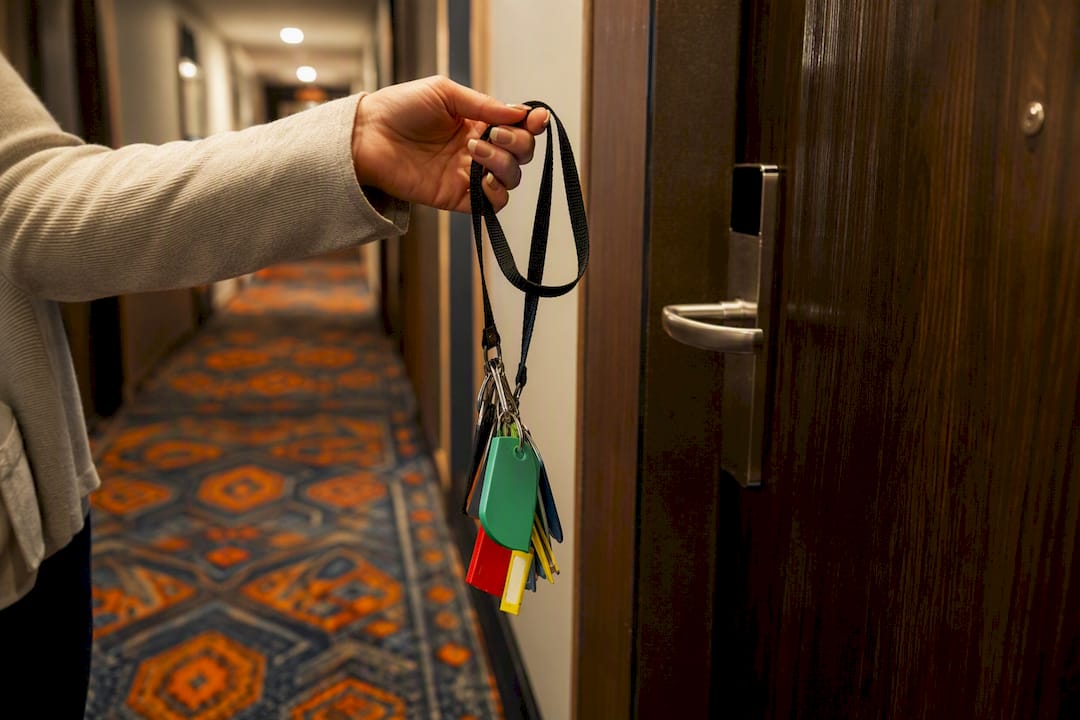
Occupancy limits are not negotiable and they are not arbitrary. Hotel group policies commonly cap rooms at four guests, tied directly to fire code and furniture capacity, and require that the primary registered guest on the room meet the hotel’s minimum age, according to the Hampton group policy. That means a 16-year-old cannot be the name on the reservation even if every other occupant is a minor.
Acceptable rooming setups typically look like this:
- Two to four same-gender youth within the two-year age band, one adult-held key per room
- One adult chaperone per gender-segregated hallway or floor, with a room near the group’s cluster
- A separate room for any student requiring medical monitoring or accessibility support, adjacent to a chaperone’s room
Key management deserves its own workflow, not an afterthought. NatureBridge’s conference center rules require adults, not youth, to hold keys or door codes, and require joint room inspections with staff at arrival and departure. Build this into your process:
- Leaders hold all room keys and log check-out times for any youth needing temporary access
- Sign-out sheets track who has a key at any moment during the stay
- A designated deputy chaperone handles lost-key replacement so the lead organizer isn’t pulled away from group duties
Facility Rules Every Organizer Must Confirm Before Arrival
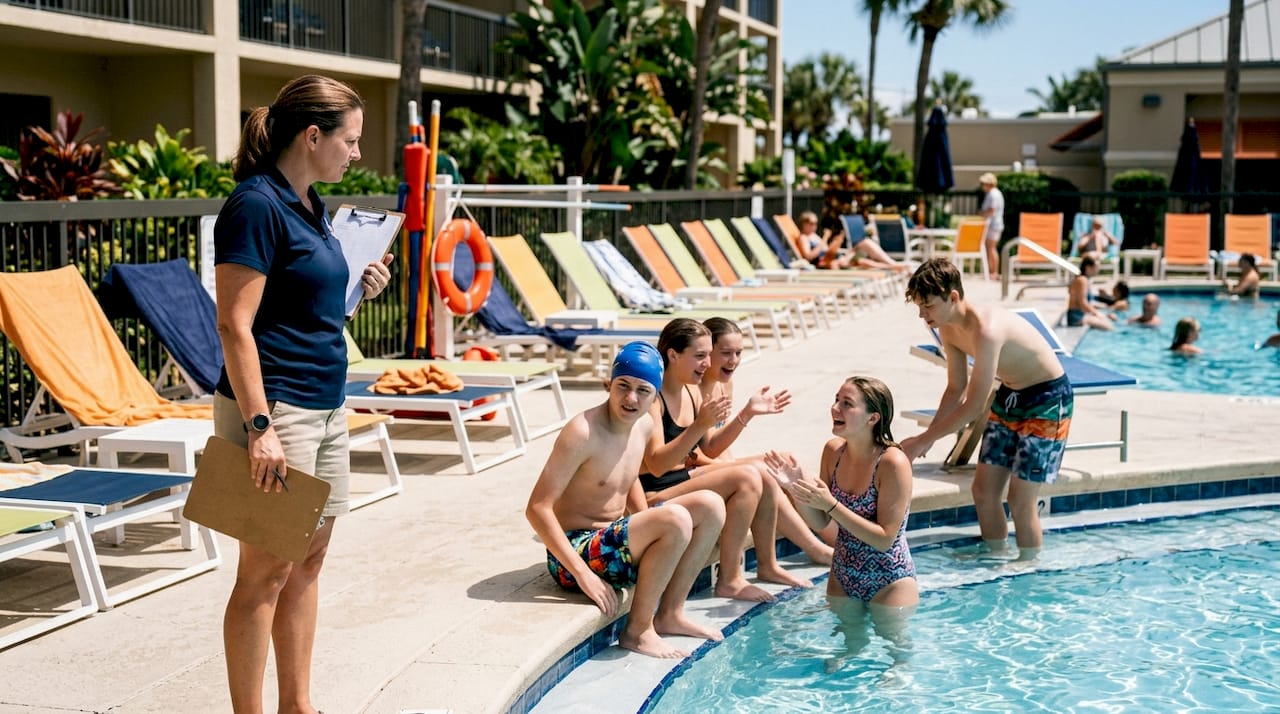
Pools, fitness rooms, and shared spaces are where hotels expect organizers to enforce their own supervision, not rely on hotel staff to police it. Most properties do not provide lifeguards, and group policies typically require an adult present anytime minors use the pool or hot tub, regardless of swimming ability. Confirm this with the hotel directly at booking, not at check-in, because pool hours and supervision requirements vary by property.
Fitness centers frequently carry a minimum age requirement, often 18, unless a parent or chaperone is physically present. Ask the hotel for their written age policy on this before your group arrives, so you’re not negotiating it in the lobby.
Alcohol and smoking policies are non-negotiable for youth groups. Hotel group agreements generally prohibit alcohol in any space where minors are present, ban it outright in public areas during a youth group stay, and treat violations as grounds for removal from the property, per the Hampton group policy. Smoking restrictions apply the same way, with added cleaning fees for violations in non-smoking rooms.
Before your group checks in, confirm and communicate:
- Pool and hot tub hours, and whether a chaperone must be poolside at all times
- Fitness center age minimums and whether chaperone accompaniment satisfies them
- Quiet hours (commonly 10 p.m. to 7 a.m.) and hallway conduct expectations
- No food or gatherings in guest rooms beyond the assigned occupants
- Zero tolerance for alcohol and smoking, with the consequence stated up front
Organizer Responsibilities, Conduct Rules, and Financial Liability
Signing a hotel group agreement means accepting responsibility for your group’s behavior, not just their safety. Every hotel agreement of this kind includes language making the organizer financially liable for property damage, excessive cleaning, or noise complaints traced back to the group. That is standard, and hotels enforce it: violations can lead to added charges, removal from the property, or police involvement in serious cases, according to the Hampton group policy.
Set conduct expectations in writing before departure, not verbally in the parking lot:
- No unauthorized guests in rooms, ever, regardless of age
- No room-to-room visiting after quiet hours without a chaperone present
- No moving furniture, propping doors, or covering smoke detectors
- Immediate compliance with any hotel staff request regarding noise or safety
Leader duties extend past enforcing rules. You are responsible for tracking whereabouts at all times, running room checks jointly with your co-chaperones, managing medications and allergy information for the group, and documenting compliance in case a dispute arises later. This is exactly the kind of load that becomes unmanageable past a certain group size, which is one reason larger programs bring in a dedicated coordinator rather than handling it solo.
Pro Tip: Keep a single shared document, digital or paper, where every chaperone logs room checks with a timestamp and initials. It takes thirty seconds per check and becomes your best evidence if a dispute over damages or behavior comes up later.
A Sample Hotel Group Agreement and Check-In Checklist
A short, signable agreement does more to prevent problems than a verbal conversation with the front desk ever will. Clear group policies reduce friction at check-in and give hotel staff something concrete to enforce, which is exactly the function this kind of document serves.
Here is language you can adapt directly:
- Occupancy and rooming: Rooms will not exceed [hotel’s stated maximum, commonly 4] occupants. Roommates are matched by gender and within a two-year age range.
- Chaperone ratio: The group maintains a minimum ratio of 1 adult per [8 to 20, depending on age] youth at all times, including overnight hours.
- Key control: Chaperones hold all room keys. Youth do not carry keys unless a chaperone authorizes temporary access.
- Facility use: Pool, hot tub, and fitness center use requires direct chaperone supervision and compliance with posted hotel hours.
- Conduct: No alcohol, no unauthorized guests, and compliance with quiet hours from [time] to [time].
- Financial responsibility: The group leader accepts responsibility for damages, excessive cleaning fees, or disturbances caused by group members.
- Incident reporting: Any medical, behavioral, or safety incident will be reported to hotel staff and documented in writing within 24 hours.
At check-in, bring:
- The signed agreement, printed
- A finalized rooming list with names and ages
- Emergency contact numbers for every participant
- Photo ID for every chaperone
- Medical and allergy forms for the group
Ministry groups may want to add a clause about devotional gathering spaces; sports teams often need language covering equipment storage; school groups typically add a curfew tied to the next day’s schedule. The student travel accommodation standards guide (opens in a new tab) is a useful reference when adapting this template to your group’s specific needs.
Consent Forms, Medical Information, and Leader Acknowledgement
Every hotel stay with minors depends on paperwork collected weeks before departure, not the morning of. You need four documents for every participant: a signed parental permission form covering emergency medical consent, a medication authorization listing dosages and administration times, a photo and media release if the trip involves any public performance or promotion, and a signed conduct agreement acknowledging the group’s behavioral expectations.
Hand the hotel a condensed version of this at check-in: your rooming list, emergency contact numbers for every guardian, direct phone numbers for every chaperone, and the signed group agreement. You do not need to hand over medical details to hotel staff. Keep those with the lead chaperone or designated first-aid contact only.
Store medical and consent forms securely during travel. Insurer guidance stresses documenting the event properly and confirming coverage in advance, and communicating policies to parents before departure rather than explaining them after something has already gone wrong, per Brotherhood Mutual.
Practical handling rules:
- Keep physical forms in a locked folder or bag, not loose in a chaperone’s backpack
- Digital copies should be password protected and accessible to at least two chaperones in case one is unavailable during an emergency
- Photo releases and conduct agreements can travel with the rooming list since they carry no sensitive health data
Incident Reporting and Emergency Procedures
When something goes wrong, the speed and clarity of your response matters more than almost anything else in this article. Build a simple decision sequence before you ever need it.
For a medical emergency:
- Stabilize the situation and assess whether the injury or illness requires immediate care.
- Call 911 if there is any doubt about severity. Do not wait to see if symptoms pass.
- Notify hotel security or the front desk immediately so they can direct emergency responders.
- Contact the parent or guardian as soon as the immediate situation is under control.
- If hospital transport occurs, assign one chaperone to accompany the student while the rest of the group stays supervised under the remaining ratio.
For behavioral violations or criminal conduct, separate the individuals involved first, then loop in hotel staff. Serious incidents may require police involvement, and hotel agreements typically reserve the right to remove a group member from the property without refund in these cases, per the Hampton group policy.
Document everything using a standardized incident report: time, location, people involved, witnesses, hotel staff notified, immediate action taken, and next steps. Keep one copy with the hotel and one in your own group records for insurance or district reporting purposes, following the format outlined in Brotherhood Mutual’s guidance.
Pro Tip: After any incident, no matter how minor, debrief with the hotel manager before you leave the property. A five-minute conversation on-site prevents confused follow-up calls and mismatched accounts later.
Afterward, notify your insurer if the incident involves injury or property damage, file a follow-up report with your school or organization, and send parents a clear, factual update. Vague communication after an incident erodes trust faster than the incident itself.
How Group Travel Network Supports Safe, Compliant Hotel Stays
Handling all of this manually works for a single team of 15 kids and three chaperones. It gets much harder at scale, and that is exactly where a dedicated coordinator earns its cost. Group Travel Network assigns a dedicated trip coordinator to manage rooming lists, verify chaperone ratios against hotel policy, and negotiate group agreements directly with vetted hotel partners, which removes a significant chunk of the administrative load from the organizer.
Self-managing with templates works fine for smaller, single-hotel trips. Once you’re coordinating multiple buses, a performance schedule, or lodging across several nights, a specialist handling vendor relationships and travel protection options reduces the number of moving pieces you personally have to track. That shift in responsibility is often the difference between a trip that runs smoothly and one where the organizer spends the whole time firefighting instead of supervising.
Booking and Reservation Rules That Apply Specifically to Youth Groups
Youth group hotel bookings work differently than a standard reservation, and treating them the same way creates problems later. Most hotels require a deposit at the time of booking, often calculated per room block rather than per person, and that deposit is frequently non-refundable past a set date, sometimes 30 to 60 days before arrival depending on the property.
Cancellation policies for group blocks tend to be stricter than individual reservations because the hotel has held inventory specifically for your dates. Ask for the exact cancellation window in writing, along with whether partial cancellations, say, if five students drop out, trigger a rebooking fee or a reduction in your group rate.
Minimum stay requirements show up more often with performance tours and tournament weekends, when hotels near a venue expect multi-night bookings during peak demand. If your group only needs one night but the property requires two, factor that cost into your budget conversation with parents early, not after the deposit is already down.
Experts caution against letting individual families or students book their own rooms through consumer travel sites, even when it seems more convenient. Self-booking removes the organizer’s ability to enforce rooming, verify chaperone coverage, and confirm the group agreement is in place, according to Brookings’ analysis of protections for minors in travel (opens in a new tab). A coordinator-managed group booking keeps every room tied to the same agreement, the same rooming list, and the same point of contact.
Accessibility and Special Needs Provisions for Youth Groups
Every youth group has participants with needs beyond the standard rooming and supervision plan, and hotel policies need to account for that before arrival, not during check-in. Request ADA-compliant rooms early for any student using a wheelchair or mobility device. Hotels typically have a limited number of these rooms, and group blocks can fill them fast if you don’t flag the need at booking.
For students with food allergies, communicate details to the hotel if breakfast or dining is included, and confirm ingredient information ahead of the trip rather than reading a label in the lobby the morning of. For students with sensory sensitivities, requesting rooms away from elevators, ice machines, or ground-floor foot traffic makes a meaningful difference in how well they cope with an unfamiliar environment overnight.
Medication management deserves particular attention here. Any student with a documented medical condition, whether it’s diabetes, severe allergies, or a condition requiring nightly medication, should be roomed near a chaperone trained to recognize and respond to that specific need, not just assigned by age and gender alone.
Build this into your planning checklist:
- Confirm ADA room availability and location at booking, not check-in
- Share dietary restrictions with the hotel in advance if meals are included
- Room students with sensory needs away from high-traffic areas when possible
- Pair students with medical conditions near a chaperone briefed on their care plan
Staff Training and Support for Managing Youth Groups
Chaperones who show up without preparation are the weakest link in any hotel youth group policy, no matter how well the paperwork is written. Every adult supervising the trip should know the chaperone ratio, the rooming plan, the key control process, and the emergency chain before the bus leaves the parking lot, not after arriving at the hotel.
Run a short briefing before departure covering the two-adult rule, the open-door policy for one-on-one interactions, and exactly who to call if a student needs medical attention or breaks a conduct rule. Chaperones who understand the reasoning behind a policy, not just the policy itself, enforce it more consistently when something unexpected happens at 11 p.m. on the second night.
Assign specific roles rather than leaving supervision as a shared, vague responsibility. One chaperone should own key control and room checks. One should hold medical forms and manage medications. One should be the designated point of contact for hotel staff if an issue comes up. Splitting these roles prevents the common failure mode where everyone assumes someone else is handling it.
New or first-time chaperones benefit from pairing with someone experienced on their first overnight trip. A quick review of the chaperone role guide before the trip gives less experienced adults a concrete reference for what’s expected, rather than learning the ratio rules and reporting chain in real time during an actual incident.
Balancing Strictness With Practicality on the Ground
Some rules are not up for debate. Supervision ratios, the two-adult policy, and key control exist because they prevent the exact situations that turn into lawsuits or, worse, real harm to a kid. Do not soften these to keep the trip feeling relaxed.
Where you can flex is in the small stuff: extending quiet hours by twenty minutes after a late game, letting a group gather in a common area instead of splitting by room. Rigid enforcement of every minor rule burns trust with teenagers fast, and trust is what makes them actually follow the rules that matter. The organizers who get this right treat the non-negotiables as non-negotiable and everything else as a judgment call. When a trip’s logistics outgrow what a volunteer chaperone team can manage alone, that’s usually the signal to bring in a specialist rather than stretch your own team thinner.
— Donovan
Let Group Travel Network Handle the Hotel Logistics for You
Writing your own group agreement and chasing down chaperone ratios is manageable for one trip, but for practical advice on managing group travel logistics, the tips in Seamless Group Travel: New Ways to Plan for Events can be invaluable. Managing it for every away game, every performance tour, and every field trip for years is a different job entirely, and it’s one Group Travel Network was built to take off your plate. A dedicated trip coordinator negotiates the hotel group agreement on your behalf, builds the rooming plan around your chaperone ratio, and coordinates travel protection options so you’re not the only line of defense if plans change.

This kind of support tends to make the most sense once you’re coordinating multiple hotel nights, a performance schedule, or a group large enough that manual rooming lists start creating errors. Pricing depends on group size, destination, and length of stay, and a coordinator can walk you through the specifics before you commit to anything. If you’re planning an upcoming trip and want the administrative load handled for you, start with the step-by-step school group travel planning guide (opens in a new tab) to see what a fully coordinated hotel stay looks like from booking to check-out.
Sources
- Preparing for a Youth Ministry Overnight Event (opens in a new tab)
- Conference Youth Group Expectations (NatureBridge) (opens in a new tab)
- Hotel Group Policy (Hampton sample) (opens in a new tab)
- Patchwork protection of minors (Brookings analysis) (opens in a new tab)
FAQ
What Are the Rules for a Youth Group Staying at a Hotel?
At minimum, groups need a documented adult supervision ratio, age and gender rooming rules, occupancy limits per room, leader-held keys, signed parental consent, and a signed group-hotel agreement covering financial responsibility.
What Are the Hotel Policies for Children Traveling Without Parents?
Most hotels require a primary registered guest of legal adult age on every room, even when the room is filled with minors, and hold the adult chaperone responsible for supervision and any damages, per the Hampton group policy.
Can Two 16-Year-Olds Stay in a Hotel Alone?
Most hotels do not permit minors to be the registered guest on a room, so two 16-year-olds generally cannot book or occupy a room without an adult’s name on the reservation, though exact age minimums vary by property.
Can Two Adults and Three Kids Stay in One Hotel Room?
It depends on the hotel’s occupancy cap, which commonly limits rooms to four total guests tied to fire code, so two adults and three children may exceed that limit and require a second room.
Should Youth Group Members Book Their Own Hotel Rooms?
No. Self-booking removes the organizer’s ability to confirm rooming, chaperone ratios, and the group agreement, so a coordinator-managed or organizer-booked reservation is the safer standard.
Recommended
- How To Create Group Itineraries That Work For Everyone • Group Travel Network (opens in a new tab)
- Youth Travel Packing List: 10 Must-Haves For 2026 • Group Travel Network (opens in a new tab)
- Youth Group Leadership Tips: 2026 Guide For Ministry Leaders • Group Travel Network (opens in a new tab)
- Student Travel Accommodation Standards: 2026 Guide For Schools • Group Travel Network (opens in a new tab)