

TL;DR:
- Community enhances student safety, learning, and participation by fostering genuine connections during trips. Planning intentional pre, on, and post-trip activities builds trust, identity, and belonging, yielding measurable positive outcomes. Dedicated coordinators and strategic logistics support sustain community-driven experiences that improve both performance and long-term engagement.
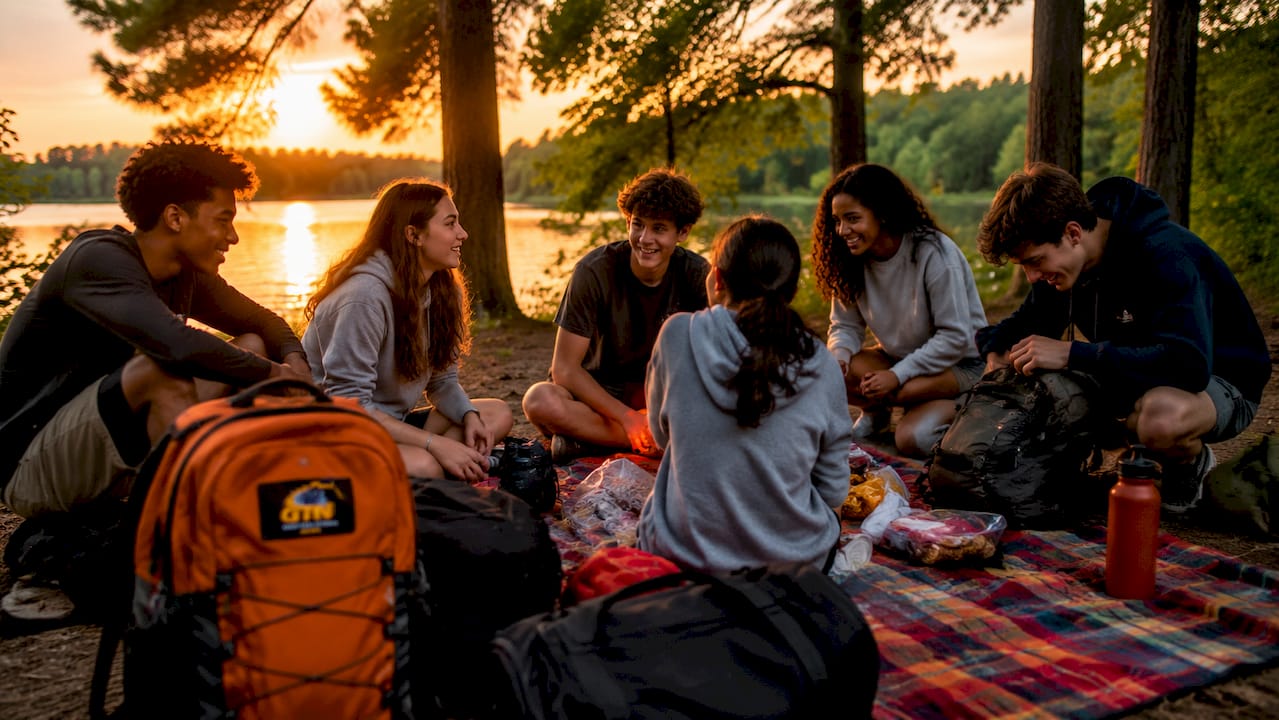
Community is the single biggest multiplier for student group trips. Strong group cohesion improves safety, deepens learning, sharpens performance quality, and drives repeat participation — every goal on your planning checklist gets better when students genuinely connect with each other. The Adventure Travel Trade Association’s findings show that over 70% of travelers now actively seek community-focused experiences, with demand even sharper among youth groups. Oxytocin, the neurochemical released during shared novel experiences, accelerates trust faster on a five-day trip than months of classroom time can. Grouptravelnetwork is built around exactly this reality: coordinating student and performance group trips so that community formation is a design feature, not a happy accident.
Three priorities to act on now:
- Assign trusted peer leaders before departure, not on day one of the trip
- Plan at least two structured shared activities that mix students across their usual social clusters
- Confirm your chaperone ratios in writing before finalizing any vendor contracts
Pro Tip: Cut one itinerary stop if you have to, but never cut the pre-trip bonding session. Students who arrive knowing two or three peers outside their friend group are measurably calmer, safer, and more engaged from hour one.
Table of Contents
- Why does community in group travel improve student outcomes?
- How does community actually form on a group trip?
- How do you build community before, during, and after the trip?
- What logistics decisions make or break community on student trips?
- How do you measure community impact and report it to stakeholders?
- What does a community-focused school performance tour look like in practice?
- Key Takeaways
- What consistently works on school trips
- Grouptravelnetwork makes community-focused trips easier to plan
- Useful sources
- FAQ
Why does community in group travel improve student outcomes?
Over 70% of travelers now seek adventures built around social connection. For student trips, that preference translates directly into outcomes administrators can report to principals and parent groups.
Core benefits, each tied to a measurable outcome:
- Safety and supervision: Students who feel belonging stay closer to the group, report concerns faster, and respond to chaperone guidance more readily — fewer incidents, cleaner incident logs
- Performance cohesion: Ensembles that bond off-stage rehearse with more focus and recover from mistakes faster; directors report tighter ensemble sound after community-focused tours
- Classroom-to-field learning transfer: Students embedded in a connected group ask more questions, engage with guides, and retain more — post-trip assessment scores reflect it
- Confidence and reduced homesickness: Peer support networks form quickly when community is intentional; first-night anxiety drops when students already have a buddy
- Repeat participation: Niche group travel research confirms that interest-based groups with strong internal bonds show higher re-enrollment and repeat travel rates
The measurable markers administrators care about — rehearsal attendance, post-trip survey scores, parent satisfaction ratings, and next-year booking intent — all trend upward when community is treated as a program goal rather than a side effect.
How does community actually form on a group trip?
Shared, novel experiences create fast, durable social bonds through mechanisms that are well-documented in social psychology and neuroscience. The short version: novelty activates reward circuits, oxytocin release strengthens trust, and the group develops a shared identity that persists long after the trip ends.
Three mechanisms matter most for organizers:
- Oxytocin and trust: Novel shared challenges — a first rehearsal in an unfamiliar venue, a group navigation task, a communal meal in a foreign city — trigger oxytocin release that accelerates trust between near-strangers
- Identity shift: As clinicians observe (opens in a new tab), travel temporarily lowers everyday social defenses; students become more authentic, which creates openings for real connection that a school hallway rarely allows
- Collective efficacy: Sociologists describe collective efficacy as a group’s shared belief in its own ability to meet goals — it forms when students face and overcome challenges together, and it translates into real performance gains back home
Design implication: low-stakes vulnerability exercises (sharing a travel fear, a first-day reflection prompt) work precisely because the identity-shift mechanism is already active. You are not forcing connection; you are giving it a channel.
How do you build community before, during, and after the trip?
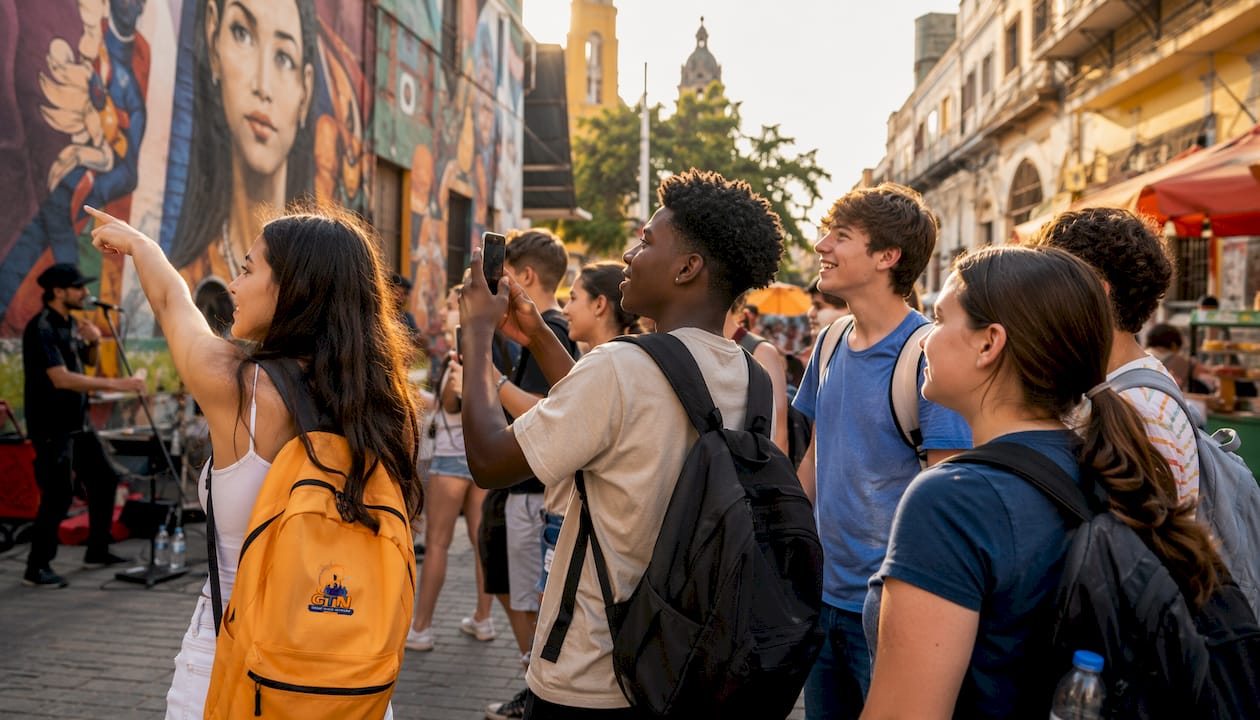
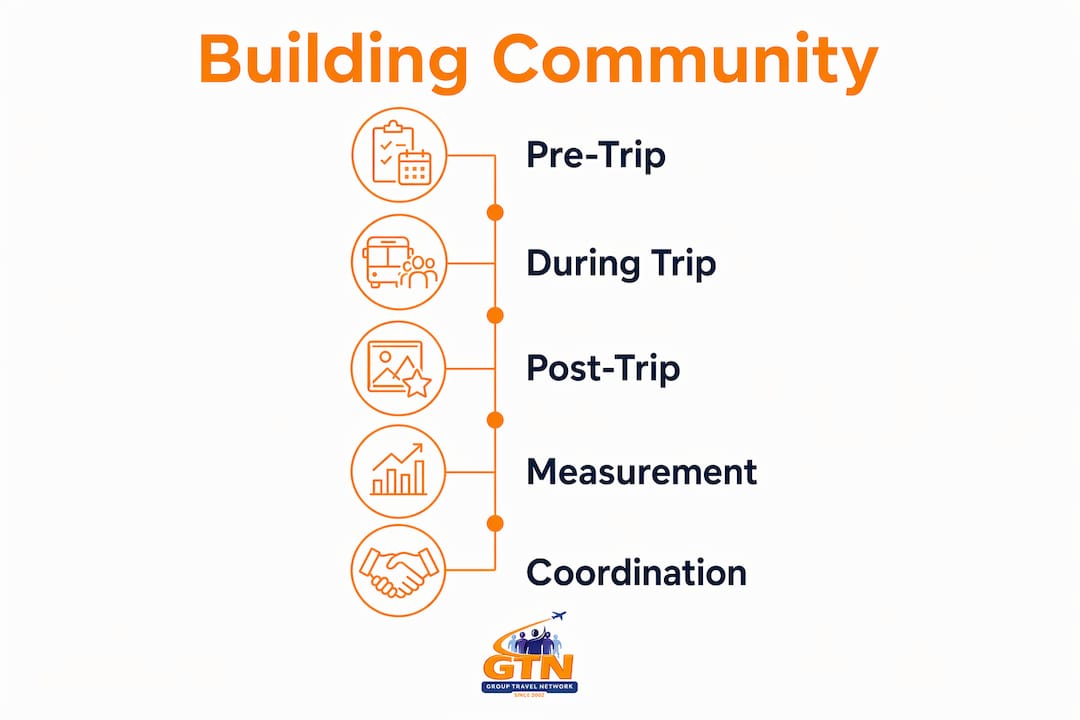
Community is built intentionally across three phases. Pre-trip creates the social foundation. On-trip deepens it through shared experience. Post-trip converts momentum into lasting bonds and future participation.
Pre-trip (registration through two weeks before departure)
- Send a short “meet your group” video or digital introduction board so students see familiar faces before day one
- Run two small-group icebreaker sessions (virtual or in-person) organized by mixed social clusters, not existing friend groups
- Identify and brief peer leaders — students who will anchor buddy pairs and morning huddles
- Assign a shared learning task tied to the destination (a short research prompt, a playlist, a photo challenge)
- Set clear social media and privacy expectations in writing; students who know the rules participate more freely
On-trip
- Open each day with a 10-minute morning huddle: one highlight from yesterday, one intention for today
- Rotate buddy pairs every 24–48 hours so students connect across the full group, not just their arrival cluster
- Use mixed-ability teams for activity challenges; performance groups benefit from cross-section rehearsal pairings
- Build shared meal prompts into at least one dinner: a single question on a card at each table works well
- Mark milestones with micro-ceremonies — a group photo at a landmark, a short applause circle after a strong performance
Pro Tip: Teen energy crashes hard around day three. Schedule your highest-stakes community activity on day two, not day four. Save the free-exploration afternoon for when fatigue peaks.
Post-trip
- Run a structured 30-minute debrief within 48 hours of return; use three questions: What surprised you? What did you learn about someone else? What do you want to carry forward?
- Create a moderated shared media channel (a private album, a class page) so students can relive and share memories safely
- Schedule one reunion event within 60 days — even a casual lunch keeps the network alive
- Convert post-trip energy into next-year interest: a brief survey asking “Would you travel again?” doubles as your first data point for stakeholder reporting
What logistics decisions make or break community on student trips?
Logistics are the scaffolding for community. Strong programming collapses when rooming assignments isolate students, bus seating locks in existing cliques, or chaperone ratios leave staff too stretched to facilitate connection.
Chaperone and housing checklist:
- Follow age-based ratio guidance: most school districts and state guidelines recommend 1 chaperone per 8–10 students for middle school and 1 per 10–15 for high school; confirm your district’s specific requirement before booking
- Assign rooming by mixed social clusters, not friend pairs — two familiar faces and two new ones per room is the standard that works
- Rotate bus seating at each major transfer; a seating chart posted the night before removes morning friction
- Select vendors with dedicated group coordinator (opens in a new tab) support — a single point of contact reduces organizer stress and keeps community programming on schedule
Budget line-items that directly enable community:
- Shared group meals (at least two per trip)
- Small-group facilitation time (one hour, built into the itinerary)
- Travel protection covering trip interruption and medical emergencies
- A contingency fund of roughly 5–10% of total trip cost for unplanned community moments (a spontaneous group activity, a weather-related schedule shift)
Planning timeline milestones:
- 9–12 months out: destination decision, deposit, and chaperone recruitment
- 6 months out: itinerary finalization and vendor contracts confirmed
- 3 months out: parent information meeting and permission forms
- 6–8 weeks out: pre-trip bonding sessions begin
- 2 weeks out: final logistics briefing, buddy pairs assigned, social media expectations distributed
How do you measure community impact and report it to stakeholders?
Measuring community outcomes is straightforward with a short pre/post survey and three behavioral markers. Administrators who bring data to the principal’s office get budget approved faster.
| Metric | Collection method | Timing |
|---|---|---|
| Self-reported belonging score (1–5 scale) | Student survey | Pre-trip and 48 hours post-trip |
| Rehearsal attendance change | Director records | 4 weeks before vs. 4 weeks after |
| Parent satisfaction rating | Parent survey | 1 week post-trip |
| Repeat booking intent | Student/parent survey | 2 weeks post-trip |
| Incident/behavior log entries | Chaperone records | During trip |
Six survey questions you can copy directly:
- “I feel like I belong in this group.” (1 = strongly disagree, 5 = strongly agree)
- “I trust the other students on this trip to support me.” (1–5)
- “This trip helped me connect with students I didn’t know well before.” (1–5)
- “I feel more confident performing/participating after this trip.” (1–5)
- “I would recommend this trip to a friend.” (Yes / No)
- “What is one thing you learned about a fellow traveler that surprised you?” (open-ended)
For your one-page stakeholder report, include: before/after average belonging scores as a simple bar chart, one behavioral indicator (rehearsal attendance change), and the percentage of students who answered “Yes” to the repeat-recommendation question.
What does a community-focused school performance tour look like in practice?
A 65-student high school concert band traveled internationally for a six-day performance tour. The goal was straightforward: deliver two strong performances and return with a cohesive ensemble identity that would carry into the following season.
Design choices made before departure:
- Peer section leaders briefed and assigned buddy pairs six weeks out
- Two virtual icebreaker sessions held across mixed instrument sections
- A shared playlist project gave students a creative task that required cross-section collaboration
On-trip interventions:
- Daily morning huddles led by rotating student leaders
- Rooming in mixed-section groups of four
- A single shared dinner on night two with table-prompt cards
Outcomes:
- Director reported the strongest ensemble cohesion of any tour in five years
- Post-trip belonging scores improved noticeably compared to pre-trip scores
- Rehearsal attendance in the following month increased noticeably compared to the same period the prior year
- Most students indicated they would participate in a future tour
The single coordinator model was central. One point of contact managed vendor communication, schedule adjustments, and chaperone coordination, which freed the director to focus entirely on the ensemble and the community programming.
Key Takeaways
Community is the highest-leverage investment in any student group trip: it improves safety, performance, and long-term participation simultaneously.
| Point | Details |
|---|---|
| Community multiplies every goal | Strong group cohesion improves safety, learning, performance quality, and repeat participation. |
| Psychology supports the design | Oxytocin, identity shift, and collective efficacy all activate on trips — intentional activities channel them. |
| Three-phase playbook | Build community pre-trip, deepen it on-trip, and convert it post-trip through debriefs and alumni steps. |
| Logistics are not separate | Rooming assignments, bus seating, chaperone ratios, and a single coordinator directly affect community outcomes. |
| Grouptravelnetwork coordinates it all | Dedicated trip coordinators, vendor partnerships, and travel protection reduce organizer workload and support community-focused programming. |
What consistently works on school trips
The organizers who get the best results aren’t the ones with the biggest budgets or the most exotic destinations. They’re the ones who treat community as a program objective with its own timeline, activities, and metrics — not a bonus that happens if the trip goes well.
The pre-trip bonding session is the single most underused tool in school travel planning. Two hours of structured mixed-group interaction before departure produces a measurably calmer, more connected group on day one. Band directors who run even one virtual icebreaker session report that students arrive at the airport already looking for their buddy, not their phone.
The measurement piece matters more than most organizers expect. A simple pre/post belonging survey takes 10 minutes to administer and gives you the data to justify next year’s trip to any skeptical administrator or school board. Pair it with rehearsal attendance numbers and you have a compelling case that the trip paid for itself in ensemble performance gains.
Grouptravelnetwork makes community-focused trips easier to plan
Planning a trip that genuinely builds community requires more coordination than a standard itinerary. Grouptravelnetwork handles the operational complexity so you can focus on the students.
Every booking includes a dedicated trip coordinator who manages vendor relationships, schedule logistics, and on-site adjustments from first inquiry through return travel. That single point of contact is what keeps community programming on track when the unexpected happens. Flexible payment plans make it easier to commit early, which is when pre-trip bonding work needs to start. Travel protection covers the contingencies that derail community momentum mid-trip.
For band directors, the performance tour planning (opens in a new tab) resources cover destination selection, performance venue coordination, and ensemble-specific logistics. For school administrators building the case internally, the educational group trip guide (opens in a new tab) walks through every planning milestone with stakeholder-ready language. Start your planning conversation with Grouptravelnetwork today and get a custom itinerary built around your group’s community goals.
Useful sources
- Adventure Travel Trade Association / Travazgo: community demand in group travel — use for stakeholder presentations on market trends
- The Psychology of Shared Experiences (Untethered Voyages) — oxytocin, collective efficacy, and bonding mechanisms; background for program design rationale
- Why Do We Make Such Fast Friends on Vacation? (Condé Nast Traveler) — identity shift and Matt Sosnowsky’s clinical perspective; useful for parent and faculty briefings
- Niche group travel starts with communities (Travel Alliance Partnership) — leader-first model and repeat engagement data
- Grouptravelnetwork: Safe Travel Planning Steps for Student Groups in 2026 — chaperone ratios, timeline milestones, and safety checklist
- Grouptravelnetwork: Educational Group Trip Planning Guide — full planning framework for school administrators
| Point | Details |
|---|---|
| Community demand is documented | Over 70% of travelers now seek adventures built around social connection. |
| Psychology is the mechanism | Oxytocin, identity shift, and collective efficacy explain why trips build bonds faster than classrooms. |
| Measurement is straightforward | A six-question pre/post survey and three behavioral markers give you stakeholder-ready data. |
| Grouptravelnetwork supports the full cycle | Dedicated coordinators, flexible payments, and travel protection cover pre-trip through post-trip community goals. |
FAQ
Why does community matter more on group trips than in school?
Travel removes everyday social routines and triggers oxytocin release through shared novel experiences, accelerating trust and connection far faster than a standard school environment allows.
What chaperone ratio should school administrators plan for?
Most school district guidelines recommend 1 chaperone per 8–10 students for middle school and 1 per 10–15 for high school; always confirm your district’s specific requirement before finalizing vendor contracts.
How do you measure community outcomes after a student trip?
A short pre/post belonging survey (1–5 scale), rehearsal attendance records, and a parent satisfaction rating give administrators the quantitative data needed for stakeholder reporting.
Can Grouptravelnetwork help with community-focused trip design?
Yes. Grouptravelnetwork provides dedicated trip coordinators, vendor partnerships, and student group travel packages (opens in a new tab) that include structured community-building programming from pre-trip through post-trip.
What is the single highest-impact community activity for student trips?
A structured pre-trip bonding session that mixes students across their usual social clusters consistently produces the strongest day-one cohesion and the lowest first-night homesickness rates.
Recommended
- What Is Community-Focused Travel? A 2026 Guide (opens in a new tab)
- The Role Of Travel Community Building In Education • Group Travel Network (opens in a new tab)
- Role Of Local Tour Guides: Why They Matter In 2026 • Group Travel Network (opens in a new tab)
- Group Travel For Students 2026: Building Lifelong Memories (opens in a new tab)