


TL;DR:
- Multi-day school travel involves overnight educational trips that deepen student engagement and extend curriculum beyond the classroom. Successful planning requires early organization, clear communication, and collaboration with specialist operators to manage logistics and safety. These trips foster academic growth, social skills, and cultural awareness, making them a vital part of students’ educational experience worth advocating for despite logistical challenges.
Multi-day school travel is defined as structured, overnight educational excursions that take students beyond their local area for two or more consecutive days, combining curriculum-linked learning with real-world experience. These trips range from 2-day regional outings (opens in a new tab) to 10-day international programs, and they represent one of the most powerful tools educators have for deepening student engagement. The industry term for this category is “educational travel” or “student group travel,” and understanding what it involves helps schools plan with confidence. This guide covers trip types, proven benefits, planning steps, and common challenges so you can make informed decisions for your students.
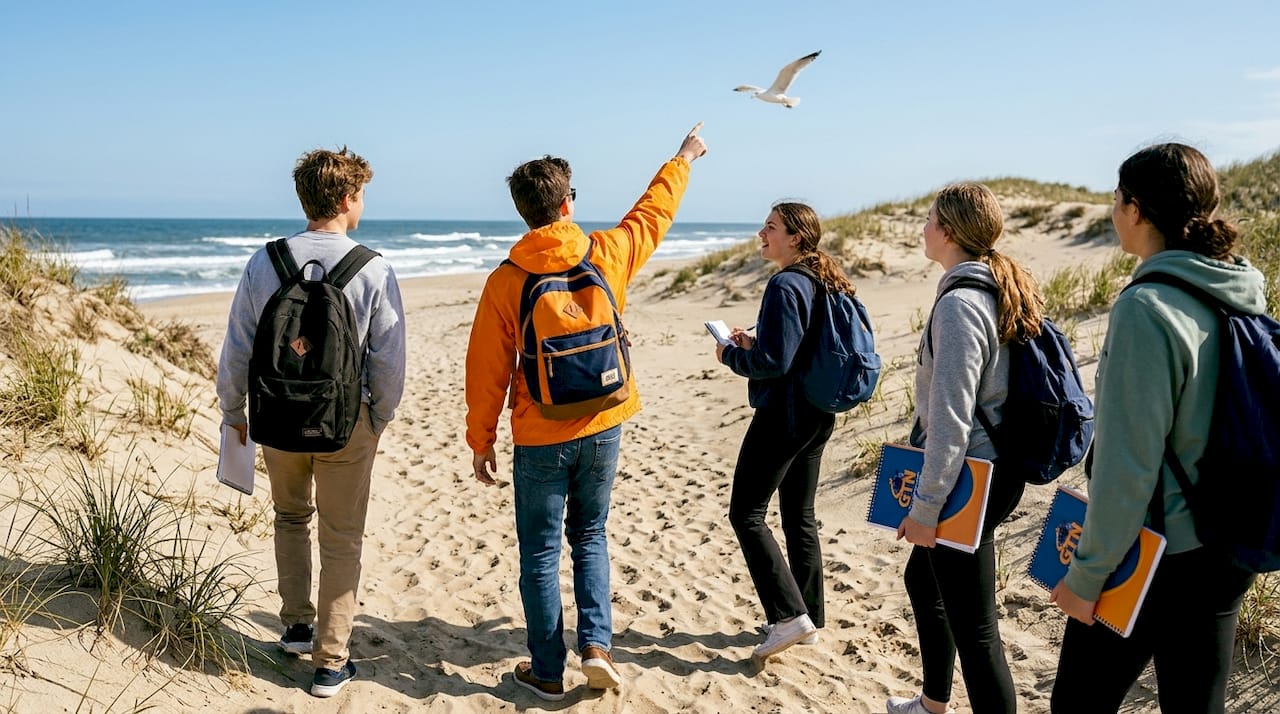
What is multi-day school travel and how does it work?
Multi-day school travel refers to immersive educational trips that involve at least one overnight stay, structured learning objectives, and a group format managed by school staff or a specialist tour operator. Unlike a single-day field trip, these excursions require coordinated logistics: transportation, accommodation, meals, supervision ratios, and a full itinerary that balances educational content with student wellbeing.
The defining feature of multi-day educational travel is intentionality. Every activity connects to a learning goal, whether that is a history class visiting Washington, D.C., a marine biology group studying ecosystems in the Florida Keys, or a performing arts ensemble touring concert venues across Europe. The trip is not a reward. It is a curriculum extension delivered in a different environment.
Grouptravelnetwork specializes in exactly this model, building customized itineraries that align with school objectives while managing the vendor relationships and logistics that make multi-day trips possible. Schools work with dedicated trip coordinators rather than assembling every component themselves, which reduces the planning burden significantly.
What types of multi-day school travel exist?
Multi-day educational travel covers a wide spectrum of formats, durations, and destinations. The right format depends on grade level, budget, curriculum goals, and how much travel experience your student group already has.
Common trip categories include:
- Regional educational tours: 2 to 3 days, typically within driving distance, focused on history, science, or civic education. Examples include state capital visits, national park programs, and museum residencies.
- Outdoor education expeditions: 3 to 5 days, centered on environmental science, teamwork, and physical challenge. Programs like Outward Bound and National Geographic Student Expeditions fall into this category.
- Cultural immersion trips: 5 to 7 days, often crossing state or national borders, designed to expose students to language, art, history, or global citizenship themes.
- Performance tours: 4 to 7 days, built around band, choir, or theater groups performing at recognized venues or competitions.
- International academic programs: 7 to 10 days, combining classroom content with on-site learning at universities, cultural sites, or research facilities.
The table below compares these formats across the dimensions that matter most to planners:
| Trip type | Typical duration | Approximate cost per student | Primary educational focus |
|---|---|---|---|
| Regional educational tour | 2 to 3 days | $300 to $700 | History, civics, science |
| Outdoor education expedition | 3 to 5 days | $500 to $1,200 | Environment, teamwork, resilience |
| Cultural immersion trip | 5 to 7 days | $1,500 to $3,500 | Language, arts, global awareness |
| Performance tour | 4 to 7 days | $1,200 to $2,800 | Music, theater, professional development |
| International academic program | 7 to 10 days | $3,000 to $6,000 | Cross-disciplinary, research, global citizenship |
Grade level also shapes the format. Elementary groups typically stay regional and keep trips to two or three nights. High school groups are better suited to international programs where the academic and personal growth payoff justifies the longer duration and higher cost.
What are the main benefits of multi-day school trips?
The benefits of school trips extend well beyond the subject matter covered on any given itinerary. Research confirms that multi-day travel produces measurable gains across academic, social, and emotional dimensions.
A 2026 study by Hyundai Motor UK found that school trips produce an 80% uplift in student attention (opens in a new tab), a 75% increase in curiosity, and a 60% increase in happiness compared to a standard classroom day. Those numbers matter because they translate directly into better retention, stronger participation, and more positive behavior throughout the trip.
The academic case is equally strong. Trips linked to curriculum assessments (opens in a new tab) encourage active learning and give students a concrete reason to engage with the material. A student who visits the Gettysburg battlefield before writing a history essay does not just recall facts. They have a sensory and emotional reference point that makes the content stick.
Beyond academics, multi-day travel builds skills that classroom instruction struggles to develop:
- Independence: Students manage their own schedules, belongings, and decisions in an unfamiliar setting.
- Teamwork: Shared experiences and group problem-solving create bonds that carry back into the classroom.
- Communication: Navigating new environments requires students to ask questions, advocate for themselves, and collaborate with peers and adults.
- Cultural awareness: Exposure to different communities, languages, and perspectives builds empathy and broadens worldview.
Effective multi-day expeditions use Learn by Discovery approaches (opens in a new tab) that intentionally move students out of their comfort zones to develop self-regulation and community skills. This is not accidental. It is a designed outcome that separates purposeful educational travel from a glorified field trip.
Pro Tip: Frame every multi-day trip as a curriculum extension, not an extracurricular activity. When students and parents understand the academic connection, engagement improves and behavioral issues decrease.
How to organize a school tour: step-by-step planning guide
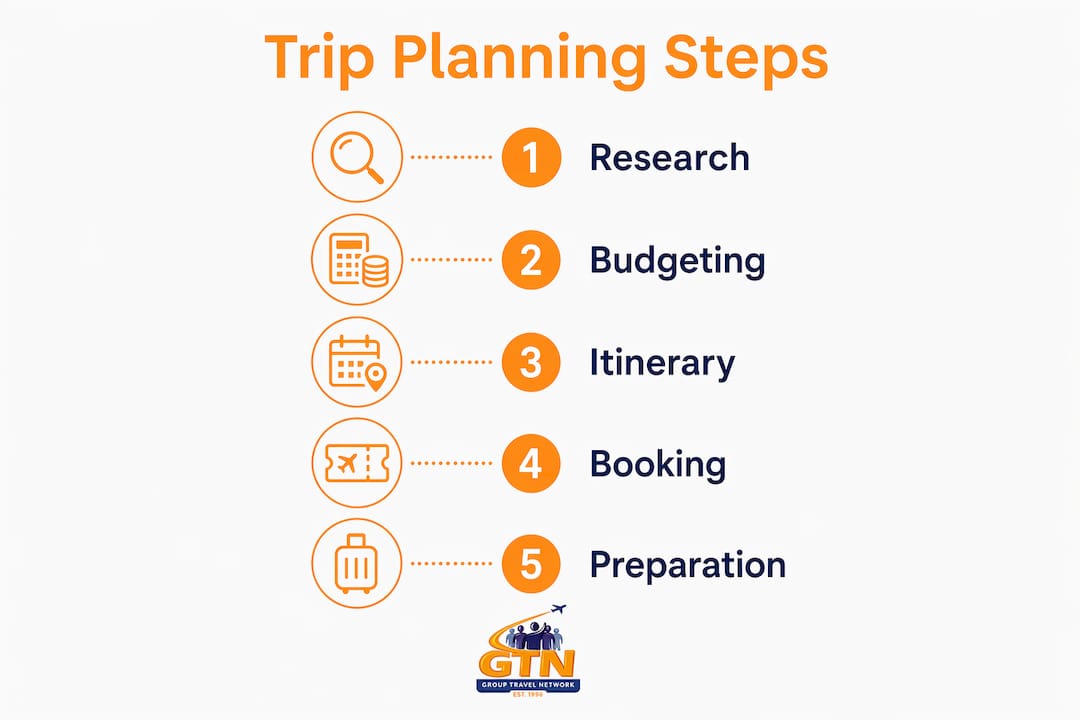
Successful multi-day school trip planning follows a clear sequence. Skipping steps or compressing the timeline creates financial risk, logistical gaps, and frustrated families.
- Start 12 to 18 months ahead. Planning 12 to 18 months in advance (opens in a new tab) gives you time to secure approvals, collect deposits, and lock in vendor pricing before availability disappears. International trips require even more lead time for passports and visa logistics.
- Secure administrative and budget approval. Present a written proposal to your principal or district office that includes educational objectives, a cost breakdown, and a risk management summary. Approval at this stage prevents the trip from being canceled after families have already paid.
- Choose a specialist educational tour operator. General travel agencies are not equipped for student group logistics. Operators like Grouptravelnetwork understand supervision ratios, school insurance requirements, and how to build itineraries that satisfy both curriculum goals and student energy levels.
- Set up a payment plan for families. Monthly payment structures, such as $200 per month over 10 months, make trips accessible to more students and reduce the risk of last-minute cancellations. Collect family deposits before paying vendor deposits to avoid absorbing non-refundable costs.
- Collect all student information in one step. Gather medical records, dietary restrictions, emergency contacts, and signed permissions simultaneously with the first payment. Collecting medical and emergency info with payment (opens in a new tab) avoids the delays and confusion that come from chasing paperwork later.
- Build a balanced itinerary. Alternate high-energy activities with downtime segments for recovery (opens in a new tab) to reduce burnout and behavioral problems. Experienced planners add buffer time between activities rather than scheduling every hour.
- Communicate proactively with parents. Use structured, automated communication cadences with reminders at key milestones: deposit due, permission form deadline, packing list, departure briefing. Open-ended email threads create confusion. A clear communication schedule prevents it.
Pro Tip: For trips involving flights, book as a group of 10 or more travelers. Group flight bookings offer more flexible and often refundable terms that protect the school if enrollment numbers change.
Build a 10 to 15% financial buffer into your budget from the start. Unexpected costs, from a student’s medical need to a weather-related itinerary change, are not rare. They are predictable. Planning for them protects everyone.
What challenges do schools face with multi-day travel?
Multi-day school travel produces strong outcomes, but it also generates real operational pressure on the educators who organize it. Understanding these challenges helps you prepare rather than react.
The most significant barrier is administrative burden. Teachers who organize trips take on background checks, safety audits, vendor negotiations, and parent communications on top of their regular workload. Administrative duties and parental complaints (opens in a new tab) are among the most cited reasons educators stop organizing trips altogether. This is a systemic problem, not a personal one.
Financial constraints create a second layer of difficulty. Families with limited budgets may struggle to participate, which creates equity concerns for schools committed to inclusive programming. Payment plans help, but they do not eliminate the gap entirely. Schools that secure grant funding or partner with community sponsors can extend access more effectively.
Liability and legal exposure also weigh heavily on trip organizers. When something goes wrong on a multi-day trip, the teacher who organized it often bears the first line of scrutiny. Educators advocate for legal immunity and reduced liability protections to make organizing trips a sustainable part of the profession rather than a personal risk.
“Stronger institutional protections for trip organizers are not a luxury. They are the condition under which multi-day school travel can survive as a regular part of education.”
Working with a specialist operator like Grouptravelnetwork transfers a significant portion of this risk. Dedicated trip coordinators handle vendor contracts, safety protocols, and compliance documentation, which reduces the legal and logistical exposure for individual teachers.
Key takeaways
Multi-day school travel produces its strongest outcomes when it is planned early, framed as curriculum, and supported by institutional structures that protect both students and educators.
| Point | Details |
|---|---|
| Definition matters | Multi-day school travel involves overnight stays, structured learning goals, and group logistics managed by educators or specialist operators. |
| Research backs the value | Hyundai Motor UK’s 2026 study found an 80% attention uplift and 75% curiosity increase on school trips versus classroom days. |
| Plan 12 to 18 months ahead | Early planning secures vendor pricing, allows payment plans, and reduces last-minute cancellations. |
| Balance the itinerary | Alternating high-energy activities with downtime prevents burnout and improves student behavior throughout the trip. |
| Protect your organizers | Administrative burden and liability concerns are the leading reasons educators stop running trips. Institutional support and specialist operators reduce both. |
Why multi-day school travel is worth fighting for
I have worked with enough educators and trip planners to know that the hardest part of organizing a multi-day school trip is not the logistics. It is the institutional inertia. Principals who are nervous about liability, parents who question the cost, and teachers who are already stretched thin all create friction that makes it easier to just not do the trip.
That is the wrong call. The data is clear, and the anecdotal evidence from every educator I have spoken with confirms it: students who go on well-planned multi-day student trips (opens in a new tab) come back different. Not just more knowledgeable. More confident, more curious, and more connected to their peers and teachers.
The framing matters enormously. When a trip is positioned as a reward or a break, it gets cut first when budgets tighten. When it is positioned as a curriculum component with measurable learning outcomes, it becomes harder to eliminate. I have seen schools protect their annual Washington, D.C. trip through three consecutive budget cycles because the social studies department documented exactly what students learned and how it showed up in their assessments.
The challenge of parental complaints and administrative load is real, and I do not minimize it. But the solution is not to stop running trips. It is to build better systems, work with operators who absorb the logistical burden, and advocate loudly for the institutional protections that make this work sustainable. Multi-day educational travel is not a nice-to-have. It is one of the few experiences in a student’s school career that they will remember for the rest of their lives.
— Donovan
How Grouptravelnetwork helps you plan with confidence
Planning a multi-day school trip does not have to fall entirely on one teacher’s shoulders. Grouptravelnetwork works directly with educators, school administrators, and band directors to build customized itineraries, manage vendor relationships, and handle the logistics that consume planning time.

From flexible payment plans that make trips accessible to more families, to dedicated trip coordinators who manage compliance and safety documentation, Grouptravelnetwork is built for the specific demands of student group travel. Explore the student educational travel guide (opens in a new tab) for destination ideas, planning timelines, and package options designed for schools. You can also browse school trip packages (opens in a new tab) that cover safety planning, cost structures, and itinerary formats for groups of every size. When you are ready to move from planning to booking, Grouptravelnetwork’s team is available for a personalized consultation.
FAQ
What is multi-day school travel?
Multi-day school travel is a structured educational excursion involving overnight stays, curriculum-linked activities, and group supervision, lasting anywhere from two days to ten days or more. It differs from a single-day field trip in scope, depth of learning, and logistical complexity.
How far in advance should you plan a multi-day school trip?
Start planning 12 to 18 months before the departure date to secure vendor pricing, collect family deposits, and complete administrative approvals without time pressure. International trips may require additional lead time for passports and visa requirements.
What are the biggest benefits of school trips for students?
Research from Hyundai Motor UK’s 2026 study shows school trips produce an 80% uplift in attention, a 75% increase in curiosity, and a 60% increase in happiness compared to a standard classroom day. Students also develop independence, teamwork, and cultural awareness that classroom instruction alone cannot replicate.
What should you pack for a multi-day school trip?
Packing lists vary by destination and trip type, but core items include weather-appropriate clothing, any required medications with documentation, a reusable water bottle, comfortable walking shoes, a small daypack, and any materials tied to the trip’s academic activities. Schools should distribute a standardized packing list at least four weeks before departure.
How do schools manage the cost of multi-day educational travel?
Monthly payment plans, such as $200 per month over 10 months, make trips financially accessible for more families and reduce last-minute dropout rates. Schools should also build a 10 to 15% budget buffer to cover unexpected costs and avoid absorbing non-refundable vendor fees.
Recommended
- Why School Group Travel Ignites Engagement And Learning • Group Travel Network (opens in a new tab)
- How To Organize School Tours: 2026 Planning Guide • Group Travel Network (opens in a new tab)
- Student Educational Travel: Ultimate 2025 Guide For Schools (opens in a new tab)
- Group Travel Agencies: Complete 2025 Guide For Excellence (opens in a new tab)