

May 27, 2026
Cultural Exchange Trip Benefits: 10 Reasons They Matter

TL;DR:
- Cultural exchange trips foster long-lasting emotional intelligence, intercultural competence, and adaptability beyond sightseeing. Structured learning, community engagement, and educator support significantly enhance these lasting benefits. Proper planning extends growth up to 18 months post-trip, shaping globally minded students.
Most students and educators think of cultural exchange trips as a chance to see new places and try unfamiliar food. That framing undersells what actually happens. The real cultural exchange trip benefits run far deeper, touching emotional intelligence, academic performance, communication skills, and worldview in ways that last for months and years after the passport gets stamped. Research backs this up, and so does the experience of every educator who has watched a quiet student come home with something they can’t quite name but can’t stop talking about.
Table of Contents
- Key takeaways
- 1. Cultural exchange trip benefits start with emotional intelligence
- 2. Self-awareness and adaptability grow in real time
- 3. Intercultural competence deepens through structured learning
- 4. Educational benefits align with UNESCO’s global frameworks
- 5. Language skills improve through necessity, not curriculum
- 6. Long-term impact extends 3 to 18 months after returning
- 7. Gender and individual differences shape adjustment paths
- 8. Community engagement separates real exchanges from tourism
- 9. How cultural exchange trips compare to other educational travel
- 10. How to optimize any cultural exchange trip for maximum benefits
- My honest take on what makes these trips actually work
- Plan your next cultural exchange trip with Grouptravelnetwork
- FAQ
Key takeaways
| Point | Details |
|---|---|
| Personal growth is measurable | Research shows intercultural competence and emotional development continue growing 3 to 18 months after a trip ends. |
| Preparation shapes outcomes | Structured pre-departure training and expectation management significantly determine how deeply students engage with the experience. |
| Reflection converts experience into learning | Journaling and group debriefs turn travel memories into lasting psychological and academic growth. |
| Not all trips deliver equally | Programs built on reciprocity and structured learning consistently outperform sightseeing tours in educational impact. |
| Educators play a critical role | Individual adjustment trajectories vary widely, so tailored support from educators is key to maximizing benefits for every student. |
1. Cultural exchange trip benefits start with emotional intelligence
One of the most well-documented cultural exchange trip benefits is the development of emotional intelligence. When students are placed in unfamiliar environments, they must read social cues they have never encountered before, manage discomfort, and respond thoughtfully rather than reactively. That process builds self-regulation in a way no classroom exercise can replicate.
Research on adolescent travel shows that intercultural travel builds emotional development that persists well beyond the trip itself, with meaningful attitudinal changes continuing for up to 18 months after students return home. The growth is not a travel high. It is a structural shift in how students process unfamiliar situations.
- Students learn to tolerate ambiguity, a skill that directly transfers to academic problem-solving
- They develop empathy by observing how other communities meet shared human needs differently
- Self-awareness increases as students recognize how their own cultural background shapes their assumptions
Pro Tip: Encourage students to keep a brief emotion log during the trip, not just an events log. Noting what surprised them, confused them, or made them uncomfortable gives educators powerful material for post-trip reflection.
2. Self-awareness and adaptability grow in real time
You cannot teach adaptability through a lecture. You can only put students in situations that require it. Cultural immersion experiences do exactly that, and they do it daily. A student who cannot read a menu, navigate a transit system, or explain a simple need in a second language quickly learns to observe, experiment, and adjust.
Cultural exchange fosters adaptability and empowers both visiting and host communities, according to research from the World Economic Forum. That bidirectional impact matters. Students are not just passive recipients of culture. They are active participants, and that role builds real confidence.
Adaptability gained through travel also correlates with better performance in group projects, internships, and future workplace collaboration, exactly the skills educators want to build.
3. Intercultural competence deepens through structured learning
Intercultural competence is not the same as knowing facts about another country. It is the ability to communicate effectively across cultural difference, to recognize your own blind spots, and to build genuine relationships with people whose reference points differ from yours. That skill develops through structured immersion combined with guided reflection, not through passive exposure alone.
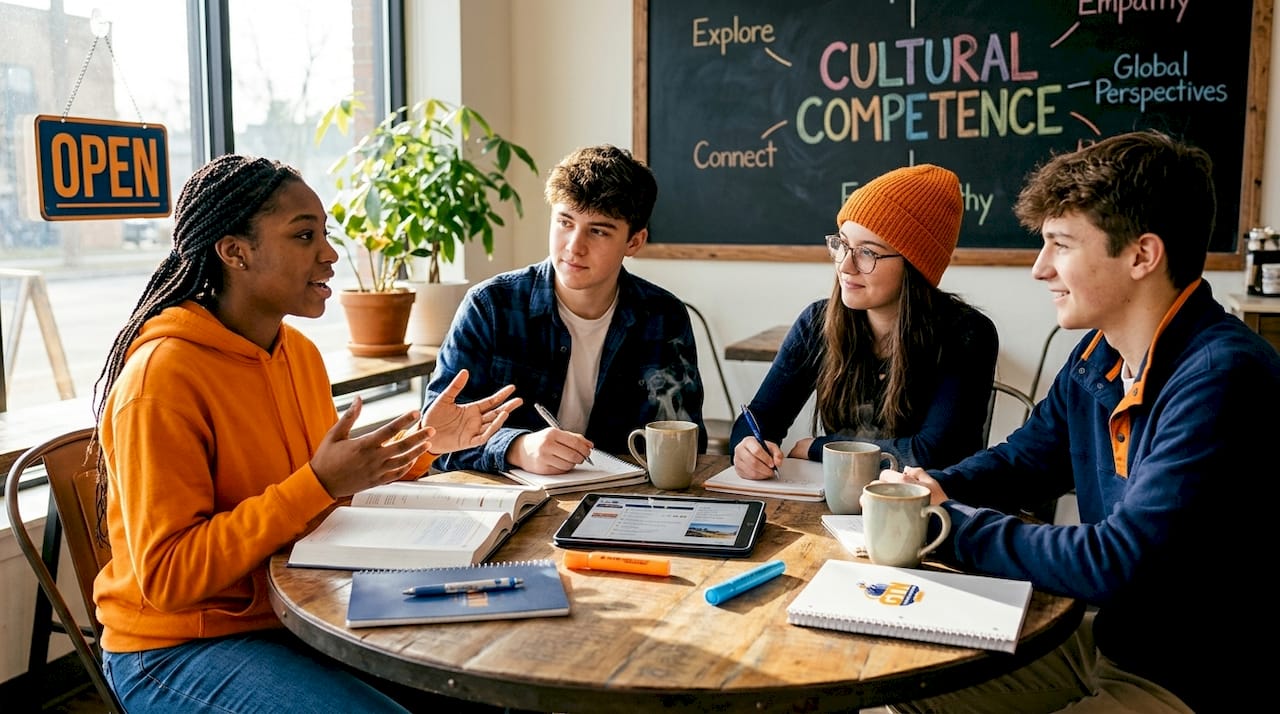
A research study using the Intercultural Development Inventory identified four adjustment types among study abroad students: Resisters, Seekers, Adapters, and Embracers. Each group moved through cultural integration differently. The students who had pre-departure training and ongoing reflection support made the deepest gains. The takeaway for educators is clear. Structure does not limit the experience. It amplifies it.
4. Educational benefits align with UNESCO’s global frameworks
The advantages of cultural exchange are not just personal. They are foundational to how international bodies think about education and peace. The UNESCO Declaration on cultural cooperation frames cultural exchange as a tool for moral and intellectual education, specifically designed to foster peaceful relations and genuine understanding among youth from different nations.
That framing matters for educators who need to justify program funding or connect trips to curriculum goals. Cultural exchange is not a reward trip. It is an educational intervention with documented outcomes that include:
- Enhanced critical thinking through exposure to multiple valid worldviews
- Improved language skills from real-world communication practice
- Stronger historical and geographic literacy connected to lived experience
- Greater curiosity and proactive learning orientation
- Expanded empathy and reduced in-group bias
“Cultural exchange, when designed with reciprocity and educational intent, is one of the most powerful tools available for developing the kind of global citizens our world needs.” — Grounded in UNESCO’s intercultural leadership work with youth
5. Language skills improve through necessity, not curriculum
Language learning in a classroom has a ceiling. Immersion learning does not. When a student needs to ask for directions, order food, or apologize for a cultural misunderstanding, the language stakes are real. That pressure activates a different kind of memory and retention than a vocabulary quiz ever could.
Even students who do not speak the host country’s language develop stronger communication instincts. They learn to use gesture, tone, visual cues, and patient repetition. Those skills strengthen their English communication too, because they become more conscious of how meaning is built and lost across context.
The benefits of study abroad in this area extend to students who return and choose to continue formal language study, often with dramatically higher motivation and retention rates.
6. Long-term impact extends 3 to 18 months after returning
Here is something most trip brochures do not mention. The growth does not peak during the trip. For many students, the most significant personal development happens post-return, as they process what they experienced against their home context.
Research documents continued critical reflection and meaningful personal change for 3 to 18 months after students return. The experience acts like a slow-release mechanism for new perspectives.
| Time After Return | Common Developmental Marker |
|---|---|
| 0 to 1 month | Reverse culture shock; heightened awareness of home context |
| 1 to 3 months | Active questioning of prior assumptions; identity refinement |
| 3 to 6 months | Integration of new worldview into academic and social behavior |
| 6 to 18 months | Sustained proactive learning orientation; continued intercultural reflection |
Pro Tip: Schedule a structured group reflection session at 30 days and 90 days after the trip. Short prompts like “What do I see differently now?” keep the growth cycle active and give educators real data on program impact.
7. Gender and individual differences shape adjustment paths
Not every student processes cultural immersion the same way. Research on short-term study abroad found that female students tend toward integration at higher rates than male students, and that individual adjustment trajectories vary significantly depending on pre-trip preparation and personality factors.
This is not a reason to lower expectations for any group. It is a reason to design support that meets students where they are. An educator who recognizes that one student is a natural Embracer while another is initially a Resister can provide targeted encouragement that helps both students grow, just through different pathways.
The cross-cultural learning impact is not uniform, and that is actually good news. It means educators have real influence over outcomes when they stay engaged throughout the process.
8. Community engagement separates real exchanges from tourism
A sightseeing tour shows students the world. A cultural exchange trip puts them inside it. The distinction matters enormously for educational outcomes. Programs that include genuine community involvement consistently produce deeper learning than those limited to museum visits and guided tours.
Real engagement looks like sharing meals with local families, participating in community projects, attending local schools, or collaborating on artistic or civic work. Those interactions build the kind of empathy and relational understanding that no amount of reading can replicate.
Why does reciprocity matter? Programs that give as well as receive, where visiting students contribute something meaningful to the host community, produce richer outcomes for everyone involved. UNESCO’s framework explicitly frames cultural cooperation as mutual benefit and education, not one-way exposure.
9. How cultural exchange trips compare to other educational travel
Not all travel delivers the same benefits. Understanding the differences helps educators choose the right format for their goals.
| Travel Format | Personal Development | Intercultural Competence | Educational Structure |
|---|---|---|---|
| Cultural exchange trip | High, structured growth | Deep, reciprocal engagement | Curriculum-aligned, reflective |
| Study tour | Moderate, context-dependent | Moderate, observational | Often curriculum-linked |
| Sightseeing tour | Low to moderate | Superficial | Minimal structure |
| Local cultural experience | Moderate | Limited by proximity | Varies widely |
Cultural exchange programs stand apart because of structured reciprocity, guided reflection, and direct relationship-building with host communities. Those three elements, not the destination itself, drive the superior educational outcomes.
10. How to optimize any cultural exchange trip for maximum benefits
Knowing why cultural exchange trip benefits exist is only half the work. The other half is designing experiences that actually deliver them. Here is what the research and practical experience consistently recommend:
- Before the trip: Provide pre-departure cultural training, set realistic expectations about discomfort, and assign preparatory readings or conversations with alumni
- During the trip: Build in daily reflection time, encourage students to document questions not just observations, and create structured opportunities for genuine host interaction
- After the trip: Schedule multiple debrief sessions, connect trip experiences back to classroom curriculum, and create a peer-sharing format so students articulate what they learned to others
- For educators: Track individual adjustment styles and provide tailored support. A student who seems disengaged may be processing deeply. Silence is not always resistance.
You can also explore student group planning guides to find frameworks that build these elements into the trip structure from the start, rather than adding them as afterthoughts.
My honest take on what makes these trips actually work
I have seen a lot of student trips that were built around impressive itineraries and ended there. The photos were great. The learning was shallow. And I have seen modest trips to unremarkable destinations that changed students in ways their teachers still talk about years later.
The difference was never the destination. It was always the structure around reflection. Students do not automatically grow from exposure to difference. They grow when someone helps them examine what that difference reveals about themselves. A trip without intentional debriefing is just an expensive vacation with better stories.
What I have also noticed is that educators often underestimate the post-trip window. They work hard on pre-departure preparation and in-the-moment facilitation, then consider the job done when students land back home. That is exactly when the most important work begins. The re-entry period is disorienting, and students who have support during it convert that disorientation into genuine insight. Those who do not often just readjust to their prior worldview.
I genuinely believe that the life-changing travel experiences we talk about are not accidents. They are designed. And any educator who commits to that design will see results that justify every logistical challenge of making the trip happen.
— Donovan
Plan your next cultural exchange trip with Grouptravelnetwork
If this article has convinced you that cultural exchange trips are worth the investment of time and planning, the next step is finding a partner who understands the educational stakes. Grouptravelnetwork specializes in exactly this. From customized itineraries built around intercultural learning goals to dedicated trip coordinators who handle logistics so educators can focus on students, the support is built for schools that take outcomes seriously.
Whether you are looking to plan your first trip or refine an existing program, student group trips designed for educational impact are available across a wide range of destinations and formats. You can also start with the step-by-step planning guide to map out the full process from proposal to return. Safety, community, and lasting memories are the standard, not the goal.
FAQ
What are the main cultural exchange trip benefits for students?
Cultural exchange trips build emotional intelligence, intercultural competence, adaptability, and language skills. Research shows these benefits continue developing for 3 to 18 months after students return home.
How do cultural exchange programs differ from regular school trips?
Cultural exchange programs emphasize reciprocal engagement with host communities, structured reflection, and curriculum-linked learning. Regular school trips often focus on sightseeing without the same depth of personal or intercultural development.
How long do the benefits of cultural exchanges last?
Studies show continued critical reflection and meaningful personal growth for up to 18 months after a cultural exchange trip ends, particularly when post-trip reflection activities are built into the program.
What role do educators play in maximizing cross-cultural learning impact?
Educators shape outcomes by providing pre-departure training, facilitating structured reflection during and after the trip, and recognizing that individual students adjust to cultural immersion at different rates and through different pathways.
Do short-term trips still deliver meaningful benefits?
Yes. Research confirms that even short-term international travel produces measurable gains in intercultural competence and emotional intelligence, especially when the program includes structured community engagement and guided reflection.
Recommended

Relax with our Student Travel Expertise .
We deliver stress-free student trips backed by an exceptional array of services you won’t find anywhere else:
- Stress-free, creative planning of customized itineraries
- Dedicated GTN Service host on every trip
- Extensive travel protection plan options
- Online, individual registration system
- Flexible payment plans and online payment options
- Bulk buyer discounts for great trips that cost less
Inclusion into #MyGTNFamily for life! (you don’t even have to remember our birthday!)
Spain
There is no place like Spain to offer a student performance opportunity or cultural student trip.
Myrtle Beach
All students love the beach! Especially a beach known for its 60 miles of pristine coastline.
Boston
Have your students experience colonial charm in the city that is considered the hub of New England.
London
Provide your student group with the “Royal” treatment! One of the world’s most recognized cities.
See What People Are Saying
“What wonderful trip we had to NYC! Our group of 51 never missed a beat because of Group Travel Network and our wonderful guide, Tim. It was truly a theatre trip to remember! If you are looking for a travel company who really cares about the details, Group Travel Network is for you!”
“This was my first time using a company to plan our band trip. It was so easy working with Justin and Group Travel Network. We had to make several changes along the way, but they were accommodating changes and worked everything out for us. I would highly recommend using Group Travel Network.”
“It has been my privilege to use Group Travel Network as the exclusive travel coordinator for my band for over 10 years. I can say, without doubt or hesitation, that GTN is, by far, the best travel company for student groups currently in existence. I have often said that I wouldn’t take my band across the street without GTN and that’s not far from the truth!”