

April 6, 2026
Cultural trips: 98% of students grow beyond the classroom
TL;DR:
- Cultural trips significantly enhance students’ academic motivation, cultural knowledge, and global awareness.
- Experiential travel fosters personal growth, empathy, resilience, and teamwork in ways classroom learning cannot achieve.
- Short-term domestic and international trips, when well-structured, provide lasting intercultural and social benefits.
Cultural trips carry a reputation as glorified vacations with a permission slip attached. That perception is wrong, and the research proves it. When students step outside their familiar environment and engage with different cultures, languages, and communities, something measurable happens. Academic engagement rises. Empathy deepens. Maturity accelerates. For school administrators and trip coordinators, understanding these outcomes is not just interesting, it is essential for making the case to school boards, parents, and budget committees. This article breaks down the evidence, compares trip formats, and gives you practical tools to maximize every dollar and every moment your students spend in the field.
Table of Contents
- The educational impact of cultural trips
- Personal growth and social development
- Effective trip formats: Short vs. long, domestic vs. international
- Addressing barriers and amplifying impact
- A fresh take: What most schools miss about cultural trips
- Partner with experts for impactful student travel
- Frequently asked questions
Key Takeaways
| Point | Details |
|---|---|
| Transformative educational gains | Cultural trips produce measurable improvements in academic engagement and personal growth. |
| Lasting personal development | Students develop maturity, confidence, social responsibility, and enduring cultural awareness through travel. |
| Impactful at any length or location | Even short or domestic trips spark substantial benefits when integrated well. |
| Overcoming barriers | Practical planning and partnerships can make life-changing travel accessible for all students. |
The educational impact of cultural trips
Many educators assume cultural trips are supplemental, a nice reward after standardized testing season. But the data tells a different story. Study tours significantly improve adolescents’ learning outcomes, psychological growth, and social responsibility across measurable dimensions. These are not soft, anecdotal gains. Researchers tracked students before and after travel experiences and found consistent, statistically significant improvements.
One of the most striking findings involves global awareness. International travel enhances attitudes and global awareness even after short-term experiences, meaning a single well-planned trip can shift how a student sees the world for years. That kind of return on investment is hard to replicate inside a classroom.
Here is a summary of the key outcomes researchers consistently document:
| Outcome area | Before trip | After trip |
|---|---|---|
| Academic engagement | Moderate | Significantly higher |
| Cultural knowledge | Limited | Substantially expanded |
| Social responsibility | Developing | Measurably stronger |
| Global attitudes | Narrow | Broader and more nuanced |
| Emotional regulation | Variable | More stable and reflective |
The benefits cluster around several core areas. Students return with higher maturity levels, a deeper understanding of their own values, and a more positive outlook on their educational path. These are not temporary spikes. Follow-up studies show the effects persist months after the trip ends.
Core benefits documented by researchers include:
- Improved academic motivation tied to real-world context
- Stronger cross-cultural communication skills
- Greater awareness of global interdependence
- Increased sense of personal responsibility
- Higher likelihood of pursuing further education or travel
One statistic stands out above the rest: 98% of students reported a better understanding of their own cultural values after a study abroad or cultural travel experience. That number should anchor every conversation you have with skeptical stakeholders. Exploring international student travel options and reviewing the broader group travel benefits can help you frame this case clearly for your school community.
Personal growth and social development
Beyond the classroom, these trips deeply affect students’ personal and social development. The growth that happens when a teenager navigates an unfamiliar city, communicates across a language barrier, or shares a meal with a family from a different background cannot be replicated by a textbook exercise.
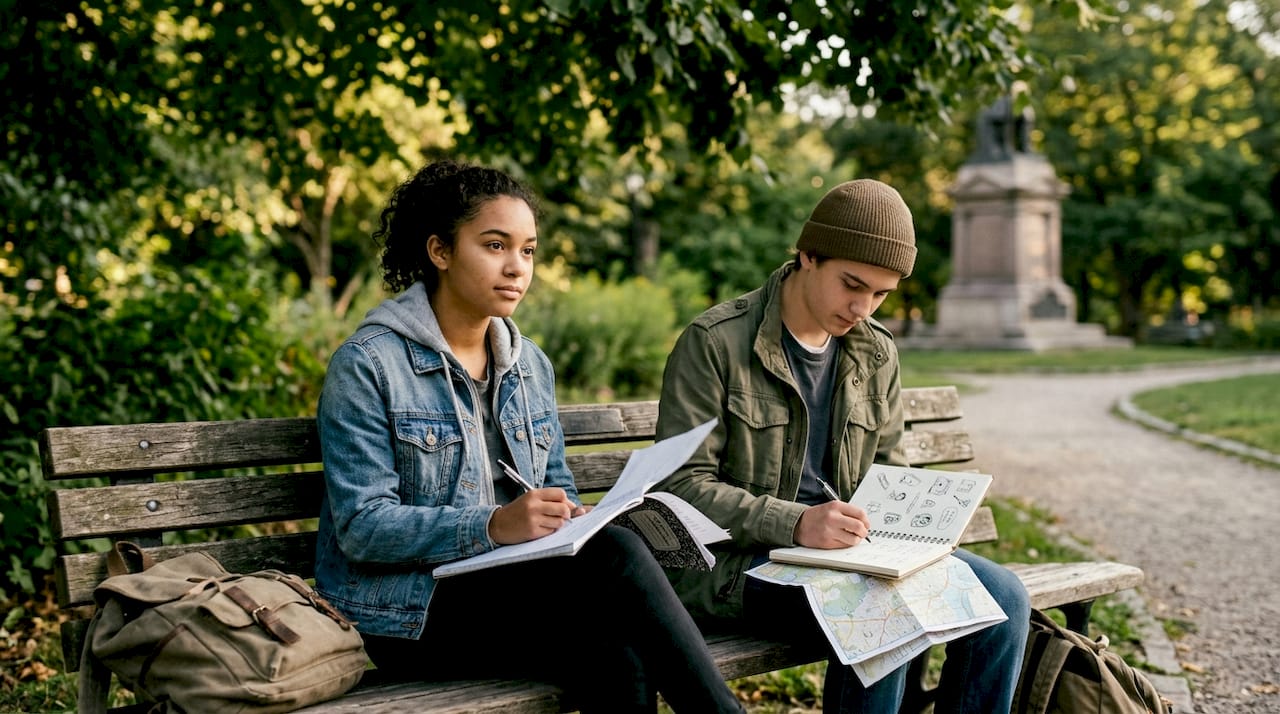
Educational tours foster cultural confidence, social responsibility, resilience, and self-cognition in ways that structured classroom learning rarely achieves. These are the exact competencies that colleges and employers say they want, yet schools often struggle to teach them directly.
Here are the growth milestones students typically reach through immersive cultural travel:
- Confidence: Students learn to advocate for themselves in unfamiliar situations.
- Resilience: Handling delays, discomfort, and the unexpected builds real coping skills.
- Cultural awareness: Direct exposure replaces stereotypes with genuine understanding.
- Empathy: Face-to-face connections with people from different backgrounds humanize abstract differences.
- Teamwork: Shared challenges during travel bond groups in ways that classroom projects rarely do.
The numbers back this up. 95% of study abroad students reported increased maturity, and 98% said they better understood their own cultural values after the experience.
“Travel strips away the familiar and forces students to rely on their own judgment, creativity, and compassion. That process, more than any single destination, is what changes them.”
These gains do not happen automatically. The structure around the trip matters enormously. Reviewing educational tour tips before you plan can help you build in the right scaffolding.
Pro Tip: Schedule a structured debrief session within 48 hours of returning. Ask students to write or share one moment that surprised them, one belief that shifted, and one action they want to take. This simple practice dramatically extends the psychological and academic impact of the trip.
Effective trip formats: Short vs. long, domestic vs. international
Understanding these benefits, how do different types of trips compare? Not every school has the budget or logistical capacity for a two-week international journey. The good news is that shorter and domestic trips deliver real, documented results too.
Short-term immersions as brief as 6 days boost intercultural competence and have lasting effects on student attitudes. That finding should give coordinators confidence when pitching a four-day regional trip to a cautious administration.
Short-term study abroad improves intercultural competence across all major subscales, including knowledge, skills, and attitudes toward other cultures. And repeated exposure offers cumulative benefits, meaning a school that builds a culture of annual trips will see compounding growth in student outcomes year over year.
| Format | Cost | Logistical complexity | Intercultural impact | Best for |
|---|---|---|---|---|
| Short domestic | Low | Low | Moderate | First-time programs |
| Long domestic | Moderate | Moderate | Moderate to high | Budget-conscious schools |
| Short international | Moderate to high | High | High | Schools with some experience |
| Long international | High | Very high | Very high | Established programs |
When choosing the right format for your school, consider these factors:
- Student readiness: First-time travelers benefit most from shorter, closer trips that build confidence gradually.
- Curriculum alignment: The trip format should connect directly to what students are studying.
- Budget and equity: Shorter domestic trips are easier to fund inclusively for all students.
- Frequency over length: Two shorter trips per year often outperform one long trip in terms of cumulative growth.
Even a four-week program, when compared to no travel at all, yields measurable intercultural gains across every dimension researchers track. The student travel guide at Group Travel Network offers practical frameworks for matching trip format to your school’s specific goals and constraints.
Addressing barriers and amplifying impact
To ensure every student benefits, it is vital to address common hurdles and leverage best practices. The research is clear that cultural trips work, but they only work if students can actually access them.
Resource inequality restricts access for rural and low-income students at a disproportionate rate. This is not just an equity issue. It is a missed opportunity for the schools and communities that need these developmental benefits most. Addressing it requires intentional planning.
Strategies that work for expanding access include:
- Grant funding: Many state arts councils, cultural foundations, and federal programs fund educational travel.
- Tiered payment plans: Spreading costs over 12 months reduces the financial shock for families.
- Community partnerships: Local businesses and alumni networks often sponsor students when asked directly.
- Fundraising integration: Student-led fundraising builds ownership and investment in the trip before it happens.
For risk management, coordinators should follow a structured planning sequence:
- Identify and document all health and medical needs for traveling students.
- Confirm travel insurance coverage for every participant before deposits are paid.
- Establish clear emergency communication protocols with parents and school administration.
- Brief all chaperones on behavior expectations and emergency procedures.
- Register the group with the relevant embassy or consulate for international trips.
Trips are most effective when focused on authentic human connections rather than a checklist of famous landmarks. A conversation with a local artisan teaches more than a rushed photo stop at a monument.
Additional ways to amplify impact after the trip:
- Assign reflection journals during travel, not just after.
- Host a school-wide presentation where students share what they learned.
- Connect trip experiences to upcoming curriculum units.
- Invite students to propose the next trip destination based on their interests.
Pro Tip: Prioritize one meaningful human connection per trip day over three rushed site visits. A single authentic interaction with a local community member creates more lasting learning than a full day of passive sightseeing.
Resources for coordinating safe group travel and reviewing youth tour essentials can help you build a framework that is both safe and educationally rich.
A fresh take: What most schools miss about cultural trips
With the evidence reviewed, here is a perspective rarely found in standard planning guides: most schools are optimizing for the wrong thing.
Administrators spend enormous energy selecting destinations, negotiating hotel rates, and building sightseeing schedules. Those logistics matter. But the research consistently shows that the destination is almost irrelevant compared to the quality of human interactions students have and whether those interactions are connected to what they are learning in school.
A trip to a neighboring state with two hours of structured conversation with local students will outperform a week in a famous European capital where students spend most of their time in tourist queues. The transformative power is in the exchange, not the postcard.
“The most powerful trips are the ones students are still talking about in their senior year, and those are almost never defined by the places they visited.”
Schools that invest in planning successful trips with relationship-building and curriculum integration at the center consistently report stronger outcomes than those that treat travel as an add-on activity.
Pro Tip: After returning, organize a school-wide sharing event where traveling students present their experiences to peers who did not go. This extends the cultural learning to the entire school community and builds momentum for future trips.
Partner with experts for impactful student travel
If you are ready to create life-changing travel experiences for your students, expert resources are available to make the process far less overwhelming than it looks.
Organizing a cultural trip involves dozens of moving parts: vendor negotiations, safety protocols, curriculum alignment, payment plans, and parent communication. Working with specialists in group travel for students means you get dedicated support at every stage, from destination selection through post-trip debrief. Group Travel Network helps you access the full range of educational travel benefits without carrying the entire planning burden alone. When you make classroom lessons real through expertly planned travel, students come back changed in ways that last.
Frequently asked questions
Do short cultural trips offer lasting benefits for students?
Yes, even trips as short as 6 days can make a lasting impact on intercultural competence and student attitudes, with research showing positive changes persist well beyond the trip itself.
How can schools overcome the cost and resource barriers to offer cultural trips?
Schools can partner with outside organizations, seek grants, use tiered fundraising, and involve all students in planning to overcome resource limitations, since resource barriers disproportionately affect rural and low-income communities.
Are domestic cultural trips as valuable as international ones?
Both deliver significant growth because repeated exposure and engagement matter more than destination, making a well-structured domestic trip equally powerful when human connections are prioritized.
What types of student learning outcomes improve after cultural trips?
Students experience better academic engagement, cultural confidence, maturity, and understanding of values, with study tours significantly improving psychological growth and social responsibility across measurable dimensions.
Recommended

Relax with our Student Travel Expertise .
We deliver stress-free student trips backed by an exceptional array of services you won’t find anywhere else:
- Stress-free, creative planning of customized itineraries
- Dedicated GTN Service host on every trip
- Extensive travel protection plan options
- Online, individual registration system
- Flexible payment plans and online payment options
- Bulk buyer discounts for great trips that cost less
Inclusion into #MyGTNFamily for life! (you don’t even have to remember our birthday!)
Spain
There is no place like Spain to offer a student performance opportunity or cultural student trip.
Myrtle Beach
All students love the beach! Especially a beach known for its 60 miles of pristine coastline.
Boston
Have your students experience colonial charm in the city that is considered the hub of New England.
London
Provide your student group with the “Royal” treatment! One of the world’s most recognized cities.
See What People Are Saying
“What wonderful trip we had to NYC! Our group of 51 never missed a beat because of Group Travel Network and our wonderful guide, Tim. It was truly a theatre trip to remember! If you are looking for a travel company who really cares about the details, Group Travel Network is for you!”
“This was my first time using a company to plan our band trip. It was so easy working with Justin and Group Travel Network. We had to make several changes along the way, but they were accommodating changes and worked everything out for us. I would highly recommend using Group Travel Network.”
“It has been my privilege to use Group Travel Network as the exclusive travel coordinator for my band for over 10 years. I can say, without doubt or hesitation, that GTN is, by far, the best travel company for student groups currently in existence. I have often said that I wouldn’t take my band across the street without GTN and that’s not far from the truth!”