

May 19, 2026
Why School Trips Matter for Student Growth in 2026
TL;DR:
- School trips enhance student wellbeing, curiosity, and attention far more effectively than standard classroom days.
- They provide experiential learning, support social development, and foster teacher-student relationships through active inquiry and reflection.
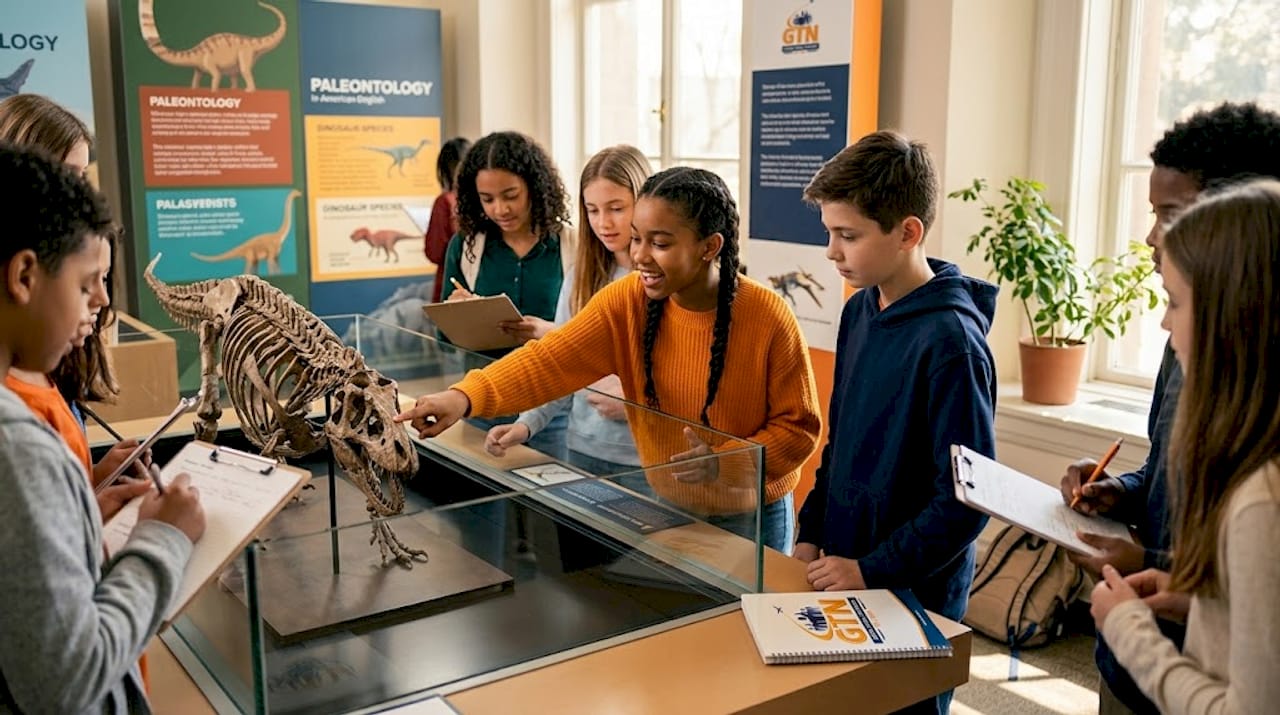
School trips are not a break from learning. They are learning. A 2026 Hyundai Motor UK study found that school trips boost wellbeing by 60%, attention by 80%, and curiosity by 75% compared to standard school days. Those are not small gains. For educators, parents, and community leaders wrestling with declining student engagement, understanding why school trips matter could reshape how you think about the entire school experience. This article breaks down the research, the real-world benefits, and the planning strategies that separate a memorable trip from a missed opportunity.
Table of Contents
- Key takeaways
- Why school trips matter for real learning
- Social and emotional growth on school trips
- Why destinations and trip planning matter
- Long-term benefits of consistent school trip programs
- My take on school trips as core educational strategy
- Plan your next school trip with Grouptravelnetwork
- FAQ
Key takeaways
| Point | Details |
|---|---|
| Measurable engagement gains | School trips significantly increase student wellbeing, curiosity, and attention compared to typical classroom days. |
| Experiential learning sticks | Hands-on, real-world learning through trips improves recall and knowledge retention far beyond worksheets. |
| Social development accelerates | New environments build confidence, collaboration skills, and stronger student-teacher relationships. |
| Planning quality determines impact | Active inquiry-based trips with pre-trip and post-trip structure deliver measurably better outcomes than passive sightseeing. |
| Long-term benefits are documented | Students who take multiple trips show higher grades, better attendance, and fewer behavioral issues over time. |
Why school trips matter for real learning
Most students forget a lecture within a week. They remember the day they held a fossil, interviewed a park ranger, or watched a chemical reaction happen in front of them. That difference is not anecdotal. It is grounded in Kolb’s experiential learning cycle, which describes how people learn best when they move through four stages: concrete experience, reflective observation, abstract conceptualization, and active experimentation. A well-designed school trip hits all four.
When a group of sixth graders visits a wetlands preserve and spends two hours collecting water samples, recording species observations, and debating what their data means, they are doing science. Not reading about it. Not watching a video. Doing it. Experiential learning through field trips has been shown to improve recall, nuanced analysis, and independent motivation to explore topics further, compared to traditional classroom instruction.
The advantages of school trips for learning also show up in test scores. Research published in the Journal of Human Resources found that students participating in multiple field trips show higher test scores and better grades, especially as they transition into middle school. This is not a coincidence. Trips give abstract classroom concepts a physical, emotional anchor. That anchor makes information retrievable.
School trips also serve students whose strengths do not show up on standardized tests. Kinesthetic learners, visual learners, and students who struggle with passive classroom formats get to shine when the learning environment changes. A student who rarely raises her hand in class might lead the group during a nature scavenger hunt. Recognizing and designing for that possibility is part of why educational field trip advantages extend beyond academics alone.
Pro Tip: Frame every trip with a learning purpose before students board the bus. Give each student one guiding question to investigate on-site. Then, within 48 hours of returning, have them synthesize their findings in a short reflection or class discussion. This pre-trip and post-trip structure is the single most effective way to convert a fun outing into lasting knowledge.
- Assign students specific observation tasks rather than general exploration
- Connect on-site discoveries to a current classroom unit before departure
- Use post-trip projects, such as presentations or written reflections, to reinforce what was learned
- Revisit trip experiences during assessments to strengthen memory retrieval
Social and emotional growth on school trips
Classrooms have routines. Trips break them. That disruption is exactly the point. When students navigate an unfamiliar environment together, share responsibilities, and solve unexpected problems as a group, they practice social skills that no worksheet can replicate. Collaboration, communication, adaptability, and empathy all get exercised in the field in ways that are immediate and consequential.
The impact of school excursions on belonging is particularly striking. A survey of thousands of students in England found that trips are the top factor in fostering a sense of school belonging, with 58% of students ranking trips above sports clubs, arts programs, and other activities. That statistic should matter deeply to any school administrator concerned about retention, motivation, or climate.
Student confidence also grows during trips in ways that are hard to manufacture inside a school building. A shy student who successfully reads a map, leads a small group, or speaks to a museum educator in front of peers experiences a real competency win. These moments build self-perception in ways that affect how a student shows up back in the classroom.
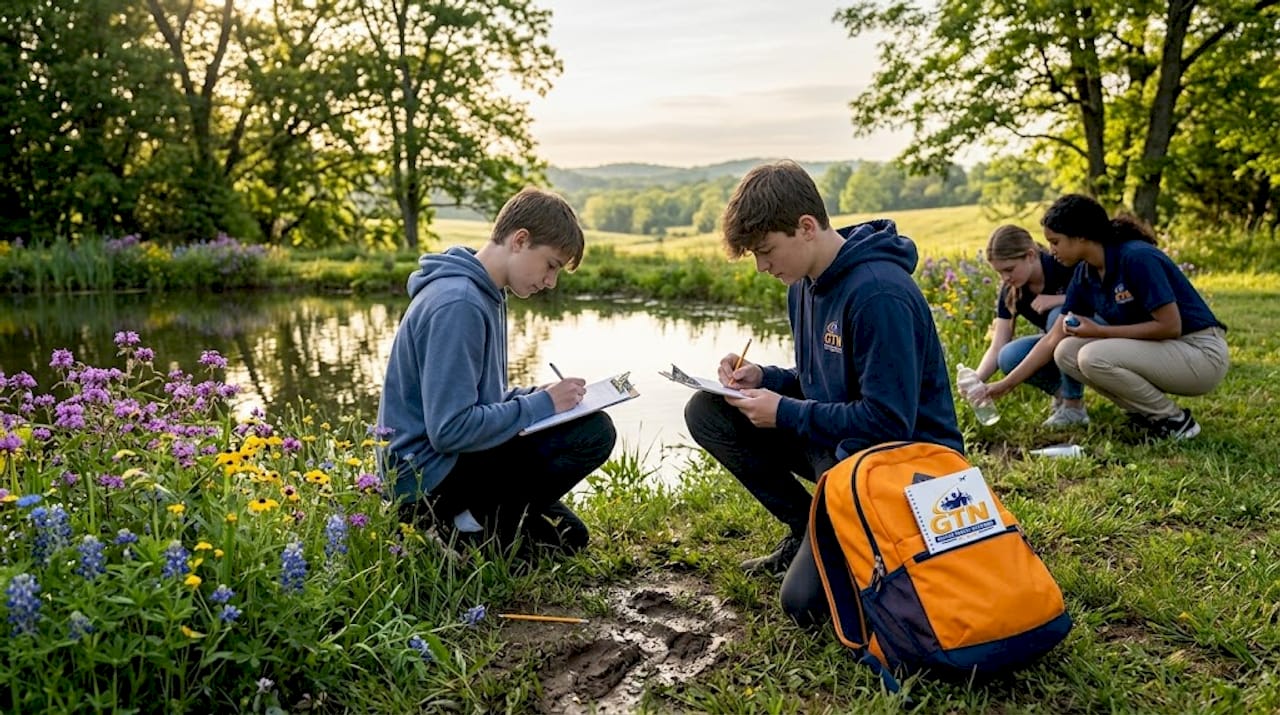
Perhaps the least discussed benefit is what happens between teachers and students. Teacher-student relationships improve significantly on trips. Students see their teachers as human beings. Teachers see their students outside the academic pressure of grades and testing. That shift makes teachers more approachable and students more motivated when the group returns to school.
Pro Tip: Before departing, assign each student a specific role for the trip, such as group navigator, timekeeper, or note taker. Rotating roles across a multi-day trip builds leadership confidence and keeps every student actively engaged rather than passively along for the ride.
- Build in structured group discussion time during travel to strengthen peer relationships
- Mix students across usual social groups when assigning trip teams
- Brief teachers beforehand on observing and naming social growth, not just academic learning
- Address potential equity concerns by creating buddy systems that support students who may feel anxious
Why destinations and trip planning matter
Not all trips are created equal. A visit to a history museum where students wander with no clear task is a field trip. A visit where students arrive with three investigative questions, spend 90 minutes gathering evidence from artifacts, and then debate competing historical interpretations back at the bus is a living classroom. The destination matters. The planning matters more.
The value of any destination lies in its ability to connect abstract concepts to something students can see, touch, and question in real time. A theater district brings a Shakespeare unit to life. A local river watershed makes an ecology lesson tangible. A manufacturing facility turns an economics concept into a visible process. Why destinations matter for school trips comes down to alignment. The destination should serve the curriculum, not just fill a calendar date.
Here is a straightforward comparison between effective and ineffective trip planning approaches:
| Planning approach | What it looks like | Learning outcome |
|---|---|---|
| Active inquiry-based trip | Students arrive with guiding questions, complete on-site tasks, debrief as a group | High retention, critical thinking, curriculum connection |
| Passive sightseeing trip | Students follow a guide with no assigned tasks or reflection | Low retention, entertainment value only |
| Staff-collaborative planning | Teachers, administrators, and support staff co-design the experience and set clear expectations | Smooth logistics, reduced behavioral issues, shared ownership |
| Last-minute logistics-only planning | Booking transport and venue without curriculum integration or behavioral framing | Confusion, missed learning opportunities, increased management burden |
Structured planning involving staff collaboration and clear behavioral expectations has been shown to improve trip outcomes significantly while reducing the management burden on individual teachers. Why school trip planning matters is not just about logistics. It is about building a shared educational intention across everyone involved.
Equity also belongs in the planning conversation. Schools that build trip costs into their annual budget, seek grant funding, or offer flexible payment options make sure that a student’s access to these experiences does not depend on family income.
Pro Tip: Involve students in the destination selection process. When students feel ownership over where they go and why, their engagement on-site and their motivation to prepare in advance increases noticeably.
Long-term benefits of consistent school trip programs
One well-organized trip can shift how a student feels about learning. A sustained program of annual or multi-year trips can change a student’s academic trajectory. Research from the Journal of Human Resources connecting multiple trips to better grades, fewer absences, and reduced behavioral infractions points to something deeper than a single memorable day.
Repeated experiential learning builds intellectual resilience. Students who regularly encounter new environments, unfamiliar experts, and real-world problems learn to tolerate ambiguity, ask better questions, and persist when answers are not obvious. These habits transfer back into the classroom in measurable ways.
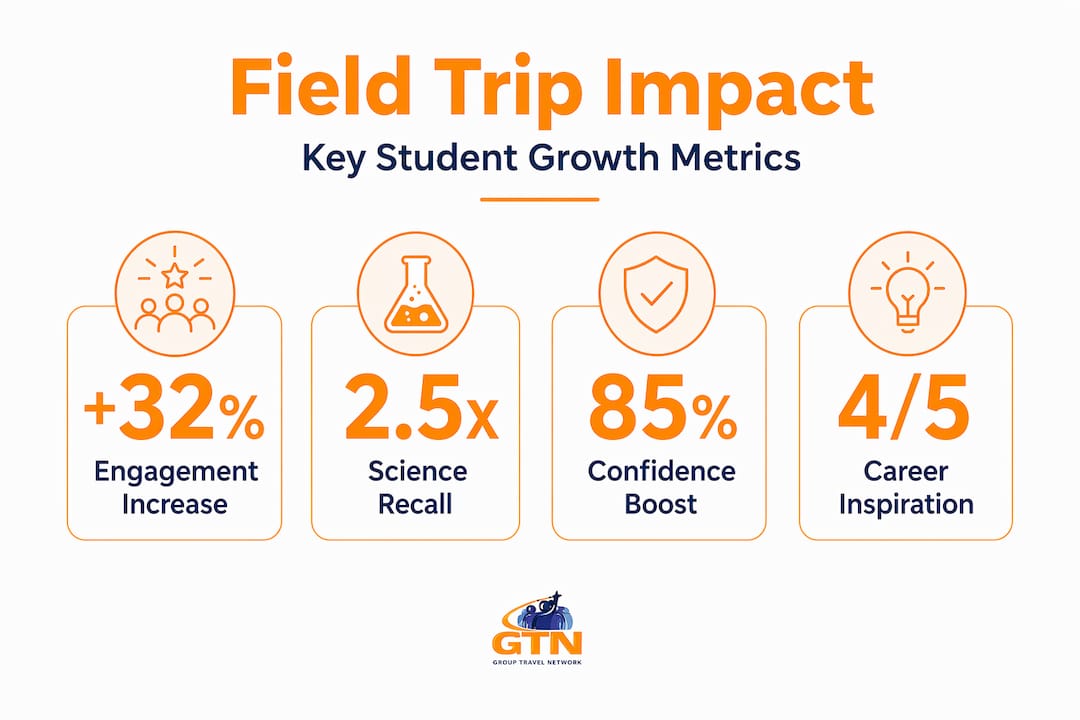
The career exposure dimension of school trips is underappreciated. When a middle schooler visits a marine biology lab, a film production studio, or a city planning office, they encounter career pathways they may never have considered. Trips expose students to vocational and professional worlds that expand their sense of what is possible for their own future. For students from under-resourced communities, this exposure can be genuinely life-altering.
Developmental timing matters too. The middle school years are a period of rapid identity formation, and trips during this transition are particularly impactful. Students at this age are testing their independence and building peer identity. A well-designed trip meets them exactly where they are.
| Program structure | Documented benefit |
|---|---|
| Single annual trip | Increased engagement and belonging within the school year |
| Multi-year trip program | Higher grades, fewer absences, and reduced behavioral infractions |
| Career-focused excursions | Expanded awareness of professional pathways and future goals |
| Community-based local trips | Stronger civic identity and sense of purpose |
Pro Tip: Design your school’s trip program as a progression. Younger grades build local community awareness. Middle grades explore regional or career-relevant destinations. Upper grades tackle more complex, self-directed inquiry trips. This structure builds on itself and creates a school culture where trips are expected and valued.
My take on school trips as core educational strategy
I have worked alongside educators long enough to hear the same hesitations repeated. The liability concerns. The difficulty fundraising. The fear that something will go wrong. I understand all of it. But what I have also seen, repeatedly, is that the schools that treat trips as optional extras are the ones where student disengagement goes quietly unaddressed.
My honest view is this: a school trip is not a reward for good behavior. It is not a break from the curriculum. It is one of the most efficient uses of educational time available, provided it is planned with intention. The strengthened teacher-student bonds that form during trips pay dividends for months after the group returns. Teachers tell me that students who seemed checked out in class become entirely different people on a trip. That shift does not disappear when the bus pulls back into the school parking lot.
What I encourage every educator and administrator to do is stop asking whether trips are worth the effort and start asking how to make them more effective. The research is clear. The outcomes are documented. The question now is one of design and institutional commitment, not justification. Trips belong in the school calendar the same way literacy blocks and math periods do. When schools treat them that way, students feel it.
— Donovan
Plan your next school trip with Grouptravelnetwork
If the research in this article confirms what you already suspected, the next step is putting a real plan together. That is where Grouptravelnetwork comes in.

Grouptravelnetwork specializes in organizing educational group travel for schools, bands, sports teams, and youth organizations. From customized itineraries to dedicated trip coordinators, flexible payment plans, and full travel protection, every service is built to take the stress off educators and deliver experiences that actually serve students. Whether you are planning your school’s first overnight trip or building out a multi-year program, the educational trip planning guide is a strong place to start. You can also explore adventure trip benefits and browse options designed to align with your curriculum and community goals. For schools focused on safety and logistics, the safe journey coordination resources provide practical frameworks for managing group travel with confidence.
FAQ
Why do school trips matter more than classroom lessons?
School trips deliver experiential learning that classroom instruction cannot replicate. Research shows they improve recall, build social skills, and increase student engagement by up to 80% compared to standard school days.
How do school trips support student social development?
Trips place students in new environments that require collaboration, communication, and adaptability. A large-scale survey found that 58% of students cite school trips as the top factor in their sense of belonging at school, ranking above sports and arts programs.
What makes a school trip educationally effective?
The most effective trips include pre-trip guiding questions, active on-site inquiry tasks, and post-trip synthesis activities. Passive sightseeing without structure produces significantly lower learning outcomes than inquiry-based approaches.
How many trips does a student need to see long-term benefits?
Research from the Journal of Human Resources links participation in multiple field trips to measurably higher grades, better attendance, and fewer behavioral issues, particularly during the middle school transition years.
How can schools make trips accessible to all students?
Schools can build trip costs into annual budgets, apply for educational grants, and work with travel partners that offer flexible payment plans. Equity planning is a core part of why school trip planning matters for every student, regardless of economic background.
Recommended

Relax with our Student Travel Expertise .
We deliver stress-free student trips backed by an exceptional array of services you won’t find anywhere else:
- Stress-free, creative planning of customized itineraries
- Dedicated GTN Service host on every trip
- Extensive travel protection plan options
- Online, individual registration system
- Flexible payment plans and online payment options
- Bulk buyer discounts for great trips that cost less
Inclusion into #MyGTNFamily for life! (you don’t even have to remember our birthday!)
Spain
There is no place like Spain to offer a student performance opportunity or cultural student trip.
Myrtle Beach
All students love the beach! Especially a beach known for its 60 miles of pristine coastline.
Boston
Have your students experience colonial charm in the city that is considered the hub of New England.
London
Provide your student group with the “Royal” treatment! One of the world’s most recognized cities.
See What People Are Saying
“This was my first time using a company to plan our band trip. It was so easy working with Justin and Group Travel Network. We had to make several changes along the way, but they were accommodating changes and worked everything out for us. I would highly recommend using Group Travel Network.”
“It has been my privilege to use Group Travel Network as the exclusive travel coordinator for my band for over 10 years. I can say, without doubt or hesitation, that GTN is, by far, the best travel company for student groups currently in existence. I have often said that I wouldn’t take my band across the street without GTN and that’s not far from the truth!”
“What wonderful trip we had to NYC! Our group of 51 never missed a beat because of Group Travel Network and our wonderful guide, Tim. It was truly a theatre trip to remember! If you are looking for a travel company who really cares about the details, Group Travel Network is for you!”