


TL;DR:
- Effective school trip planning requires early preparation, administrative buy-in, and comprehensive safety protocols to ensure student safety and logistical success. Utilizing digital tools, clear parent communication, and vetted transport providers streamline processes, while flexible leadership and quick adaptation turn unforeseen events into valuable learning experiences. Mastering structure and flexibility helps create memorable, safe, and smoothly executed educational journeys.
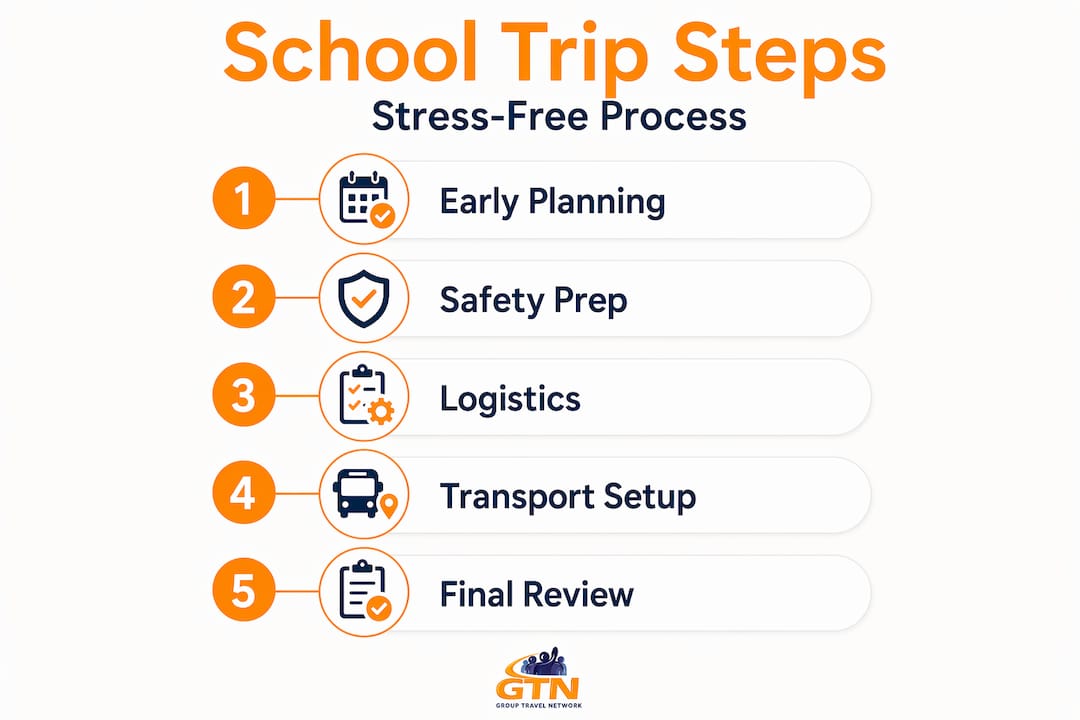
Planning a school trip sounds exciting until you’re three months out and still don’t have parent permission slips, a confirmed bus company, or administrator sign-off. The reality is that a step by step school trip plan is what separates a transformative student experience from a logistical disaster. Whether you’re coordinating a one-day museum visit or a multi-day performance tour, the stakes are high: student safety, curriculum alignment, budget compliance, and about a hundred moving pieces that all need to land at the same time. This guide walks you through every phase, from early approval to post-trip debrief.
Table of Contents
- Understanding the benefits and challenges of school trips
- Step 1: Early preparation and administrative buy-in
- Step 2: Safety protocols and supervision planning
- Step 3: Managing logistics, parent communication, and permissions
- Step 4: Transport safety and booking best practices
- Step 5: Final preparations, on-trip management, and post-trip evaluation
- Why stress-free school trip planning requires mastering both structure and flexibility
- Simplify your school trip planning with Group Travel Network
- Frequently asked questions
Key Takeaways
| Point | Details |
|---|---|
| Start planning early | Begin school trip preparations 6 to 12 months in advance to secure approvals and bookings. |
| Prioritize safety | Maintain appropriate adult-to-student ratios and prepare detailed risk assessments. |
| Use digital tools | Collect permissions and organize chaperones digitally to reduce administrative burden. |
| Book transport early | Secure licensed providers with DBS-checked drivers and seat-belt-equipped vehicles in advance. |
| Prepare for emergencies | Equip Visit Leaders with safeguarding knowledge and clear emergency procedures. |
Understanding the benefits and challenges of school trips
Before you open a single spreadsheet, it helps to understand exactly why school trips are worth the effort and what makes them so hard to pull off.
The data is striking. School trips boost (opens in a new tab) pupils’ wellbeing and engagement by 60% and attention by 80% compared to typical school days. That’s not a marginal improvement. That’s the kind of shift in student engagement that teachers spend entire careers chasing. The hands-on, real-world context of a well-designed trip activates curiosity in ways a classroom simply cannot replicate.
But the obstacles are real. Rising transport costs (opens in a new tab) are cited by 71% of teachers as the biggest barrier to organizing school trips, and the administrative workload compounds that stress. Between risk assessments, permission forms, chaperone coordination, and budget tracking, a single trip can demand dozens of hours of preparation.
The benefits of student travel (opens in a new tab) extend well beyond academics. Social confidence, independence, and real-world problem-solving all develop during off-site experiences. Knowing this helps you build the case internally and stay motivated when the logistics feel overwhelming.
Common barriers administrators face:
- Insufficient budget and unclear fundraising pathways
- Heavy administrative load with limited planning support
- Difficulty securing timely parent responses and permissions
- Lack of a clear framework for risk assessment and safety compliance
- Uncertainty about vendor vetting and transport compliance
Having seen the value school trips add to student learning, let’s explore how to start planning effectively.
Step 1: Early preparation and administrative buy-in
The single most common mistake school trip coordinators make is starting too late. Begin planning (opens in a new tab) 6 to 12 months before departure, identifying program types, reviewing curriculum alignment, and drafting your administrator proposal early in the process.
Why that far in advance? Because vendor availability, budget approvals, and fundraising timelines all compress rapidly once the school calendar fills up. Starting early gives you room to course-correct without crisis.
Your early planning checklist should include:
- Identify the educational objective and curriculum standards the trip addresses
- Draft a proposed itinerary with estimated costs
- Research destination options and preliminary vendor availability
- Build a projected budget including contingency funds (typically 10 to 15% of total cost)
- Prepare an administrator presentation with learning outcomes, safety plan overview, and budget summary
For the administrator presentation specifically, strong buy-in requires more than enthusiasm. Bring a presentation template that includes a curriculum alignment map, a risk summary, and a proposed communication plan for parents. Administrators respond to preparedness. Walk in with answers to the questions they haven’t asked yet.
Step-by-step early planning sequence:
- Define the trip’s learning objectives and grade-level fit
- Research two or three destination options with cost comparisons
- Draft a timeline working backward from departure date
- Submit administrator proposal with curriculum alignment evidence
- Secure written approval before making any vendor commitments
For school group travel planning (opens in a new tab), the earlier you document your decisions, the smoother every subsequent phase becomes.
Pro Tip: Create a shared planning folder with your administrator from day one. When they can see your documents, risk assessments, and communication drafts in real time, approval requests move faster and trust builds naturally.
With administrative support secured, the next crucial step is organizing safety and supervision.
Step 2: Safety protocols and supervision planning
Safety is not a checkbox. It’s the foundation every other planning decision rests on. And it starts with getting your supervision ratios right before you finalize any logistics.
Minimum supervision ratios (opens in a new tab) vary by student age: 1 adult per 6 pupils under age 5, 1:10 for primary-age students, and 1:15 for secondary students, with adjustments based on trip-specific risk. A hiking trail in rugged terrain requires a tighter ratio than a museum visit, regardless of age group.
Core safety planning elements:
- Conduct a written risk assessment specific to every activity and location
- Assign a designated Visit Leader who holds overall responsibility
- Ensure all adult leaders have current safeguarding training
- Prepare a medical information sheet for every student
- Identify hospital locations and urgent care facilities near your destination
“Emergency procedures must include contacts, missing child protocols, and safeguarding policies.” EVOLVE educational visits policy 2025 (opens in a new tab)
This isn’t just about compliance. A missing child protocol that every chaperone knows by heart is the difference between a contained incident and a full emergency. Practice it before you leave. Debrief it after the trip.
For expert planning for educational trips (opens in a new tab), building your safety framework early means you can present it to parents before permission slips go out, which noticeably increases return rates and parent confidence.
Having established safety frameworks, let’s move to managing logistics and parent engagement effectively.
Step 3: Managing logistics, parent communication, and permissions
This is where most trips either run smoothly or quietly fall apart. The key is removing ambiguity from every interaction with parents, chaperones, and vendors.
Most U.S. school districts (opens in a new tab) require 1 chaperone per 5 to 8 students, with digital permission slips collected 3 to 4 weeks before departure. Paper forms slow everything down and create tracking nightmares. Go digital from the start.
Parent communication timeline:
- 8 to 10 weeks out: Send initial trip announcement with cost breakdown and educational purpose
- 6 to 8 weeks out: Distribute digital permission slips and medical information forms
- 4 weeks out: Deadline for permission slips and deposit payments
- 2 weeks out: Send detailed itinerary, packing list, and behavior expectations
- 3 to 5 days out: Final confirmation with departure time, emergency contacts, and day-of procedures
Pro Tip: Assign one chaperone to each cluster of 6 to 8 students and keep those groupings consistent throughout the trip. When every chaperone “owns” a specific group, accountability gaps disappear.
| Task | Deadline | Owner |
|---|---|---|
| Administrator approval | 10 to 12 months out | Trip coordinator |
| Vendor bookings confirmed | 6 to 9 months out | Trip coordinator |
| Permission slips distributed | 6 to 8 weeks out | Coordinator or teacher |
| Permission slips deadline | 4 weeks out | Coordinator |
| Final itinerary sent to parents | 2 weeks out | Trip coordinator |
| Chaperone briefing | 1 week out | Visit Leader |
Administrative hours are a hidden cost that schools consistently underestimate. Digital tools that automate reminders, track payment status, and flag missing forms can reclaim dozens of hours per trip.
When you coordinate group tours (opens in a new tab) through a platform built for educational groups, much of this infrastructure already exists.
With logistics in place, focus next on transportation safety and booking strategies.
Step 4: Transport safety and booking best practices
Transport is the phase where the most preventable safety failures occur and where early action pays the biggest dividends.
What to confirm before booking any transport provider:
- Valid PSV (Public Service Vehicle) operator license for the route type
- Enhanced DBS checks for all drivers transporting students
- Seat belt availability for every passenger seat
- Vehicle maintenance records available on request
- Clear breakdown and emergency protocol procedures
Drivers must hold Enhanced DBS checks, and seat belts are legally required on all coaches used for passengers under 16. Don’t accept verbal assurances on these points. Get documentation.
| Trip Type | Recommended Booking Lead Time | Key Consideration |
|---|---|---|
| Day trip (local) | 6 to 10 weeks ahead | Availability in peak school months |
| Multi-day domestic | 4 to 6 months ahead | Overnight parking and driver rest regulations |
| International tour | 6 to 12 months ahead | Customs compliance and driver documentation |
Book transport early, particularly for trips scheduled in May, June, or September, when demand from school groups peaks. Late bookings often mean fewer vehicle choices, higher costs, and rushed driver briefings.
Pro Tip: Always request a written confirmation of driver credentials before signing any transport contract. A reputable operator will have this documentation ready within 24 hours of your request.
For travel management for schools (opens in a new tab), having a vetted network of transport providers already screened for compliance removes one of the most stressful parts of trip planning.
Having secured transport, the final key phase is trip execution and final checks before departure.
Step 5: Final preparations, on-trip management, and post-trip evaluation
The week before departure is when your school field trip guide moves from planning documents to lived action. Everything needs to be confirmed, printed, and in the right hands.
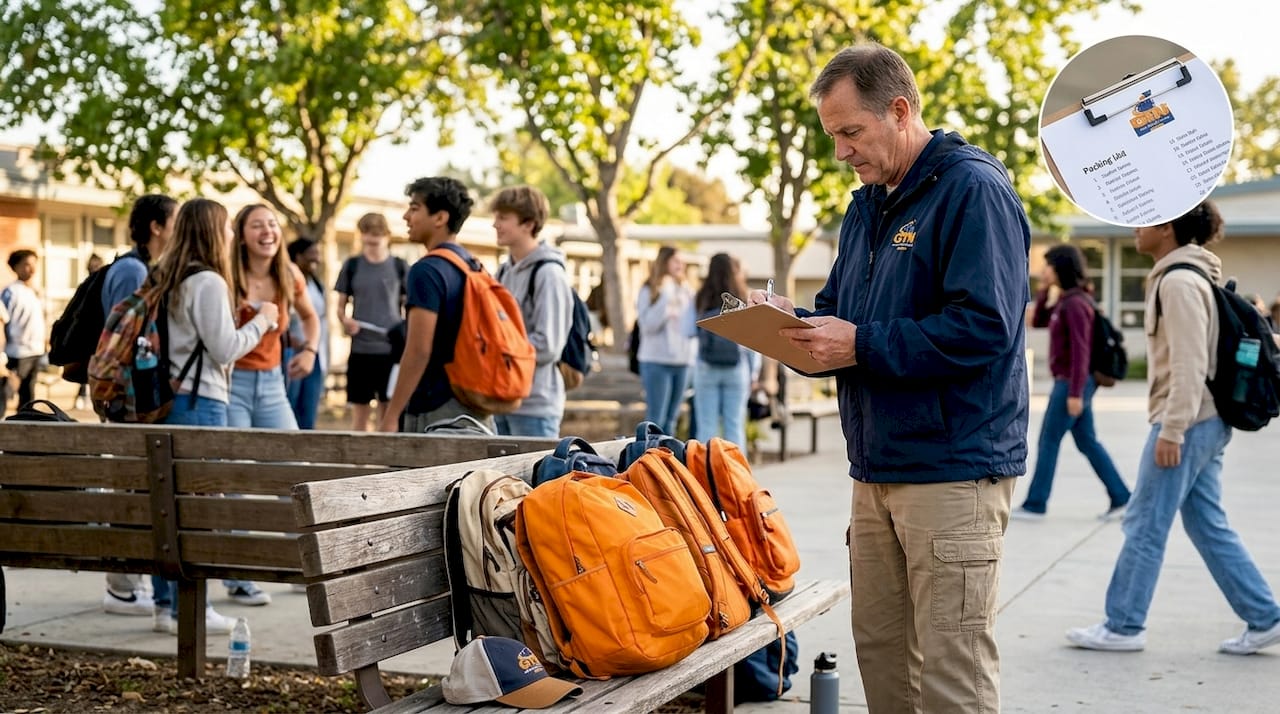
Complete all risk management documents, hold pre-departure meetings, and confirm emergency plans in the one to three months before your departure date. Don’t leave these tasks for the final week.
Pre-departure checklist:
- Confirmed itinerary distributed to all staff, chaperones, and parents
- Printed student rosters for every chaperone group
- First aid kits packed and assigned to specific adults
- Emergency contact sheet laminated and carried by Visit Leader
- All students’ medications collected, labeled, and secured
On the day itself, structure is everything. Use printed rosters, assign point contacts for day-of questions, conduct headcounts at every transition point, and brief chaperones on contingency plans before students board.
On-trip management sequence:
- Morning headcount and attendance confirmation before departure
- Chaperone briefing covering the day’s schedule, rules, and emergency protocol
- Headcount at every transition: boarding, arriving at venue, moving between areas, departing
- Designated communication channel (group text or walkie-talkie) for all adults
- End-of-day debrief with staff before returning to school
Post-trip evaluation is the step most coordinators skip and immediately regret when planning the next excursion. Collect feedback from students, chaperones, and parents within 48 hours while details are fresh. Document what worked, what didn’t, and what you’d change. Your next trip’s educational trip checklist starts here.
Pro Tip: Send a two-minute post-trip survey to parents and chaperones the evening of return. Response rates are highest when the experience is still fresh, and the insights will directly improve your next trip’s planning cycle.
Now that you’ve learned the step-by-step process, let’s explore a unique perspective on school trip planning you won’t find elsewhere.
Why stress-free school trip planning requires mastering both structure and flexibility
Here’s the uncomfortable truth most school trip guides don’t address: the most dangerous moment in any trip isn’t a missing permission slip or an unbooked bus. It’s when a rigid plan meets an unpredictable reality and the people responsible don’t have the authority or the confidence to adapt.
Visit Leaders must master (opens in a new tab) national guidance on supervision and emergency procedures, but equally important is developing team support and practical flexibility on the ground. A chaperone who knows exactly what to do when the venue changes its entry policy at 9 AM is worth more than a perfect plan that nobody can deviate from.
This is why empowering your chaperones matters as much as briefing them. Give them a copy of the risk assessment. Walk them through the “what if” scenarios before the day. Let them know they have permission to make judgment calls within defined boundaries. A chaperone who feels trusted performs better under pressure than one who freezes waiting for instructions.
The other thing we’ve seen consistently in educational group travel: the trips that students remember most are rarely the ones that went exactly as planned. They’re the ones where something unexpected happened and the adults handled it well. A weather change that redirected a nature walk into an impromptu geology lesson. A transport delay that turned into an unplanned community observation exercise. Preparation doesn’t mean eliminating surprises. It means being ready to turn them into learning moments.
Use your step-by-step planning guide as a foundation, not a ceiling. The goal is confident, informed flexibility — not compliance with a document.
Simplify your school trip planning with Group Travel Network
Pulling off a well-organized trip while managing your regular administrative workload is genuinely hard. That’s where Group Travel Network was built to help.

We work directly with school administrators and trip coordinators to plan educational group trips (opens in a new tab) that are curriculum-aligned, logistically sound, and built around student safety. From vetted transport providers and digital permission management to dedicated trip coordinators who handle vendor communication on your behalf, our platform covers every phase of the process. We also offer flexible tools to help you budget for school trips (opens in a new tab) and manage payments without the spreadsheet chaos. Our travel management for teams resources give you the infrastructure to plan smarter and execute with confidence.
Frequently asked questions
When should school trip planning begin?
Planning should start 6 to 12 months before departure to secure approvals, confirm vendor availability, allow time for fundraising, and distribute permissions without rushing families.
What adult-to-student supervision ratios are recommended?
Recommended ratios are 1 adult per 6 pupils under age 5, 1:10 for primary-age students, and 1:15 for secondary students, always adjusted upward for higher-risk environments or activities.
How can administrators reduce the logistical workload for trips?
Digital permission slips and structured chaperone sign-up tools dramatically cut admin time and reduce the coordination errors that come with paper-based systems.
What are the key safety checks for school trip transport?
Drivers must hold Enhanced DBS checks, coaches must have seat belts for all passengers under 16, and operators should carry valid PSV licenses with documented breakdown protocols.
How should schools handle emergencies during off-site visits?
Visit Leaders must carry safeguarding procedures, emergency contact sheets, and missing child protocols, and should brief every chaperone on these procedures before the group departs.
Recommended
- School Group Travel Planning: A Step-by-step Guide • Group Travel Network (opens in a new tab)
- Essential Performance Trip Checklist For Stress-Free School Travel (opens in a new tab)
- How To Budget For School Trips: A Step-by-Step Guide • Group Travel Network (opens in a new tab)
- How Travel Experts Make Student Trips Safer And Stress-free • Group Travel Network (opens in a new tab)