

TL;DR:
- International student tours enhance intercultural skills and academic understanding through structured, reflective experiences.
- They positively impact local communities economically and foster long-term cultural exchanges.
- Effective tours require intentional planning, clear objectives, safety measures, and balancing fun with learning.
International student tours carry a reputation for being glorified field trips, but that view misses something important. Research consistently shows these experiences reshape how students think, communicate, and engage with the world around them. The gains go well beyond passport stamps. When tours are structured with clear learning goals, students build intercultural skills, deepen academic knowledge, and develop personal confidence that classroom instruction alone rarely achieves. This guide walks school administrators and travel coordinators through the evidence, the design principles, and the practical steps for turning international tours into genuinely transformational experiences for students.
Table of Contents
- The transformational benefits of international student tours
- Economic and community impacts: Why tours matter beyond the classroom
- How to design educationally rich student tours
- Overcoming challenges: Common concerns and solutions for international tours
- A new lens on international student tours: Integrating fun and learning
- Next steps: Plan extraordinary international tours with expert support
- Frequently asked questions
Key Takeaways
| Point | Details |
|---|---|
| Intercultural growth | Students build essential cultural skills, attitudes, and global awareness that last a lifetime. |
| Wider community impact | Tours benefit local economies and strengthen relationships between schools and host communities. |
| Best tours balance fun and learning | Academic value is highest when tours combine enjoyable activities with structured reflection and curriculum alignment. |
| Overcoming challenges | With clear objectives and strong planning, common concerns like cost, safety, and rigor can be addressed. |
The transformational benefits of international student tours
Let’s get one thing straight: a well-designed international tour is not a vacation with a permission slip attached. It’s a structured learning environment that happens to be set in a different country. The distinction matters because it changes how you plan, what you measure, and what students take home.
Short-term study abroad increases intercultural competence (opens in a new tab) significantly, with measurable gains across knowledge, attitudes, and skills. That’s not a small finding. It means students return with a stronger ability to navigate cultural differences, communicate across language barriers, and recognize their own assumptions. These are skills employers and universities actively seek.
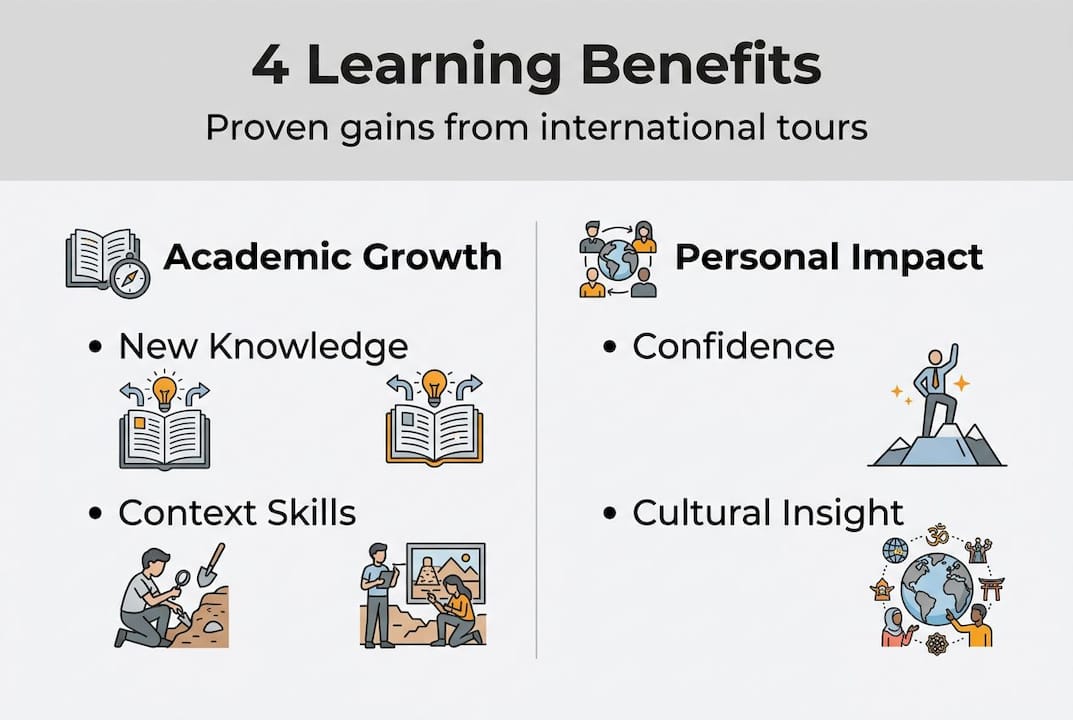
The educational advantages of international tours span multiple domains. Here’s a quick look at what students typically gain:
| Domain | Specific gains |
|---|---|
| Academic | Contextual understanding of history, geography, and language |
| Social | Collaboration, empathy, and cross-cultural communication |
| Personal | Confidence, adaptability, and independent decision-making |
| Career readiness | Global awareness, resilience, and problem-solving |
Beyond the table, the group travel benefits are also deeply social. Students who travel together build trust quickly. They navigate unfamiliar situations as a team, which strengthens peer relationships in ways that a semester of shared classes rarely does.
Here are the core skills students develop on well-designed international tours:
- Intercultural competence: Recognizing and respecting cultural differences in real time
- Language exposure: Practical engagement with foreign languages, even without fluency
- Historical context: Seeing the physical sites they’ve studied brings facts to life
- Self-reliance: Managing schedules, budgets, and decisions in unfamiliar settings
- Global citizenship: Understanding their place in a wider, interconnected world
“Fun doesn’t cancel learning. In fact, when students are engaged and enjoying themselves, retention improves. The key is pairing enjoyment with structured reflection.”
Pro Tip: Schedule a 20-minute debrief session each evening during the tour. Ask students three questions: What surprised you today? What challenged you? What will you remember in five years? This simple habit dramatically increases how much students retain from the experience.
Explore global learning through student travel to see how itineraries can be built around specific academic outcomes rather than just destinations.
Economic and community impacts: Why tours matter beyond the classroom
The benefits of international student tours don’t stop at the school gate. Every group that travels internationally leaves a footprint in the communities they visit, and that footprint matters more than most administrators realize.
Erasmus students contribute approximately €4,500 per student (opens in a new tab) to local economies through accommodation, food, and leisure spending. They also show high revisit loyalty, returning as independent tourists later in life. Student groups function similarly. When your school sends 40 students abroad, that group generates real economic activity for local restaurants, museums, guides, and hotels.
This creates a reciprocal relationship. Host communities benefit financially, which gives them strong motivation to deliver excellent, authentic experiences. Schools that build long-term partnerships with specific destinations often find that the quality of those experiences improves over time as local providers come to know and invest in the relationship.
Here’s how schools and communities win together:
- Local businesses grow: Student groups fill accommodations and restaurants during off-peak seasons
- Cultural exchange deepens: Repeated visits build genuine relationships between schools and communities
- School reputations strengthen: Districts known for global programs attract families who value educational breadth
- Alumni loyalty forms: Students who loved a destination often return as adult travelers
- Curriculum partnerships develop: Host institutions and schools can co-create learning content
A comparison of short-term and long-term impact helps clarify the value:
| Impact type | Short-term tour | Long-term partnership |
|---|---|---|
| Economic contribution | Immediate local spending | Recurring annual revenue |
| Cultural exchange | Surface-level exposure | Deep, ongoing relationships |
| School reputation | One-time visibility | Sustained community recognition |
| Student outcomes | Foundational global skills | Cumulative intercultural growth |
Schools that align international tours with International Baccalaureate programs (opens in a new tab) or similar frameworks also gain an academic credibility boost. These programs recognize international experience as a core component of student development, not an optional extra.
The cultural trip benefits for students are well documented, but the community-level ripple effects are just as compelling. And transformative group travel done right creates advocates on both sides of the journey.
How to design educationally rich student tours
A great destination is not enough. The difference between a tour that students forget in six months and one they reference for the rest of their lives comes down to design. Administrators and coordinators who approach tour planning with intention get dramatically better outcomes.
Benefits are maximized through social learning (opens in a new tab) and structured reflection. Observation, imitation, and guided discussion are how students internalize what they experience. Without these elements, even the most impressive destination becomes background scenery.
Here are the essential elements of an educationally rich tour:
- Curricular alignment: Every major activity should connect to something students are studying or will study
- Qualified local guides: Guides who understand your students’ age group and academic level add enormous value
- Structured reflection time: Built-in journaling, group discussion, or creative response activities
- Learning objectives: Written goals that define what students should know or be able to do after the tour
- Balanced scheduling: Mix of academic visits, cultural immersion, and genuine free time
- Pre-tour preparation: Classroom sessions before departure that prime students for what they’ll encounter
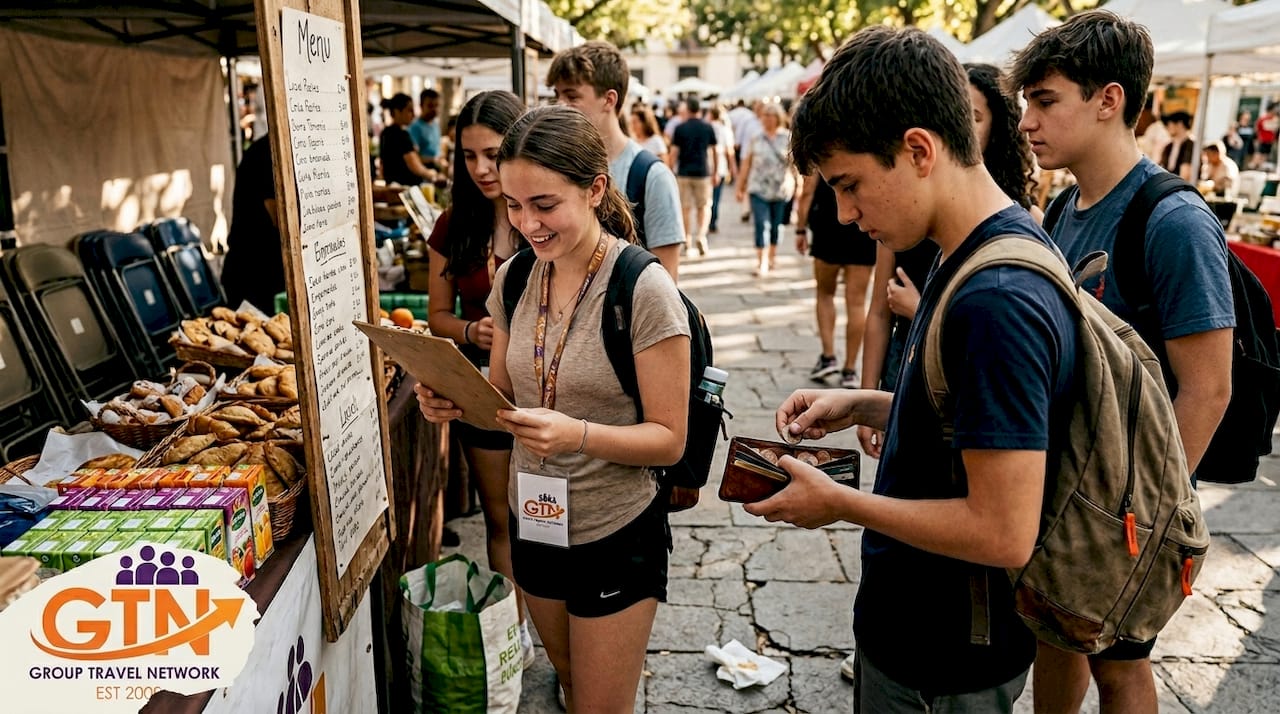
Pro Tip: Avoid packing every hour with scheduled activities. Students need unstructured time to process what they’ve seen. A free afternoon in a local market often produces more genuine cultural learning than three back-to-back museum visits.
The framework for building community on tours is just as important as the academic content. Students who feel connected to their group are more willing to take intellectual and social risks, which is exactly the mindset that produces growth.
For coordinators looking for inspiration, adventure-based education models offer a useful template. These programs blend physical challenge, cultural exposure, and reflective practice into cohesive experiences that hit multiple learning goals simultaneously.
Overcoming challenges: Common concerns and solutions for international tours
Every administrator who has considered an international tour has also run through the list of reasons it might not work. Cost, safety, logistics, and accountability are real concerns. They deserve real answers, not reassurance.
Here are the most common concerns and how to address them directly:
- Cost and accessibility: Offer tiered payment plans, apply for grants, and partner with fundraising programs to ensure no student is excluded based on finances
- Student safety: Work with agencies that provide 24/7 emergency support, comprehensive travel insurance, and vetted vendor networks
- Measurable outcomes: Define learning objectives before departure and assess them through post-tour assignments, presentations, or portfolio entries
- Parental concerns: Host an information night with clear itineraries, safety protocols, and contact procedures
- Inclusivity: Design tours that accommodate students with different physical abilities, dietary needs, and learning styles
- Academic missed time: Frame the tour as curriculum delivery, not absence, and coordinate with teachers in advance
“Short-term trips risk being low-impact unless structured with learning in mind.” This is the challenge worth solving, not avoiding.
The solution is not to abandon international tours because they’re complicated. It’s to build the systems that make them work. Schools that use community-building strategies from the planning stage create stronger group dynamics that carry through the entire trip.
Well-designed educational guided tours come with built-in frameworks for exactly these challenges. The right partner handles logistics so you can focus on the educational experience.
A new lens on international student tours: Integrating fun and learning
Here’s the view we’d push back on: the idea that academic rigor and genuine enjoyment are in tension. In our experience working with schools across a wide range of destinations and age groups, the trips that produce the deepest learning are also the ones students describe as the most fun. That’s not a coincidence.
The research backs this up. Students retain more when they’re emotionally engaged. A student who laughs with a local family over a shared meal is forming a memory that carries cultural knowledge far more effectively than a lecture ever could. The experience becomes the lesson.
What separates high-impact tours from forgettable ones is not the ratio of museums to free time. It’s the quality of reflection that follows each experience. The key benefits of group travel are activated most powerfully when students are given space to process what they’ve seen and felt. Debrief sessions, travel journals, and peer conversations turn enjoyable moments into lasting insight.
Stop framing tour planning as a tradeoff between fun and learning. Start designing for both, deliberately and simultaneously.
Next steps: Plan extraordinary international tours with expert support
You now have the evidence, the framework, and the practical tools to design international tours that genuinely move students forward. The next step is putting it into action with the right support behind you.
At Group Travel Network, we specialize in helping schools build lifelong memories through carefully structured international programs. Our team handles logistics, vendor coordination, and safety planning so your focus stays on the students. Explore our adventure tours with educational value to see how we align destinations with learning goals. Whether you’re planning your first international trip or refining an existing program, we can help you make classroom lessons real in ways that stay with students for years.
Frequently asked questions
What is the most important benefit of international student tours?
Building intercultural competence is widely supported by research as the top benefit. Study abroad gains are measurable across knowledge, attitudes, and practical skills for navigating a global world.
How do international student tours support local economies?
Tours generate direct spending on accommodations, food, and cultural experiences. Students contribute roughly €4,500 per person to local economies and often return as loyal adult tourists.
What makes an international tour academically effective?
Setting clear learning objectives, aligning the itinerary with the curriculum, and building in structured reflection are the three pillars. Unstructured trips risk prioritizing entertainment over genuine academic impact.
Are international student tours worth the cost and effort?
Yes, when designed as structured learning experiences. Intercultural competence gains are significant and measurable, and the personal and community value extends well beyond the trip itself.
Recommended
- Student Tour Group: 8 Advantages For Education In 2025
- Education Travel Group: 10 Adventures Benefits In 2025
- Student Educational Trips 2025: 5 Keys For Success
- College Student Tours: 5 Ways To Maximize Learning In 2025
- 5 Benefits of Speaking A Different Language – Linda Mandarin (opens in a new tab)