

May 15, 2026
How to build a school team trip itinerary that works

TL;DR:
- Careful risk assessment and thorough preparation of student information are essential before building a safe, effective trip itinerary.
- Structured planning includes defining goals, sequencing activities, assigning supervision, and building contingency buffers to manage delays and emergencies.
- Flexibility, transparent communication, and inclusive routines create resilient trips that adapt smoothly to unforeseen challenges.
Planning a student trip is nothing like booking a family vacation. You’re managing dozens of young people, a rotating cast of chaperones, parental expectations, school policies, and the very real pressure that something could go wrong on your watch. A poorly designed itinerary doesn’t just create inconvenience; it creates gaps in supervision, confusion among staff, and unnecessary risk for students. The good news is that a purposeful, well-sequenced itinerary can prevent most of these problems before they start. This guide walks you through the exact process, from prerequisites to final verification, so your next trip runs smoothly from departure to return.
Table of Contents
- What you need before you start: Planning prerequisites
- Step-by-step process: Building your team trip itinerary
- Managing group safety and inclusivity
- Budgeting, contingencies, and communication tips
- Final checklist and itinerary verification
- What most guides miss about team trip planning
- Take your school trip planning further
- Frequently asked questions
Key Takeaways
| Point | Details |
|---|---|
| Start with clear goals | Every successful itinerary begins by defining the educational purpose and expected outcomes. |
| Risk assessment is essential | Assess risks for each activity and student, accounting for medical needs and supervision. |
| Structure ensures inclusion | Assign groups and chaperones, using predictable routines to reduce anxiety for all students. |
| Plan for contingencies | Build flexibility into your itinerary for staffing or schedule changes. |
| Communicate clearly | Keep staff, students, and families in the loop with detailed, secure itinerary sharing. |
What you need before you start: Planning prerequisites
Before you write a single activity into your itinerary, you need solid groundwork. Skipping this stage is the most common reason school trips hit serious problems mid-journey.
Start with a risk assessment. Not all trips carry the same level of risk. A museum visit and a multi-day wilderness excursion require very different levels of preparation. You should plan for inclusion and proportional risk assessment based on trip type and student needs, weighing factors like terrain, weather, group size, and the specific needs of each student in your group.
Gather student information early. You need to collect the following before building anything:
- Medical conditions and medications, including emergency action plans for allergies or seizure disorders
- Special educational needs (SEN) and accessibility requirements
- Emergency contact information for every student
- Signed permission forms with trip details clearly stated
- Dietary restrictions for any meals included in the schedule
This information shapes every decision you make in the itinerary. If a student uses a wheelchair, your venue choices change. If a student has severe anxiety, your group structure and schedule predictability become critical. Strategies for making student trips safe consistently emphasize that safety starts with knowing your students, not just your destination.
Administrative and parental buy-in matters just as much as logistics. Secure formal approval from your principal or district before investing significant planning time. Then communicate with parents early, sharing trip goals, costs, and supervision plans. A lack of early communication is one of the top reasons trips get scaled back or canceled entirely.
Here’s a quick overview of essential documentation before departure:
| Document | Purpose | Who provides it |
|---|---|---|
| Permission slip | Legal authorization for student travel | Parent or guardian |
| Medical information form | Health history and medications | Parent or guardian |
| Emergency action plan | Response protocol for medical events | School nurse or parent |
| Itinerary overview | Schedule and contact info for families | Trip coordinator |
| Staff assignment sheet | Role clarity for all adults | Administrator |
Pro Tip: Create a single digital folder (shared with your admin and lead chaperone) that houses every form before the trip date. If something goes wrong, you need instant access, not a filing cabinet search.
“Effective trip planning starts with the students you’re taking, not the destination you’re visiting. Know your group before you build your schedule.”
Learning safe and impactful travel planning at this stage means treating the prerequisite phase as foundational, not optional.
Step-by-step process: Building your team trip itinerary
Once prerequisites are handled, you can move step-by-step through designing a practical, safe, and enriching itinerary.
Step 1: Define your trip goals. What should students know, feel, or be able to do because of this trip? Concrete learning outcomes guide every scheduling decision. A band performance tour has different objectives than a science field trip to a national park.
Step 2: List all required activities and logistics. Write every non-negotiable element first. Transportation arrivals and departures, meals, and any pre-booked venues go on the schedule before optional activities fill the gaps.
Step 3: Sequence activities with pacing in mind. Back-to-back high-stimulation activities exhaust students and increase behavioral incidents. Alternate between high-energy and quieter segments. Group visit engagement tips from experienced tour operators consistently highlight that engagement peaks when students have brief recovery time built into the schedule.
Step 4: Assign group structures and buddy systems. Divide students into manageable groups of 8 to 12, assigning each group a lead adult. Use a buddy system as a secondary layer of accountability, particularly in crowded or unfamiliar environments. Your expert group trip planning approach should account for student dynamics, not just headcounts.
Step 5: Assign chaperones to specific itinerary segments. Supervision needs to be explicit, not assumed. Plan explicit chaperone coverage and alternatives, mapping supervision to each itinerary segment. This means naming who is responsible during lunch, during free time, during travel transitions, and during any outdoor or unstructured activities.
Step 6: Plan contingency windows. Build 15 to 20 minute buffers between major transitions. This absorbs late arrivals, bathroom breaks, and unexpected delays without cascading into the rest of your day. For a step-by-step school group travel schedule, buffer time is not wasted time. It’s risk management.
Here’s how structured and unstructured itinerary approaches compare:
| Approach | Strengths | Weaknesses |
|---|---|---|
| Fully structured | Clear supervision, predictable schedule | Less flexible if conditions change |
| Loosely structured | More student autonomy | Higher supervision gaps |
| Hybrid (recommended) | Balances engagement and safety | Requires more upfront planning |
Pro Tip: Use a color-coded itinerary template when sharing with chaperones. Assign each chaperone a color so they can instantly spot when they’re “on duty” without reading every line of text. This reduces confusion and ensures nobody misses their supervision window.
Following group travel planning steps designed specifically for schools will help you avoid the common trap of over-scheduling, which is just as risky as under-planning.
Managing group safety and inclusivity
With your itinerary taking shape, it’s vital to embed safety and inclusivity into every segment, not just add them as an afterthought at the end.
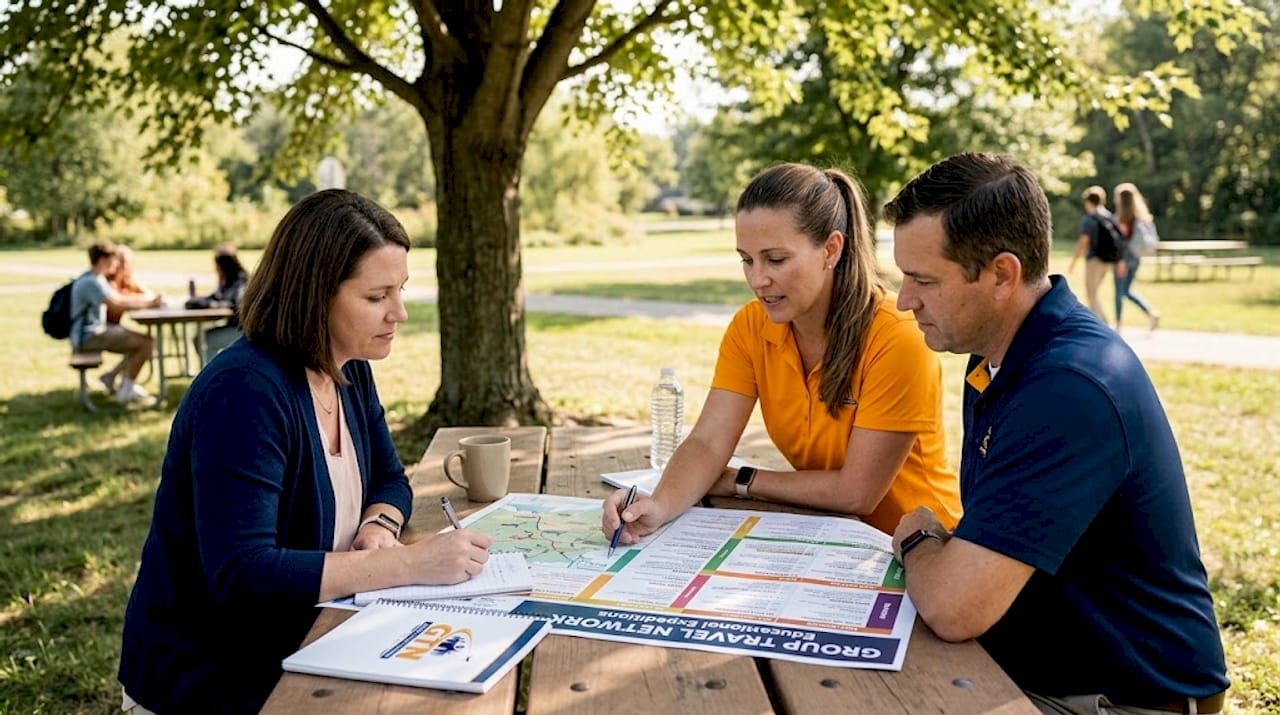
Group structures, assigned adults, and predictable routines manage risks and reduce anxiety for students, especially those with disabilities or SEN. For students on the autism spectrum, for example, a detailed written schedule shared in advance can significantly reduce distress and behavioral incidents during the trip itself.
Key safety and inclusivity strategies include:
- Name every adult responsible for each supervision window in writing
- Pre-walk high-risk venues in your planning if possible, identifying hazards like uneven terrain, crowded areas, or limited emergency exits
- Share accessibility needs with every venue and transportation provider in advance, not just the school nurse
- Create a communication plan that covers how staff will contact each other, how parents will be updated, and what the protocol is if a student goes missing or becomes ill
- Use predictable daily routines on multi-day trips, such as a consistent wake-up time, morning briefing format, and evening check-in
“Inclusivity in school travel isn’t just about wheelchair ramps. It’s about designing experiences where every student, regardless of need, has a meaningful role in the group.”
Understanding how educational tourism inclusivity works in practice reveals that the most successful trips are those where coordinators consider diverse student backgrounds alongside physical and medical needs.
Pair your safety planning with clear safe journey coordination protocols so every adult on the trip understands their role from day one.
Budgeting, contingencies, and communication tips
With your group structure and safety strategies set, preparing for financial pitfalls and communication gaps is the next critical step.
Staffing, workload, and unreliable funding from parents can threaten trip feasibility. Build contingency plans and communicate financial expectations early. Hidden costs like gratuities, entrance fee increases, extra meals, or emergency transportation regularly catch coordinators off guard.
Here’s how to build financial resilience into your plan:
- Identify all fixed costs (transportation, accommodation, pre-booked venues) before announcing the trip price
- Estimate variable costs generously, including meals, incidentals, and supply replenishment
- Add a 10 to 15 percent contingency buffer to your per-student cost estimate
- Communicate payment schedules clearly to families with multiple reminder touchpoints
- Have a written refund and cancellation policy in place before collecting any money
Staffing contingencies deserve equal attention. What happens if a lead chaperone calls in sick the morning of departure? Your budget planning for school trips should include a backup staffing plan that names specific replacement adults and clarifies their responsibilities.
Communication with families throughout the planning process builds the kind of trust that makes parents more flexible when things don’t go exactly as planned. Send a pre-trip letter detailing the schedule, emergency protocols, and contact information. During multi-day trips, consider brief daily check-in messages through your school’s communication platform. These don’t need to be long. A two-sentence update confirming students are safe and having a great time does more for parent confidence than a lengthy newsletter.
Pro Tip: Draft a “what if” document for your staff that covers the five most likely disruptions: weather delays, student illness, transportation issues, venue closures, and chaperone unavailability. Knowing the plan in advance means staff can respond calmly rather than improvising under pressure.
Final checklist and itinerary verification
Completing your itinerary means verifying all the details are in place for a safe, successful trip.
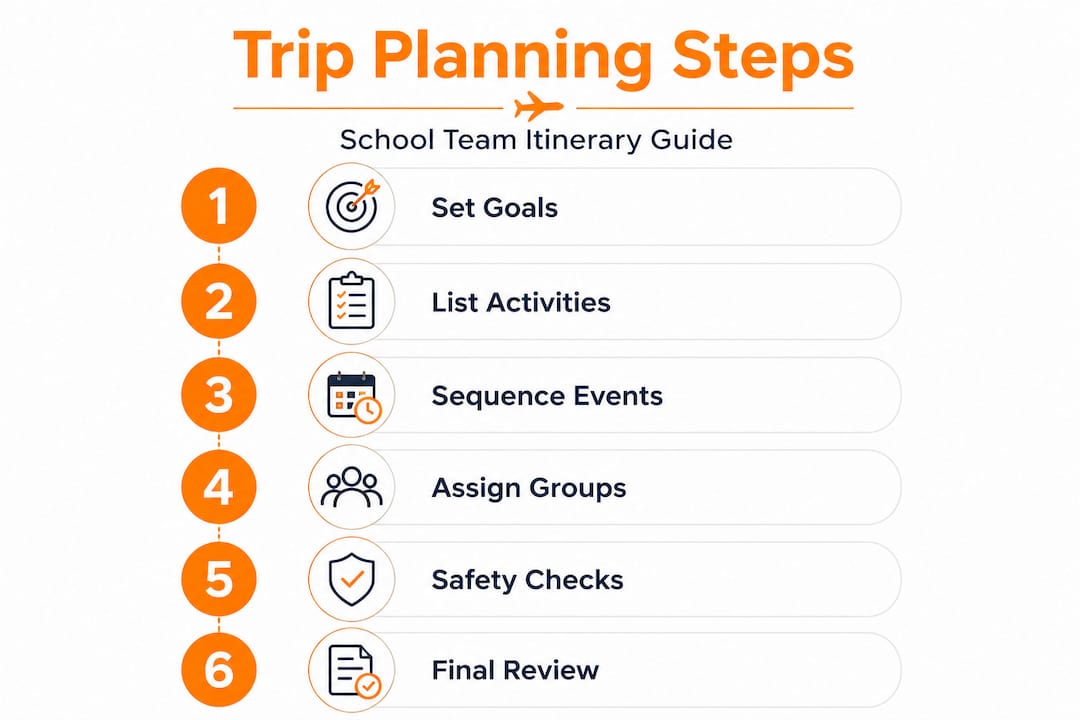
Groupings, assignments, and routines should be clear and documented before departure. A finalized itinerary isn’t just a schedule. It’s a coordination document that every adult on the trip should be able to use independently.
Run through this verification checklist before distributing your final itinerary:
- All permission forms collected and filed
- All medical forms and emergency action plans reviewed by the trip leader
- Supervision assignments confirmed with every chaperone in writing
- Emergency contacts included on every page of the itinerary
- Venue contacts and addresses listed with backup phone numbers
- Contingency plans documented for at least three likely disruptions
- Accessibility accommodations confirmed with all venues and transport providers
- Itinerary shared with school administration, families, and students in age-appropriate formats
Here’s a simple distribution plan for the finalized itinerary:
| Recipient | Format | When to share |
|---|---|---|
| School administration | Full document with forms | 2 weeks before departure |
| Chaperones | Detailed version with assignments | 1 week before departure |
| Parents and guardians | Summary with emergency contacts | 1 week before departure |
| Students | Age-appropriate schedule | Day before or morning of |
Reviewing top trip planning tips from experienced coordinators reinforces one consistent message: the trips that go well are the ones where every stakeholder knows exactly what to expect and who to contact if things change.
What most guides miss about team trip planning
Here’s something most planning templates won’t tell you: the goal isn’t a perfect itinerary. It’s a resilient one.
After years of working with school groups and educational travel coordinators, we’ve seen a consistent pattern. The administrators who stress over crafting a flawless, minute-by-minute schedule often struggle more during the actual trip than those who built in breathing room and communicated openly with their team. Rigidity and perfection aren’t the same thing.
The best trip leaders we’ve worked with share one trait: they treat the itinerary as a living document, not a contract. When a museum tour runs 30 minutes long because students are genuinely engaged, the rigid planner panics. The adaptive planner adjusts the afternoon and creates a better memory than the original schedule would have.
Transparency about uncertainty also matters more than most guides acknowledge. When you tell parents, “Here’s our plan, and here’s what we’ll do if it changes,” you build far more confidence than a coordinator who presents a flawless itinerary and then visibly struggles to adapt in the field. The educational group travel advantages that students gain from well-planned trips are maximized precisely when adults model calm, flexible problem-solving in real time.
The trips that become legend in a school community aren’t the ones that went exactly as planned. They’re the ones where something unexpected happened and the team handled it beautifully.
Take your school trip planning further
Building a great itinerary from scratch takes time, expertise, and a deep understanding of what school groups actually need on the road.

At Group Travel Network, we specialize in taking that weight off your shoulders. Whether you’re coordinating your first student trip or your fifteenth, our dedicated trip coordinators can help you design a customized itinerary that balances educational goals, safety requirements, and genuine student engagement. Explore our school trip planning guide for a ready-to-use framework, or browse destinations and packages designed to create group travel for lasting memories. From flexible payment plans to full travel protection, we’re built around the specific needs of schools and educational groups.
Frequently asked questions
What’s the most common mistake when creating a team trip itinerary?
Overlooking risk assessment or supervision details is the most common error, and proportional risk assessment matched to trip type and student needs is the foundation of a safe plan.
How can I adapt an itinerary for students with special needs?
Account for disabilities, SEN, and medical conditions from the start, and use predictable routines and group structures to provide consistency and support throughout the trip.
How early should parents be involved in planning?
Involve parents as early as possible to secure permissions and funding commitments, since early financial transparency significantly reduces cancellations and last-minute scaling back.
What should we do if a chaperone drops out last minute?
Always document a backup supervision plan in advance so that if a chaperone withdraws, you can plan explicit chaperone coverage and shift responsibilities without disrupting the trip.
How do you share the itinerary with families securely?
Distribute finalized itineraries through your school’s secure communication platform or an encrypted app, and follow up with a confirmation checklist to ensure every family has received and reviewed it.
Recommended

Relax with our Student Travel Expertise .
We deliver stress-free student trips backed by an exceptional array of services you won’t find anywhere else:
- Stress-free, creative planning of customized itineraries
- Dedicated GTN Service host on every trip
- Extensive travel protection plan options
- Online, individual registration system
- Flexible payment plans and online payment options
- Bulk buyer discounts for great trips that cost less
Inclusion into #MyGTNFamily for life! (you don’t even have to remember our birthday!)
Spain
There is no place like Spain to offer a student performance opportunity or cultural student trip.
Myrtle Beach
All students love the beach! Especially a beach known for its 60 miles of pristine coastline.
Boston
Have your students experience colonial charm in the city that is considered the hub of New England.
London
Provide your student group with the “Royal” treatment! One of the world’s most recognized cities.
See What People Are Saying
“What wonderful trip we had to NYC! Our group of 51 never missed a beat because of Group Travel Network and our wonderful guide, Tim. It was truly a theatre trip to remember! If you are looking for a travel company who really cares about the details, Group Travel Network is for you!”
“This was my first time using a company to plan our band trip. It was so easy working with Justin and Group Travel Network. We had to make several changes along the way, but they were accommodating changes and worked everything out for us. I would highly recommend using Group Travel Network.”
“It has been my privilege to use Group Travel Network as the exclusive travel coordinator for my band for over 10 years. I can say, without doubt or hesitation, that GTN is, by far, the best travel company for student groups currently in existence. I have often said that I wouldn’t take my band across the street without GTN and that’s not far from the truth!”