

August 16, 2026
Your Disney Performance Trip: A 2026 Planning Guide for Educators
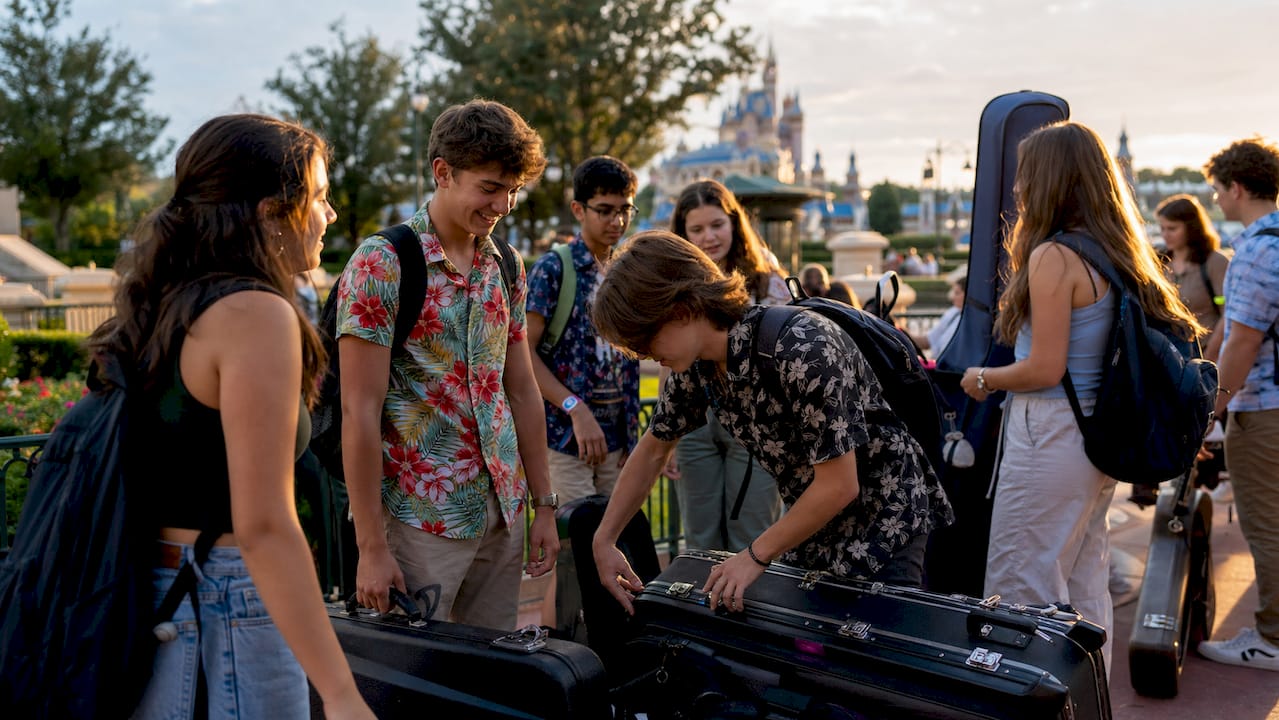
Book a stage performance or workshop slot through Disney Imagination Campus, and contact a dedicated trip coordinator now to lock your dates. Performance windows for popular seasons fill twelve to eighteen months out, and the earlier your ensemble applies, the more program options and better pricing you have to choose from. A Group Travel Network trip coordinator handles the Disney-side paperwork, transportation, lodging, and payment plan so you can focus on rehearsals instead of spreadsheets.
That’s the short version. If you’re a band director, choir teacher, or dance instructor weighing whether a Disney performance trip is realistic for your group this year, here’s what actually goes into making it happen: which program fits your ensemble, what a package typically includes, how the audition and paperwork timeline works, and what it costs per student once you factor in the add-ons nobody mentions upfront.
Key Takeaways
A successful Disney performance trip depends on early booking, a program match suited to your ensemble, a clear budget checklist, and deliberately scheduled downtime to protect performance quality.
| Point | Details |
|---|---|
| Pick the right program type | Match workshops, stage performances, festivals, or specialty programs to your ensemble’s readiness and goals. |
| Lock dates 12 to 18 months out | Popular performance windows fill early, so start the inquiry process well ahead of your target trip. |
| Budget beyond the base package | Sound tech, dressing-room time, and Lightning Lane passes are commonly sold as separate add-ons. |
| Build in recovery blocks | Schedule no more than two consecutive full park days to protect stamina and performance quality. |
| Confirm chaperone ratios early | Set supervision ratios based on student age and how much unstructured park time is planned. |
| Work with a dedicated coordinator | Group Travel Network manages vendor coordination, payment plans, and Disney-specific logistics from inquiry through trip completion. |
Table of Contents
- What Are Your Disney Performance Trip Options?
- What Does a Disney Performance Tour Package Typically Include?
- How Do You Apply and Prepare for a Disney Performance Audition?
- What Does a Sample Disney Performance Itinerary Look Like?
- What Does a Disney Performance Trip Cost Per Student?
- What Chaperone and Safety Rules Apply to a Performance Trip?
- Why Book a Disney Performance Trip With Group Travel Network?
- How Do You Prevent Burnout on a Multi-Day Performance Trip?
- A Coordinator’s View on What Actually Breaks a Performance Trip
- Let Group Travel Network Handle the Details
- Sources
- FAQ
What Are Your Disney Performance Trip Options?
Disney Imagination Campus, formerly marketed under the Disney Performing Arts name, runs the official pathway for school and youth ensembles seeking on-site performance opportunities and workshops at Disney parks. The program covers everything from a single afternoon workshop to a full staged performance slot on a Disney venue stage, and understanding the differences matters because each option has its own group size limits, audition requirements, and price point.
Here’s how the main program types break down:
- Workshops: Half-day or full-day instructional sessions led by Disney entertainment professionals, covering topics like stage presence, choreography, or ensemble technique. No audition required, and group sizes are flexible.
- Stage performances: A scheduled performance slot on an actual Disney venue stage, most commonly booked through the Group Stage Performances program. These typically require a video submission for adjudication.
- Festival Disney and similar competitive festivals: Multi-group festival events where ensembles perform for adjudicators and receive scored feedback, often paired with a workshop component.
- Soundtrack Sessions: A specialty vocal and instrumental recording experience where student musicians record a soundtrack-style performance, popular with choirs and smaller instrumental ensembles.
- Dance Disney: A dance-specific program combining technique workshops with a performance opportunity, geared toward competitive and studio-based dance teams.
- Disney Broadway Magic: A musical theater focused program blending vocal and acting workshops with a themed performance slot, aimed at theater departments and show choirs.
Workshops accept nearly any group size and skip the audition step entirely, which makes them the low-risk entry point for a first-time performance trip. Stage performances, Soundtrack Sessions, Dance Disney, and Disney Broadway Magic all involve some form of pre-registration or video audition, and slots are limited, so groups that wait until three or four months out often find their preferred dates already booked.
What Does a Disney Performance Tour Package Typically Include?
A standard performance tour package bundles round-trip transportation (motor coach or air, depending on distance), hotel nights on or near Disney property, multi-day park tickets, the workshop or performance block itself, and basic on-site logistics support like group check-in and a point of contact for schedule changes. What it usually does not include catches a lot of first-time organizers off guard.
|
| Category | Typically Included | Often Extra |
|---|---|---|
| Transportation | Round-trip motor coach or flights, airport/hotel transfers | Individual rental vehicles, ride-share for side trips |
| Lodging | Hotel nights matching your itinerary length | Room upgrades, resort-fee add-ons |
| Park access | Multi-day park tickets for the performance dates | Lightning Lane skip-the-line passes |
| Performance/workshop | Scheduled workshop or stage time, basic sound support | Dedicated sound tech, custom staging, dressing-room reservations |
| Support | Group check-in assistance, trip coordinator contact | VIP tour guides, character meet-and-greet add-ons |
A few line items are worth asking about before you sign anything:
- Sound tech and dressing-room time are frequently sold as add-ons rather than bundled into the base performance package.
- Lightning Lane passes run separately from park tickets, and pricing shifts by attraction and date.
- Custom staging or lighting requests for a dance or theater performance usually carry an extra fee.
- VIP tour experiences and character interactions are almost always optional upgrades, not standard inclusions.
Pro Tip: Get every quote broken out by line item, not as a single bundled number. Ask specifically what counts as “confirmed performance time” in the contract; some packages list a workshop as a performance credit when it’s really just instructional time with no audience.
Read the fine print on refund and change policies before you commit a deposit. Weather delays, illness outbreaks, and school calendar shifts all happen, and you want to know exactly how much of your deposit is recoverable if your travel dates move.
How Do You Apply and Prepare for a Disney Performance Audition?
Getting into a stage performance, festival, or specialty program takes lead time, video prep, and a fair amount of paperwork. Here’s a realistic timeline:
- 12 to 18 months out: Decide on program type (workshop vs. stage performance vs. festival), get administrative approval, and submit your initial program inquiry.
- 6 to 12 months out: Submit audition materials if required, finalize your performance date request, and start collecting deposits from families.
- 60 to 90 days out: Confirm final group numbers, lock transportation and lodging, and submit any special-needs or dietary accommodation requests.
- 30 days out: Finalize rehearsal schedules, confirm tech/sound requirements with the venue, and distribute final itineraries to parents.
- Pre-trip week: Hold a final dress rehearsal, confirm chaperone assignments, and pack labeled equipment and costumes.
Audition requirements vary by program, but most stage performance and festival slots ask for a video submission, usually eight to twelve minutes of representative repertoire, filmed in decent lighting with clear audio. Adjudicators for competitive festivals typically score on technique, ensemble balance, and stage presence, while straightforward stage performance slots often just need proof the group can hold a program together for its allotted time.
A few practical audition tips that make a real difference:
- Record in a space with natural acoustics, not a gymnasium that muddies the sound.
- Choose repertoire that shows range rather than your hardest piece; adjudicators want to see control, not just difficulty.
- Match your video formatting to whatever the program specifies. A sideways phone video gets rejected before anyone even listens.
- Rehearse the actual audition cut as a standalone piece, not just as part of a longer set, so the pacing holds up on its own.
Paperwork tends to pile up fast: parental consent forms, medical and allergy information, emergency contacts, media release forms for any recorded performance footage, and accommodation requests for students with special needs or dietary restrictions. Building a simple shared checklist and assigning it to one staff member early avoids the last-minute scramble that derails so many trips.
What Does a Sample Disney Performance Itinerary Look Like?
Balancing rehearsal time, workshop sessions, performance slots, and actual park time is the hardest scheduling puzzle in this whole process. Here are three tested structures depending on how much time your school can commit.
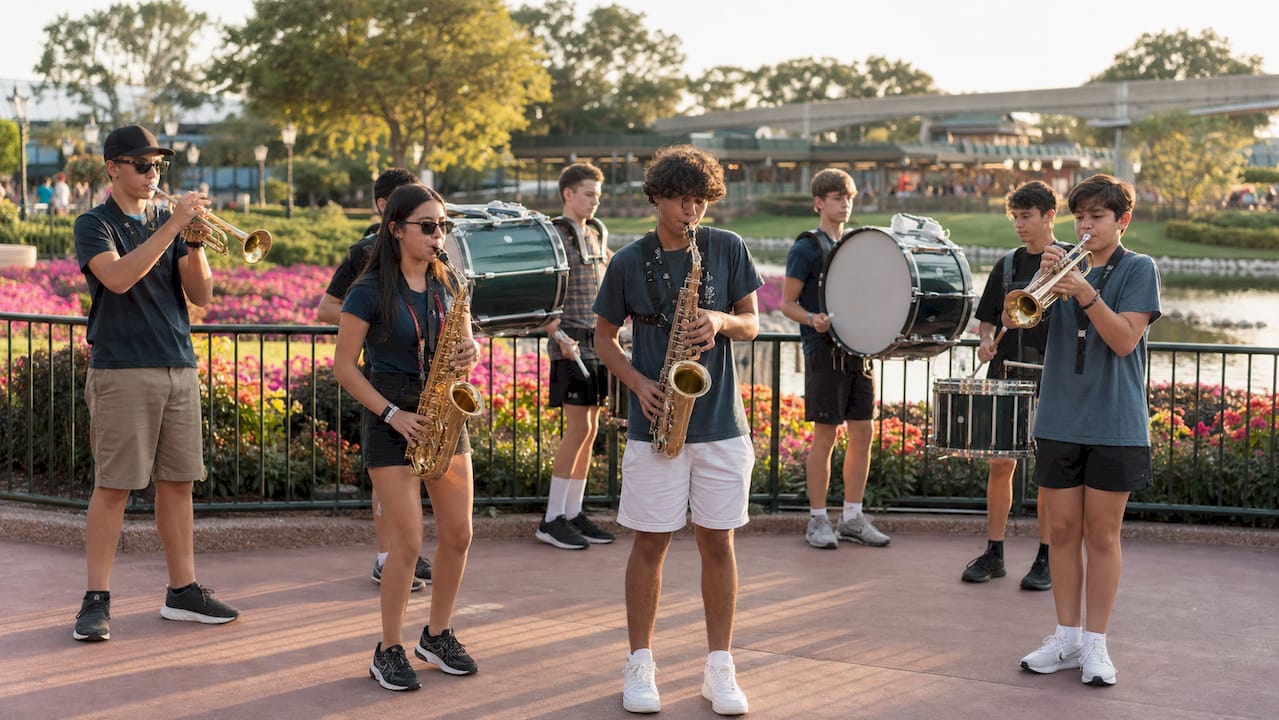
The 3-day compact trip works for groups with tight school-calendar windows. Day one is travel and check-in with an evening park visit. Day two opens with a morning workshop, moves into afternoon tech/dress rehearsal, and closes with the evening performance slot. Day three is a full park day before departure.
The 4-day balanced trip adds breathing room. Day one is travel and arrival. Day two is a full workshop day with light park time in the evening. Day three holds the performance in the morning or early afternoon, followed by a genuinely free afternoon and evening in the parks. Day four is departure with a half-day buffer.
The 5-day festival-style trip suits groups entering a multi-day festival or competition. It spreads rehearsal, adjudication, and recovery across the extra days, with at least one full day that has zero scheduled obligations.
| Day | Morning | Afternoon | Evening |
|---|---|---|---|
| 1 | Travel/arrival | Hotel check-in | Light park visit |
| 2 | Workshop session | Tech/dress rehearsal | Free park time |
| 3 | Performance slot | Rest block or free time | Park time |
| 4 | Free park day | Free park day | Departure prep or travel |
| 5 (festival trips) | Adjudication/festival day | Recovery block | Farewell dinner |
Most stage performances and festival slots happen mid-morning to early afternoon, before peak park crowds and heat set in, and venues generally reserve a tech and dress window one to two hours before the actual performance. Booking that tech time is not automatic. Confirm it with your coordinator weeks ahead, not the week of the trip.
Build in at least one genuine recovery block, whether that’s an unstructured afternoon or a slower morning, and pad your travel schedule with buffer time between park transitions. Disney Parks Blog recommends locking your priorities and dates early precisely because the sequencing above only works if performance slots, dining reservations, and rest blocks are booked in the right order, not scrambled together at the last minute.
What Does a Disney Performance Trip Cost Per Student?
Per-student pricing swings on a handful of variables: time of year, trip length, transportation mode, hotel category, and how many add-ons you stack onto the base package. A trip during peak season with air travel and a deluxe resort will run well above a shoulder-season trip using motor coach transportation and a value resort, even with an identical performance program.
A workable budget checklist looks like this:
- Deposit: Typically due at booking to hold performance dates and lodging, usually a modest per-student amount.
- Interim payment: Scheduled midway through the planning window, often tied to finalized group numbers.
- Final payment: Due 30 to 60 days before departure, once rooming lists and performance schedules are locked.
- Travel protection: Optional but worth presenting to families, especially for groups traveling with a chartered flight or crossing state lines by coach.
Statistic Callout: Lightning Lane single-pass pricing commonly falls between about $10 and $29 per person for many popular attractions, and pricing shifts by date and attraction demand. If your group wants skip-the-line access on performance day to protect rehearsal time, budget that as a separate line item rather than assuming it’s bundled into park tickets.
Sound and tech riders are another spot where budgets run short. Organizers often underestimate what basic dressing-room time and sound support cost, so build in a modest contingency line for tech needs specific to your ensemble type, whether that’s a dance floor surface, extra monitors, or instrument storage.
Peak dates, holiday weeks, and summer months push per-student costs up across transportation, lodging, and ticket pricing simultaneously. Shifting your trip to a shoulder-season week, even by two or three weeks, can meaningfully lower your total package cost without touching the performance program itself.
What Chaperone and Safety Rules Apply to a Performance Trip?
Supervision ratios shift by student age and by how much unstructured park time is built into the schedule. Younger ensembles and any group with significant free time in the parks need tighter ratios than an older high school group on a tightly scheduled performance day. Most schools set their own ratio policy, but a starting benchmark of one adult chaperone per eight to ten students for middle and high school groups is common practice, tightening further for elementary-age performers.
Equipment logistics deserve their own checklist, separate from the general trip packing list:
- Microphones, stands, and any amplification gear your performance requires, confirmed against what the venue actually provides.
- Spare batteries and backup cables for anything electronic, because venue tech support isn’t going to have your specific gear on hand.
- Labeled wardrobe and costume pieces, with a plan for laundry or quick repairs if the trip runs multiple performance days.
- Instrument cases and a clear loading/unloading assignment so nothing gets left on a bus.
Load-in and staging logistics run on tighter windows than most first-time organizers expect. Arrival times for tech checks are usually set well before the performance, and your on-site coordinator’s job is to confirm exactly when your group gets stage access, how long the tech check runs, and where the group stages before going on. Nail this down in writing before travel day, not when you’re standing outside the venue with a bus full of students in costume.
Pro Tip: Schedule at least one deliberate downtime block per day, even a 90-minute stretch with no itinerary item attached. Research on child scheduling shows that stacking activity after activity without rest raises burnout risk, and a tired ensemble performs worse than a rested one, no matter how many rehearsals you’ve packed in.
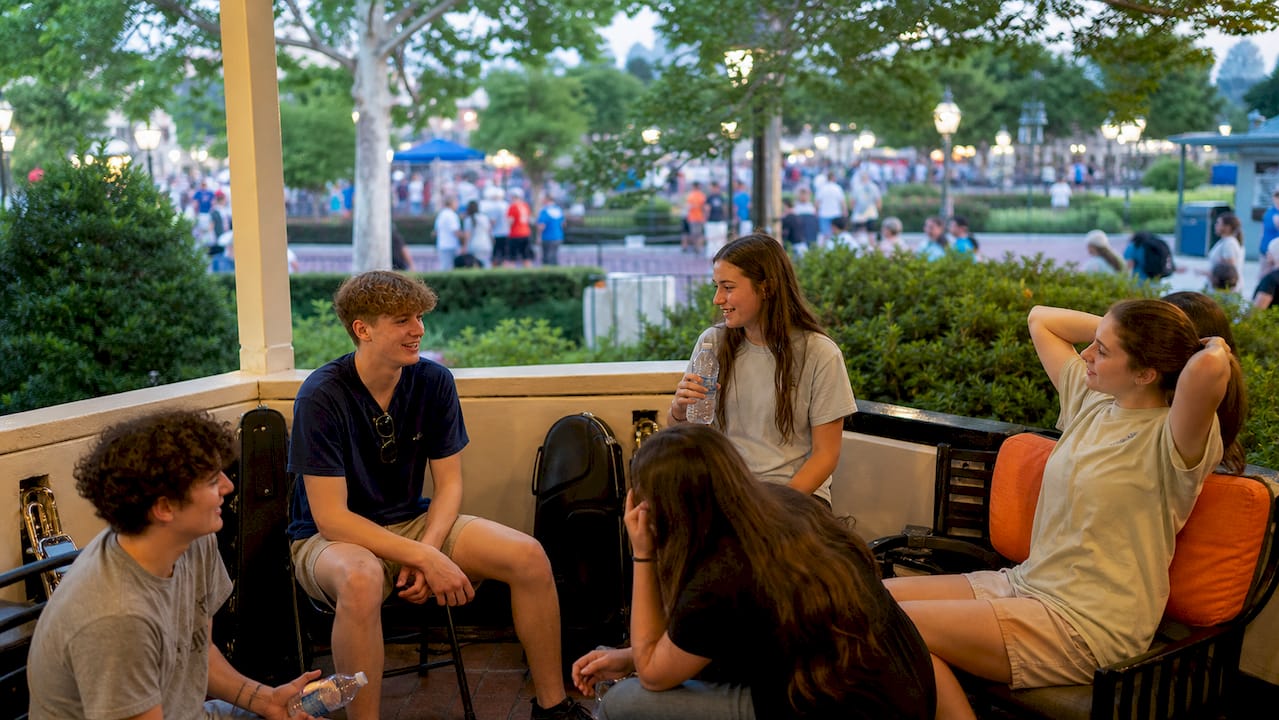
An essential performance trip checklist can help you formalize chaperone assignments, equipment tracking, and emergency contact information before departure day arrives.
Why Book a Disney Performance Trip With Group Travel Network?
Coordinating a Disney performance trip means juggling Disney’s own booking systems, transportation vendors, hotel contracts, and your school’s payment collection process, all at once, while also managing rehearsal prep. That’s exactly the workload a specialist group travel planner absorbs.
Group Travel Network provides:
- A dedicated trip coordinator who serves as your single point of contact from initial inquiry through the final performance day.
- Established vendor relationships for transportation, lodging, and Disney program coordination, which speeds up quote turnaround.
- Online registration so families can submit forms, payments, and consent documents without you chasing down paper.
- Flexible payment plans that spread the cost across the planning window instead of demanding one lump sum.
- Travel protection options for schools that want a safety net against illness, weather, or schedule disruptions.
On the Disney-specific side, a coordinator manages the pieces that are easy to get wrong: securing your actual performance slot, coordinating what your tech rider needs against what the venue provides, and confirming rehearsal and workshop times so they don’t collide with your park schedule. Experienced planners also keep watching for pricing after your initial booking, since promotional rate drops sometimes appear after a group has already locked its dates, and a good coordinator flags that instead of letting the savings pass by unnoticed.
Before reaching out to a planner, have a rough idea of your group size, target travel dates, the performance program you’re aiming for (workshop, stage performance, festival, or specialty program), and a general budget range. That’s enough for a coordinator to start building real options instead of generic estimates. For a broader look at how these tours run, the main types of student performance tours breaks down which structure tends to fit which kind of ensemble.
How Do You Prevent Burnout on a Multi-Day Performance Trip?
Multi-day trips fail more often from exhaustion than from any logistical mistake. Stacking a full park day on top of rehearsal, tech check, and a performance, with no breathing room, produces tired students who miss cues and flatten their energy on stage exactly when they need it most.
Overscheduling on multi-day trips raises the risk of burnout and can noticeably lower performance quality, and that finding applies directly to a five-day festival trip packed wall to wall with activities. The fix isn’t cutting content. It’s sequencing it so recovery time sits deliberately between the highest-demand blocks.
A Disney cruise is worth considering as an alternative environment for groups that want a calmer performance trip structure. Here’s how the two compare:
- Crowd intensity: Theme parks bring constant crowd navigation and long walking distances; a cruise ship keeps the group in a contained, lower-crowd environment.
- Pacing: Park days run on tight, activity-stacked schedules; cruise days build in natural downtime between meals, shows, and port stops.
- Group structure: Parks require more active chaperone management across a sprawling footprint; a ship’s contained layout simplifies keeping track of a large ensemble.
- Logistics: Park performance trips require managing multiple transfers and venue check-ins; a Disney Cruise consolidates lodging, dining, and entertainment under one roof, literally.
Pro Tip: Set a hard rule of no more than two consecutive full park days before a scheduled rest block, and never schedule your highest-stakes performance the same day as a full park morning. Students who spend six hours walking and standing in line before a 4pm stage call rarely deliver their best set.
Test stamina honestly during pre-trip rehearsals by running a full-length rehearsal block back to back with a physical activity, then gauging how performance quality holds up under fatigue. If energy visibly drops, that’s your cue to build a longer recovery window into the actual itinerary. Have a contingency plan ready too. A rained-out outdoor rehearsal or a delayed transfer shouldn’t be the thing that costs your ensemble its scheduled slot.
A Coordinator’s View on What Actually Breaks a Performance Trip
The part of a Disney performance trip that trips up even well-organized schools isn’t the audition or the paperwork. It’s the gap between what a printed itinerary says will happen and what the venue’s actual tech and staging logistics allow on the day. A group shows up expecting forty-five minutes of dress rehearsal time and gets fifteen, because nobody confirmed the tech window in writing weeks ahead. That mismatch is almost always preventable, and it’s the single most common thing an experienced coordinator catches before it becomes a crisis on-site.
The other pattern worth naming directly: schools that build their itinerary around maximizing park time, then treat the performance as something students will just rise to on adrenaline. It usually doesn’t work that way. An ensemble that spent the morning in ninety-degree heat walking between lands does not suddenly find its best tone quality at a 3pm call time.
One practical fix that costs nothing: run your final dress rehearsal at the same time of day your actual performance slot is scheduled for, not whenever rehearsal happens to fit at home. Students perform differently at 9am than they do at 4pm, and matching that rhythm in advance removes one more variable on the day that matters.
Let Group Travel Network Handle the Details
There are a lot of moving pieces in a Disney performance trip, and most schools don’t have a staff member who can chase Disney program deadlines, coordinate transportation vendors, and manage family payments all at the same time without something slipping. That’s the gap a dedicated coordinator closes: one point of contact who’s already run this process dozens of times and knows exactly which questions to ask Disney’s program office before you ever sign a contract.

Getting a real quote takes less than you’d think. Have your proposed travel dates, an estimated group size, the performance program you’re targeting (workshop, stage performance, festival, or specialty program), and a rough budget range ready when you reach out. From there, a Group Travel Network coordinator builds a customized itinerary, walks you through payment plan options, and manages the Disney-side coordination directly.
Start by visiting the performance tours page to request a quote, or browse the school group travel planning guide if you’re still finalizing internal approval before you commit to dates.
Sources
- How to plan a trip to Disney World
- How to plan a trip to Disney World in 2026 – The Points Guy
- Insider secrets from Disney travel experts
FAQ
What Is the 3/2/1 Rule at Disney?
The 3/2/1 rule suggests planning three park days, followed by two lower-key days (like a water park or resort day), then one final easier day before departure. It’s a pacing strategy worth adapting for performance trips, where rehearsal and performance days count as high-intensity days needing the same recovery buffer.
What Is the Cheapest Month to Visit Disney for a Performance Trip?
Shoulder-season months, generally outside summer and major holiday weeks, tend to offer lower hotel rates and ticket pricing since demand drops. Flexible performance program dates in these windows also give your group a better shot at securing preferred stage or workshop slots.
How Much Does It Cost to Perform at Disney?
Costs vary widely based on program type, trip length, transportation mode, and add-ons like sound tech or Lightning Lane passes, so there’s no single flat rate. A dedicated trip coordinator can build a program-specific quote once you provide group size, dates, and your target performance type.
How Much Does a Behind-the-Scenes Tour at Disney World Cost?
Behind-the-scenes tours are priced separately from performance programs and vary by tour length and content, so they should be requested and quoted individually if your group wants to add one to a performance itinerary.
Do You Need an Audition for a Disney Performance Trip?
Stage performances, festivals, Soundtrack Sessions, Dance Disney, and Disney Broadway Magic typically require a video submission for adjudication, while general workshops usually do not require an audition.
Recommended

Relax with our Student Travel Expertise .
We deliver stress-free student trips backed by an exceptional array of services you won’t find anywhere else:
- Stress-free, creative planning of customized itineraries
- Dedicated GTN Service host on every trip
- Extensive travel protection plan options
- Online, individual registration system
- Flexible payment plans and online payment options
- Bulk buyer discounts for great trips that cost less
Inclusion into #MyGTNFamily for life! (you don’t even have to remember our birthday!)
Spain
There is no place like Spain to offer a student performance opportunity or cultural student trip.
Myrtle Beach
All students love the beach! Especially a beach known for its 60 miles of pristine coastline.
Boston
Have your students experience colonial charm in the city that is considered the hub of New England.
London
Provide your student group with the “Royal” treatment! One of the world’s most recognized cities.
See What People Are Saying
“This was my first time using a company to plan our band trip. It was so easy working with Justin and Group Travel Network. We had to make several changes along the way, but they were accommodating changes and worked everything out for us. I would highly recommend using Group Travel Network.”
“It has been my privilege to use Group Travel Network as the exclusive travel coordinator for my band for over 10 years. I can say, without doubt or hesitation, that GTN is, by far, the best travel company for student groups currently in existence. I have often said that I wouldn’t take my band across the street without GTN and that’s not far from the truth!”
“What wonderful trip we had to NYC! Our group of 51 never missed a beat because of Group Travel Network and our wonderful guide, Tim. It was truly a theatre trip to remember! If you are looking for a travel company who really cares about the details, Group Travel Network is for you!”