

TL;DR:
- Virtual cultural exchanges are accessible, asynchronous activities that foster student connections and cultural understanding. In-person homestays offer deeper learning through daily participation and authentic immersion; they build empathy and language skills. Combining structured virtual projects with community service and arts initiatives creates impactful, inclusive global learning experiences.
Cultural exchange ideas are intentional, structured activities that connect learners from different backgrounds to share traditions, values, and knowledge in ways that build empathy and global competence. Educators and youth leaders who design these experiences give students a skill set that no textbook can replicate. International education exchanges divide into two primary categories: traditional physical travel and virtual models, each with distinct advantages in accessibility and depth. Organizations like UNESCO, the German American Partnership Program (GAPP), and the WorldEd Foundation have spent decades proving that well-designed exchanges produce measurable gains in communication skills, cultural respect, and civic responsibility.
1. What are the best virtual cultural exchange ideas for classrooms?
Virtual exchanges, formally called Collaborative Online International Learning (COIL), are the most accessible entry point for most schools. They require no travel budget and fit inside existing curriculum schedules. International exchanges divide (opens in a new tab) into physical and virtual models, each serving different resource levels and educational goals.
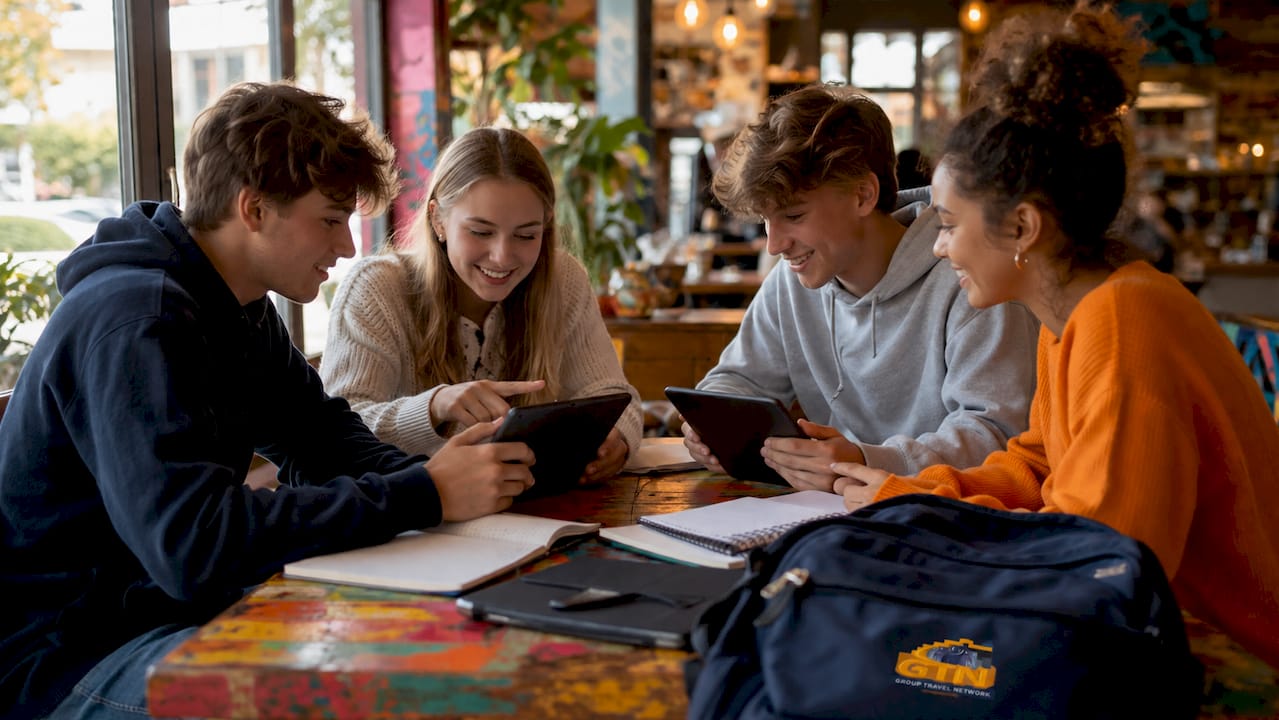
The WorldEd Foundation’s Cultural Cuisine Exchange is a strong example. It runs as a 6-week program (opens in a new tab) with only three live virtual gatherings, making it fully asynchronous-friendly for schools managing packed timetables. Students share recipes, cook together on video, and exchange the stories behind their family dishes. That structure keeps participation high without demanding synchronized schedules across time zones.
Key features that make virtual exchanges work:
- Asynchronous design: Students post video responses, shared documents, or recorded presentations on their own schedule.
- Simple tools: Shared slide decks, recorded video messages, and collaborative documents reduce the technical barrier.
- Focused scope: A single theme, such as food, music, or daily routines, produces deeper engagement than broad cultural surveys.
- Multiple countries: One classroom can connect with two or three partner schools simultaneously.
Successful virtual exchanges (opens in a new tab) thrive on small, manageable projects rather than complex large-scale initiatives, with asynchronous-first models yielding higher completion rates. That finding matters because overambitious programs often stall before students build any real connection.
Pro Tip: Start with a single six-week project before committing to a full-year partnership. A small win builds student enthusiasm and gives you data to justify a larger program to administrators.
2. How to design immersive cultural immersion experiences through travel and homestays
Physical travel exchanges remain the gold standard for depth of learning. Living with a host family forces students to practice language, adapt to different daily rhythms, and develop real empathy. The German American Partnership Program (GAPP) has supported over 780 U.S. schools (opens in a new tab) and built an alumni network of 400,000 since 1972. That scale demonstrates what sustained, structured travel exchange can produce over generations.
Authentic immersion means more than sightseeing. Programs that integrate students into daily local tasks, such as farming, cooking, or traditional crafts, produce deeper learning than passive tourism. Hands-on local participation (opens in a new tab) consistently outperforms observation-only models in cultural retention and empathy development.
Practical elements that define a strong immersion program:
- Homestay placement: Students live with local families rather than in hotels, creating daily cross-cultural dialogue.
- Daily task integration: Cooking meals, attending local markets, or participating in community routines builds real connection.
- Managed expectations: Prepare students for simple accommodations and unstructured time. Unstructured time with host families (opens in a new tab) leads to the deepest language acquisition and cultural understanding.
- Ethical community engagement: Programs should respect local customs and avoid treating host communities as exhibits.
Home-based arrangements also show measurable results. Home-swapping travelers (opens in a new tab) engage 40% more with local culture compared to traditional tourism models. That gap reflects the difference between visiting a culture and living inside it, even briefly.
Pro Tip: Cut at least 20% of planned activities from any itinerary before departure. The most memorable moments in immersion travel happen in unscheduled time, not on a bus between landmarks.
3. Creative cultural exchange ideas using arts, storytelling, and performance
Creative arts exchanges work because they transcend language. A student who cannot yet hold a conversation in another language can still respond emotionally to a folk song, a poem, or a short film. Storytelling, poetry, music, and theater enable cross-cultural understanding by highlighting shared human themes and fostering communication beyond words.
Strong creative exchange formats include:
- Digital storytelling projects: Students record short videos about a family tradition, neighborhood, or personal memory, then share them with partner schools.
- Collaborative poetry anthologies: Each class contributes poems on a shared theme, such as home, food, or seasons, then compiles a bilingual collection.
- Music and dance tutorials: Students teach a traditional song or dance step via video, and partner students learn and respond in kind.
- Folk tale retellings: Students adapt a local story into a short illustrated book or animated clip and exchange it with international partners.
- Theater scene adaptations: Drama classes co-write and perform scenes inspired by each other’s cultural contexts, then share recordings.
Food as a cultural exchange medium creates human connections that surpass language barriers, helping students embody another person’s experience. Cooking demonstrations, recipe swaps, and shared meal stories fit naturally into arts-based exchange projects and add a sensory dimension that video alone cannot replicate.
Pro Tip: Match the creative format to your students’ age and existing curriculum. A middle school English class benefits most from collaborative storytelling, while a high school music program gains more from live performance exchanges.
4. Community-based cultural exchange ideas for social responsibility
Community-based exchanges combine cultural learning with direct service, giving students a reason to engage that goes beyond curiosity. Community service integrated with cultural exchange (opens in a new tab) deepens social cohesion and promotes youth leadership aligned with UNESCO’s intercultural leadership goals. That alignment matters because it positions cultural exchange as a civic skill, not just a travel perk.
Practical community-based formats include:
- Cultural fairs: Students organize booths representing different countries or heritage backgrounds, sharing food, music, crafts, and stories with the wider school or neighborhood.
- Shared volunteer days: Partner groups from different backgrounds work together on a community cleanup, garden project, or food drive, building rapport through shared effort.
- Holiday cooking exchanges: Students from different cultural backgrounds prepare traditional holiday dishes together and share the stories behind each recipe.
- Local cultural events: Youth groups attend each other’s cultural celebrations, such as Lunar New Year, Diwali, or Juneteenth, as invited guests rather than observers.
- Pen pal and community mapping projects: Students document their own neighborhoods through photos and written descriptions, then exchange the maps with international partners.
The key distinction between effective and superficial community exchange is depth of interaction. A cultural fair where students walk past booths without conversation produces far less learning than one structured around guided dialogue and shared tasks. Design activities that require students to ask questions, collaborate, and reflect.
5. Comparison of cultural exchange methods for educators
Choosing the right approach depends on your budget, student age, available time, and curricular goals. The table below compares the four main methods across practical dimensions.
| Method | Cost | Immersion level | Time commitment | Best for |
|---|---|---|---|---|
| Virtual (COIL) | Low | Moderate | 6–12 weeks | Schools with limited budgets or travel restrictions |
| Traditional travel and homestay | High | Very high | 1–3 weeks on-site | Programs with travel funding and older students |
| Creative arts exchange | Very low | Moderate | 4–8 weeks | Any age group; integrates with existing curriculum |
| Community-based service | Low to moderate | High | Ongoing or event-based | Youth groups focused on civic engagement |
Educators with no travel budget should start with a virtual or creative arts exchange. Those with partial funding can combine a virtual project with a short domestic cultural immersion trip. Full international homestay programs work best for high school students with institutional support and at least six months of preparation time.
Pro Tip: Pilot a virtual project with your target partner school before committing to a travel exchange. A successful online collaboration builds trust between institutions and gives students a foundation of shared knowledge before they meet in person.
For educators interested in language learning benefits (opens in a new tab) tied to exchange programs, pairing a language study component with any of these methods accelerates both cultural and linguistic gains. Similarly, cultural immersion in language learning (opens in a new tab) shows that structured immersion tasks outperform classroom-only instruction for retention and fluency.
Key takeaways
The most effective cultural exchange programs combine intentional structure with genuine human interaction, whether virtual, in-person, creative, or community-based.
| Point | Details |
|---|---|
| Start virtual for accessibility | COIL-style programs like the Cultural Cuisine Exchange run in six weeks with minimal live sessions. |
| Homestays outperform tourism | Unstructured time with host families drives the deepest language and cultural learning. |
| Arts exchanges transcend language | Storytelling, music, and theater connect students across language gaps at any budget level. |
| Service builds real empathy | Community-based exchanges aligned with UNESCO goals produce stronger civic engagement than passive exposure. |
| Match method to resources | Compare cost, immersion level, and time commitment before selecting a program format. |
What I’ve learned about cultural exchange that most guides get wrong
Most articles on this topic treat cultural exchange as a logistics problem. Get the flights, book the homestays, plan the itinerary, and the learning will follow. That assumption is wrong, and I’ve seen it produce expensive trips that students forget within a semester.
The real work of cultural exchange is emotional, not logistical. Students need structured moments to reflect, ask uncomfortable questions, and sit with the discomfort of not understanding something. A packed schedule of museums and guided tours actively prevents that. The programs I’ve seen produce lasting change are the ones that build in silence, shared meals, and unscripted conversation.
Virtual exchanges get underestimated for the same reason. Educators assume that without physical presence, the connection will be shallow. But a six-week asynchronous project where students share personal stories about their neighborhoods often produces more genuine curiosity than a three-day group tour. The medium matters less than the intentionality behind the design.
The educators who run the best programs treat cultural exchange as a two-way dialogue, not a field trip. Their students don’t just observe another culture. They share their own, receive feedback, and revise their assumptions. That reciprocity is what UNESCO describes as the core of intercultural leadership, and it’s achievable on any budget if you design for it deliberately.
If you take one thing from this: the best cultural exchange trip benefits (opens in a new tab) come not from where you go, but from how deeply you engage when you get there.
— Donovan
How Grouptravelnetwork supports student cultural exchange programs
Planning a meaningful cultural exchange trip for a student group involves far more than booking flights and hotels. Grouptravelnetwork specializes in organizing educational group travel for schools, bands, sports teams, and youth organizations, handling the logistics so educators can focus on the learning.
From customized itineraries to dedicated trip coordinators, Grouptravelnetwork builds programs around your educational goals, not generic tour packages. The team works with schools to identify destinations that align with curriculum themes, cultural exchange objectives, and budget realities. Start with the school group travel planning (opens in a new tab) guide for a step-by-step framework that covers everything from initial planning to post-trip reflection. For groups ready to build lifelong student memories (opens in a new tab) through international travel, Grouptravelnetwork provides the structure and support to make it happen.
FAQ
What are cultural exchange ideas for students?
Cultural exchange ideas are structured activities that connect students from different backgrounds to share traditions, values, and knowledge. Examples include virtual cuisine exchanges, homestay programs, collaborative arts projects, and community service events.
How do virtual cultural exchange programs work?
Virtual exchanges use asynchronous tools like shared documents and recorded video to connect classrooms across countries without travel. Programs like the WorldEd Foundation’s Cultural Cuisine Exchange run for six weeks with only three live sessions.
What are the benefits of cultural exchange for students?
Cultural exchange builds empathy, cross-cultural communication skills, and global competence. Community-based exchanges aligned with UNESCO’s intercultural leadership goals also strengthen civic responsibility and youth leadership.
How do I choose between virtual and in-person cultural exchange?
Choose virtual exchanges when budget or travel restrictions apply, since they are low-cost and curriculum-friendly. Select in-person homestay programs for older students when deeper language acquisition and full cultural immersion are the primary goals.
What makes a cultural immersion experience effective?
Effective cultural immersion requires unstructured time with host families, hands-on participation in daily local tasks, and intentional reflection. Programs that pack schedules too tightly reduce the spontaneous interaction that drives the deepest learning.
Recommended
- Role Of Local Tour Guides: Why They Matter In 2026 • Group Travel Network (opens in a new tab)
- Student Travel Abroad: Expanding International Education (opens in a new tab)
- Cultural Exchange Trip Benefits: 10 Reasons They Matter • Group Travel Network (opens in a new tab)
- Student Guided Tours: Expert-Led Educational Adventures (opens in a new tab)