


For instrument rental on tour, touring groups typically choose among five routes: hand-carrying your own gear, renting from local shops, booking professional backline, using short-term rental services shipped to the venue, or relying on house gear. Two topics need attention first: airline carriage rules for instruments and, on international legs, customs paperwork such as an ATA Carnet. Costs depend on instrument type, rental length, and how much technician support you need.
TL;DR:
- U.S. carriers may allow small instruments in cabin if space remains, while large ones may need a purchased seat; ordinary oversize fees may still apply.
- An ATA Carnet covers temporary equipment movement without duties for up to one year, but officials must stamp it at every border entry and exit.
- Book local rentals 2–4 weeks ahead and backline for tours across multiple cities 6–12 weeks ahead; begin carnet paperwork before crossing a border.
- Require vendors to confirm the model, delivery window, damage terms, and insurance responsibility in writing, and approve any substitute before show day.
Table of Contents
- Which rental approach fits your tour?
- How do airline rules, packing, and customs paperwork work?
- What drives rental costs on tour?
- How do you choose a rental vendor?
- When should you book, and what should you check?
- Why does coordinated rental planning matter for ensemble tours?
- Let us handle rentals for your performance tour
- FAQ
- Sources
Which rental approach fits your tour?
Match the approach to the risk. A cello on a short regional run is a different problem from a full drum and amp setup across many cities, and the cheapest option on paper rarely stays cheapest once a show is delayed.
- Hand-carry your own instruments: best for fragile or irreplaceable pieces and short tours. Check the DOT guidance on traveling with a musical instrument (opens in a new tab) before you book flights.
- Local rental shops: good for single-city needs or a quick replacement. Confirm the exact model and the delivery window before you commit.
- Professional backline rental: rider-accurate setups with technicians and spares. This is the right call when consistent tone and fast changeovers matter across several shows.
- Short-term rental services and shipping to the venue: convenient for small ensembles or a temporary swap when something breaks.
- House gear or venue-provided backline: always confirm in writing before arrival, including model, condition, and who is on site to hand it over.
Many tours mix these. Players carry the pieces that are personal to them, such as a trumpet or a violin, and rent the heavy or bulky items locally.
How do airline rules, packing, and customs paperwork work?
For U.S. carriers, small instruments may go into the cabin and be stowed in approved overhead bins or under seats if space is available at boarding. Carriers treat them like other carry-on items, so there is no priority, and large instruments may require purchasing an extra seat, as the final DOT rule on air travel with musical instruments explains. Airlines may apply the same oversize or overweight fees as other checked baggage, but they cannot charge extra simply because an item is a musical instrument, according to the DOT musical instruments FAQ.
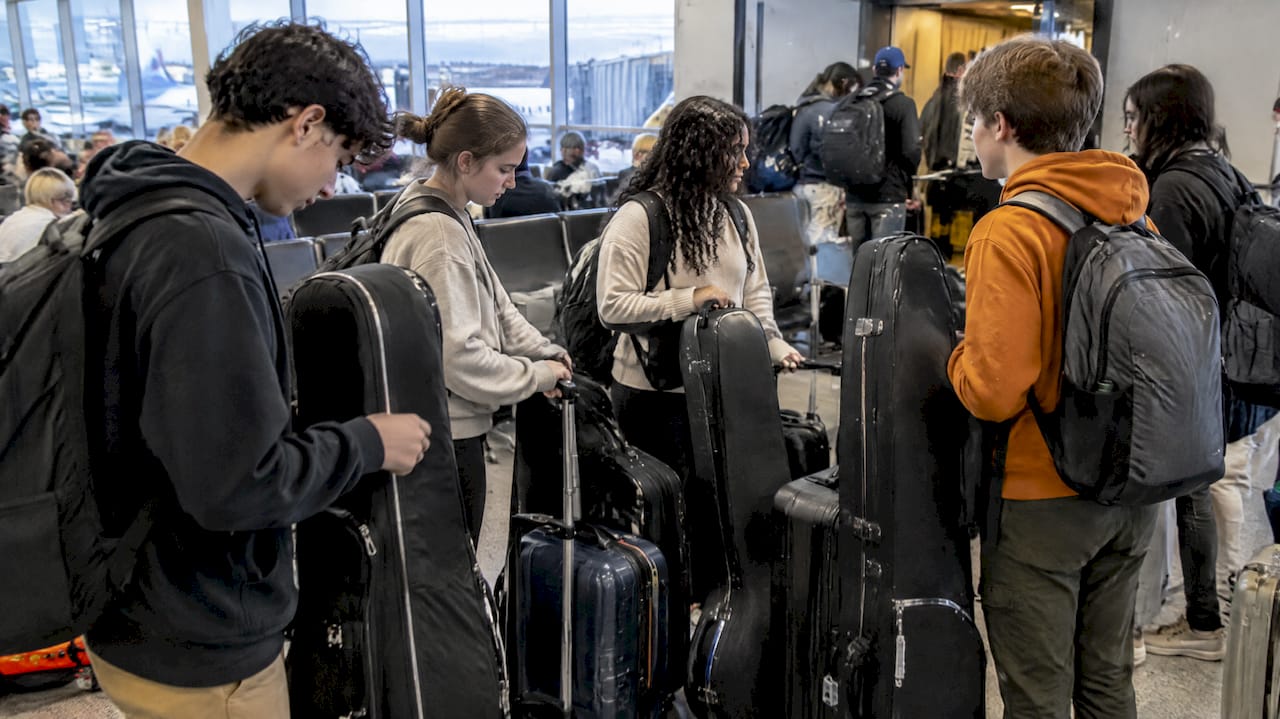
Hand-carry anything you cannot replace, check sturdy items in hard cases, and buy a seat for anything too large for the overhead bin.
For border crossings, an ATA Carnet (opens in a new tab) allows temporary, duty-free movement of professional equipment, including instruments, for up to one year. It must be stamped at every entry and exit to avoid duties or seizure. Check whether the destination has paperwork requirements for instruments containing protected materials.
- Pack instruments in rigid cases with humidity control.
- Keep a labeled inventory with serial numbers.
- Carry proof of ownership for every owned instrument.
- Bring spare parts such as strings, reeds, and cables.
- Keep technician and vendor phone numbers in one shared document.
Pro Tip: Photograph every case, open and closed, before it leaves your hands, so any damage claim starts with evidence.
What drives rental costs on tour?
Rates vary widely by instrument class, condition, and rental duration. Daily and weekly pricing usually looks different from a long-term arrangement, so ask for both before you decide. We do not publish a single price here because quotes depend too heavily on the factors below.
- Deposits: refundable security deposits are common for high-value instruments.
- Insurance: cover the instrument itself, shipping, and any liability tied to on-site technicians.
- Technician labor: setup, tuning, and changeover support are often billed separately.
- Extra charges: damage or repair fees, local transport, and freight handling.
International legs add their own line items. A carnet comes with a processing fee and a refundable security deposit sized to the value of the gear, and it needs an accurate, itemized list of goods, as the ISM carnet guide (opens in a new tab) lays out.
Carnets are valid for up to one year, which means one application can cover several trips if you plan the itinerary around it.
How do you choose a rental vendor?
Weigh four things: tour scale (one city or many), how rare or fragile the instrument is, how much consistency of tone matters, and whether you cross borders. A single-city gig tolerates a local shop. A multi-city run with a strict sound usually does not.
Ask every vendor these questions:
- Can you guarantee the model and serial number?
- What spares do you carry?
- What are your tech support hours?
- What are the delivery and pickup windows?
- How does test and approval work before the show?
- What are your cancellation and damage policies?
Put the answers in writing along with the rider. Professional providers work from your written technical rider, and when an exact model is unavailable, they should offer written alternatives for approval before the show. Also require inspection sign-off and a clear statement of who carries insurance at each stage.
When should you book, and what should you check?
Start earlier than feels necessary. Typical lead times run 2–4 weeks for local city rentals and 6–12 weeks for backline vendors on multi-city tours. Apply for an ATA Carnet well before the first border crossing.
- Know who to call: the venue technical contact, local rental houses, a freight forwarder, and your national chamber of commerce for carnets.
- Inspect on delivery: test every instrument before the vendor leaves.
- Stage spares: keep strings, cables, and reeds within reach of the stage.
- Document condition: take dated photos of each item at handoff.
- Confirm the technician handoff: know who owns problems once doors open.
For packing and transport scheduling, our guide to booking equipment transport weeks ahead (opens in a new tab) walks through the timeline step by step.
Why does coordinated rental planning matter for ensemble tours?
Most tour problems trace back to one person juggling too many vendors. When a single coordinator vets vendors, consolidates invoices, and handles disputes, directors and tour managers get their rehearsal time back. Documented rigs matter just as much: a written loadout for each configuration lets a local technician rebuild the same stage setup in any city, which speeds load-ins and keeps the sound consistent from show to show. My view is that the paperwork is the real instrument of a smooth tour, and that groups lose more shows to missing documents than to missing gear. Our band trip planning guide (opens in a new tab) shows how directors can organize this early.
— Donovan
Let us handle rentals for your performance tour
We arrange vendor partnerships and manage logistics for performance tours, so you have support coordinating your trip. For school and youth ensembles, that means vendor partnerships, on-trip coordinators, and support for directors.

Ready to request a quote? Start with our Performance Tours (opens in a new tab) page and tell us where you are headed.
FAQ
Can you rent instruments online?
Yes, many rental services take bookings online and ship to a venue or address. Confirm the exact model, delivery window, and damage policy in writing before you pay.
Is it better to rent or buy a guitar for a tour?
Renting suits short tours, distant destinations, or situations where flying with your own guitar adds risk. Buying makes sense when the instrument is personal to your sound and you can hand-carry it under DOT carriage rules.
How far ahead should you book tour rentals?
Book local city rentals 2–4 weeks ahead and multi-city backline 6–12 weeks ahead. Start any carnet paperwork even earlier, before your first border crossing.
Do you need paperwork to take instruments abroad?
Often, yes. Professional gear crossing borders typically needs an ATA Carnet, and instruments with protected materials may need a Musical Instrument Certificate. Authorities can seize gear that lacks proper certification, as the ISM travel advice notes.
Sources
- Traveling With a Musical Instrument | US Department of Transportation (opens in a new tab)
- Music Industry Ranks as Top User of ATA Carnets | ATA Carnet (opens in a new tab)
Recommended
- School Performance Trip Gear: Book Transport Weeks Ahead (opens in a new tab)
- 90 Day Band Performance Tour Playbook For School Directors (opens in a new tab)
- Three Part Rehearsal Scheduling System For School And Student Tours (opens in a new tab)
- Tips For Organizing Band Tours: 10 Proven Strategies (opens in a new tab)