

September 20, 2026
U.S. Educators: When to Hire a Planner for Accessible School Trips
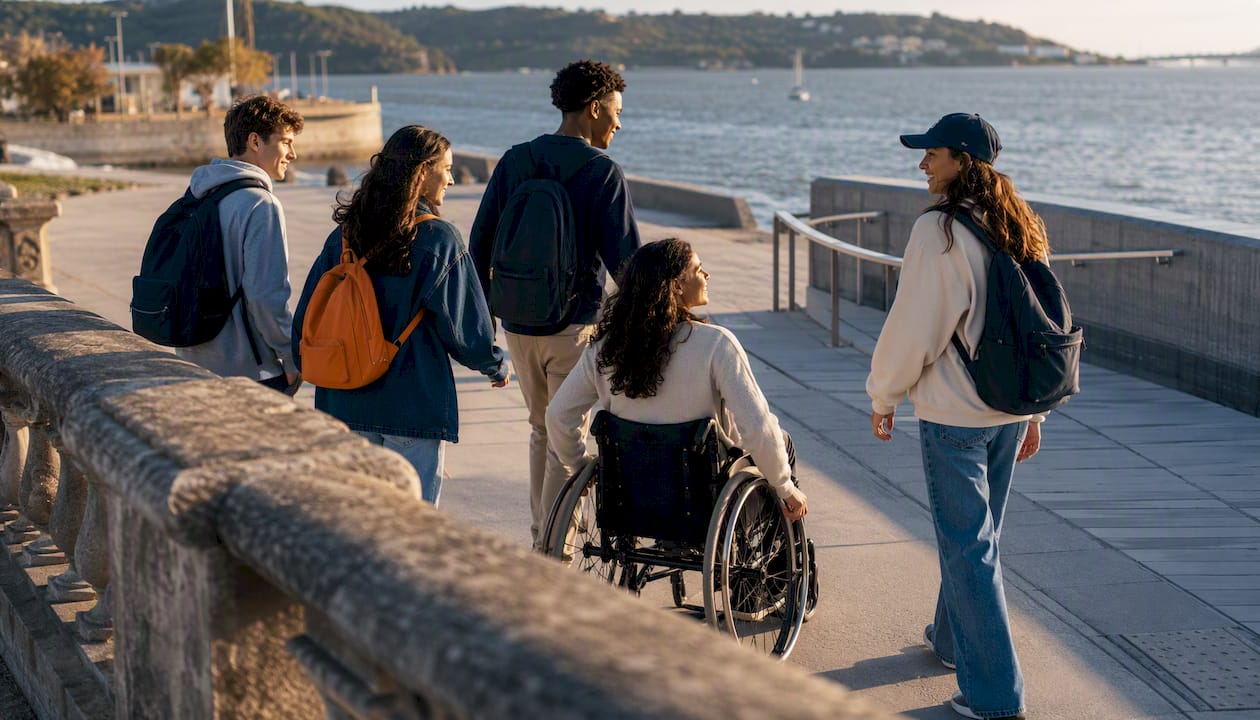
Yes, accessible school trips are achievable when you start with the right process. Coordinate 504/IEP accommodations early, run a pre-visit or venue audit before you book, staff at lower ratios for students with complex needs, and put every accommodation in writing. If your team is stretched thin, a specialized group travel planner can take on the coordination and vendor vetting so nothing falls through the cracks.
TL;DR:
- Starting planning six to eight weeks before a trip allows sufficient time to gather documentation, audit venues, and confirm transportation accessibility.
- Museums, science centers, and aquariums are the easiest destinations to adapt for diverse learners, offering features like timed entry, quiet rooms, and paved pathways.
- A dedicated trip coordinator can effectively manage vendor communications, verify accessibility needs in writing, and handle funding, especially for complex or international trips.
- Schools should always verify accommodations with each venue directly and keep receipts for all expenses tied to documented student needs to ensure proper reimbursement.
- Sending visual schedules, social stories, and pre-visit virtual tours helps reduce anxiety and prepares students with disabilities for the trip experience.
Table of Contents
- What Are Accessible School Trips, and Why Does Planning Order Matter?
- Which Venues and Activities Work Best for Diverse Learners?
- What Do Schools Need to Know About 504/ADA Coordination and Funding?
- How Do You Prepare Students Before Departure and Support Them On the Trip?
- Sample Itineraries: 1-Day and 3-Day Accessible Trip Templates
- How Specialized Planners Reduce the Risk of Accessible Trips
- Ready to Plan an Accessible Trip Without the Guesswork?
- Sources
- FAQ
What Are Accessible School Trips, and Why Does Planning Order Matter?
Accessible school trips are excursions designed so students with mobility, sensory, cognitive, communication, or medical needs can participate fully alongside their classmates, not on the sidelines. That means physical access (ramps, restrooms, transport), sensory accommodations (quiet spaces, reduced noise), and administrative support (504/IEP documentation, staffing) all working together, not as an afterthought bolted onto a standard itinerary.
The order you tackle these pieces matters as much as the pieces themselves. Here’s a planning sequence that keeps you ahead of deadlines instead of scrambling the week before departure.
- Notify families and your disability services team six to eight weeks out. Collect documentation on mobility, sensory, medical, and communication needs before you touch a venue website.
- Audit the venue for physical and sensory access. Check ramps, elevator locations, accessible restrooms, and drop-off routes. Ask about noise levels, lighting, and crowd density during your visit window.
- Set staffing ratios based on documented needs, not a generic headcount. Programs supporting students with disabilities often run tighter ratios of about 1 adult for every 6 to 7 students, well below what a typical field trip uses.
- Confirm transportation accessibility. Lift-equipped coaches, tie-down anchors, and realistic drive times with built-in breaks all need confirming, not assuming.
- Build written communication tools. Visual schedules, social stories, and a one-page emergency plan should go home with families before the trip, not get explained verbally on the bus.
Pro Tip: Assign one staff member as the sole point of contact for accessibility questions. When families and vendors know exactly whom to call, small issues get fixed before they become trip-day emergencies.
Our educational group trip planning guide breaks this sequence down further with a printable risk-assessment format.
Which Venues and Activities Work Best for Diverse Learners?
Some destinations adapt far more easily than others, and knowing the difference before you book saves everyone a headache.
- Museums and science centers tend to lead the pack. Most offer timed entry to control crowd density, sensory guides, and quiet rooms for students who need a reset.
- Zoos and aquariums usually have paved paths and shaded rest areas, though outdoor heat and crowd noise can be a sensory challenge in peak season.
- State parks and nature centers offer strong sensory relief through open space, but check trail surfaces and restroom distance before committing.
- Performance venues (theaters, concert halls) often have accessible seating sections, but you need to confirm sightlines and sound levels in advance, especially for students sensitive to volume.
- In-school or on-campus alternatives, like mobile planetariums or traveling science workshops, remove the biggest barriers entirely: no bus, no unfamiliar building, and full control over lighting and sound. Immersive in-school programs can deliver comparable learning outcomes without the transport risk.
On-site, small adjustments go a long way. Reducing group size to 8 to 10 students per docent, offering hands-on alternatives to visual-only exhibits, and designating a quiet room near the entrance all reduce anxiety and increase participation for autistic students specifically, though the same fixes tend to help the whole group.
What Do Schools Need to Know About 504/ADA Coordination and Funding?
A 504 plan follows a student on every school-sponsored activity, including field trips, so the accommodations already in place at school (extra time, sensory breaks, mobility support) apply on the road too. Coordinate with your district’s 504/IEP coordinator before you finalize any itinerary, not after.
The Americans with Disabilities Act requires that public accommodations, including most museums, theaters, and tour operators, provide reasonable access. That said, requirements vary by venue type and age of the building, so verify specifics directly with each vendor rather than assuming compliance.
Funding for extra accessibility costs, like additional staff, adapted transport, or a personal aide, typically comes from a mix of sources:
- District special education or general trip budgets
- PTA or parent-teacher organization fundraising
- Local community grants and civic organizations
- Charitable aid or program-specific scholarships
Some youth travel organizations build financial aid directly into their model. Rustic Pathways, for instance, offers program scholarships and flight grants tied to individualized needs reviews. On the advocacy side, Mobility International USA has documented how campus disability offices have created lasting scholarship funds, like the Enabled Abroad model, rather than covering costs on a one-off basis.
Keep every receipt tied to a documented accommodation. Reimbursement requests move faster when the paper trail already ties the expense to a specific student need.
How Do You Prepare Students Before Departure and Support Them On the Trip?
Three things make or break the pre-trip window: exposure, documentation, and clarity.
- Run a pre-visit or virtual tour. Photos, videos, or an actual walkthrough of the venue let anxious or autistic students know what to expect before the bus even leaves. This single step is one of the most cited interventions for reducing trip-day anxiety.
- Send home written schedules and social stories. A simple visual timeline of the day, shared a week ahead, gives students and families something concrete to prepare around.
- Document medication and emergency protocols in writing. List dosing times, storage requirements, and who carries what. Every staff member on the trip should know the plan, not just the lead teacher.
Staff training matters just as much as the paperwork. Chaperones need a short briefing on de-escalation basics, how to recognize sensory overload before it peaks, and who has authority to pull a student aside for a break. Programs built specifically for students with disabilities often mandate multiple pre-departure meetings for exactly this reason, so staff aren’t improvising on the fly.
Pro Tip: Build a 15-minute quiet break into the schedule every 90 minutes, whether students seem to need it or not. Preventing overload is far easier than recovering from it.
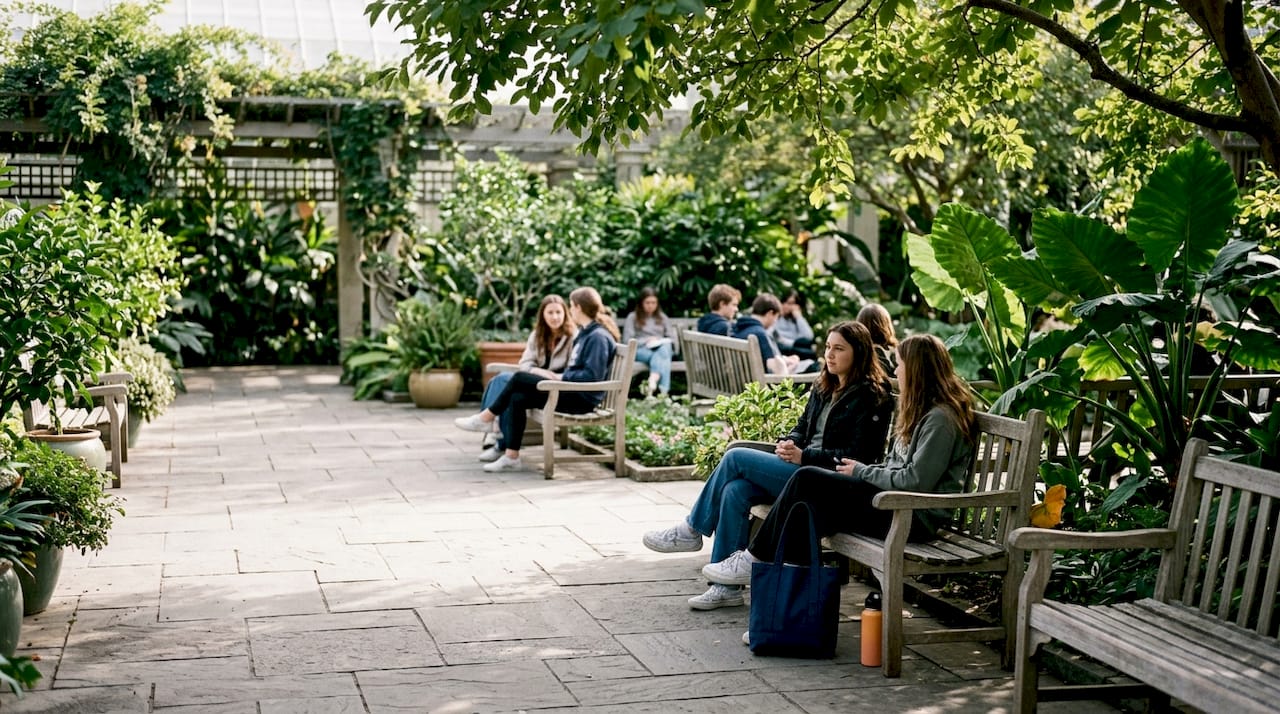
On the trip itself, keep a fixed communication line home. A quick midday check-in text to families of students with higher support needs costs you five minutes and prevents a dozen worried phone calls. Our student pre-trip orientation guide covers the orientation piece in more depth.
Sample Itineraries: 1-Day and 3-Day Accessible Trip Templates
These templates are starting points, built to adjust for your group’s specific needs.
1-Day Template: Local Accessible Museum Visit
- Depart 8:30 AM, arrive by 9:15 AM to beat crowd density
- Staff ratio: 1:6 for groups with complex needs, 1:10 for general groups
- Pre-visit action: send photo walkthrough and visual schedule one week prior
- On-site: two 15-minute quiet breaks built into a 3-hour visit
- Transport: lift-equipped coach confirmed 72 hours ahead
- Contingency: designated quiet room location confirmed with venue staff on arrival
3-Day Template: Regional Nature Center + Accessible Lodging
| Day | Activity | Accessibility Notes |
|---|---|---|
| Day 1 | Travel + accessible lodging check-in | Confirm roll-in showers and ground-floor rooms in advance |
| Day 2 | Nature center paved trail walk + hands-on exhibit hall | Alternate low-stimulation option available for sensory-sensitive students |
| Day 3 | Low-stimulation morning (reading room or quiet outdoor space) + travel home | Reserved as a recovery day, not a packed activity day |
Every template needs the same four checks before it leaves the planning stage: staff ratios matched to documented needs, a transport checklist confirmed in writing, pre-visit materials sent home, and a written contingency plan for medical or sensory emergencies.
How Specialized Planners Reduce the Risk of Accessible Trips
Coordinating 504/IEP accommodations, vendor accessibility audits, medical documentation, and transport logistics is a lot to run in-house, especially for a small special education department already stretched across daily instruction.
A dedicated trip coordinator can handle itinerary building, accessibility-related vendor questions, and payment logistics to prevent staff from chasing multiple confirmations. This kind of support matters most in a few specific scenarios: trips involving complex medical needs, international travel legs where accessibility standards vary by country, or schools with limited staff to manage vendor communication solo.
A planner doesn’t replace your district’s 504/IEP team, it works alongside it. The coordinator documents accommodations, confirms them with each vendor in writing, and flags any venue that can’t meet a specific need before your group ever books a ticket.
— Donovan
Ready to Plan an Accessible Trip Without the Guesswork?
Using a specialized trip coordinator is an alternative to contacting each vendor individually to verify access; the coordinator vets vendors and documents accommodations in writing before departure.
Our Educational Endeavors service builds custom itineraries around your students’ documented needs, with flexible payment plans and travel protection options built in from the start. If your school is planning a trip for students with diverse needs this year, request a planning consultation and get a coordinator matched to your group before you commit to a single venue.
Sources
- School trips aren’t always accessible for autistic children — but they can bring huge benefits
- SASS Worldwide | Supported Study Abroad for Students with Disabilities
- Rustic Pathways — Travel for All
- Mobility International USA — advocacy and best practices
FAQ
Are Field Trips Covered Under a 504 Plan?
Yes. A 504 plan applies to all school-sponsored activities, including field trips, so accommodations already documented at school (extra time, sensory breaks, physical access) carry over to the trip. Coordinate with your district’s 504 coordinator before finalizing the itinerary to confirm what applies.
What Are Some Good Places for an Accessible School Trip in the US?
Museums, science centers, and aquariums tend to rank highest for accessibility because they typically offer paved routes, accessible restrooms, and quiet rooms. In-school alternatives like mobile planetariums or traveling science workshops remove transport and unfamiliar-environment barriers entirely when off-site access is limited.
Where Should We Go for a 3-Day Accessible Trip in the US?
A regional nature center paired with accessible lodging works well because it mixes an active day with a built-in low-stimulation recovery day. Confirm roll-in showers, ground-floor rooms, and paved trail access before booking.
How Much Does a Group School Trip Usually Cost?
Costs vary widely based on destination, group size, and accessibility needs like adapted transport or added staffing, so there’s no fixed figure to quote. Grouptravelnetwork’s Educational Endeavors page and dedicated coordinators provide a custom quote based on your group’s specific itinerary and accommodations.
How Can Schools Fund Extra Accessibility Costs?
Funding typically comes from district special education budgets, PTA fundraising, local grants, or program-specific scholarships. Some travel providers also build financial aid directly into their programs, such as Rustic Pathways’ scholarship and flight grant model for students with individualized needs.
Recommended

Relax with our Student Travel Expertise .
We deliver stress-free student trips backed by an exceptional array of services you won’t find anywhere else:
- Stress-free, creative planning of customized itineraries
- Dedicated GTN Service host on every trip
- Extensive travel protection plan options
- Online, individual registration system
- Flexible payment plans and online payment options
- Bulk buyer discounts for great trips that cost less
Inclusion into #MyGTNFamily for life! (you don’t even have to remember our birthday!)
Spain
There is no place like Spain to offer a student performance opportunity or cultural student trip.
Myrtle Beach
All students love the beach! Especially a beach known for its 60 miles of pristine coastline.
Boston
Have your students experience colonial charm in the city that is considered the hub of New England.
London
Provide your student group with the “Royal” treatment! One of the world’s most recognized cities.
See What People Are Saying
“It has been my privilege to use Group Travel Network as the exclusive travel coordinator for my band for over 10 years. I can say, without doubt or hesitation, that GTN is, by far, the best travel company for student groups currently in existence. I have often said that I wouldn’t take my band across the street without GTN and that’s not far from the truth!”
“This was my first time using a company to plan our band trip. It was so easy working with Justin and Group Travel Network. We had to make several changes along the way, but they were accommodating changes and worked everything out for us. I would highly recommend using Group Travel Network.”
“What wonderful trip we had to NYC! Our group of 51 never missed a beat because of Group Travel Network and our wonderful guide, Tim. It was truly a theatre trip to remember! If you are looking for a travel company who really cares about the details, Group Travel Network is for you!”