

September 18, 2026
Save $65 Per Room on Off Season School Trips: 5 Planner Ideas
Off-season school trips can cut costs and crowds while delivering strong curriculum value, but only if planners budget for the costs vendors do not volunteer upfront. The savings are real: lower attraction fees, better hotel availability, and negotiating leverage that disappears during peak months. The catch is just as real. Pick a trip type suited to shoulder-season scheduling, demand an itemized quote before signing anything, and set aside a contingency fund. The sections below cover the best off-season trip ideas, the hidden costs that inflate per-student pricing, timing advice by destination type, and a planner checklist you can use on your next quote request.
TL;DR:
- Off-season trips offer significant savings on hotels, attraction fees, and bus availability, but require detailed, itemized quotes to avoid hidden costs surpassing advertised prices.
- Planning trips during January through March for museums or early fall and late winter for parks minimizes crowds and leverages educator discounts or lower venue demand.
- Unexpected expenses like supply teacher coverage, hotel markups, and venue surcharges can increase actual trip costs by $25 to $35 per student beyond initial quotes.
- Building a contingency fund of 10% to 15% of the total trip cost is essential to cover weather delays, attraction closures, or scheduling issues common in off-season planning.
- Working with a dedicated trip coordinator ensures comprehensive negotiations, accurate cost breakdowns, and helps mitigate risks when managing multiple vendor relationships for multi-night or international trips.
Table of Contents
- What Are the Best School Trip Off Season Ideas?
- The Hidden Costs Nobody Puts on the Quote Sheet
- Timing and Risk: When Off-Peak Becomes a Liability
- The Planner Checklist: What to Ask Before You Sign
- Why Off-Season Trips Work, and Where They Bite Back
- Plan Your Off-Season Trip With a Dedicated Coordinator
- Sources
- FAQ
What Are the Best School Trip Off Season Ideas?
Off season school excursions work best when the trip type actually benefits from fewer crowds and lower demand, not just lower prices. Some experiences barely change between July and February. Others transform.
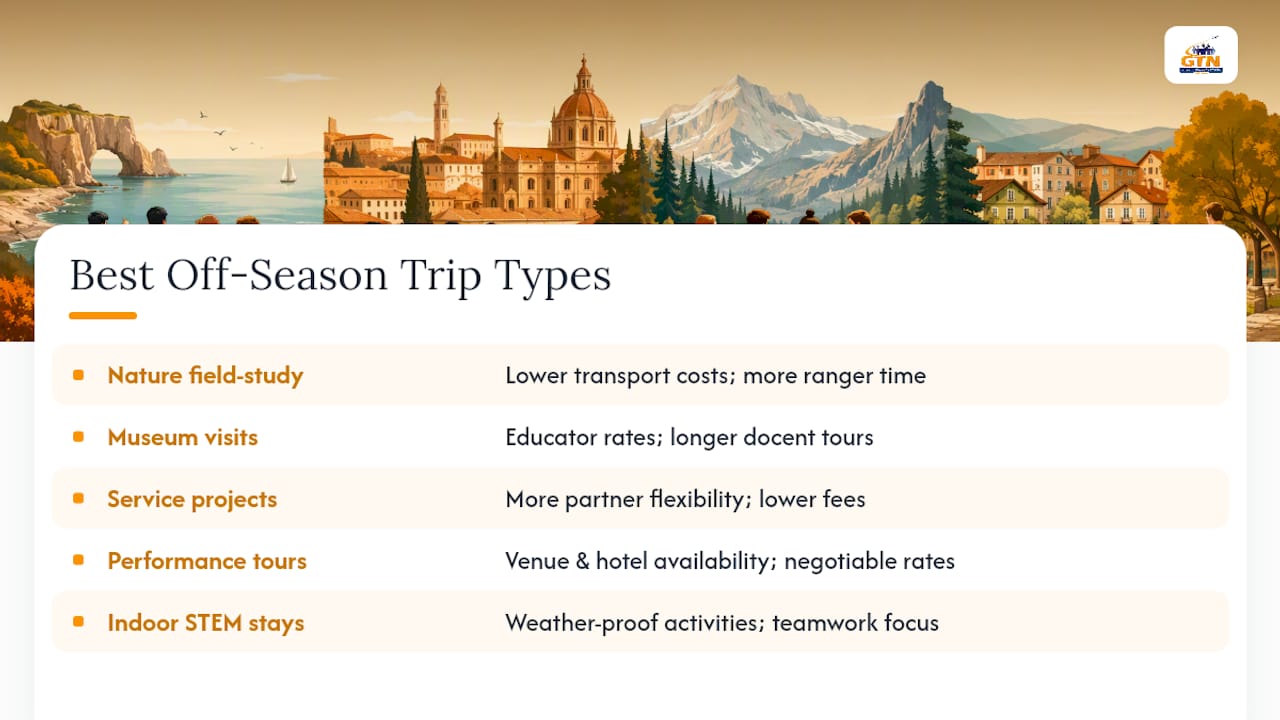
1. Regional Nature and Field-Study Days
State parks, watershed centers, and working farms rarely raise rates by season, and transport costs drop when you are not competing with every other district for the same buses in May. Shoulder-month scheduling also means smaller groups on trails and more one-on-one time with rangers or naturalists.
2. Museum and Cultural Site Visits in the Mid-Term Window
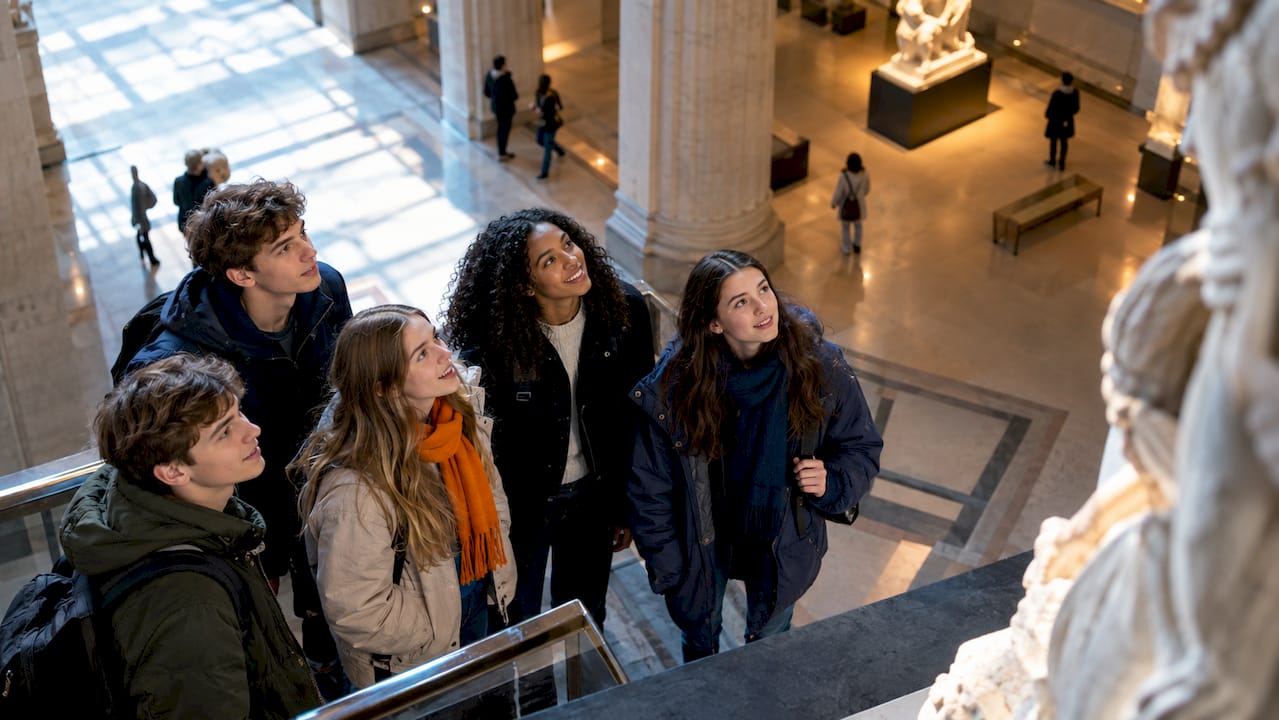
January through March is dead season for most museums and historic sites. Many offer educator rates during this window that simply are not advertised during peak spring-trip season, and docent-led tours run longer when staff are not managing five school groups at once.
3. Service-Learning Projects Scheduled in Shoulder Months
Nonprofit and community partners often have more flexibility to host groups in fall and winter, when volunteer demand typically drops. That flexibility translates into lower coordination fees and better access to the partner staff who make the experience meaningful.
4. Performance Mini-Tours Outside Festival Peak
Band, choir, and orchestra directors chasing a competition slot in April pay peak pricing for buses, hotels, and venues. Scheduling a showcase tour in a quieter month, even a regional one built around a single adjudicated performance, opens up venue availability and hotel rates that simply don’t exist during festival season. Performance tour destinations built around off-peak calendars tend to have far more room to negotiate than a March or April date chasing a state final.
5. Indoor STEM and Workshop Overnight Stays
Late fall and deep winter are the best months to book indoor-focused trips: robotics labs, planetariums, escape-room style problem solving, and maker-space workshops. Groups looking for a curriculum-aligned indoor activity that also builds teamwork can look at options like educational escape room formats, which work well as a rainy-day or weather-contingency add-on regardless of season.
The Hidden Costs Nobody Puts on the Quote Sheet
A quoted per-student price is a starting number, not a final one. The gap between the two is where off-season budgets get destroyed.
Supply teacher cover alone can run $200 or more per day for every classroom teacher who travels, a cost that rarely appears anywhere in a trip vendor’s quote because it is a district expense, not a travel expense. Hotel markups are another quiet one: rooms booked through a bundled package can carry markups of roughly $65 per room per night compared to what the hotel would charge directly. Multiply that across 20 rooms for three nights and you have added nearly $4,000 to a trip that looked affordable on paper.
Add in the variable costs that swing hardest by region and season:
- Mandatory coach requirements versus a district school bus, which can change per-student transport cost significantly depending on distance and state rules
- Driver gratuities, which some vendors quietly fold into “service fees” and others leave for you to cover separately
- Venue surcharges for after-hours access, group size minimums, or holiday-adjacent scheduling
- Insurance top-ups beyond a baseline travel protection plan
A full accounting of these line items shows why a day trip advertised at a low per-student figure can actually cost $25 to $35 per student once staffing and administrative time are counted honestly. That is not a rounding error. It is often the difference between a trip your budget approves and one that gets cut in February.
Statistic Callout: Coach bus pricing has increased significantly in recent years, according to reporting on rising field trip costs, driven by fuel, insurance, and driver shortages that hit every season, not just peak months.
Pro Tip: Ask every vendor for a cost breakdown by category, not just a total. If a provider won’t separate bus, hotel, guide, and meal costs into line items, assume the total includes a margin they don’t want you to see.
Timing and Risk: When Off-Peak Becomes a Liability
“Off season” means something different depending on what you are booking, and confusing the categories is how planners end up stranded.
- Museums and cultural sites run their quietest months from January through March, right after the winter holiday rush and before spring field-trip season floods their calendars.
- National and state parks hit their shoulder window in early fall and late winter, when weather is manageable but crowds and camping fees drop.
- Performance venues and competition circuits thin out between major festival cycles, typically late fall and midwinter, before spring competition season books everything up.
- Beach and warm-weather destinations, including programs built around a specific climate window like a Costa Rica dry-season service trip, operate on a completely different calendar tied to weather, not the US school year.
The risk side of off-season travel is real and worth planning around. Reduced venue staffing means shorter hours or fewer guided tour slots. Some restaurants and attractions simply close for the season, which can strand a group that assumed a listed hour was still accurate. Lock in transportation early since rural and long-distance coach pricing can carry surcharges that shift by season and fuel cost, get written confirmation of attraction access rather than a verbal assurance, and confirm cancellation and refund terms before you pay a deposit.
The Planner Checklist: What to Ask Before You Sign
Every trip that goes over budget shares the same root cause: someone skipped a question they should have asked before signing a contract.
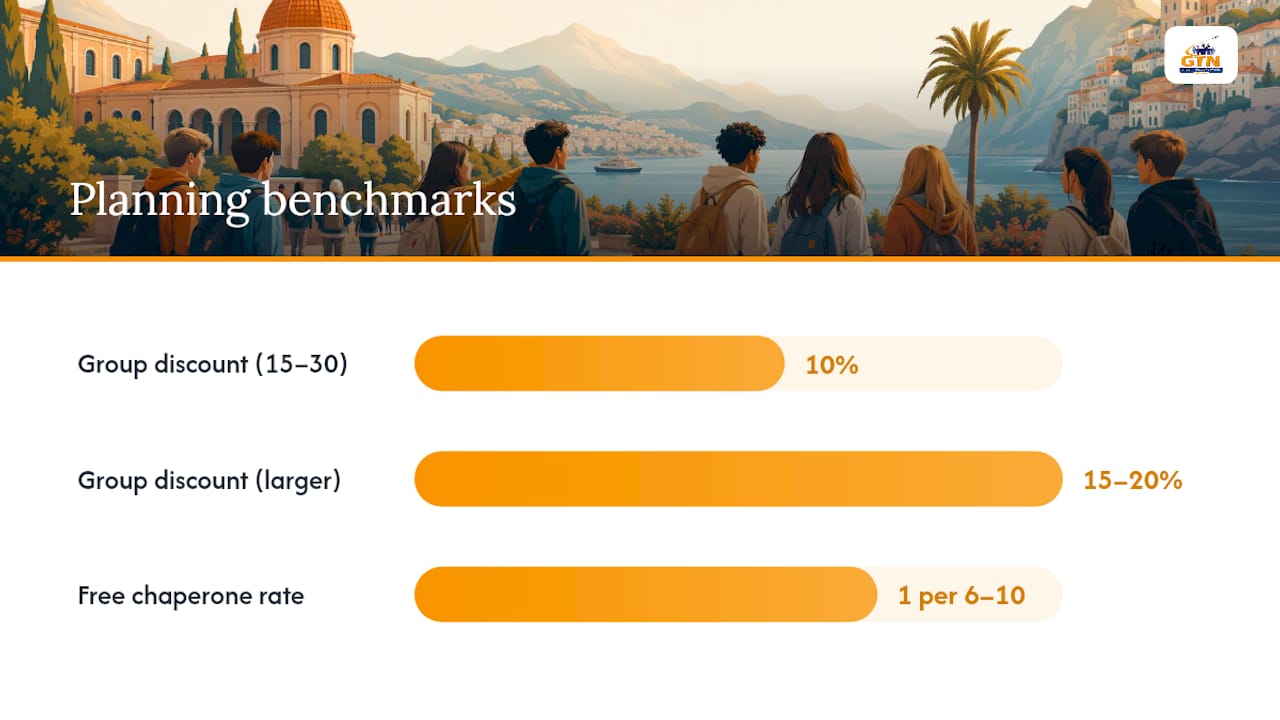
Start with the fundamentals. Confirm your learning objectives match the trip type, establish your minimum headcount for group discounts, and lock down your chaperone ratio and required certifications before requesting quotes. Bulk group discounts commonly run 10% for groups of 15 to 30 students and 15% to 20% for larger groups, and many providers offer one free chaperone spot per six to ten paying students. If a quote doesn’t mention either, ask directly.
When the quote comes back, insist on itemized numbers: bus cost per day, hotel cost per room per night, guide daily rate, and meal cost per person. Itemized quotes remain the most reliable way to catch a provider padding margins into a bundled total, and a refusal to break down those categories is itself a red flag worth walking away from.
Watch for these warning signs specifically:
- Vague “free chaperone” language with no stated ratio
- Large deposits with no written refund policy
- A single bundled number with no willingness to itemize
- Attraction stops that seem chosen for commission rather than curriculum fit
Pro Tip: Build a contingency fund of 10% to 15% of the total trip cost before you finalize a budget. Off-season trips carry fewer crowd risks but more schedule risk, and that fund is what keeps a weather delay or a closed attraction from becoming a parent-communication crisis.
A dedicated trip coordinator who handles online registration, flexible payment plans, and travel protection removes most of this negotiation burden from a teacher’s plate entirely, which matters most on multi-night or interstate trips where the number of moving vendor relationships multiplies fast.
Why Off-Season Trips Work, and Where They Bite Back
Off-season trips reward planners who do the homework and punish the ones who don’t. The savings on hotels, attraction fees, and bus availability are genuinely larger than most districts assume, but they come attached to a planning burden that peak-season trips don’t carry. A vendor with slack capacity in February will negotiate. A vendor scrambling to fill buses in April won’t.
The pattern worth trusting is simple: trips that stayed on budget were the ones where someone insisted on an itemized quote before signing, and trips that blew past budget were almost always missing that one step. For a single-day regional trip, most educators can manage that negotiation directly. For a multi-night or interstate itinerary, especially anything involving a performance tour or an international leg, working with a coordinator who negotiates these contracts daily closes gaps a first-time planner won’t even know to look for.
— Donovan
Plan Your Off-Season Trip With a Dedicated Coordinator
Off-season planning rewards groups that skip the DIY vendor chase entirely. Some travel agencies pair groups with a dedicated trip coordinator who builds the itemized quote, secures pricing and chaperone spots, and manages payment plans and travel protection details, relieving teachers of much of this negotiation burden.

That matters most for the off-season trips covered above: a mid-winter performance showcase, a multi-stop museum circuit, or an interstate service-learning trip, where a dozen vendor relationships need to be negotiated and confirmed months apart. Whether you are planning a curriculum-aligned excursion through Educational Endeavors or a shoulder-season showcase through Performance Tours, the next step is the same: request an itemized off-season quote and get a coordinator assigned before you commit to dates.
Sources
- Why are field trips getting more expensive? – The Valley Echo
- Hidden costs of school trips revealed | Hyett Education
- The Think Tank: What Educational Tour Providers Won’t Tell You | Tour DC With Us
FAQ
Are Off-Season School Trips Actually Cheaper?
Usually, yes, particularly for hotels, attraction fees, and bus availability, but the savings only hold if you get an itemized quote first. Hidden costs like hotel markups of around $65 per room per night can erase the discount if you skip that step.
What Is the Best Time of Year for a Museum-Focused School Trip?
January through March tends to be the quietest window for most museums and cultural sites, after winter break crowds thin out and before spring field-trip season fills their calendars. That period often comes with educator rates that aren’t offered during peak months.
How Much Should We Budget Beyond the Advertised Quote?
Plan for the real total to run higher than the advertised figure once staffing and administrative costs are included; some analyses show day-trip costs climbing to $25 to $35 per student after hidden costs are counted. A contingency fund of 10% to 15% covers most of that gap.
What Should Be in an Itemized Trip Quote?
An itemized quote should break out bus cost per day, hotel cost per room per night, guide daily rate, and meal cost per person, not just a single bundled total. Itemized quotes are the most reliable way to catch a vendor hiding margins in a bundled price.
Does Grouptravelnetwork Help With Off-Season Trip Planning?
Yes. Grouptravelnetwork assigns a dedicated trip coordinator to build itemized quotes, negotiate chaperone ratios and group discounts, and manage flexible payment plans and travel protection for off-season school trips. Current pricing and service details are available directly on the Grouptravelnetwork site.
Recommended

Relax with our Student Travel Expertise .
We deliver stress-free student trips backed by an exceptional array of services you won’t find anywhere else:
- Stress-free, creative planning of customized itineraries
- Dedicated GTN Service host on every trip
- Extensive travel protection plan options
- Online, individual registration system
- Flexible payment plans and online payment options
- Bulk buyer discounts for great trips that cost less
Inclusion into #MyGTNFamily for life! (you don’t even have to remember our birthday!)
Spain
There is no place like Spain to offer a student performance opportunity or cultural student trip.
Myrtle Beach
All students love the beach! Especially a beach known for its 60 miles of pristine coastline.
Boston
Have your students experience colonial charm in the city that is considered the hub of New England.
London
Provide your student group with the “Royal” treatment! One of the world’s most recognized cities.
See What People Are Saying
“This was my first time using a company to plan our band trip. It was so easy working with Justin and Group Travel Network. We had to make several changes along the way, but they were accommodating changes and worked everything out for us. I would highly recommend using Group Travel Network.”
“It has been my privilege to use Group Travel Network as the exclusive travel coordinator for my band for over 10 years. I can say, without doubt or hesitation, that GTN is, by far, the best travel company for student groups currently in existence. I have often said that I wouldn’t take my band across the street without GTN and that’s not far from the truth!”
“What wonderful trip we had to NYC! Our group of 51 never missed a beat because of Group Travel Network and our wonderful guide, Tim. It was truly a theatre trip to remember! If you are looking for a travel company who really cares about the details, Group Travel Network is for you!”