

September 12, 2026
Parents: 7 Steps to Secure an Interest Free School Trip Payment Plan

Yes, interest-free payment plans are widely available for school trips, usually through the school’s trip coordinator or the group-travel organizer running the itinerary. Ask for an installment schedule or online enrollment link first, since most schools and agencies already have one built into their registration portal. If no formal plan exists, you can typically request one directly, and the school can set milestone due dates matched to what the vendor requires.
TL;DR:
- Most schools and agencies offer interest-free installment plans, often with flexible options like autopay, manual schedules, or deposit plus milestone payments.
- Payment deadlines typically range from deposits due 4 to 6 months before departure to final balances settled within seven days, with missed payments risking cancellation.
- School trip costs generally fall between $50 and $300 per student for day trips, but international or multi-day trips can cost significantly more, depending on transportation and lodging.
- Families should confirm the total trip cost, keep records of all payments and communications, and request any necessary extensions well before deadlines to avoid forfeiting deposits or cancellations.
- Use only secure, school-approved online portals for payments, avoiding wiring funds to personal accounts, and verify the vendor’s reputation through trusted sources before submitting funds.
Table of Contents
- How Do School Trip Payment Plans Actually Work?
- What Do School Trips Typically Cost Per Student?
- When Are Payments Due, and What Happens if You’re Late?
- How Do You Set Up a Payment Plan With Your School?
- What Funding Options Exist Beyond a School Payment Plan?
- A One-Page Checklist From Enrollment to Departure
- How Group Travel Network Builds Payment Plans Into Every Trip
- Is It Safe to Pay for School Trips Online?
- Do All Schools Offer the Same Payment Plan Options?
- A Practical Note on Timing From Donovan
- Let Group Travel Network Handle the Payment Logistics
- Sources
- FAQ
How Do School Trip Payment Plans Actually Work?
Most families run into three basic setups, and the difference matters more than it sounds.
Autopay plans pull a set amount from a card or bank account on fixed dates, usually monthly, until the balance clears. You set it up once through a school portal and don’t think about it again unless the card expires.
Manual installment schedules hand you a due-date calendar, and you log in or mail a check by each deadline yourself. These give you more control but more room to forget a payment.
Deposit plus milestone plans ask for a set amount upfront to hold the spot, then bill in chunks tied to vendor deadlines, like a $50 deposit in September, $150 in December, and the balance in March. Travel providers often market these no-interest installment options with minimal or no enrollment fees, though some agencies do charge a small setup or processing fee on top of the trip cost.
Before enrolling, ask these questions:
- Is there an enrollment or processing fee separate from the trip cost?
- What happens if I miss a scheduled autopay date?
- Can I switch from autopay to manual payments mid-plan?
- Is the schedule published anywhere in writing, not just verbal?
Schools and agencies typically confirm your spot through an enrollment email or portal login, which becomes your paper trail if a dispute ever comes up.
What Do School Trips Typically Cost Per Student?
Most day and short overnight field trips run $50 to $300 or more per student, depending on destination, transportation distance, and whether lodging is involved; for practical classroom and trip planning ideas, see Wycieczki edukacyjne w podstawówce: pomysły i gotowe plany. Multi-day trips or international travel push well past that range once flights and hotels enter the picture.
The total breaks down into a handful of line items: chartered transportation, admission or program fees, meals, lodging where applicable, and extras like souvenirs or optional activities. Transportation and lodging usually eat the biggest share of the budget on any trip longer than a single day.
Headcount matters more than most parents realize. Organizers typically plan around three tiers, interested, likely, and committed, because vendor pricing often depends on a minimum group size, and a shrinking group can raise the per-student cost for everyone else. This is exactly the kind of budgeting guidance from K&S that helps schools map committed numbers to actual vendor invoices.
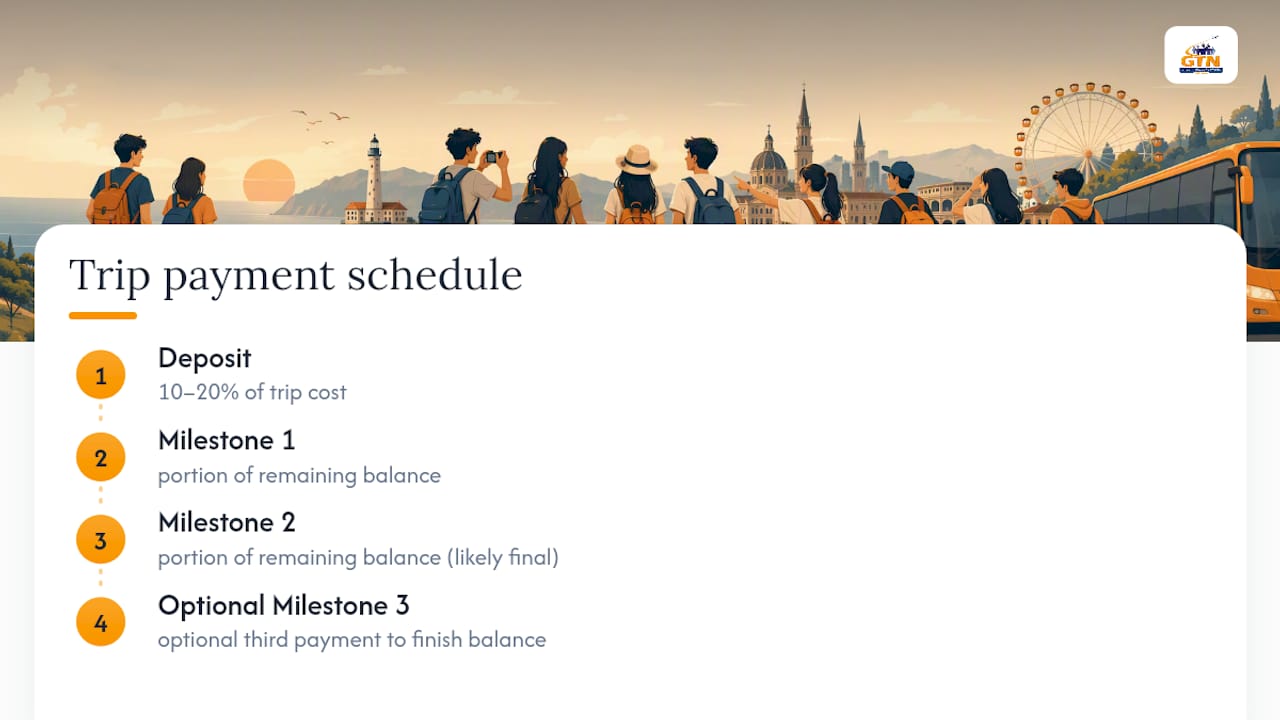
Once you know the total, dividing it into a deposit (often 10 to 20% of the trip cost) plus two or three milestone payments makes the number far less intimidating on a monthly budget.
When Are Payments Due, and What Happens if You’re Late?
Vendors set the pace here, not families. Many venues and travel operators require a deposit month in advance to hold the reservation, then demand full payment at least seven days before the trip departs, a policy common among museums and group venues that can cancel a reservation outright if payment isn’t settled by that window.
A typical timeline looks like this:
- Deposit due at registration, often 4 to 6 months before departure.
- First milestone payment 60 to 90 days out.
- Second milestone payment 30 to 45 days out.
- Final balance due no later than 7 days before departure.
- Refund or cancellation window closes shortly after the final payment date.
Refund policies vary by vendor, but most subtract nonrefundable costs, like chartered bus deposits or ticketed admissions, already paid to third parties. That’s why a missed final payment often means forfeiting the deposit, not just delaying the trip.
Pro Tip: If you’re going to miss a milestone by a few days, contact the coordinator before the due date, not after. Most schools will grant a short extension if you ask early, but almost none will reverse a cancellation once it’s processed.
How Do You Set Up a Payment Plan With Your School?
Start with the person actually running logistics, not the front office. That’s usually the classroom teacher, band director, or a designated trip coordinator, and they can point you to the enrollment portal or send a direct invoice.

A short email works better than a phone call because it creates a written record. Something like this covers the essentials:
“Hi [Name], my child [Student Name] is registered for the [Trip Name] trip on [Date]. I’d like to set up an installment payment plan. Could you send me the payment schedule, portal link, and confirm the deposit amount and due date? Thanks.”
Administrators will usually ask for the student’s full name, grade, and sometimes proof of enrollment before activating a plan. Keep every confirmation email and payment receipt in one folder, digital or physical, since you’ll want that trail if a payment doesn’t process correctly.
Before you send that first payment, do a few things:
- Confirm the total cost matches what’s listed on the official trip invoice.
- Check whether the school uses autopay or requires manual submission each cycle.
- Save the portal login separately from your email password manager.
- Ask what confirmation you’ll receive once the plan is fully paid off.
Get the plan confirmed in writing, then track each payment against the schedule so nothing slips past a deadline unnoticed.
What Funding Options Exist Beyond a School Payment Plan?
When a formal installment plan still doesn’t cover the gap, a few backup routes exist, some better suited to short-term needs than others.
- Fundraising campaigns run through the school, whether bake sales, car washes, or online giving pages, work well because they spread the cost across the community instead of one family. Payment-collection platforms let organizers set up scheduled campaigns matched to vendor deadlines, with funds typically depositing into the school account within 2 to 3 business days.
- Field trip grants exist through some nonprofits and local education foundations, though applications usually need to go in weeks or months before departure, so this isn’t a last-minute fix.
- Cash-advance apps can bridge an immediate deposit deadline. Some offers short, fee-free advances up to roughly $100 to $200, which covers a deposit but rarely a full balance, so vet the repayment window and any fees before committing.
- School-based need assistance is worth asking about directly. Many schools have a small discretionary fund for families who ask quietly rather than publicly.
Avoid high-interest credit cards or payday-style loans for trip costs. The Better Business Bureau is a useful resource for checking a travel organizer’s reputation before handing over any advance payment, especially for a vendor you haven’t worked with before.
A One-Page Checklist From Enrollment to Departure
Keep this sequence taped to the fridge or saved in your notes app.
- Confirm the total trip cost and save the official invoice or portal confirmation.
- Mark the deposit due date on your calendar the day you enroll.
- Set up autopay or a recurring reminder for each milestone payment.
- Keep every receipt and confirmation email in one folder.
- If money’s tight, apply for school assistance or start a fundraiser at least 60 days out.
- Request any extension in writing before, not after, a due date passes.
- In the final week, confirm the balance shows as paid in full and pack any required travel documents or medical forms.
Following that order keeps you ahead of vendor deadlines instead of scrambling the week before departure.
How Group Travel Network Builds Payment Plans Into Every Trip
Some group-travel organizers structure flexible, interest-free payment schedules into their planning process, including features like online registration, milestone billing synced to vendor deadlines, and dedicated trip coordinators who track payments.
For administrators, that means fewer manual spreadsheets and fewer awkward calls chasing down a late balance. For families, it means a portal that shows exactly what’s owed and when, plus travel protection options that cover unexpected cancellations without forcing a fight over refunds. The payment policy template Group Travel Network provides gives schools a starting framework instead of building one from scratch.
Is It Safe to Pay for School Trips Online?
Yes, as long as the portal or platform uses standard encryption and doesn’t ask you to send payment details over email or text. A legitimate school trip portal will show a secure connection (look for “https” and a lock icon in the browser bar) and will never request your full card number or bank account details through a message or phone call.
Stick to ACH bank transfers or card payments processed through the school’s official portal rather than personal payment apps like Venmo or Zelle sent to an individual’s account. Those apps offer little recourse if something goes wrong, and they don’t generate the itemized receipt you’ll want for your own records or, in some cases, for a workplace reimbursement account.
A few habits protect you regardless of which platform the school uses:
- Save a PDF or screenshot of every payment confirmation, not just the email notification.
- Check your bank or card statement against the payment schedule monthly to catch any duplicate or missed charges early.
- Use a unique password for the school payment portal rather than reusing one from another account.
- Ask the coordinator what happens to your payment data if the trip gets canceled or rescheduled.
If a school or organizer asks you to wire money directly to a personal account instead of a school-affiliated portal, treat that as a red flag and ask for an alternative payment method. Legitimate group-travel operators and schools almost always route payments through a business account or a dedicated collection platform, not a personal one.
Do All Schools Offer the Same Payment Plan Options?
Not even close. Public schools running a single day trip often use a simple manual system, cash or check collected by the teacher, with little formal structure beyond a due date on a flyer. There’s rarely a portal, and payment plans, when offered, tend to be informal arrangements worked out directly with the teacher.
Larger public school districts running multi-day or international trips are more likely to use a dedicated online registration system with built-in autopay, since the dollar amounts involved make manual tracking unrealistic for a district office.
Private schools and performance-based programs, band, choir, or athletics tours, tend to have the most developed payment infrastructure, often because they run these trips annually and have already worked out kinks with a trip organizer. These programs commonly offer no-interest installment plans by default rather than something you have to request.
Group-travel agencies sit in the middle but usually offer the most flexibility of the three, since organizing payment logistics is core to what they do rather than a side task added onto a teacher’s existing workload. Guidance from PayIt2 notes that payment plans significantly boost participation on higher-cost trips, which is a big part of why agencies build installment options in from the start rather than treating them as an exception.
The practical takeaway: ask early what system your specific school or provider actually uses, because the answer varies enormously even between two schools in the same district.
A Practical Note on Timing From Donovan
Most payment plan problems aren’t about money, they’re about timing. Families wait until a deadline is already close, then discover extensions are harder to get under pressure. Ask for the schedule the day you enroll, not the week before a payment is due, and nearly every option in this guide stays open to you.
— Donovan
Let Group Travel Network Handle the Payment Logistics
Group Travel Network offers something a spreadsheet or a teacher’s personal tracking system can’t: a dedicated trip coordinator whose job is specifically to keep enrollment, billing milestones, and vendor deadlines in sync, so no family gets blindsided by a missed cancellation window.

That means flexible, interest-free payment schedules built around your school’s actual trip calendar, online enrollment so parents can see exactly what’s owed at any point, and travel protection options that reduce the financial risk if plans change. Whether you’re a parent trying to lock in a plan or an administrator tired of chasing down late payments, the setup does the coordination work that usually falls on one overworked staff member. Visit the student group trip planning page to see how a managed payment structure could work for your school’s next trip, or reach out to a trip coordinator directly to ask what’s possible for your group’s size and timeline.
Sources
- Field trips — NMI (Museum example policy)
- How to Budget for School Trips: Stress-Free Guide | K&S
- School field trip funding guidance | Gerald
- School field trip fundraising and payment collections | PayIt2
This article is general information, not a substitute for advice from a qualified financial advisor. Consult a qualified financial professional about your own circumstances before acting on anything here.
FAQ
Can You Pay for a School Trip in Installments?
Yes, most schools and group-travel organizers offer installment plans, either through autopay or a manual milestone schedule, and you can usually request one directly from the trip coordinator if it isn’t already offered.
How Do I Set Up a Payment Plan for a School Trip?
Contact the teacher or trip coordinator, ask for the payment schedule or portal link, and confirm the deposit amount and due dates in writing before making your first payment.
How Much Do School Trips Usually Cost?
Most trips run $50 to $300 or more per student, with multi-day or international trips costing significantly more once lodging and flights are included.
What Happens if I Miss a Payment Deadline?
Missing a deadline can trigger late fees or cancellation, since many venues require full payment at least 7 days before the trip; contact the coordinator before the due date to request an extension.
Recommended

Relax with our Student Travel Expertise .
We deliver stress-free student trips backed by an exceptional array of services you won’t find anywhere else:
- Stress-free, creative planning of customized itineraries
- Dedicated GTN Service host on every trip
- Extensive travel protection plan options
- Online, individual registration system
- Flexible payment plans and online payment options
- Bulk buyer discounts for great trips that cost less
Inclusion into #MyGTNFamily for life! (you don’t even have to remember our birthday!)
Spain
There is no place like Spain to offer a student performance opportunity or cultural student trip.
Myrtle Beach
All students love the beach! Especially a beach known for its 60 miles of pristine coastline.
Boston
Have your students experience colonial charm in the city that is considered the hub of New England.
London
Provide your student group with the “Royal” treatment! One of the world’s most recognized cities.
See What People Are Saying
“It has been my privilege to use Group Travel Network as the exclusive travel coordinator for my band for over 10 years. I can say, without doubt or hesitation, that GTN is, by far, the best travel company for student groups currently in existence. I have often said that I wouldn’t take my band across the street without GTN and that’s not far from the truth!”
“What wonderful trip we had to NYC! Our group of 51 never missed a beat because of Group Travel Network and our wonderful guide, Tim. It was truly a theatre trip to remember! If you are looking for a travel company who really cares about the details, Group Travel Network is for you!”
“This was my first time using a company to plan our band trip. It was so easy working with Justin and Group Travel Network. We had to make several changes along the way, but they were accommodating changes and worked everything out for us. I would highly recommend using Group Travel Network.”