

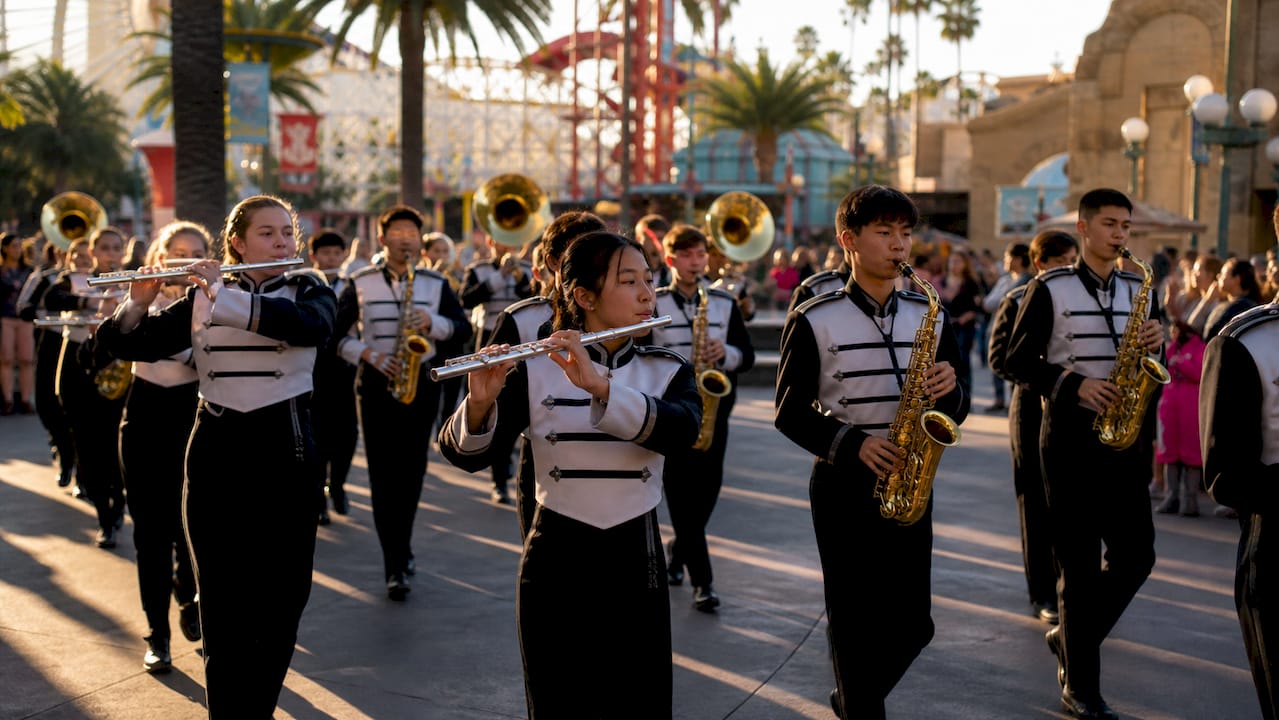
Stage shows, marching or parade slots, and industry-style workshops make up the three real theme park performance opportunities open to school and youth groups right now. Most programs require a recent performance video, a minimum group size that ranges from roughly 15 to 40 participants, and an application filed months before the trip. Your immediate next step: pull up the specific park’s official program page and confirm its exact minimums, video requirements, and application window before you build a budget or a travel date around it.
Here’s what shapes the decision from there:
- Registration fees are typically separate from park admission tickets and are often non-refundable once paid.
- Performance times usually get assigned two to three weeks before your event, not at booking.
- Uniform photos, a current roster, and proof of school affiliation almost always accompany the video submission.
Key Takeaways
Booking a theme park performance opportunity comes down to matching your ensemble to the right format, meeting each park’s specific eligibility rules, and separating registration fees from ticket payments throughout the process.
| Point | Details |
|---|---|
| Match format to ensemble | Marching bands suit parade routes; choirs and small groups often fit stage sets better. |
| Confirm minimums early | Group size thresholds range roughly from 15 to 40 depending on the park and program. |
| Budget fees separately | Registration or slot-hold fees are non-refundable and distinct from ticket purchases. |
| Prepare video to exact specs | Submit a recent, well-lit, full-ensemble video timed to your actual slot length. |
| Consider a planner for scale | Grouptravelnetwork coordinates applications, tickets, and payment plans for larger or multi-park bookings. |
Table of Contents
- What Types of Theme Park Performance Opportunities Are Available?
- What Are the Eligibility Requirements for Student Groups?
- How Do Booking Timelines and Registration Fees Work?
- How Do You Prepare a Winning Application?
- What Happens on the Day of a Theme Park Performance?
- When Should You Hire a Performance Trip Planner?
- Does Skill Level or Musical Genre Affect Eligibility?
- How Do You Match a Program to Your Ensemble?
- What Does a Theme Park Performance Trip Really Cost?
- What Do Successful Theme Park Performances Look Like?
- What the Data Actually Tells Directors to Prioritize
- Book Your Group’s Theme Park Performance With Grouptravelnetwork
- Sources
- FAQ
What Types of Theme Park Performance Opportunities Are Available?
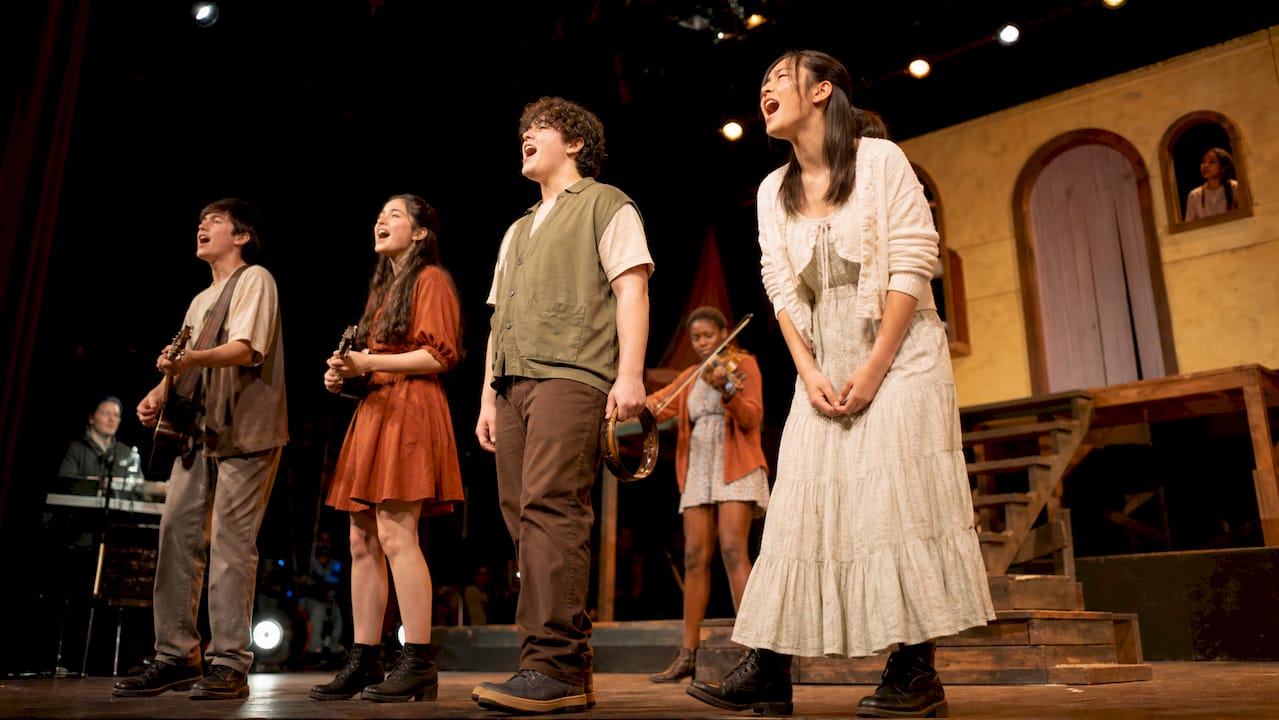
Stage performances are the most common format directors ask about, and for good reason. These slots typically run around twenty to thirty minutes in front of a seated or standing audience, with a park-provided technician handling sound and a coordinator managing the schedule backstage. Disney Imagination Campus (opens in a new tab) treats participating students as honorary cast members for the day, pairing them with professional crew and tying the experience to educational standards rather than just a spot on a stage.
Marching and parade opportunities ask more of performers physically. Routes can stretch close to a mile, crowds line both sides, and there’s no seated break in the middle, so groups need real stamina and rehearsal time built into their prep, not just their program.
A few other formats round out the field:
- Holiday and pre-parade warm-up slots: seasonal windows with their own application deadlines, often tighter than standard programs.
- Workshops: clinics led by industry professionals that align with National Core Arts Standards, useful for groups that want an educational credit alongside the trip.
- Combination bookings: some ensembles pair a stage set one day with a workshop the next to maximize the visit.
What Are the Eligibility Requirements for Student Groups?
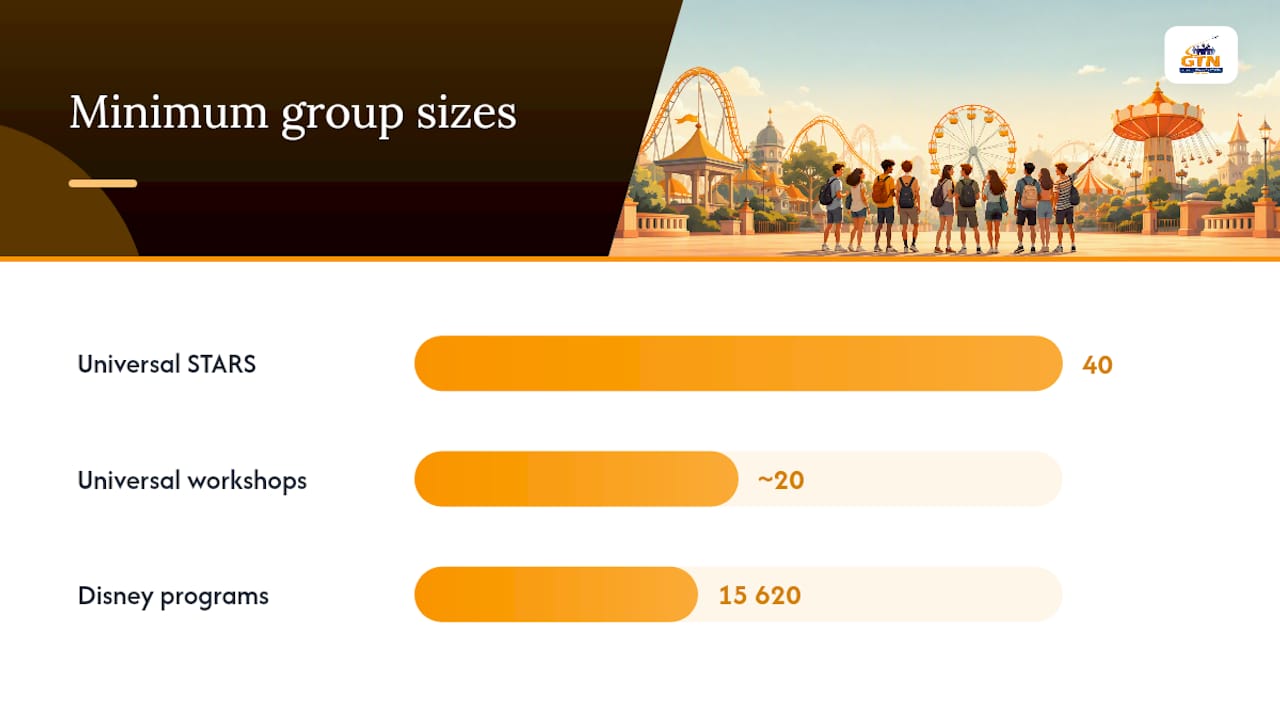
Minimum group sizes are the first filter, and they vary more than most directors expect. Universal Orlando’s STARS program sets a 40-person minimum for STARS-branded groups and around 20 for some workshop tracks, while Disney’s programs list minimums closer to 15 to 20 depending on the offering. Cedar Point and Kings Dominion run their own group registration processes with published thresholds on each program page.
Quick fact check: many programs cap participants at high-school age or below, and a handful extend eligibility to college-level ensembles, so confirm the age ceiling before your college marching band or show choir applies.
Beyond headcount, three rules show up across nearly every park:
- Costumes must be age-appropriate, and recognizable character impersonation is prohibited across the board.
- Repertoire needs to stay family-friendly; content restrictions rule out material with mature themes or copyrighted character likenesses.
- Chaperones typically receive a set number of complimentary tickets tied to your performer count, with additional adults paying standard group rates.
How Do Booking Timelines and Registration Fees Work?
Money and scheduling move on two separate tracks, and mixing them up is the single most common mistake directors make.
- Application window opens: usually months ahead of your target date, sometimes as early as the previous fall for a spring trip.
- Registration or slot-hold fee due: Kings Dominion (opens in a new tab) charges a $50 non-refundable registration fee that’s entirely separate from ticket purchases, and missing that payment can release your timeslot to another group.
- Ticket minimums confirmed: Universal’s STARS marching program requires a 40-ticket minimum, and groups traveling from outside Florida often need park-to-park tickets rather than single-park passes.
- Performance time assigned: typically locked in two to three weeks before the event, not at the time of application.
Statistic to remember: that 40-ticket minimum at Universal is one of the higher thresholds among major parks, which makes it worth checking early if your ensemble is smaller.
Keep registration fee receipts filed separately from ticket payments. Treating them as one line item is how directors end up short at final reconciliation.
How Do You Prepare a Winning Application?
Reviewers are looking at your video before anything else, so start there.
- Record a recent performance: within six to 12 months, in good lighting, with the camera stable and the full ensemble visible in frame.
- Check your audio levels: a great performance with distorted or clipped sound reads as unpolished, even when the playing isn’t.
- Add a brief slate: organization name, date, and a contact person at the front of the file so reviewers have context in the first ten seconds.
- Assemble your documentation: a roster with ages and roles, proof of school affiliation, and clear photos of your intended uniform.
- Build a program list with run times: reviewers want to see that your set fits the slot length, whether that’s a tight 20 minutes or a longer showcase.
- Choose repertoire carefully: family-friendly, free of character likenesses, and timed to the exact slot you’re applying for, not padded or trimmed on the fly.
- Label and submit files clearly: follow the park’s accepted file types or hosting-link instructions, and respect any word limits on your program description.
Pro Tip: Submit your video and photos as a single labeled folder with your group name and event date in the file names. Reviewers process dozens of applications a week, and a submission that’s easy to open and easy to identify gets looked at first.
What Happens on the Day of a Theme Park Performance?
Arrival windows matter more than most first-time groups expect. Parks generally want performing groups on-site well ahead of showtime for staging and a tech check, not arriving at the gate and heading straight to the stage.
Warm-up space is often limited, so ask about it specifically when you apply rather than assuming it’s included. Both Cedar Point (opens in a new tab) and Disney provide dedicated technicians and stage crew for student performances, which takes pressure off your own staff for sound and lighting.
A few operational details to lock down before you travel:
- Confirm credentialing rules for backstage access; not every chaperone gets the same clearance as performers.
- Ask about student meal-plan options for large groups, since Cedar Point publishes per-person pricing that bundles admission with meals for performers and non-performers alike.
- Clarify how season-pass holders or visiting family members factor into your group’s ticket count and seating.
When Should You Hire a Performance Trip Planner?
Handling the application yourself works fine for a single park visit with a straightforward group, but many directors find that one-stop travel planning services (opens in a new tab) simplify the process and reduce headaches. It gets harder once you’re juggling multiple park applications, payment plans for 60 families, and a ticket order that needs to match a registration fee paid on a different timeline.
A dedicated trip coordinator manages the application, ticket orders, payment plans, and park liaison so you can focus on rehearsal instead of paperwork. Planners also bundle tickets efficiently and make sure your video, photos, and roster meet each park’s exact specs before submission, catching the small mismatches that get applications sent back for revision.
Before hiring anyone, ask these four questions:
- What’s the refund policy if a performance date changes or falls through?
- Does the package include travel protection or insurance options?
- Who manages the two-to-three-week performance-time confirmation window?
- What level of on-site support shows up with the group on performance day?
Grouptravelnetwork’s performance tours (opens in a new tab) page outlines how this kind of coordination works for school and youth ensembles heading into 2026 season bookings.
| Consideration | What It Means for You |
|---|---|
| Group size | Under 20 performers, direct booking is manageable |
| Multiple parks | Two or more applications, a planner saves real time |
| Payment plans | Planners handle family-by-family payment tracking |
| Reconciliation | Planners separate registration fees from ticket costs automatically |
Does Skill Level or Musical Genre Affect Eligibility?
Group size and age aren’t the only gates parks apply. Skill level gets evaluated through your submitted video, and reviewers are looking for ensemble cohesion and stage readiness, not conservatory-level polish. A well-rehearsed middle school choir with clean entrances and solid intonation often clears review faster than a technically ambitious group that looks unprepared on camera.
Genre restrictions are looser than most directors assume, but not absent. Marching bands, show choirs, jazz ensembles, orchestras, dance teams, and color guard units all get booked regularly. What gets flagged is content, not style: material with mature themes, aggressive lyrics, or anything resembling a copyrighted character performance gets rejected regardless of genre.
Instrumentation matters for stage sets specifically. Programs with a fixed tech setup may ask in advance whether you need risers, specific microphone counts, or amplification for electric instruments, since last-minute equipment requests are harder to accommodate once your slot is confirmed. Marching programs care less about this and more about your group’s ability to hold formation and tempo across a route with no conductor visible for stretches of it.
One overlooked factor: programs tied to National Core Arts Standards (opens in a new tab) style workshops sometimes weigh educational framing as part of eligibility. A group that presents its trip as curriculum-aligned learning, not just a performance opportunity, occasionally has an easier path through review for workshop-based programs specifically.
How Do You Match a Program to Your Ensemble?
Start with what your group does best, not what looks most exciting on a brochure. A marching band built for outdoor formations and sustained tempo is a natural fit for a parade slot; that same band forced into a 20-minute seated stage set loses the physical energy that makes it distinctive.
Choirs and small ensembles usually shine in stage formats, where sound projection and vocal blend matter more than crowd-facing choreography. If your group is smaller, under 20 performers, a workshop track can be the stronger opening move, letting students build park-specific experience before you commit to a full stage or parade application the following year.
Consider your goals beyond the performance itself. Groups chasing a strong audition tape for scholarship or competition purposes may prioritize a stage set with professional tech support, since Disney’s coordinator-and-technician model produces cleaner audio and video than most parade routes can offer. Groups more interested in the shared experience of performing for a live crowd often lean toward parade or marching formats instead.
Budget and travel distance factor in too. A Cedar Point stage slot might suit a Midwest ensemble avoiding cross-country travel costs, while a Florida-based Universal STARS booking makes more sense for groups already planning a southeastern trip. Matching program type to travel logistics, not just artistic fit, often determines whether the whole trip pencils out financially.
What Does a Theme Park Performance Trip Really Cost?
Ticket price and registration fee are just the entry point. Cedar Point lists per-person program pricing that runs around $41.04 per performer and non-performer, and that figure typically bundles admission with the performance slot itself, but it doesn’t cover everything your group will spend.
Parking adds up fast for large groups arriving by bus or multiple vehicles, and most parks charge per vehicle rather than per person, so a single coach often costs less per student than a caravan of parent cars. Accommodation is usually the largest line item outside of tickets, particularly for multi-day trips that pair a performance with general park days. Meal plans, where offered, can simplify budgeting considerably. Cedar Point’s student meal-plan options bundle food costs into a predictable per-person rate instead of leaving families to cover meals out of pocket inside the park.
Registration fees deserve their own budget line, separate from everything else. That $50 non-refundable fee at Kings Dominion, and comparable fees at other parks, needs to be paid and tracked independently of your ticket order. Treating it as part of the same payment doesn’t just risk confusion. It risks losing your slot if the reconciliation gets tangled.
Add chaperone tickets, instrument or equipment transport if you’re a marching band, and any additional workshop fees if you’re combining a stage set with an educational session. A realistic total budget accounts for tickets, registration fees, transportation, lodging, meals, and a contingency line for the extras that always come up on a multi-day trip.
What Do Successful Theme Park Performances Look Like?
The strongest applications share a pattern: a group that rehearsed its actual performance slot length, not just its concert repertoire, and submitted a video that matched exactly what park reviewers would see on stage. Bands that trim or extend their set to fit a 20-minute window, rather than submitting a full 45-minute concert program and hoping reviewers extrapolate, tend to move through review faster.
Marching groups that succeed on parade routes typically over-rehearse formation holds and tempo consistency, since a mile-long route with an unpredictable crowd is a very different environment than a football field halftime show. Directors who scout the actual route length in advance, factoring in the physical demands noted in most park program guides, report fewer mid-route issues than those who assume any marching band can handle any route unprepared.
Workshop participants who frame their visit around specific standards, citing the National Core Arts Standards alignment parks build their educational programming around, generally get more out of the clinic portion because they arrive with specific learning goals rather than treating it as a break between park days.
The common thread across every successful booking is preparation that matches the format, not generic performance readiness applied to whichever slot happened to be available.
What the Data Actually Tells Directors to Prioritize
Most advice on this topic treats a theme park performance like a field trip with extra paperwork. It isn’t. The parks that publish the clearest requirements, Universal’s ticket minimums, Kings Dominion’s registration fee structure, Disney’s standards alignment, are telling you exactly what they reward: applications that treat the performance as a professional booking, not a bonus activity tacked onto a park day.
The conventional advice to “just apply early” misses the real bottleneck. Early applications with a mismatched video or an unclear program list get bounced back just as often as late ones. What separates smooth bookings from stressful ones is matching your ensemble’s actual strengths to the right format before you ever file the application, then treating registration fees and ticket payments as two entirely separate financial tracks from day one.
If you take one thing from this guide, prioritize the video. It’s the first thing reviewers see, and it’s the easiest thing to get wrong through rushed lighting or unstable framing rather than any real deficiency in your group’s performance.
— Donovan
Book Your Group’s Theme Park Performance With Grouptravelnetwork
Handling park applications, ticket orders, and payment plans across multiple families is where most directors lose time they’d rather spend on rehearsal. Grouptravelnetwork exists for exactly this gap: a dedicated trip coordinator manages the park liaison, tracks registration fees separately from ticket payments, and sets up flexible payment plans so you’re not chasing forms while also running sectionals.

This matters most once your group crosses that 20 to 30 performer mark or you’re weighing more than one park for the same trip, where the reconciliation problems this guide covers start compounding fast. Grouptravelnetwork’s coordinators handle that complexity directly, and the performance tours page walks through how the process works for bands, choirs, and youth ensembles planning a 2026 booking. If your group is ready to move forward, request a quote there and get a coordinator assigned to your application before your target park’s window closes.
Sources
- Performance in the Park | Performance Opportunities | Cedar Point (opens in a new tab)
- Kings Dominion – Performance in the Park (opens in a new tab)
- Group Stage Performances | Disney Imagination Campus (opens in a new tab)
FAQ
What Is the Minimum Group Size for a Theme Park Performance?
Minimums vary by park and program, ranging from about 15 to 20 for some Disney offerings up to 40 for Universal’s STARS marching program.
How Far in Advance Should We Apply?
Applications typically open months before your target date, and performance times get confirmed two to three weeks prior, so file as early as the park’s window allows.
Are Registration Fees Refundable?
No. Programs like Kings Dominion’s Performance in the Park charge a non-refundable registration fee separate from ticket costs, and it secures your slot only once received.
What Should Our Audition Video Include?
A recent performance, within six to 12 months, filmed with stable framing, good lighting, and the full ensemble visible, with a brief slate identifying your organization at the start.
Should We Book Directly or Use a Planner?
Direct booking works for smaller, single-park trips, but a planner like Grouptravelnetwork adds real value once you’re coordinating multiple applications, large payment plans, or several family payment schedules at once.
Recommended
- Your Disney Performance Trip: A 2026 Planning Guide For Educators • Group Travel Network (opens in a new tab)
- Performance Tour Destinations Explained For Educators In 2026 • Group Travel Network (opens in a new tab)
- Student Performances Tours: Showcasing Talent In 2025 (opens in a new tab)
- How To Select Performance Trip Destinations: 2026 Guide • Group Travel Network (opens in a new tab)