

July 8, 2026
What Is Community-Focused Travel? A 2026 Guide
TL;DR:
- Community-based tourism keeps over 70% of revenue local, supporting community growth and reducing leakage. It prioritizes local ownership, benefiting both travelers through authentic experiences and communities with economic and cultural gains. Travelers and educators can ensure authenticity by asking about ownership and how funds are distributed before participating.
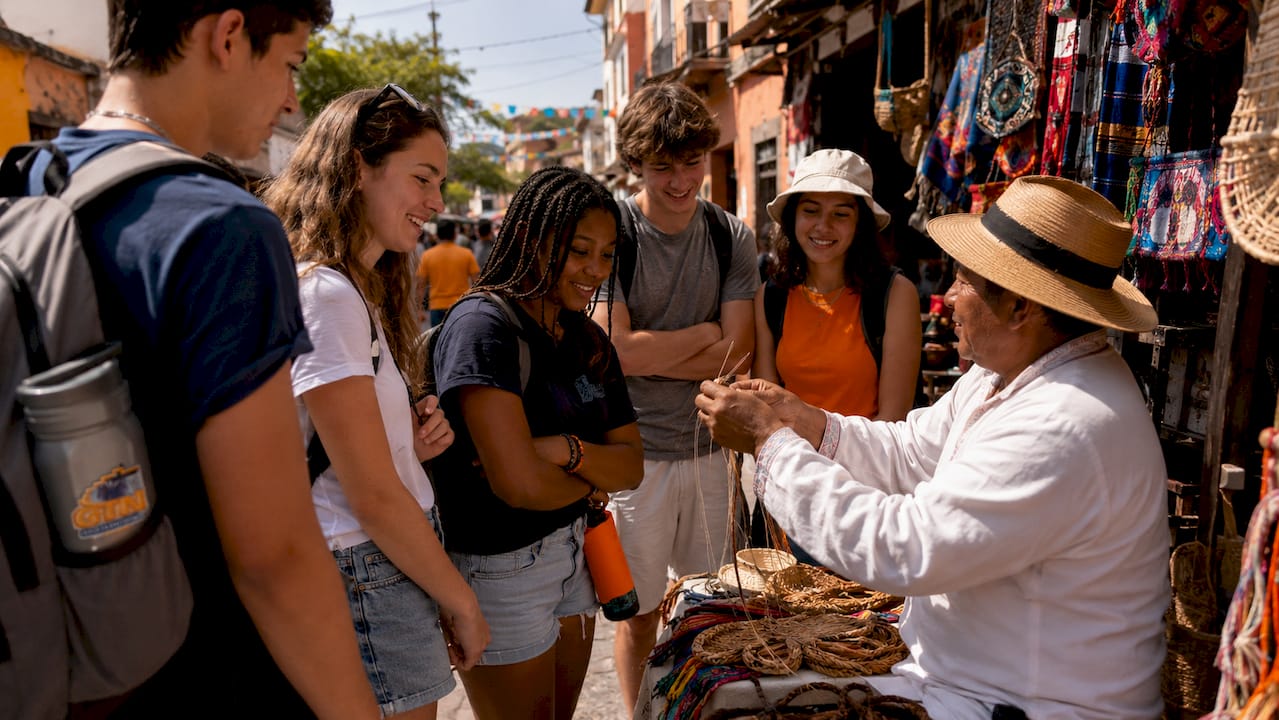
Community-focused travel is tourism where local people own, operate, and benefit directly from the experiences offered to visitors. The industry term for this model is community-based tourism (CBT), and it stands apart from conventional travel because revenue stays local: CBT retains over 70% of income within local economies, compared to less than 30% in traditional tourism. That gap is not a minor accounting difference. It represents the difference between a destination that grows stronger from visitors and one that is slowly hollowed out by them. For travel enthusiasts and educators, understanding what is community-focused travel is the first step toward making trips that genuinely matter.
What is community-focused travel and why does it matter?
Community-based tourism places local people at the center of every decision. According to Planeterra president Jamie Sweeting, true community tourism must be owned, led, and shaped by local people. Without that ownership, the experience is simply a commercial product with a community-friendly label.
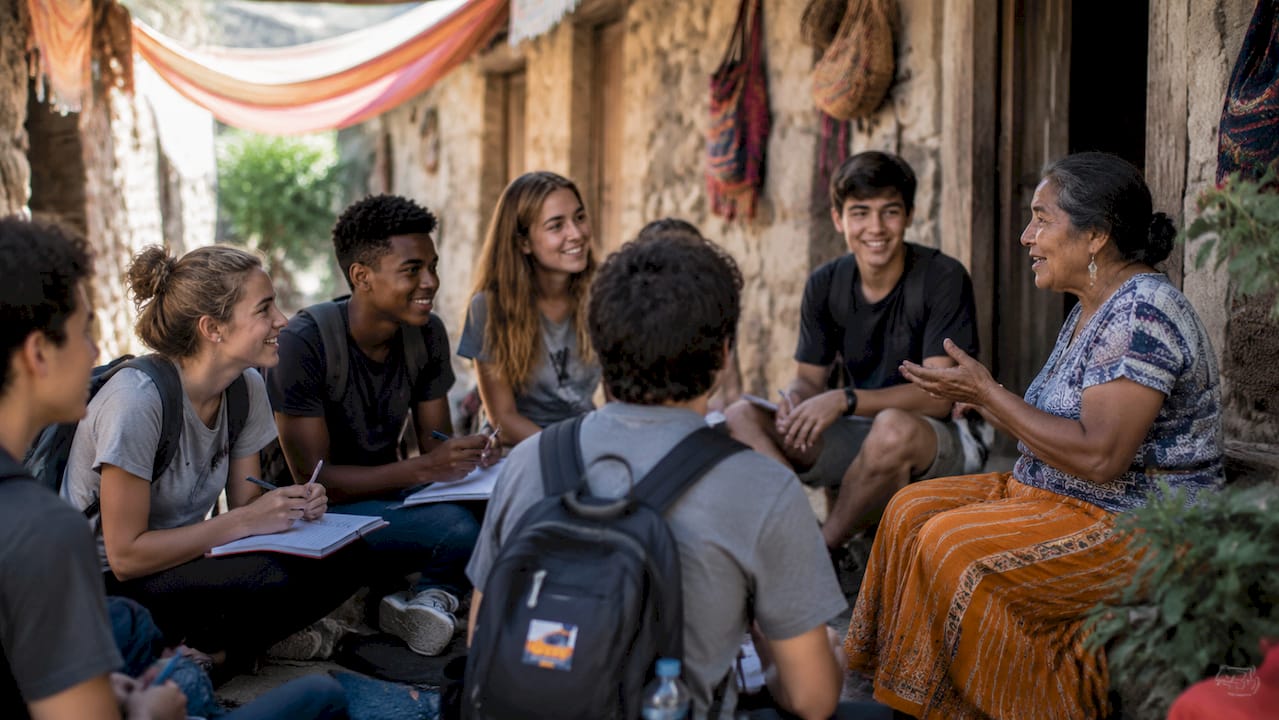
The distinction matters because ownership determines where money flows, who makes decisions, and whether the destination benefits long term. A village cooperative running its own guided hikes keeps profits in the community. A resort that hires a few local staff and exports the rest of its revenue does not.
CBT also addresses a structural problem in global tourism called tourism leakage. Integrating community-based tourism helps established destinations combat overtourism and leakage by directing spending toward underserved communities. That makes CBT a practical tool, not just an ethical preference.
How does community travel benefit locals and travelers?
The economic case for community travel is concrete. Local incomes can increase by up to 45% from community tourism projects, with reinvestment directed into schools, healthcare, and local infrastructure. That reinvestment creates a compounding effect: better schools produce more skilled community members who can lead richer tourism experiences.
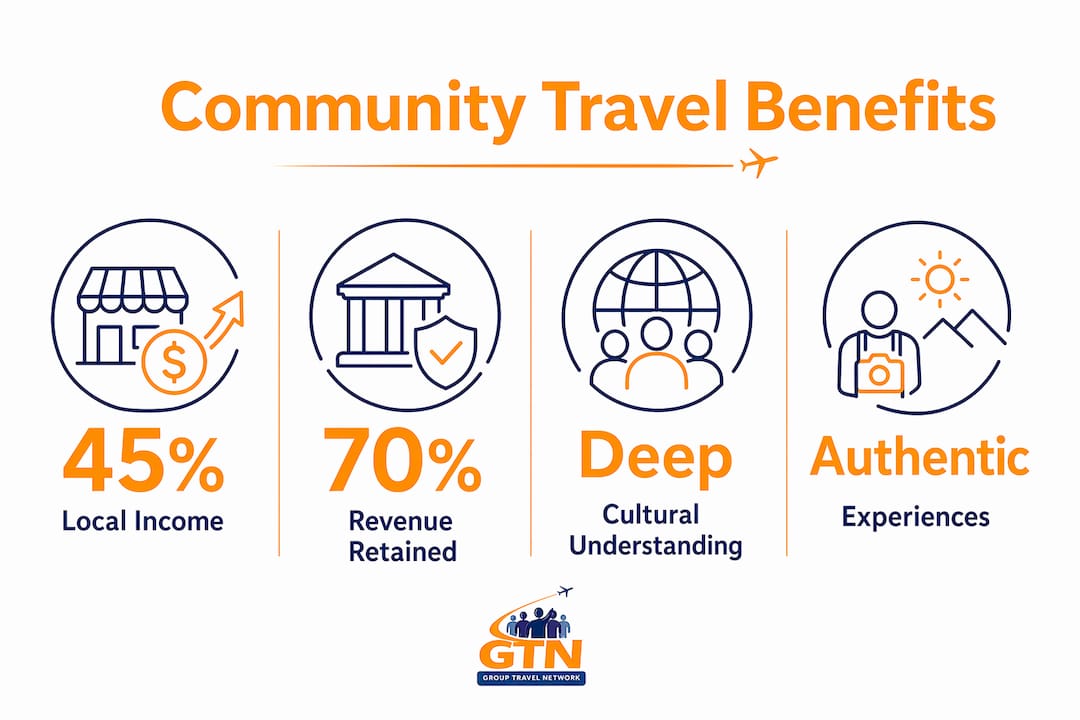
The benefits for travelers are equally measurable. Participants in community-focused travel report 72% higher cultural understanding compared to conventional tours. Sitting in a family kitchen learning to cook a regional dish teaches more about a culture than any museum exhibit.
Beyond economics and education, CBT supports environmental protection. Communities with a direct financial stake in their natural surroundings have strong incentives to protect forests, reefs, and wildlife. The benefits stack in multiple directions at once:
- Economic: Revenue stays local and funds community priorities like schools and clinics.
- Cultural: Travelers gain authentic exposure to traditions, languages, and daily life.
- Environmental: Local stewardship reduces habitat destruction and resource overuse.
- Social: Communities gain agency over how their culture is presented and shared.
“Community tourism centers on agency: local people must own and shape the experiences, making tourism effective in sustainable development.” — Planeterra, via Travel Weekly Australia
What types of community travel experiences exist?
Community-based tourism takes several forms, each with a different level of community involvement and governance structure.
| Experience type | Key features | Community involvement |
|---|---|---|
| Homestays | Guests stay with local families | High: family owns and manages |
| Cooperative-run tours | Village guides lead cultural or nature tours | High: profits shared across members |
| Community eco-lodges | Accommodation built and operated locally | High: community holds ownership stake |
| Craft and skill workshops | Artisans teach traditional techniques | Medium: individual artisans benefit directly |
| Village cultural programs | Performances, cooking, or storytelling sessions | Medium to high: depends on governance |
The governance structure is what separates genuine CBT from a commercial imitation. Community ownership and governance ensure tourism benefits are distributed equitably, distinguishing true community tourism from commercial ventures. A cooperative model, for example, distributes profits across all members rather than concentrating them with a single owner.
Indigenous-governed tourism programs add another layer of authenticity. Many indigenous communities use tourism as a tool for cultural preservation, allowing visitors to witness traditions that might otherwise disappear. The community sets the terms, controls access, and decides what is shared.
Pro Tip: Before booking any “community” experience, ask the operator directly: who owns this business, and what percentage of your fee goes to community members? A legitimate CBT provider answers that question without hesitation.
How to engage in community travel respectfully and effectively
The single most important shift a traveler can make is moving from a consumer mindset to a guest mindset. Seeing yourself as invited rather than as a paying customer fundamentally changes how you interact with hosts and how hosts respond to you. Customers expect services. Guests participate in an exchange.
Preparation matters before you arrive. Researching local cultural norms beforehand helps avoid disrespect and creates space for genuine connection. Knowing basic greetings in the local language, understanding dress codes, and learning about local customs signals respect before you say a single word.
Follow these steps to engage effectively:
- Choose verified CBT operators. Favor homestays or village tours where the community owns and operates the enterprise. Ask directly about local ownership before booking.
- Spend money locally. Buy food, crafts, and services from community members rather than from outside vendors who happen to be near the destination.
- Follow host guidance. Accept that schedules may shift, meals may differ from expectations, and plans may change. Flexibility is not a compromise. It is part of the experience.
- Ask thoughtful questions. Show genuine curiosity about daily life, history, and traditions. Avoid questions that reduce people to stereotypes or treat their culture as entertainment.
- Leave feedback that helps. Share honest reviews that help future travelers find authentic CBT experiences and help communities improve their offerings.
Visitor behaviors cumulatively influence community development and sustainability in small communities. One traveler’s careless behavior can damage a community’s reputation or environment. One traveler’s respect can inspire a host to invest more in sharing their culture.
Pro Tip: Pack patience as deliberately as you pack your passport. Authentic community tourism is often unpredictable and requires flexibility, patience, and willingness to step outside your comfort zone. The moments that don’t go to plan are usually the most memorable.
How can educators integrate community travel into learning?
School group travel and community-based tourism are a natural fit. When students move beyond sightseeing and into genuine community interaction, the learning becomes experiential rather than passive. Outdoor and community-based learning supports educational development in ways that classroom instruction alone cannot replicate.
Educators planning community-focused trips should build the experience around specific learning goals. A history class visiting a community in rural Peru is not just on a field trip. Students are practicing Spanish, learning economic geography, and developing empathy through direct human contact. The curriculum connection makes the trip defensible to administrators and transformative for students.
Key benefits for student groups include:
- Empathy development: Living alongside community members builds perspective that textbooks cannot provide.
- Civic awareness: Students see firsthand how tourism policy, economic systems, and environmental choices affect real people.
- Language skills: Immersive community settings accelerate language acquisition far faster than classroom drills.
- Teamwork: Navigating unfamiliar environments as a group builds cooperation and problem-solving skills.
- Cultural humility: Students learn to recognize their own assumptions and question them.
Learning outside the classroom through community tourism experiences deepens cultural understanding and sharpens social awareness in ways that stay with students long after the trip ends. Grouptravelnetwork specializes in exactly this kind of purposeful group travel, helping educators design student group tours that build genuine community connections rather than just checking destinations off a list.
Key Takeaways
Community-based tourism is the most effective model for retaining economic value locally, building cultural understanding, and creating travel experiences that benefit both visitors and hosts.
| Point | Details |
|---|---|
| Local ownership is non-negotiable | True CBT is owned and operated by community members, not outside investors. |
| Economic impact is measurable | Local incomes can rise by up to 45% and communities reinvest in schools and healthcare. |
| Cultural gains are significant | Travelers report 72% higher cultural understanding in CBT versus conventional tours. |
| Guest mindset changes everything | Approaching hosts as an invited guest rather than a customer improves every interaction. |
| Educators have a clear opportunity | School groups gain empathy, civic awareness, and language skills through community travel. |
Why community travel is the most honest form of tourism
I’ve spent years watching well-intentioned travelers return from “community experiences” that were, in reality, staged performances for outside profit. The giveaway is always the same: the community members look tired, the prices feel suspiciously low, and nobody can tell you where the money goes.
Real community travel is uncomfortable in the best way. You eat what the family eats. You wait when the schedule shifts. You sit with the awkwardness of not sharing a language and find connection anyway. That discomfort is not a design flaw. It is the mechanism through which genuine understanding happens.
What I find most compelling about CBT is that it asks something of the traveler, not just the host. You cannot be passive. You have to show up curious, flexible, and willing to be changed by what you see. That is a higher standard than most tourism demands, and it produces a proportionally richer result.
For educators, the argument is even cleaner. A student who spends three days in a community-run eco-lodge in Costa Rica learns more about ecology, economics, and human dignity than a semester of lectures on the same topics. The experience is the curriculum.
— Donovan
Plan your next community-focused group trip with Grouptravelnetwork
Grouptravelnetwork works with educators, band directors, and school administrators to build group travel programs that go beyond sightseeing. Every itinerary is designed to connect student groups with the places and people they visit, not just the landmarks.
Whether you are planning a first cultural exchange or a returning annual trip, Grouptravelnetwork provides dedicated trip coordinators, flexible payment plans, and travel protection built for school groups. The student group travel planning guide walks educators through every step, from destination selection to day-of logistics. For groups ready to build real community connections, the educational group travel resources show exactly how to turn classroom lessons into lived experience.
FAQ
What is community-based tourism in simple terms?
Community-based tourism is travel where local people own and manage the experiences, keeping economic benefits within the community. It contrasts with conventional tourism, where profits often leave the destination entirely.
How does community travel differ from regular tourism?
Community travel retains over 70% of revenue locally, compared to less than 30% in traditional tourism. The key difference is local ownership and governance of the tourism enterprise.
What is responsible travel and how does it relate to CBT?
Responsible travel is a broader term for minimizing negative impacts and maximizing positive ones while visiting a destination. Community-based tourism is one of the most direct expressions of responsible travel because it structurally ensures local benefit.
How can I tell if a community travel experience is authentic?
Ask the operator who owns the business and what percentage of your fee reaches community members directly. Legitimate CBT providers answer that question clearly and without hesitation.
Why should educators choose community-focused travel for school groups?
Community travel builds empathy, cultural awareness, and civic understanding in students through direct human interaction. These outcomes reinforce classroom learning in ways that conventional sightseeing trips cannot match.
Recommended

Relax with our Student Travel Expertise .
We deliver stress-free student trips backed by an exceptional array of services you won’t find anywhere else:
- Stress-free, creative planning of customized itineraries
- Dedicated GTN Service host on every trip
- Extensive travel protection plan options
- Online, individual registration system
- Flexible payment plans and online payment options
- Bulk buyer discounts for great trips that cost less
Inclusion into #MyGTNFamily for life! (you don’t even have to remember our birthday!)
Spain
There is no place like Spain to offer a student performance opportunity or cultural student trip.
Myrtle Beach
All students love the beach! Especially a beach known for its 60 miles of pristine coastline.
Boston
Have your students experience colonial charm in the city that is considered the hub of New England.
London
Provide your student group with the “Royal” treatment! One of the world’s most recognized cities.
See What People Are Saying
“What wonderful trip we had to NYC! Our group of 51 never missed a beat because of Group Travel Network and our wonderful guide, Tim. It was truly a theatre trip to remember! If you are looking for a travel company who really cares about the details, Group Travel Network is for you!”
“This was my first time using a company to plan our band trip. It was so easy working with Justin and Group Travel Network. We had to make several changes along the way, but they were accommodating changes and worked everything out for us. I would highly recommend using Group Travel Network.”
“It has been my privilege to use Group Travel Network as the exclusive travel coordinator for my band for over 10 years. I can say, without doubt or hesitation, that GTN is, by far, the best travel company for student groups currently in existence. I have often said that I wouldn’t take my band across the street without GTN and that’s not far from the truth!”