

TL;DR:
- Performing arts trips are immersive educational experiences that combine live performances, workshops, backstage access, and cultural immersion. Proper planning, early booking, risk management, and curriculum alignment are essential for maximizing their educational value. Destination choices like London, New York, and Disney offer structured programs tailored for student group performance learning.
Performing arts trips are structured educational travel experiences that place students directly inside live performance culture, from Broadway stages to West End theaters, professional dance companies, and symphony halls. These trips go far beyond a single night at the theater. They combine performance attendance, artist workshops, backstage access, and peer collaboration into a single immersive program. Organizations like WorldStrides, ET Adventures, and Disney Performing Arts have built entire curricula around this model, and for good reason. Students who participate in arts education travel programs consistently report stronger creative confidence and deeper cultural awareness than peers who study the same material in a classroom. Performing arts trips explained properly are not field trips with a cultural twist. They are deliberate, curriculum-aligned experiences that require serious planning, clear risk management, and strong supplier relationships to deliver real educational value.
What do performing arts trips actually include?
A well-designed performing arts trip covers three core activity types: performance attendance, participatory learning, and cultural immersion. Each layer serves a different educational purpose, and the best itineraries weave all three together.
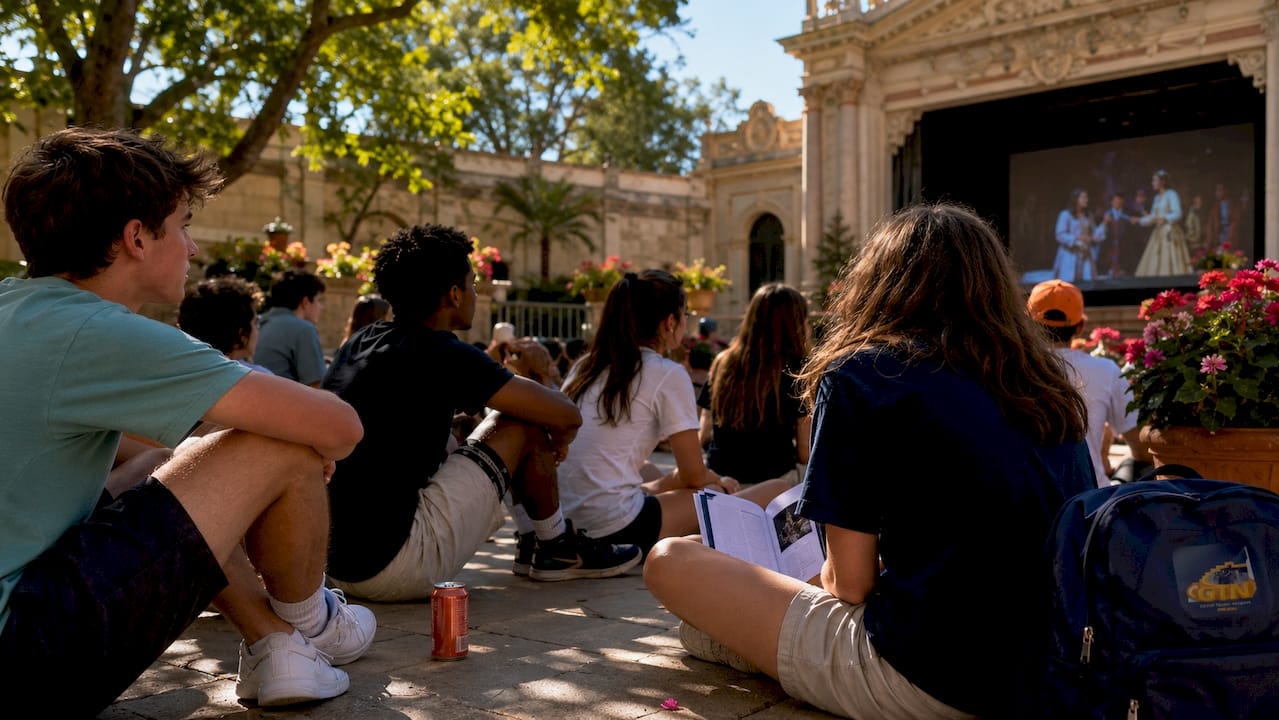
Performance attendance is the anchor. Students attend professional productions ranging from West End musicals and Broadway shows to orchestral concerts, contemporary dance performances, and regional theater productions. Seeing a professional cast perform Hamilton or The Phantom of the Opera live does something a recording cannot. It shows students what technical mastery, ensemble timing, and stage presence look like at the highest level.
Participatory learning is where the real skill development happens. This includes:
- Masterclasses led by working professionals in voice, movement, or instrument technique
- Backstage tours that reveal set design, lighting rigs, and production logistics
- Workshops in choreography, stage combat, or music direction
- Q&A sessions with directors, stage managers, or cast members
Cultural immersion ties the experience to place. A theatre trip planning itinerary in London might include the Globe Theatre, the National Theatre, and a visit to the Victoria and Albert Museum’s theater collection. In New York, students might pair a Broadway show with a visit to the Lincoln Center or a Harlem jazz club. These cultural travel experiences build context that makes the performances more meaningful.
Pro Tip: Book workshops and masterclasses at the same time you book performance tickets. Workshop slots at major venues fill up faster than seats in the house.
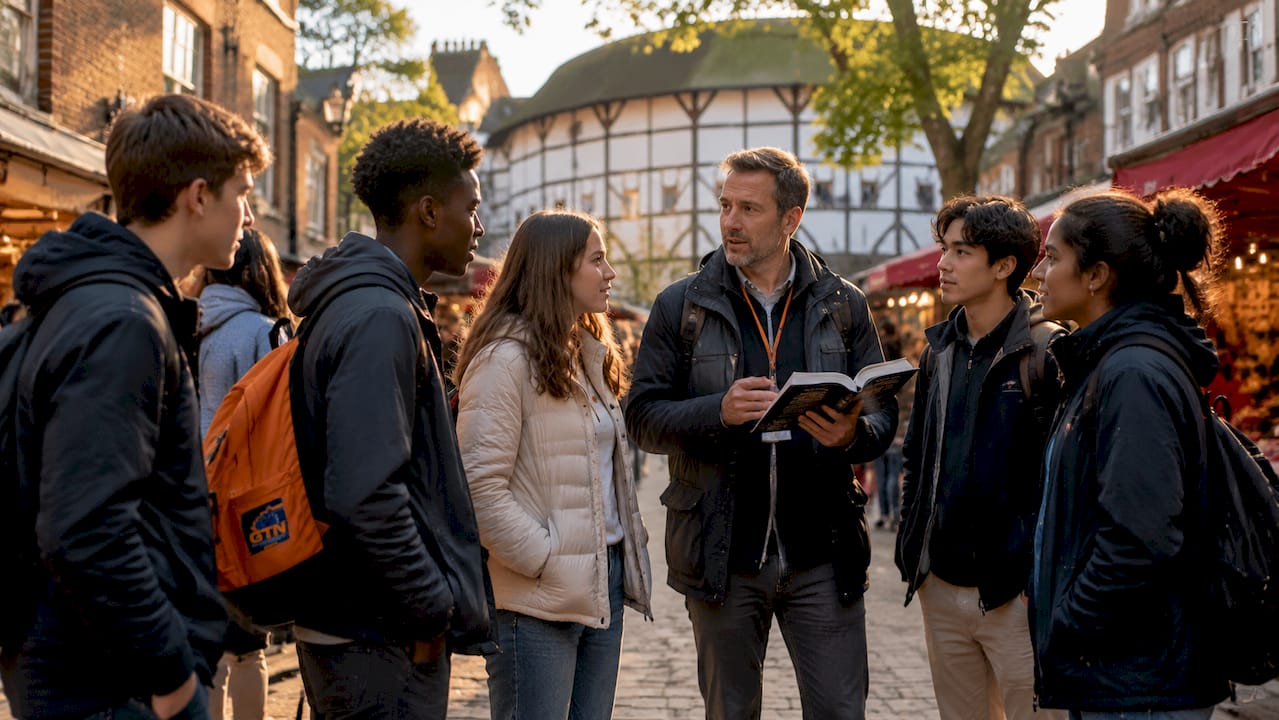
The best artistic tour ideas connect the performance to the curriculum. A drama class studying Shakespearean staging benefits more from a Globe Theatre workshop than from a generic city tour. Match every activity to a learning objective before you finalize the itinerary.
How do you plan a performing arts trip for student groups?
Effective theatre trip planning starts at least six months before departure for domestic trips and twelve months out for international ones. The timeline is not arbitrary. Popular shows require (opens in a new tab) 2–4 weeks of lead time at minimum, and high-demand productions at peak periods book out far earlier. TKTS booths in London and New York offer same-day discount tickets with savings up to 50%, but group bookings cannot rely on same-day availability.
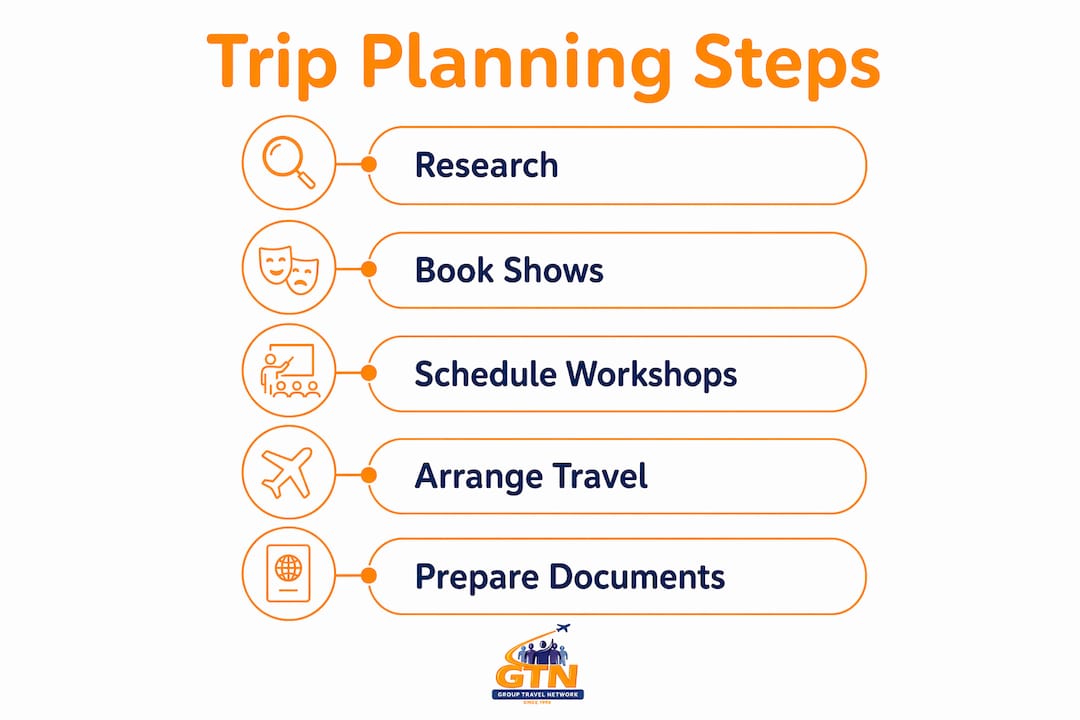
Follow this planning sequence:
- Define your educational objectives. Identify which curriculum standards the trip supports in drama, music, or dance. This justifies the trip to administrators and parents and shapes every activity choice.
- Set your budget and payment structure. Build in a 10–15% contingency buffer for unexpected costs. Offer installment payment plans to reduce financial barriers for families.
- Select performances and book early. Prioritize shows that align with your curriculum. Confirm group booking minimums and cancellation policies before committing.
- Arrange transport and accommodation. For overnight trips, choose accommodation within walking distance of venues where possible. Confirm accessibility needs for all students.
- Collect permissions and medical information. Per-trip consent forms (opens in a new tab) with detailed itinerary disclosure are the legal standard. Blanket consent forms do not meet the bar for overnight or higher-risk trips.
- Distribute packing lists and trip rules. Detailed packing lists (opens in a new tab) that specify uniform requirements, instrument handling procedures, and conduct expectations reduce day-of confusion significantly.
- Brief students and parents. Hold a pre-trip meeting to walk through the itinerary, emergency contacts, and behavioral expectations.
Pro Tip: Create a shared digital folder for all trip documentation: consent forms, insurance certificates, emergency contacts, and the full itinerary. Give every supervising staff member access before departure.
Contingency planning deserves its own step. One documented case involved a student music group of 250 people whose return flights were canceled. The organizing team re-coordinated transport (opens in a new tab) alternatives in under 24 hours. That outcome required pre-established supplier relationships and a clear chain of communication. Build those relationships before you need them.
What risk management and legal considerations apply to arts trips?
Risk management is not optional for school group travel. Formal risk assessments (opens in a new tab) must document hazard identification and mitigation for every destination and activity. Documentation is the proof of due diligence if a complaint or legal claim arises.
| Risk Area | Key Action Required |
|---|---|
| Destination hazards | Document site-specific risks: traffic, crowd density, venue access |
| Supervision ratios | Base staffing on practical supervision needs (opens in a new tab), not fixed numbers |
| Supplier compliance | Contracts must include insurance and safety clauses |
| Parental consent | Use per-trip forms with full itinerary and activity risk disclosure |
| Emergency protocols | Assign a designated emergency contact and decision-maker for the group |
The OEAP NG framework makes a critical point about supervision. Staffing ratios should reflect the competence of supervisors and the nature of activities, not a fixed number like one adult per ten students. A group attending a West End show in a familiar venue needs different supervision than a group doing a physical movement workshop in an unfamiliar studio.
Supplier selection carries legal weight. Institutions must verify that every supplier meets insurance, legal, and safety standards. For regular or overnight trips, travel package regulations apply. That means your contracts need explicit compliance clauses, not just verbal assurances.
Permission forms (opens in a new tab) must include the full itinerary, activity risk disclosures, medical authorizations, and supervision arrangements. This level of detail protects the school legally and gives parents the information they need to make an informed decision.
How do performing arts trips enhance student learning?
The educational impact of a well-run performing arts excursion extends well beyond the performance itself. Students develop skills and perspectives that classroom instruction alone cannot replicate.
“Seeing a professional perform the same monologue you have been rehearsing for weeks changes how you understand the text. It is not about copying what you see. It is about realizing how many valid interpretations exist.” — A drama educator reflecting on a West End trip with her Year 10 group.
Live performance attendance builds artistic literacy. Students learn to read a stage, interpret design choices, and analyze performance decisions in real time. That critical skill transfers directly back to their own rehearsals and productions.
Workshops and masterclasses build technical skills and personal confidence simultaneously. A student who receives feedback from a professional choreographer in a workshop setting carries that experience differently than one who receives the same feedback from a teacher. The professional context raises the stakes and the student’s engagement.
Group travel itself builds teamwork and independence. Navigating a new city, managing a schedule, and collaborating with peers in unfamiliar settings develops the kind of adaptability that arts education values. Students who participate in performance travel programs (opens in a new tab) consistently show stronger long-term engagement with arts education after their trips.
Exposure to diverse art forms also matters. A student whose only theatrical reference point is their school production gains an entirely new frame of reference after watching a professional ensemble. That expanded perspective supports long-term creative development in ways that are hard to quantify but easy to observe.
What are the best performing arts destinations for school groups?
Destination choice shapes the entire character of a performing arts trip. The right location depends on your group’s focus, budget, and curriculum goals.
The most established performing arts destinations (opens in a new tab) for school groups include:
- London West End: The global standard for musical theater and classical drama. Groups can combine shows at the Lyceum, Savoy, or National Theatre with workshops at the Globe or RADA.
- New York Broadway: The American equivalent, with Lincoln Center, Carnegie Hall, and off-Broadway venues offering educational programs specifically designed for student groups.
- Disney Performing Arts: A structured program that combines performance opportunities with professional adjudication, popular for band, choir, and dance groups.
- Edinburgh Festival Fringe: Ideal for drama and devised theater groups seeking exposure to experimental and international work.
- Chicago and Nashville: Strong options for music-focused trips, with jazz, blues, country, and classical scenes all accessible within a short radius.
| Tour Type | Best Destination | Primary Focus |
|---|---|---|
| Musical theater | London or New York | Performance attendance and workshops |
| Band and orchestra | Nashville, Chicago, or Carnegie Hall | Music performance and masterclasses |
| Dance | New York or Edinburgh | Choreography workshops and live performance |
| Classical drama | London (Globe, National) | Text-based performance and staging |
| Mixed arts | Edinburgh Festival Fringe | Experimental work and peer performance |
Domestic trips offer lower logistical complexity and cost, making them accessible for more schools. International trips add cultural depth and a stronger sense of occasion, which can significantly increase student engagement and motivation. The types of student performance tours (opens in a new tab) available in 2026 span both categories, giving educators real flexibility in destination and format.
Key takeaways
Performing arts trips deliver the most educational value when planning, risk management, and curriculum alignment work together from the start.
| Point | Details |
|---|---|
| Start planning early | Book performances and workshops 6–12 months out to secure group slots at top venues. |
| Use per-trip consent forms | Detailed itinerary and risk disclosure on every form is the legal standard for overnight trips. |
| Match activities to curriculum | Every workshop and performance should connect to a specific learning objective in drama, music, or dance. |
| Document risk assessments | Written hazard identification and mitigation records protect your institution if issues arise. |
| Choose destinations strategically | London, New York, and Disney Performing Arts each offer structured educational programs built for school groups. |
What i have learned from years of arts trip planning
The single biggest mistake I see educators make is treating the performance as the whole trip. The show is the anchor, not the program. The workshops, the backstage conversations, the shared meals, and the late-night debrief on the bus are where the real learning happens. When you plan around the performance alone, you leave most of the educational value on the table.
Early supplier relationships change everything. When you have worked with a venue coordinator or a tour operator before, you get the call when a workshop slot opens up or a cancellation creates a better ticket option. That kind of access does not come from a one-time booking. Build those relationships over multiple trips and treat your suppliers as partners, not vendors.
I have also seen trips fall apart because the communication with parents was too thin. Parents who understand exactly what their child will experience, why it matters educationally, and what the safety plan looks like are far more likely to support the trip financially and emotionally. A single pre-trip information evening changes the entire parent dynamic.
One more thing: integrate your risk management into your educational planning from day one, not as a separate compliance task at the end. The best trips I have seen are the ones where the risk assessment and the learning objectives were written at the same time, by the same people. That alignment shows in every decision that follows.
— Donovan
Plan your next performing arts trip with Grouptravelnetwork
Grouptravelnetwork specializes in exactly this kind of trip, from first-time theater excursions to multi-city performing arts tours for advanced student ensembles. The team handles itinerary design, vendor coordination, insurance, and on-trip support so you can focus on the educational experience rather than the logistics.

Start with the school group travel planning (opens in a new tab) guide on the Grouptravelnetwork site. It walks through every stage of the planning process with checklists, timeline templates, and supplier selection criteria built specifically for educational groups. Whether you are organizing a first West End trip or a full Broadway performance tour, Grouptravelnetwork connects you with the right partners, the right venues, and the right support to make it work. Explore the full range of performance tour options (opens in a new tab) and get your planning started today.
FAQ
What exactly are performing arts trips for students?
Performing arts trips are structured educational travel programs that combine live performance attendance with workshops, masterclasses, and cultural experiences. They are designed to deepen students’ artistic skills and cultural understanding beyond what classroom instruction can provide.
How far in advance should i book a performing arts trip?
Book domestic trips at least six months out and international trips twelve months in advance. Popular shows at venues like the West End or Broadway require group booking lead times of 2–4 weeks at minimum, with peak periods booking out much earlier.
What should a performing arts trip permission form include?
Permission forms should include the full itinerary, activity risk disclosures, medical authorizations, and supervision arrangements. Per-trip consent forms with detailed disclosures are the legal standard for overnight or higher-risk trips.
Do i need a formal risk assessment for a theater trip?
Yes. Institutions must conduct and document formal risk assessments that identify destination-specific hazards and mitigation strategies. Written documentation is the primary evidence of due diligence if a legal issue arises.
What are the best destinations for school performing arts trips in 2026?
London’s West End, New York’s Broadway, and Disney Performing Arts are the three most established destinations for school groups. Each offers structured educational programs, group booking options, and workshop access designed specifically for student ensembles.
Recommended
- Performance Tour Destinations Explained For Educators In 2026 • Group Travel Network (opens in a new tab)
- What Is Performance Group Travel? Your 2026 Guide • Group Travel Network (opens in a new tab)
- Essential Performance Trip Checklist For Stress-Free School Travel (opens in a new tab)
- Student Performances Tours: Showcasing Talent In 2025 (opens in a new tab)