


TL;DR:
- Effective planning with clear goals and early organization prevents trip disasters.
- Budgeting, fundraising, and logistics are crucial to ensuring student participation and safety.
- Professional support streamlines logistics, enhances safety, and allows educators to focus on students.
Picture this: the charter bus leaves without two students who wandered off, three kids are sick from the pre-departure dinner, and the performance venue has no record of your reservation. Parents are texting furiously. Your co-director is staring at you with wide eyes. Sound like a nightmare? It is. And it happens more often than anyone admits. The good news is that a structured, step-by-step planning approach eliminates nearly every one of these disasters before they start. This guide walks you through every stage of band trip planning so you can focus on what matters: making music and creating lasting memories for your students.
Table of Contents
- Define trip goals and launch planning early
- Budgeting, fundraising, and managing costs
- Logistics: transportation, accommodation, meals, and safety
- Itinerary creation: balancing music, education, and recreation
- Troubleshooting: what to do when things go wrong
- Our take: Why expert help and organization beat DIY stress
- Ready to plan? Make your next band trip unforgettable
- Frequently asked questions
Key Takeaways
| Point | Details |
|---|---|
| Start early | Launching your band trip a year ahead ensures better rates and stress-free planning. |
| Budget and fundraise smart | Break costs into categories, plan for extra expenses, and use high-profit fundraisers for affordability. |
| Prioritize logistics and safety | Use checklists, assign chaperones, and prepare for medical or weather emergencies in advance. |
| Balance structure and flexibility | Build a detailed, adaptable itinerary that leaves room for the unexpected while keeping everyone on track. |
| Partner with experts | Professional tour partners can streamline planning, reduce stress, and let you focus on making music. |
Define trip goals and launch planning early
Before you book a single hotel room or poll students about destinations, you need a clear answer to one question: what is this trip for? Is the primary goal a competitive performance, a cultural education experience, student bonding, or some combination? Your answer shapes every decision that follows, from venue selection to daily schedule to budget priorities.
A performance-focused trip demands early venue booking, audition prep time, and logistical coordination around competition or festival rules. An educational trip to Washington, D.C. prioritizes museum access, historical sites, and age-appropriate programming. A bonding trip might center on a theme park experience with less rigid scheduling. Most successful trips blend all three, but having a dominant goal keeps planning focused.
Core planning steps (opens in a new tab) include setting objectives, choosing destinations, creating timelines, budgeting, sourcing transportation, accommodation, meals, and venues, building detailed itineraries, assigning chaperones, preparing packing lists, handling health prep, organizing fundraising, developing emergency plans, and securing insurance. That list is long. That is exactly why your timeline matters so much.
Here is a quick look at your three realistic launch windows:
| Launch timing | Pros | Cons |
|---|---|---|
| Year ahead (12+ months) | Best venue access, long payment runway, calendar priority | Estimated pricing, lower initial student buy-in |
| School start (6-10 months) | High student motivation, solid retention rates | Moderate booking competition |
| Late launch (3-5 months) | Easier to gauge final participation numbers | Limited availability, compressed payment schedule |
Trip launch timing (opens in a new tab) research confirms that early launchers gain the most flexibility while late launchers risk losing preferred venues and shortening fundraising windows significantly.
When selecting a destination, look for cities or venues that offer multiple enrichment layers: performance opportunities, cultural landmarks, and student-appropriate recreation. Good band trip organization starts with a destination that serves your goals, not just one that sounds exciting.
Key goal-setting questions to answer before anything else:
- What type of performance or event is the anchor activity?
- What grade levels are attending, and what are their travel needs?
- What is the realistic maximum per-student cost?
- How many chaperones can you commit to?
- What is your school’s approval process and timeline?
Pro Tip: Lock in your trip launch date before the school year begins. Early announcements build momentum and give families the longest possible window to budget and fundraise.
Budgeting, fundraising, and managing costs
With a clear destination and timeline set, it is time to turn to budgeting and ensuring every student can participate. This is the part most directors underestimate, and it is where trips fall apart before they ever begin.
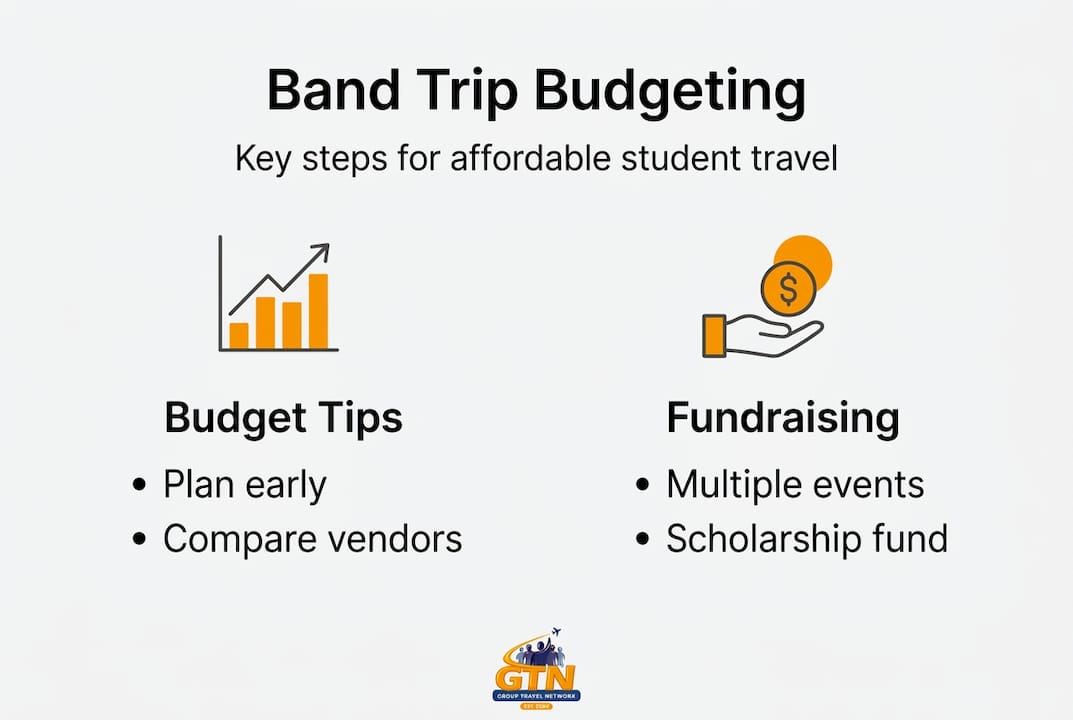
Start by mapping out every cost category. Common expense categories (opens in a new tab) include transportation, lodging, meals, attractions, performance fees, and insurance, and the guidance consistently recommends building in a 5-10% contingency buffer on top of your total estimate. For context, a D.C. trip for a typical program runs around $83,000 total, while a Hawaii trip for 150 participants lands near $3,239 per person. Band programs often operate with $115,000 to $130,000 annual budgets, which means a major trip can represent a significant slice of your total resources.
Breaking your budget into per-student figures makes it easier to set fair share fees and identify your fundraising gap. Here is a simple structure to follow:
- Calculate total trip cost including the contingency buffer
- Divide by confirmed or estimated participant count
- Subtract expected fundraising contributions per student
- Set fair share fee as the remainder
- Build a scholarship fund for students who need assistance
For budgeting for school trips to feel manageable, build the scholarship fund into your overall cost projection from day one rather than scrambling for it later.
Fundraising options (opens in a new tab) with strong profit margins include snack sales, popcorn, cookie dough, and candles, all of which can generate 40-50% profit. Concerts, branded merchandise, and crowdfunding campaigns round out the mix. A well-run fundraising program can cover a fair share fee of $400 or more per student, which dramatically reduces the financial barrier for families.
Effective fundraising for band trips requires multiple campaigns spread across the year rather than one big push. Spread the effort, reduce fatigue, and keep families engaged.
Pro Tip: Never present a single price to families. Show them the gross cost alongside the expected fundraising offset so they see the path to affordability clearly.
Good travel management for teams also means locking in vendor contracts early so you are not subject to price increases as your departure date nears.
Logistics: transportation, accommodation, meals, and safety
Once your budget is in place, nail down the logistics to keep every student safe, accounted for, and able to focus on music. This is the operational backbone of the trip, and sloppy logistics are the number one cause of the nightmare scenarios described at the start of this guide.
Transportation comes first. Charter buses work well for regional trips and offer flexibility for group departures and instrument storage. Flights are necessary for longer distances but add complexity around baggage, instrument cases, and group coordination. Always build a contingency plan for delays, whether that is a weather reroute or a mechanical issue.
Practical checklists (opens in a new tab) for chaperones, bus assignments, rooming arrangements, food allergy monitoring, and counting systems are not optional extras. They are the foundation of a safe trip. Smart directors use “all-good” hand signals for group counts, require selfie check-ins during free time, hold nightly hotel meetings, and use communication apps like Remind to keep everyone informed in real time.
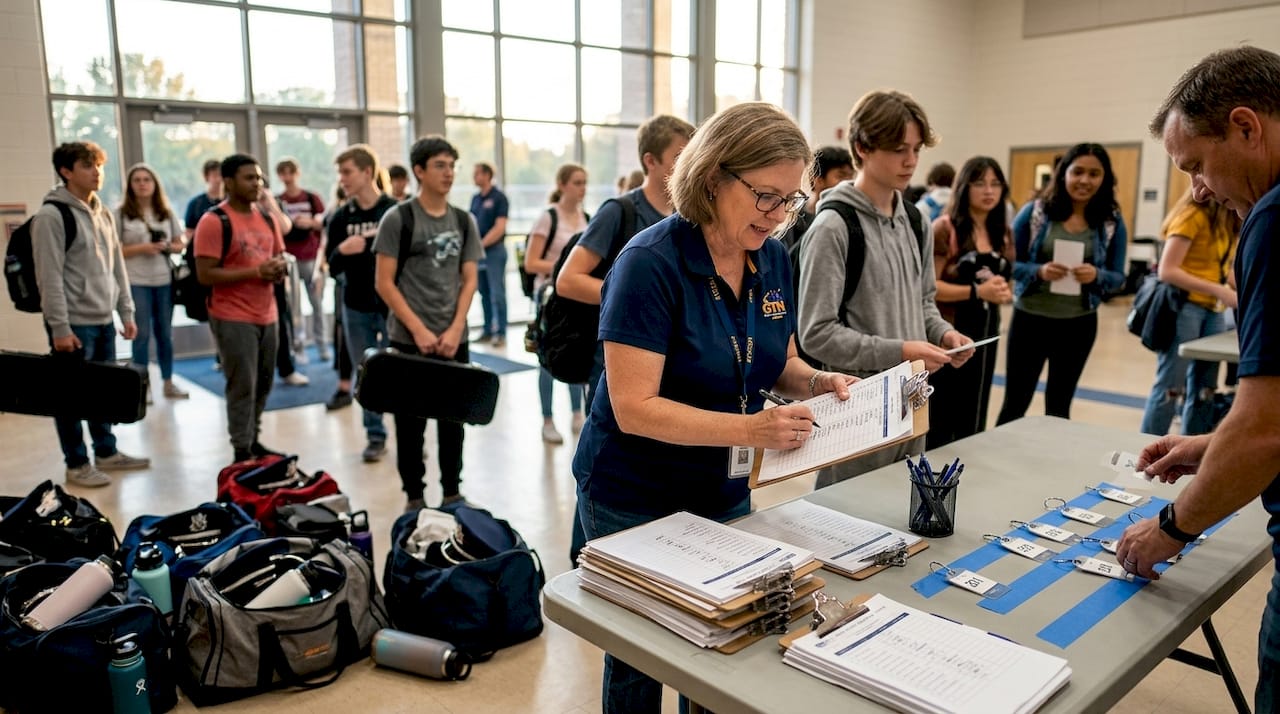
For rooming, the standard rule is same-gender rooms, chaperones never sharing with students, and a printed rooming list distributed to all leaders before arrival. Do not rely on memory or verbal agreements.
Logistics checklist before departure:
- Signed student travel forms collected from every participant
- Emergency contacts and medical information on file with every chaperone
- Food allergy and dietary restriction list shared with all vendors
- Travel insurance confirmed and documents accessible
- Behavior expectations reviewed and signed by students and parents
- Group communication app tested and all chaperones active
Safety is not optional. Set behavior expectations, accountability systems, and emergency protocols before the bus pulls out of the parking lot. Every student deserves to travel in an environment where adults are prepared.
Health and safety planning should account for allergies, emergencies, insurance, and hydration, with contingency protocols for unexpected illnesses and weather disruptions.
Pro Tip: Use nightly hotel meetings to debrief the day, preview the next morning, and give students a structured moment to ask questions. It prevents confusion and keeps chaperones aligned.
Itinerary creation: balancing music, education, and recreation
You have set strong logistics. Now coordinate the day-to-day journey to keep everyone on time, inspired, and engaged. A great itinerary is not just a schedule. It is a pacing tool that balances intensity with recovery and structure with fun.
The best band trip itineraries blend performance venues scheduling (opens in a new tab) with clinics, sightseeing windows, and clearly defined free time blocks. Disney-specific performance opportunities, for example, require specific audition videos submitted in advance and mandate that groups arrive together or risk cancellation of the entire performance slot. Those kinds of hard rules must be built into your schedule weeks before departure.
Here is a step-by-step approach to building your itinerary:
- Anchor the schedule around your performance or headline event first
- Add educational programming in the morning when students are freshest
- Block meals at consistent times to reduce logistics chaos
- Schedule recreation and free time in contained windows with clear meeting points
- Build 20-30 minute buffers between every major transition
- Plan a contingency activity for weather or venue delays
Tour operators with experience in music travel (opens in a new tab) invest over 200 hours of planning per trip and leverage volume discounts on venues and transportation. DIY itinerary building is possible, but it carries significant risks in missed details, pricing errors, and lost time that could be spent on music instruction.
For educational music tours, the itinerary should feel educational without feeling like school. Workshops and clinics with professional musicians add genuine value and give students an experience that cannot be replicated in a classroom.
Student performance tours also benefit from scheduled warm-up time, a pre-performance group meal, and a debrief session after competing or performing so students process the experience together.
Pro Tip: Always build in buffer time. Blocks that run long, students who need bathroom breaks, and traffic all eat into your schedule faster than you expect.
Troubleshooting: what to do when things go wrong
Even with the best planning, things can go off-script. Here is how to respond like a pro.
The most disruptive issues on band trips tend to fall into predictable categories. Knowing your response before the problem hits is the difference between a minor hiccup and a full-blown crisis.
Common issues and your go-to responses:
- Student illness: Isolate early to prevent spread. For norovirus, quarantine the student immediately and identify an urgent care clinic in advance. Dehydration and nausea prevention should start before the trip even begins by coaching students on water intake.
- Snow or weather delays: Have a backup plan. Game nights in the hotel, group movie screenings, or a rescheduled activity keep morale up when the weather does not cooperate.
- Bus breakdowns: Keep the transportation company’s emergency number saved in multiple chaperone phones. Know your rights under the contract and have a backup carrier option identified.
- Disney-specific issues: Groups performing at Disney must follow strict arrival rules. Arriving late as a group or failing to submit a video audition within the 12-month window can result in performance cancellation with no refund.
- Government facility closures: If a D.C. museum or monument closes unexpectedly, have two backup sites already researched and ready to slot in.
- Grouchy or uncooperative vendors: Document everything in writing before departure. A signed contract is your best protection.
Flexibility is your superpower. Directors who stay calm, adapt fast, and communicate clearly turn disasters into stories students tell for the rest of their lives.
Keeping parents informed during disruptions is just as important as fixing the problem itself. A short, factual group message through your communication app prevents rumors and panic.
Our take: Why expert help and organization beat DIY stress
Here is an uncomfortable truth most planning guides skip: when you spend 200-plus hours managing logistics, you are not directing a band. You are running a travel agency, and probably not as efficiently as one that does it every day.
Professional tour partners deliver efficiency and safety advantages that DIY planning simply cannot match. They know which venues have student-friendly pricing, which hotels actually deliver on their promises, and how to build flexibility into contracts so that a weather delay does not cost your program thousands of dollars.
We have seen the pattern repeatedly: directors who try to manage everything solo spend the trip exhausted, fielding logistics calls instead of watching their students perform. Directors who lean on experienced student tour advantages and professional systems arrive at every event prepared and present.
Understanding how school trip travel vendors work and what to ask them changes how you plan. The right vendor becomes an extension of your team, not just a booking service.
Pro Tip: The most memorable trips are safe, structured, and give educators the mental space to do what they do best: connect with students through music.
Ready to plan? Make your next band trip unforgettable
Planning a successful band trip is genuinely achievable when you have the right structure and the right support behind you.

At Group Travel Network, we specialize in organizing performance and educational travel for student music groups exactly like yours. Our student travel experts handle vendor coordination, itinerary building, and logistical troubleshooting so you can stay focused on your musicians. Whether you are planning your first trip or your fifteenth, our team brings hands-on experience in youth tour journeys that blend performance, education, and unforgettable experiences. Explore our student music tours and find the right fit for your group. Let us take the stress off your plate so your students can shine.
Frequently asked questions
How early should I start planning a band trip?
Start 6-12 months in advance for the best venue availability, competitive rates, and enough runway for fundraising and family payment plans.
What’s the typical cost per student for a band trip?
Costs vary widely depending on destination and duration. Recent examples show $3,239 per participant for Hawaii and roughly $400 to $500 as a typical fair share fee for domestic U.S. trips.
How do I handle food allergies and medical needs during travel?
Collect all medical information before departure, assign specific chaperones to monitor restrictions, and share allergy details with every vendor including restaurants, hotels, and event venues.
What’s the best way to ensure student safety on a band trip?
Combine detailed checklists and communication apps with clear behavior expectations, mandatory check-ins, and every chaperone carrying a printed emergency contact list for each student in their group.