

April 15, 2026
How to Coordinate Group Tours: Step-by-Step Guide for Schools
TL;DR:
- Successful group tours require clear objectives, administrative approval, and detailed logistical planning.
- Effective communication and early promotion boost participation and build school travel traditions.
- Flexibility, risk management, and clear roles ensure smooth execution and memorable student experiences.
Coordinating a group tour for students feels manageable until the permission slips start coming back incomplete, a parent calls with allergy concerns, and your charter bus company asks for a final headcount three weeks early. The pressure is real. Between managing logistics, keeping parents informed, and ensuring every student stays safe and engaged, the margin for error feels razor thin. This guide walks you through the exact steps experienced coordinators use to plan tours that run smoothly, from setting objectives before the first announcement to executing on the road with confidence. These are practical, field-tested strategies built for band directors, school administrators, and trip coordinators.
Table of Contents
- Establishing tour objectives and essentials
- Building participation and communicating clearly
- Planning adaptable schedules and managing risks
- Roles and responsibilities for seamless execution
- What few coordinators realize about group tour success
- Next steps: Make your group tour unforgettable
- Frequently asked questions
Key Takeaways
| Point | Details |
|---|---|
| Clarify objectives | Define clear goals and secure administrative approval before planning a group tour. |
| Boost engagement | Use promotional tools and tradition-building to encourage high participation rates. |
| Prepare for risks | Adaptable schedules and thorough backup plans safeguard against common emergencies. |
| Assign specialized roles | Designate roles including expert tour managers to ensure tours run smoothly and safely. |
Establishing tour objectives and essentials
Every successful group tour starts long before a single booking is made. The first thing you need to do is define what this trip is actually for. Is it a performance tour where your band or choir will compete or showcase? An educational excursion tied to curriculum? A cultural immersion experience? A social reward trip for students who met academic goals? Your answer shapes every decision that follows, from destination to budget to chaperone ratios.
Once you know your purpose, secure administrative approval before doing anything else. Band directors emphasize that launching trips with admin approval, promotional videos and meetings, ongoing promotion, and establishing a tradition of travel all boost participation and retention. Going to your principal or superintendent with a clear proposal, including projected costs, educational value, and safety plans, makes approval far more likely.
With approval in hand, map out your essentials. Think of this as your trip blueprint. A solid safe group journey coordination plan covers every logistical layer before you open registration.
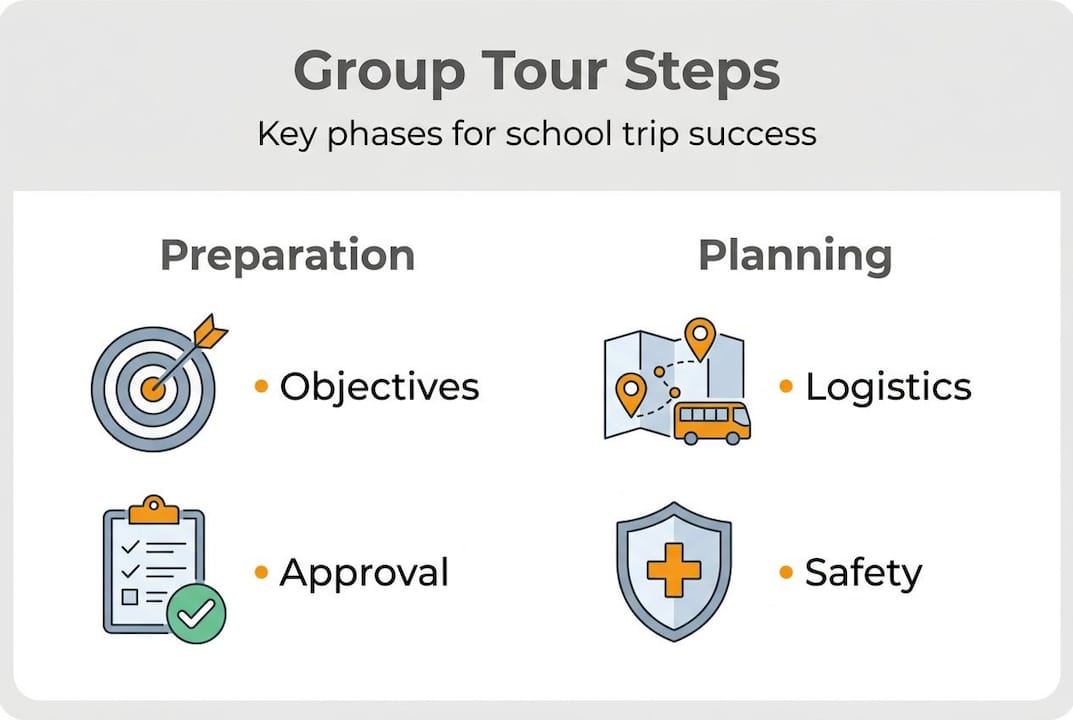
Here is a quick-reference table of the core essentials every coordinator should confirm early:
| Essential | Key Decision Points |
|---|---|
| Transportation | Charter bus, flight, or rail; backup options |
| Accommodations | Hotel blocks, room assignments, safety checks |
| Chaperone ratio | Typically 1 adult per 8-10 students |
| Insurance | Trip cancellation, medical, liability coverage |
| Communication plan | Parent meetings, email updates, emergency contacts |
Your educational tour objectives should also be documented and shared with teachers, so the trip connects to classroom learning where possible. This strengthens your case with administrators and gives students a richer experience.
Core essentials checklist:
- Written administrative approval with budget outline
- Defined educational or performance goals
- Transportation confirmed with backup options
- Accommodation contracts reviewed and signed
- Insurance coverage secured before deposits
- Chaperone recruitment started with clear role descriptions
Pro Tip: Create a one-page trip overview document you can hand to administrators, parents, and chaperones. It saves you from answering the same questions repeatedly and signals that you run a professional, organized program.
Building participation and communicating clearly
Once objectives and essentials are sorted, participation becomes your next crucial focus. Even the best-planned trip fails if students and families do not sign up. Your job at this stage is to make the trip feel exciting, accessible, and worth the investment.
Start with a promotional push. A short video, even one filmed on a smartphone, showing highlights from a previous trip or the destination itself can do more than any flyer. Pair it with a parent information meeting where you walk through costs, safety measures, and the educational value. Promotional videos and meetings combined with a tradition of travel significantly boost participation and long-term retention.
Here is a comparison of communication methods and their typical impact:
| Method | Reach | Engagement Level | Best For |
|---|---|---|---|
| Email newsletter | High | Low to medium | Updates and reminders |
| Parent info meeting | Medium | High | Building trust and answering questions |
| Promotional video | High | High | Initial excitement and enrollment |
| Social media post | High | Medium | Broad awareness |
| Alumni testimonials | Low | Very high | Overcoming hesitation |
A step-by-step participation campaign looks like this:
- Release a save-the-date announcement six to twelve months out
- Host an in-person or virtual information meeting for parents and students
- Share a promotional video on school channels and social media
- Open online registration with a clear deposit deadline
- Send bi-weekly updates to keep interest high
- Invite alumni or past participants to share their experience at a school event
Addressing hesitation early is critical. Parents worry about cost, safety, and whether the trip is worth missing school. Have a FAQ sheet ready that covers payment plans, supervision ratios, and how the trip connects to student travel benefits. When families see that you have thought through their concerns, sign-up rates climb.
Building a tradition matters more than most coordinators realize. When students hear older peers talk about a trip they took, it becomes aspirational. The advantages of group tours go beyond fun. They build confidence, cultural awareness, and lasting friendships that students talk about for years.
Pro Tip: Set a soft enrollment deadline two weeks before your official cutoff. This gives you a realistic headcount early and time to follow up with undecided families before you lose them.
Planning adaptable schedules and managing risks
Now, with participation secured, let’s address how to create plans resilient to the unexpected. A rigid itinerary is a liability. Weather changes, venues close unexpectedly, buses run late, and students get sick. Your schedule needs built-in flexibility without losing structure.
Start by building buffer time into each travel day. If you need to be at a venue by 2 p.m., plan to arrive by 1 p.m. That one-hour cushion absorbs minor delays without derailing the whole day. For multi-day trips, keep at least one afternoon loosely scheduled so you can pivot if something falls through.
Edge cases like flight and bus delays require backup transportation options, solid insurance, illness protocols including medical kits, flexible itineraries for weather or closures, and master manifests to track lost items and student whereabouts.
“The coordinators who handle crises best are not the ones who planned for everything. They are the ones who planned for anything.” This mindset separates reactive scrambling from calm, confident problem-solving on the road.
Working with a group travel agent who specializes in educational trips gives you access to vendor relationships and backup options that individual coordinators rarely have on their own.
Risk management checklist:
- Medical kits stocked and assigned to a designated health chaperone
- Backup transportation contacts saved in your phone
- Master manifest with student names, room assignments, and emergency contacts
- Flexible itinerary with two or three alternative activities per day
- Trip cancellation and medical insurance confirmed before departure
- Weather contingency plans for outdoor events
When planning age-appropriate tours, risk management also means thinking about the physical and emotional readiness of your students. A middle school group has different needs than a high school ensemble. Factor that into your activity pacing and supervision plan.
For a deeper look at how experienced coordinators handle the unexpected, the expert student travel tips available through specialized agencies can save you from learning hard lessons on your first trip.
Roles and responsibilities for seamless execution
Finally, successful execution depends on clear responsibilities and leveraging specialized talent. When everyone knows their role before the trip begins, small problems get solved at the right level instead of escalating to you.
Here are the core roles every group tour needs:
- Lead coordinator: Owns the master itinerary, vendor relationships, and all communication with the school administration
- Logistics lead: Manages transportation schedules, luggage, and room assignments
- Head chaperone: Oversees all adult volunteers, enforces behavioral expectations, and handles student discipline
- Health and safety coordinator: Carries medical kits, manages medications, and responds to illness or injury
- Performance or activity liaison: For bands and performing groups, coordinates with venues, sound crews, and event organizers
For bands and performing groups, tour managers with music expertise prevent performance distractions and keep traditions alive, which also supports recruiting. A tour manager who understands stage logistics, sound checks, and performance schedules takes an enormous load off the director, who can then focus on the students.
Assigning duties by tour stage keeps things organized:
- Pre-departure: Lead coordinator confirms all bookings; health coordinator collects medications and medical forms
- Travel day: Logistics lead manages headcounts and baggage; head chaperone monitors student behavior
- At destination: Activity liaison manages venue check-ins; all chaperones maintain supervision ratios
- Return: Lead coordinator handles final headcount and debrief; logistics lead tracks all equipment and luggage
Linked to performance tour expertise, specialized agencies can match you with tour managers who already know the venues, the vendors, and the common pitfalls for performing groups.
Pro Tip: Hold a 30-minute role briefing the week before departure. Cover the lost item protocol, the discipline escalation process, and the emergency contact chain. Chaperones who feel prepared are far more effective on the road.
What few coordinators realize about group tour success
Most planning guides focus entirely on logistics. Book the bus, confirm the hotel, collect the forms. That is necessary, but it is not what separates a forgettable trip from one students talk about ten years later.
The real differentiator is tradition. When a school builds a culture around travel, the trip becomes part of the school’s identity. Younger students aspire to go. Alumni come back to share their stories. Enrollment becomes self-sustaining. This is not accidental. It is the result of intentional, year-round promotion and storytelling.
The second thing most guides miss is the value of specialized expertise. A tour manager who knows music performance logistics does not just reduce stress. They protect the quality of the performance itself, which is the whole point of the trip for many groups.
For expert school trip tips that go beyond checklists, look for partners who understand that student motivation and community building are just as important as transportation and accommodations. The logistics get the group there. The experience is what brings them back.
Next steps: Make your group tour unforgettable
You now have a clear framework for coordinating group tours that are organized, safe, and genuinely memorable for students. The strategies above work because they address both the logistical and human sides of educational travel.

When you are ready to put these strategies into practice, Group Travel Network offers dedicated resources for every stage of the planning process. Explore group travel for students to see destination ideas and itinerary frameworks. Browse community student tours to understand how group experiences build lasting bonds. And when you are ready to start planning, the school trip planning guide walks you through every step with expert support available along the way.
Frequently asked questions
How do I handle emergencies during a group tour?
Prepare master manifests and protocols for flight delays, illness, weather, and lost items before you leave. A designated health coordinator and clear escalation chain keep everyone calm and responsive when something goes wrong.
What are the best ways to promote participation for school trips?
Promotional videos and meetings combined with a tradition of travel are the most effective tools for driving enrollment and keeping families engaged through the payment process.
Who should be responsible for tour management?
Assign a lead coordinator for overall logistics and a specialized tour manager for performance groups. Tour managers with music expertise are especially valuable for bands and choirs, where performance quality is the primary goal.
How can I make a group tour tradition part of my school’s culture?
Start promoting the next trip before the current one ends, involve alumni in recruitment events, and publicize trip highlights through school channels annually. Establishing a travel tradition increases both recruiting and long-term student retention in your program.
Recommended

Relax with our Student Travel Expertise .
We deliver stress-free student trips backed by an exceptional array of services you won’t find anywhere else:
- Stress-free, creative planning of customized itineraries
- Dedicated GTN Service host on every trip
- Extensive travel protection plan options
- Online, individual registration system
- Flexible payment plans and online payment options
- Bulk buyer discounts for great trips that cost less
Inclusion into #MyGTNFamily for life! (you don’t even have to remember our birthday!)
Spain
There is no place like Spain to offer a student performance opportunity or cultural student trip.
Myrtle Beach
All students love the beach! Especially a beach known for its 60 miles of pristine coastline.
Boston
Have your students experience colonial charm in the city that is considered the hub of New England.
London
Provide your student group with the “Royal” treatment! One of the world’s most recognized cities.
See What People Are Saying
“What wonderful trip we had to NYC! Our group of 51 never missed a beat because of Group Travel Network and our wonderful guide, Tim. It was truly a theatre trip to remember! If you are looking for a travel company who really cares about the details, Group Travel Network is for you!”
“This was my first time using a company to plan our band trip. It was so easy working with Justin and Group Travel Network. We had to make several changes along the way, but they were accommodating changes and worked everything out for us. I would highly recommend using Group Travel Network.”
“It has been my privilege to use Group Travel Network as the exclusive travel coordinator for my band for over 10 years. I can say, without doubt or hesitation, that GTN is, by far, the best travel company for student groups currently in existence. I have often said that I wouldn’t take my band across the street without GTN and that’s not far from the truth!”