

TL;DR:
- Experiential learning travel involves active participation in real-world scenarios, integrating cognitive, emotional, and practical engagement.
- It requires intentional design with community partnerships, specialist facilitation, and structured reflection to ensure lasting educational outcomes.
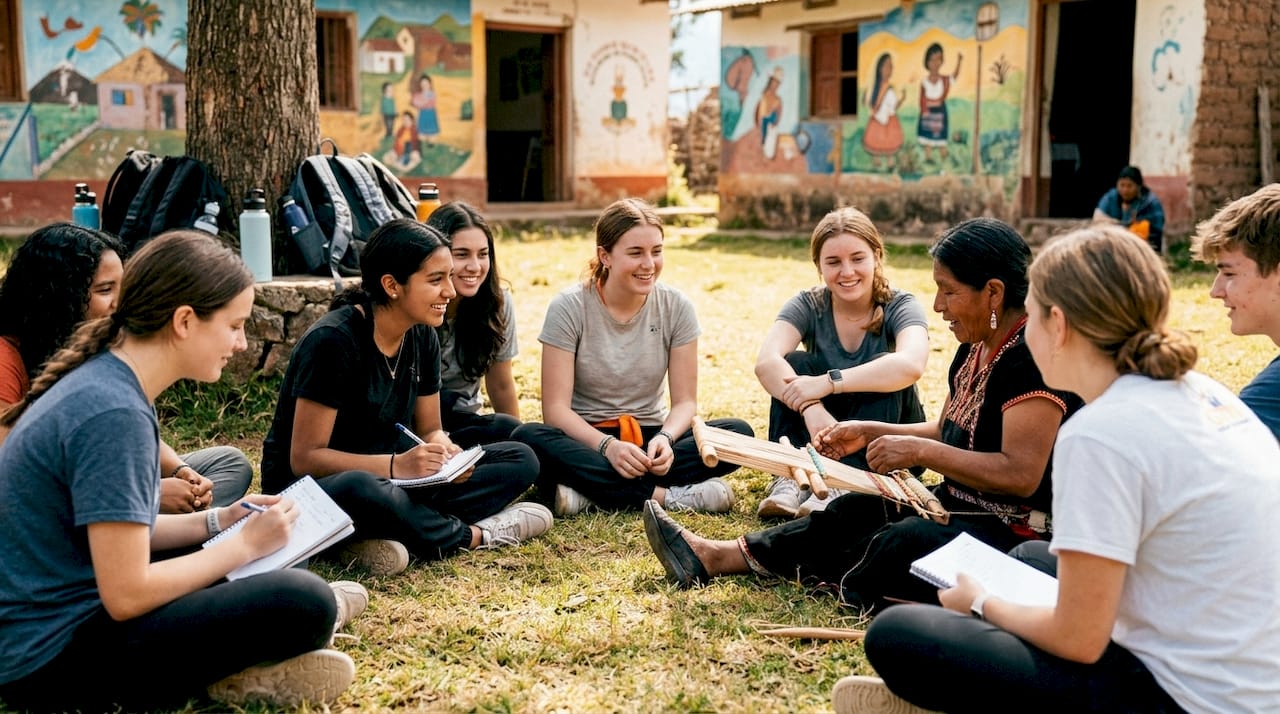
Experiential learning travel is defined as a structured educational approach where students learn by actively participating in real-world travel experiences, engaging cognitive understanding, emotional empathy, and direct action simultaneously. Unlike passive sightseeing, this method, formally known in education as experiential education travel, requires learners to observe, reflect, and apply new knowledge in context. Programs like NOLS Tanzania Cultural and Service Expeditions and Students on Ice polar voyages are built on this model, awarding academic credit (opens in a new tab) through hands-on immersion rather than classroom instruction. For educators, parents, and youth leaders, understanding this distinction is the starting point for choosing programs that produce real, lasting growth.
What is experiential learning travel and how does it work?
Experiential learning travel is the process of converting a physical journey into a structured educational event. The learner is not a spectator. They engage with local communities, complete guided tasks, reflect on what they observe, and connect those observations to academic or personal development goals. This active role is what separates it from a field trip or a vacation with educational overtones.
The model draws on three dimensions that work together. The cognitive dimension builds factual knowledge, for example understanding ecological systems in East Africa or the history of indigenous communities in Latin America. The affective dimension develops empathy and emotional intelligence through direct human contact. The active dimension requires students to do something with what they learn, whether that means contributing to a service project, presenting findings, or writing a structured reflection journal. Cognitive, affective, and active learning (opens in a new tab) together produce deeper understanding and longer retention than any single dimension alone.
One important distinction worth naming: experiential travel and transformative travel are related but not identical. Experiential travel can be curated as an emotional highlight reel. Transformative travel (opens in a new tab) goes further, requiring sustained cognitive and ethical change over time. The best experiential learning travel programs aim for transformation, not just memorable moments.
How does experiential travel differ from a standard school trip?
The difference between a standard school trip and genuine experiential education travel comes down to intentional design. A standard trip might visit a museum, follow a tour guide, and return home. An experiential program co-designs its curriculum with host communities, assigns specialist facilitators instead of generic guides, and builds structured reflection into every day.
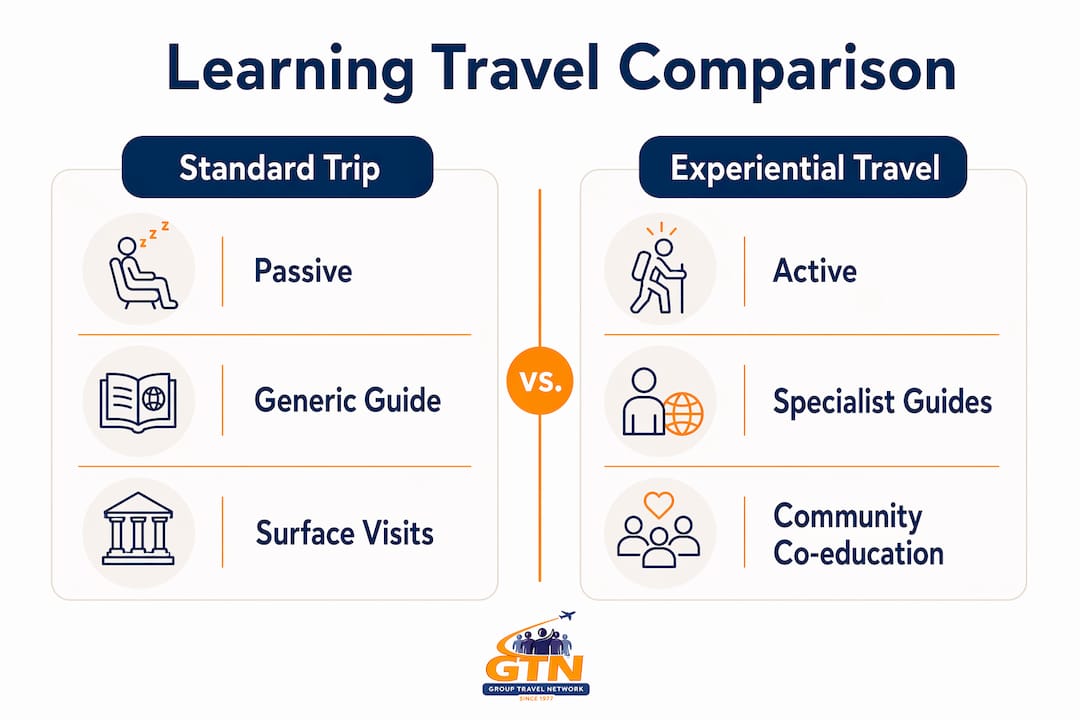
Consider the contrast directly:
| Standard school trip | Experiential learning travel |
|---|---|
| Passive observation of sites | Active participation in community activities |
| Generic tour guide narration | Specialist facilitators with subject expertise |
| No curriculum alignment | Mapped to academic standards (science, global studies, leadership) |
| Single post-trip report | Daily reflection sessions plus post-trip processing |
| Destination as backdrop | Community as co-educator |
Programs operating in Latin America and East Africa illustrate this gap clearly. A standard trip to Tanzania might visit Serengeti National Park. An experiential program like the NOLS Tanzania expedition places students in service roles alongside local communities, connects the experience to environmental science standards, and delivers 2 college credits (opens in a new tab) per three-week session. The destination is the same. The educational architecture is completely different.
The role of specialist guides and community partnerships is not cosmetic. When communities act as co-educators, students receive knowledge that no textbook replicates. That shift from tourist to learner changes what students take home.
What are the key benefits of experiential learning travel?
The benefits of experiential learning are measurable, not just anecdotal. Research from programs like Somos Impact Travel Schools shows that 100% of students report growth (opens in a new tab) in understanding diversity, while 98% report measurable leadership development. Those numbers come from peer-reviewed program evaluations, not marketing copy. They mean that well-designed programs reliably produce the outcomes educators are looking for.
The benefits extend across several dimensions:
- Critical thinking and problem-solving. Students who navigate unfamiliar environments, communicate across language barriers, and adapt to unexpected situations build cognitive flexibility that classroom exercises rarely replicate.
- Cross-cultural competency. Direct contact with communities different from a student’s own builds the kind of cultural intelligence that employers now list in over 30 million job postings as a required skill.
- Academic motivation. Students who connect classroom content to real-world experience report stronger engagement with coursework on return. Learning feels purposeful rather than abstract.
- Environmental and social responsibility. Immersive programs in natural or underserved environments build awareness that shifts student behavior at home, not just during the trip.
- Long-term retention. Because experiential learning activates multiple cognitive pathways at once, students retain information months after travel in ways that lecture-based learning does not produce.
“Modern travelers report reshaped academic motivation and stronger social awareness months after trips, confirming that the educational impact of immersive travel extends well beyond the experience itself.” — Odissey Mag, 2025
The career relevance of these skills matters for parents and youth leaders who want to justify the investment. Cross-cultural competency and critical thinking are not soft extras. They are increasingly the skills that differentiate candidates in a global job market.
What makes an experiential learning travel program effective?
Program quality is not determined by destination. It is determined by structure. The most effective travel-based learning experiences share five components that distinguish them from well-intentioned but poorly designed trips.
Co-designed curriculum with host communities. Programs that arrive with a fixed agenda and treat the local community as scenery miss the point entirely. Effective programs build their learning objectives in partnership with the people students will meet. This produces authentic engagement rather than performance.
Specialist facilitation. Generic tour guides describe what students see. Specialist facilitators help students understand what it means. The difference in learning outcome is significant. A marine biologist leading a reef study in Belize produces different results than a hotel-arranged snorkeling excursion with educational branding.
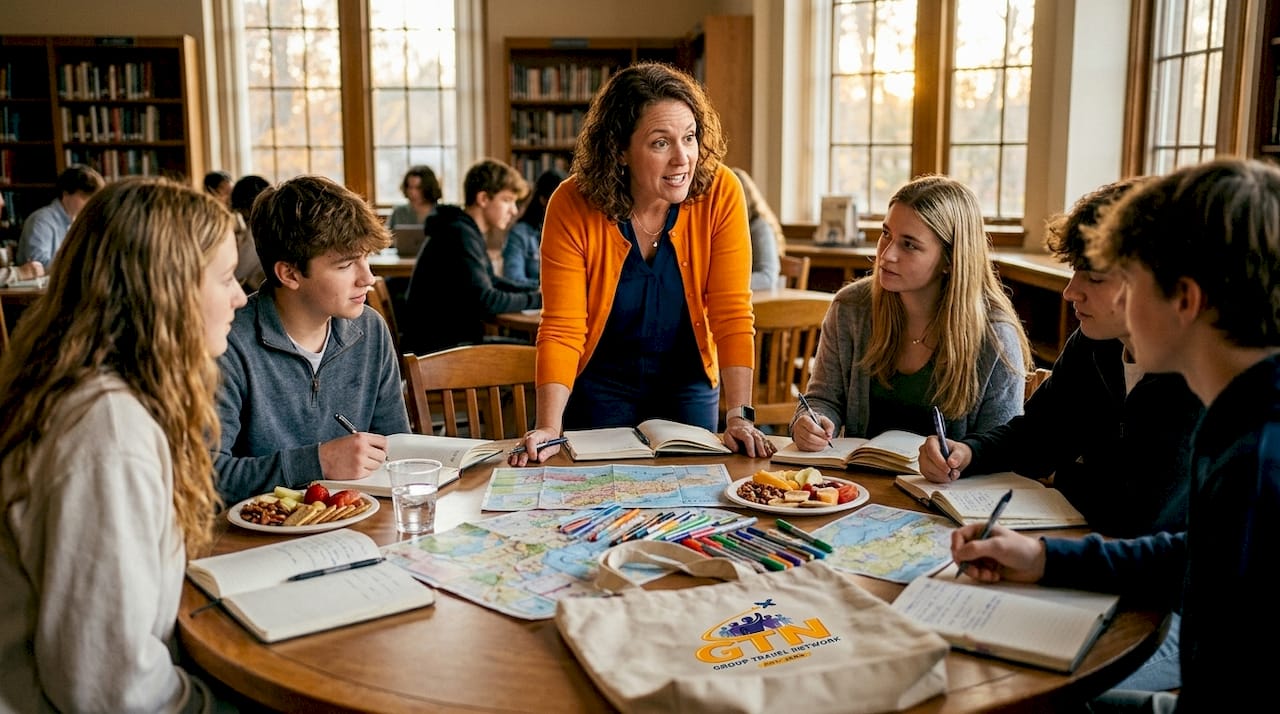
Structured daily reflection. Without facilitated reflection, trips risk remaining superficial tours rather than learning adventures. Reflection does not need to be elaborate. A 20-minute guided journal session at the end of each day, followed by group discussion, is enough to convert raw experience into retained knowledge.
Pre-trip preparation and post-trip processing. The learning arc begins before departure and continues after return. Students who arrive with cultural context absorb more. Students who process their experience through classroom integration, presentations, or community projects consolidate what they learned. Skipping either end of this arc cuts the educational return significantly.
Risk management and administrative preparation. Effective programs build in 6 to 12 months of pre-departure planning for vetting, approvals, and curriculum alignment. Safety is not a checkbox. It is a foundation that allows learning to happen.
Pro Tip: The most profound learning in experiential travel often happens in ordinary moments: shared meals, local commutes, and unscripted conversations. Build unstructured community time into the itinerary alongside formal activities.
Immersion in daily routines (opens in a new tab) with host communities, not just highlight excursions, is where empathy and genuine cultural understanding develop. Program designers who fill every hour with scheduled activities often crowd out the moments that matter most.
How can educators and youth leaders maximize learning through travel?
Educators and youth leaders hold the most leverage in determining whether a trip produces real educational outcomes. The program provider sets the structure. The adults who know the students shape how deeply they engage with it. Here is how to use that leverage well.
- Select programs aligned with specific learning goals. Vague goals produce vague outcomes. Before choosing a program, define what you want students to know, feel, or be able to do differently on return. Then evaluate programs against those criteria, not against destination appeal or price alone.
- Prepare students with cultural and academic context. Students who arrive knowing the history, language basics, and social norms of a destination engage more deeply and respectfully. Assign pre-trip readings, host a community speaker, or run a classroom simulation of the challenges students will face.
- Build reflection into the trip schedule. Do not leave reflection to chance or to the end of the trip. Schedule it daily. Use structured prompts that connect observations to learning objectives. Grouptravelnetwork recommends building at least one facilitated group reflection into every full travel day.
- Integrate the experience into ongoing curriculum. A trip that ends at the airport is a missed opportunity. Assign post-trip projects that require students to apply what they learned. Connect it to upcoming units. Invite students to present to younger grades or community groups.
- Support students through disorientation. Encountering a worldview different from your own is cognitively uncomfortable. That discomfort is the mechanism of growth, not a problem to solve. Educators who normalize and support that disorientation help students move through it rather than retreat from it.
Pro Tip: Encourage students to keep a dual-entry journal during travel: one column for observations, one column for questions those observations raise. This simple format builds the habit of reflection without requiring long writing sessions.
For youth travel experiences (opens in a new tab) that align with these principles, the program selection process matters as much as the destination. Grouptravelnetwork works with educators to match trip design to educational goals, not the other way around. You can also explore how to transform travel into learning (opens in a new tab) with structured program frameworks built for school groups.
Key takeaways
Experiential learning travel produces measurable educational outcomes only when it combines structured reflection, community partnership, and curriculum alignment before, during, and after the trip.
| Point | Details |
|---|---|
| Definition matters | Experiential learning travel is active, structured, and curriculum-aligned, not passive sightseeing. |
| Three learning dimensions | Cognitive, affective, and active engagement together produce deeper retention than any single approach. |
| Reflection is non-negotiable | Without daily facilitated reflection, trips remain superficial and fail to convert experience into learning. |
| Community as co-educator | Programs co-designed with host communities produce authentic engagement that generic tours cannot replicate. |
| Transformation takes time | Lasting change from experiential travel often emerges months after return, not during the trip itself. |
Why the magic happens after the bus ride home
I have spent years watching educators come back from immersive trips convinced their students were transformed, only to see that energy fade within weeks. The honest truth is that transformation through travel is not a moment. It is a process of gradually revising how you see the world, and it requires support long after the passport gets filed away.
The programs I have seen produce real, lasting change share one quality: they treat the trip as the middle of the story, not the climax. The preparation builds the frame. The travel fills it with experience. The post-trip work makes it stick. Programs that skip the third act are essentially asking students to carry a load of new experiences with no place to put them.
I also want to name something that rarely appears in program brochures. The most powerful learning moments I have witnessed did not happen at the scheduled cultural performance or the guided historical site. They happened at breakfast with a host family, on a crowded local bus, or during a conversation that no facilitator planned. Ordinary cultural interactions are where bias gets quietly revised. Educators who understand this build programs with breathing room, not just itineraries.
The discomfort students feel when their assumptions are challenged is not a sign that something went wrong. It is the signal that something is working. Your job as an educator or youth leader is to help them stay in that discomfort long enough to learn from it, rather than explaining it away.
— Donovan
Plan your next experiential learning trip with Grouptravelnetwork
Grouptravelnetwork specializes in building student group trips (opens in a new tab) that go beyond sightseeing to deliver genuine educational outcomes. Whether you are a school administrator, band director, or youth leader, the team provides dedicated trip coordinators, curriculum-aligned itineraries, flexible payment plans, and comprehensive travel protection. Every program is designed with safety, community engagement, and learning goals at the center. If you are ready to build a travel experience that your students will still be talking about years later, Grouptravelnetwork has the expertise to make it happen. Explore educational group travel options (opens in a new tab) or contact the team directly to start planning.
FAQ
What is the definition of experiential learning travel?
Experiential learning travel is a structured educational approach where students learn through active participation in real-world travel experiences, combining cognitive, affective, and active dimensions to produce deeper understanding than passive observation.
How is experiential travel different from a regular school trip?
A regular school trip typically involves passive observation with a generic guide, while experiential education travel uses specialist facilitators, community partnerships, curriculum alignment, and daily reflection to convert travel into measurable learning outcomes.
What age groups benefit most from experiential learning travel?
High school and college-age students benefit most from structured programs, though well-designed experiential travel activities can be adapted for middle school groups with appropriate facilitation and pre-trip preparation.
How long does it take to plan an experiential learning travel program?
Effective programs require 6 to 12 months of preparation to complete risk management, curriculum alignment, community partnerships, and administrative approvals before departure.
Can experiential learning travel earn academic credit?
Yes. Programs like the NOLS Tanzania Cultural and Service Expedition award 2 college credits or 0.5 high school credits per three-week session through learning objectives mapped to environmental science, global studies, and leadership standards.
Recommended
- Student Guided Tours: Expert-Led Educational Adventures (opens in a new tab)
- Youth Travel: 7 Experiences Every Student Deserves In 2025 (opens in a new tab)
- Educational Endeavours: Transform Travel Into Learning (opens in a new tab)
- Student Field Trips: Transforming Learning Beyond Classroom (opens in a new tab)