

April 9, 2026
Themed travel for students: engaging learning experiences
TL;DR:
- Themed travel in schools, designed with clear educational goals, leads to measurable gains in intercultural competence, critical thinking, and teamwork. Careful planning, alignment with standards, and built-in reflection are essential for effective experiential learning. Addressing equity issues and maintaining flexibility ensure inclusive, impactful travel experiences.
Most school administrators assume student travel is a reward, a break from the classroom dressed up as education. That assumption is costing students real learning opportunities. Themed travel, when designed with clear educational intent, produces measurable academic gains including stronger intercultural competence, sharper critical thinking, and genuine teamwork skills. This article breaks down exactly what themed travel means in a school context, why the evidence supports investing in it, how to design trips that actually work, and how to sidestep the pitfalls that derail even well-intentioned programs.
Table of Contents
- What is themed travel for students?
- Key benefits and measurable outcomes of themed travel
- How to design effective themed travel experiences
- Common pitfalls and how to avoid them
- Our perspective: What most guides miss about themed travel’s true impact
- Connect your students with powerful themed travel experiences
- Frequently asked questions
Key Takeaways
| Point | Details |
|---|---|
| Purposeful themed travel | Well-designed themed travel experiences drive measurable growth in student learning and engagement. |
| Data-backed benefits | Empirical studies show significant increases in intercultural skills, critical thinking, and teamwork after themed trips. |
| Effective planning matters | Align trips with educational standards and evaluate providers to ensure both safety and learning goals are met. |
| Addressing challenges | Common pitfalls like vague goals and exclusion can be overcome with clear planning, inclusivity measures, and post-trip reflection. |
What is themed travel for students?
Themed travel is not a museum visit bolted onto a bus ride. It is the intentional alignment of a travel experience with a specific curriculum theme or learning objective, structured so that every activity, location, and reflection connects back to what students are studying or need to develop. Think of it as a learning unit that happens to take place outside the classroom, with the destination serving as both context and content.
The difference between themed travel and general student tourism comes down to purpose and design. A sightseeing trip might take students to Washington, D.C., to see monuments. A themed travel experience built around civic responsibility would have students meet local policymakers, analyze policy documents on-site, and present findings back at school. The destination is the same. The educational architecture is completely different.
Common themes schools use include:
- History and heritage: Civil War battlefields, immigration history sites, Indigenous cultural centers
- Environmental science: National parks, marine biology field stations, urban sustainability projects
- Global citizenship: Service learning in partner communities, UN youth summits, cultural exchange programs
- Arts and performance: Broadway immersions, international music festivals, studio residencies
- STEM and innovation: Space centers, engineering hubs, biotech campuses
Here is a quick comparison to clarify the distinction:
| Feature | General student tourism | Themed student travel |
|---|---|---|
| Primary goal | Enjoyment and sightseeing | Curriculum-aligned learning outcomes |
| Structure | Loosely scheduled | Pre/during/post learning framework |
| Assessment | None or informal | Pre and post measurements |
| Staff role | Chaperone | Co-educator and facilitator |
| Student role | Passive observer | Active participant and researcher |
“Short-term study abroad experiences produce positive outcomes across intercultural competence, critical thinking, teamwork, and psychological growth when programs are intentionally designed.”
For coordinators exploring how to build adventure into the learning framework, adventure tours can serve as a strong model for balancing engagement with educational rigor. The core objectives of themed travel are measurable outcomes, student engagement, and social responsibility, not just exposure to new places.
Key benefits and measurable outcomes of themed travel
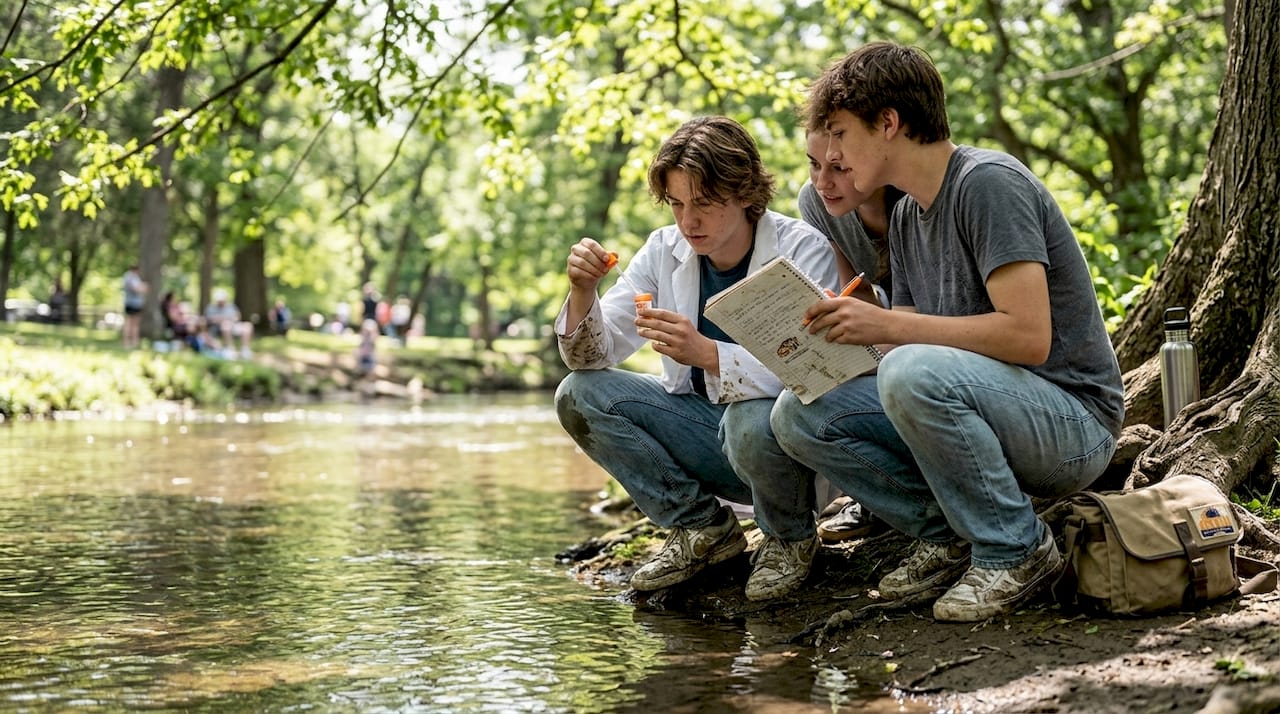
The case for themed travel is not built on anecdote. Research consistently shows that students who participate in well-designed themed travel programs show gains across multiple dimensions. Intercultural competence scores rise significantly, critical thinking skills sharpen, and students report stronger teamwork and social responsibility after structured travel experiences.
Here is what the data looks like in practice:
| Outcome area | Typical pre-trip baseline | Typical post-trip gain |
|---|---|---|
| Intercultural competence | Moderate | 10 to 15% increase |
| Critical thinking | Subject-dependent | Measurable improvement |
| Teamwork and collaboration | Variable | Consistently positive |
| Social responsibility | Low to moderate | Notable increase |
Those numbers matter when you are making a case to a school board or writing a grant proposal. They give you something concrete to point to beyond “students had a great time.”
Beyond individual student growth, schools benefit at the institutional level too. Themed travel programs can serve as benchmarks for experiential learning quality, inform curriculum design, and strengthen community partnerships. When you build post-trip evaluation into the program, you create a feedback loop that improves every future trip.
The gains also extend to teachers. Educators who participate in themed travel consistently report stronger relationships with students and a refreshed sense of their own subject matter. That is a retention and morale benefit schools rarely account for when calculating program value.
Pro Tip: Build a structured reflection session into the final day of every trip and again two weeks after return. Students who write or discuss what they learned in context retain significantly more than those who simply return to normal class schedules. You can find frameworks for this in many travel programs designed specifically for school groups.
For older students, college student tours offer a useful model for how post-secondary institutions structure themed experiences to maximize academic impact, and secondary schools can borrow heavily from those frameworks.
How to design effective themed travel experiences
Great themed travel does not happen by choosing a good destination and hoping for the best. It requires a deliberate design process that starts long before any booking is made.
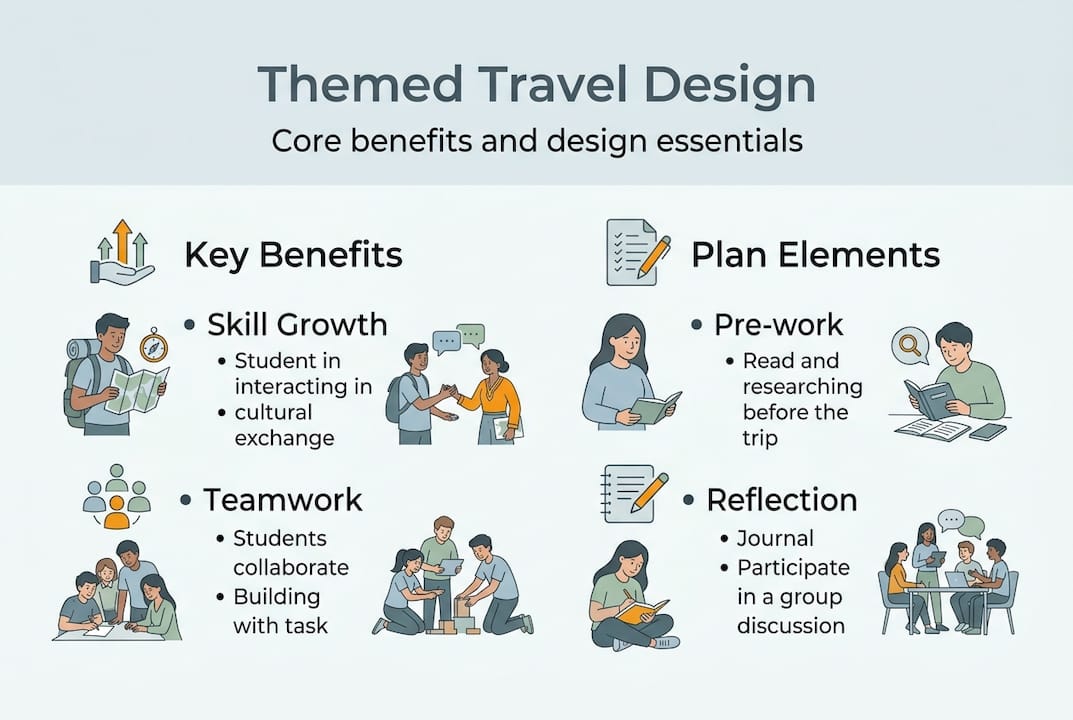
Start by aligning your trip to recognized learning standards. Whether your school follows the Next Generation Science Standards, the International Baccalaureate’s Creativity, Activity, Service framework, or the United Nations Sustainable Development Goals, standards-aligned expeditions produce stronger outcomes because students and teachers share a common language for what success looks like.
Here is a practical design sequence:
- Define the learning theme and objectives before selecting a destination. The theme drives the location, not the other way around.
- Map activities to outcomes. Every scheduled stop should connect to at least one learning objective.
- Layer educational and adventure components. Students need both intellectual engagement and physical or creative experiences to stay motivated across multi-day trips.
- Vet your providers carefully. Look for accreditation, safety track records, and evidence that the provider understands educational goals, not just logistics.
- Build in pre-trip preparation. Students who arrive with context absorb far more than those dropped into an experience cold.
- Plan post-trip integration. Decide before you leave how the experience will connect back to classroom work.
For coordinators working with career-focused travel companies or exploring class trip ideas, the best providers will already have frameworks for these steps built into their offerings.
Pro Tip: Equity matters at the design stage, not just as an afterthought. Build scholarship options and flexible payment plans into your program structure from the start. When financial barriers are addressed early, participation rates rise and the group dynamic improves because students arrive on equal footing.
Common pitfalls and how to avoid them
Even experienced coordinators run into the same traps. Recognizing them early saves time, budget, and student goodwill.
The most common pitfalls include:
- Vague trip goals: Without clear success criteria, there is no way to evaluate whether the trip worked. Define what students should know or be able to do by the end.
- Insufficient reflection time: Packing every hour with activities feels productive but leaves no space for learning to consolidate. Build in quiet time, journaling, and discussion.
- The tourism trap: When a themed trip starts to look more like a vacation itinerary, educational value erodes fast. Every activity should earn its place.
- Ignoring diverse learning needs: Students with different abilities, language backgrounds, or social needs require adapted experiences. A one-size approach excludes the students who often benefit most from experiential learning.
- Fatigue and low retention: Poor planning leads to student exhaustion, which tanks engagement and retention. Structured routes with built-in downtime outperform jam-packed schedules every time.
“Themed educational travel fails most often not because of bad destinations but because of vague goals and insufficient structure for reflection and integration.”
On the equity side, scholarships and flexible payments are not optional extras. They are essential infrastructure for any program that claims to serve all students. The same applies to adapting itineraries for students with special educational needs or diverse cultural backgrounds.
For a broader look at where educational travel is heading and how schools are solving these challenges, the future of educational travel offers useful context. And if you are evaluating providers, student travel services that specialize in school groups will already have equity frameworks built into their offerings.
Our perspective: What most guides miss about themed travel’s true impact
Most planning guides focus on logistics and curriculum alignment. Those matter. But the coordinators who consistently run the most impactful themed trips share one habit that rarely makes it into official frameworks: they treat the trip as a chapter in an ongoing classroom story, not a standalone event.
The trips that stick with students are the ones where the classroom work before departure creates genuine anticipation, where students arrive with questions they actually want answered, and where the learning continues for weeks after return through projects, presentations, and peer discussion. Transforming travel into learning is not about adding more activities. It is about creating continuity.
One caution worth naming: do not over-engineer the experience. Leave room for student-led discoveries. Some of the most powerful learning moments happen when a student notices something unexpected and the group stops to explore it. Rigid minute-by-minute schedules kill that. Build in flexibility and trust your students to contribute to the learning, not just receive it.
Connect your students with powerful themed travel experiences
Planning a themed trip that delivers real educational outcomes takes the right partner, not just a good itinerary. The logistics, safety protocols, curriculum alignment, and equity considerations all need to work together from day one.
At Group Travel Network, we specialize in exactly this kind of intentional, outcome-focused travel for school groups. Whether you are exploring education group travel options for the first time or looking to see how group travel transformations have worked for schools like yours, we have the experience and partnerships to make it happen. Start with our ultimate educational travel guide to map out your next program with confidence.
Frequently asked questions
How is themed travel different from regular field trips?
Themed travel is built around curriculum-aligned outcomes and spans multiple days with pre and post learning components, while field trips are typically single-day, single-activity experiences without structured assessment.
What types of themes are most effective for student travel?
Themes tied to academic subjects, social responsibility, and global citizenship drive the strongest engagement. Standards-aligned, multi-day trips built around NGSS, IB CAS, or UN SDGs consistently outperform loosely themed itineraries.
How can we measure the success of a themed travel experience?
Use pre and post surveys to track intercultural competence, critical thinking, and student confidence. Aim for 10 to 15% score improvements across key outcome areas as a benchmark for a well-designed program.
How do we address equity and inclusion in themed student travel?
Scholarships, flexible payments, and adapted itineraries for students with diverse learning needs should be built into the program structure from the start, not added as afterthoughts.
Recommended

Relax with our Student Travel Expertise .
We deliver stress-free student trips backed by an exceptional array of services you won’t find anywhere else:
- Stress-free, creative planning of customized itineraries
- Dedicated GTN Service host on every trip
- Extensive travel protection plan options
- Online, individual registration system
- Flexible payment plans and online payment options
- Bulk buyer discounts for great trips that cost less
Inclusion into #MyGTNFamily for life! (you don’t even have to remember our birthday!)
Spain
There is no place like Spain to offer a student performance opportunity or cultural student trip.
Myrtle Beach
All students love the beach! Especially a beach known for its 60 miles of pristine coastline.
Boston
Have your students experience colonial charm in the city that is considered the hub of New England.
London
Provide your student group with the “Royal” treatment! One of the world’s most recognized cities.
See What People Are Saying
“It has been my privilege to use Group Travel Network as the exclusive travel coordinator for my band for over 10 years. I can say, without doubt or hesitation, that GTN is, by far, the best travel company for student groups currently in existence. I have often said that I wouldn’t take my band across the street without GTN and that’s not far from the truth!”
“What wonderful trip we had to NYC! Our group of 51 never missed a beat because of Group Travel Network and our wonderful guide, Tim. It was truly a theatre trip to remember! If you are looking for a travel company who really cares about the details, Group Travel Network is for you!”
“This was my first time using a company to plan our band trip. It was so easy working with Justin and Group Travel Network. We had to make several changes along the way, but they were accommodating changes and worked everything out for us. I would highly recommend using Group Travel Network.”