

TL;DR:
- Well-planned trips aligned with curriculum enhance critical thinking and long-term student success.
- Safety, logistics, and funding are crucial to ensure a smooth, inclusive, and educational trip experience.
- Early planning and inclusive practices help prevent common mistakes and promote equity for all students.
Organizing an educational group trip sounds exciting until the realities of logistics, safety, budget gaps, and competing schedules start piling up. A poorly planned trip doesn’t just inconvenience teachers and parents; it can actively undermine the learning goals it was meant to achieve. The good news is that research consistently shows well-designed field trips deliver measurable academic and social benefits, especially for students who rarely get these opportunities. This guide walks school administrators and trip coordinators through every critical stage of planning, from defining learning outcomes and choosing the right destination to managing risk, securing funding, and avoiding the most common mistakes that derail even the best intentions.
Table of Contents
- Setting educational goals and learning outcomes
- Choosing the right destination, partners, and itinerary
- Risk management, supervision, and safety essentials
- Funding, logistics, and troubleshooting common mistakes
- Perspective: Why equity matters most in trip planning
- Next steps: Plan your educational group trip with experts
- Frequently asked questions
Key Takeaways
| Point | Details |
|---|---|
| Set clear learning goals | Define measurable educational outcomes to align your group trip with curriculum and student growth. |
| Vet partners thoroughly | Select experienced travel partners with excellent safety records and relevant educational expertise. |
| Prioritize safety planning | Adopt supervision ratios and emergency protocols to keep students protected at every stage. |
| Start early, fund inclusively | Begin planning 6–12 months ahead, utilize diverse funding sources, and ensure no student is left out. |
| Maximize equity | Design trips so all students, especially disadvantaged ones, benefit from learning opportunities. |
Setting educational goals and learning outcomes
Before you book a single bus or reserve a hotel block, you need to know exactly what you want students to walk away knowing or feeling. That clarity is what separates a field trip from a genuine educational experience. Without it, even the most impressive destination becomes an expensive day out.
Start by anchoring your trip to specific curriculum goals. Work with classroom teachers to identify what concepts are currently being taught and where experiential learning could reinforce or extend that knowledge. A history unit on the Civil Rights Movement, for example, becomes far more powerful when students stand in a location where that history actually happened. Science standards around ecosystems gain depth when students observe real habitats, not just diagrams.
The evidence behind purposeful trips is compelling. Field trips improve critical thinking (opens in a new tab) by 9% and historical recall by 88%, and over the long term, students who participate in these experiences show higher college graduation rates and median income gains. That’s not a small effect. That’s a career-shaping difference for many students.
Here’s what strong educational objectives look like in practice:
- Curriculum alignment: Tie every major activity directly to a current or upcoming classroom unit
- Critical thinking prompts: Prepare guiding questions that students will explore at the site
- Cultural exposure goals: Define what perspectives or communities students should encounter
- Post-trip reflection: Plan a structured debrief assignment before you even leave school
Teacher involvement is also essential at this stage. According to SYTA data, 77% of teachers (opens in a new tab) actively participate in program selection for student trips, which means the educators closest to your students are already invested in this process. Use that energy.
Pro Tip: Build your objectives around what the destination specifically offers, not just its general topic. If a science museum has a hands-on robotics workshop, write a learning objective around it. Specificity makes the experience more focused and easier to assess afterward.
Exploring the student tour group advantages of structured travel can help you frame these goals for parents and administrators who need convincing. And if you’re newer to this process, student travel tour tips offer a strong starting framework.
Choosing the right destination, partners, and itinerary
With clear learning outcomes in hand, the next challenge is finding the destination and the right travel partner to bring those goals to life. This decision has far more variables than most coordinators expect.
Destination selection should weigh educational value first, then accessibility, then cost. A destination that’s visually exciting but poorly aligned with your curriculum wastes instructional time. The best destinations offer layered engagement: a museum with guided educator programs, a historic site with interactive exhibits, or a performing arts venue that connects to your school’s arts curriculum.
Teachers are deeply involved in the logistics of getting there too. 93% of teachers initiate and manage most of the planning for school group trips, which means the workload falls on already-stretched professionals unless proper support structures are in place.
When vetting travel partners, ask for their safety records, references from schools of similar size, and proof of licensing. A vendor with strong group travel for education experience will proactively offer these details. One that hesitates is a red flag.
Here’s a quick comparison of destination types and what they typically offer:
| Destination type | Educational strength | Logistics complexity | Average cost range |
|---|---|---|---|
| Art and history museums | Critical thinking, recall | Low | $$ |
| STEM centers and science museums | Hands-on learning | Low to medium | $$ |
| National parks and nature sites | Environmental science | Medium to high | $ to $$ |
| Performing arts venues and tours | Creative and cultural | Medium | $$$ |
| Historical landmarks and monuments | Civic and social studies | Low to medium | $ to $$ |
Pro Tip: Involve students and parents in the destination shortlist. When students have a voice in where they’re going, engagement and behavior on the trip both improve noticeably. Even a simple classroom vote between two vetted options builds ownership.
For practical guidance on building the actual itinerary, the resource on coordinating group tours provides a step-by-step approach that many coordinators find saves hours of guesswork.
Risk management, supervision, and safety essentials
Safety planning is not a checkbox. It is the foundation that allows everything else to function. A single preventable incident can end a trip, damage your school’s reputation, and cause lasting harm to a student. In 2019, 4 preventable student fatalities (opens in a new tab) occurred during international school travel, a stark reminder that risk management must be taken seriously at every level.
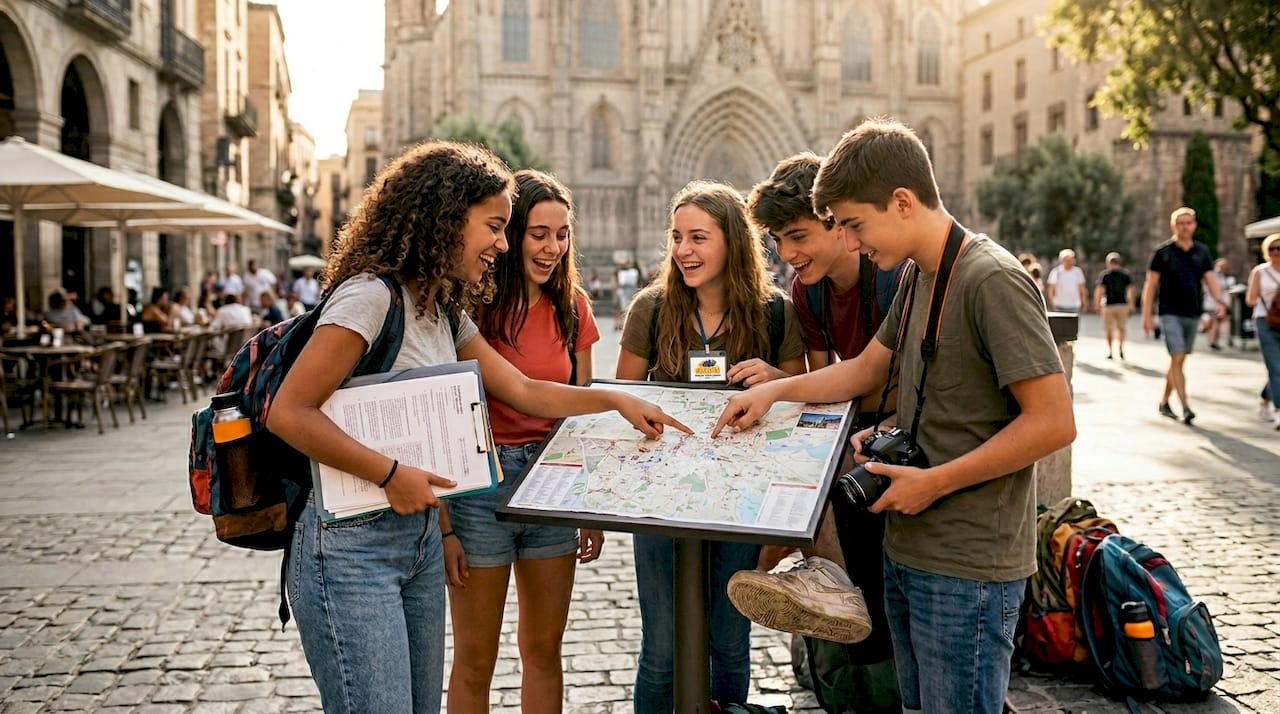
Start with a pre-departure risk assessment covering medical conditions, behavioral history, destination-specific hazards, and emergency access. Document everything. Schools that treat safety planning as a formality rather than a process are the ones caught unprepared.
Here are the core steps every coordinator should complete:
- Establish supervision ratios before finalizing group size
- Collect and review all student medical forms and allergy alerts
- Assign clear roles to each adult chaperone before departure
- Create a written emergency response plan for the destination
- Confirm that your travel partner carries adequate liability coverage
- Brief all chaperones on protocols at least one week before the trip
The recommended supervision ratio is one adult per 8 to 12 students. Anything beyond that range puts both students and chaperones in difficult positions.
| Safety element | Recommended standard |
|---|---|
| Supervision ratio | 1 adult per 8 to 12 students |
| Emergency contact list | Updated within 30 days of departure |
| Medical form review | Completed by school nurse or administrator |
| Chaperone briefing | Minimum 7 days before trip |
| Insurance coverage | Confirmed in writing from travel partner |
“The schools that handle crises best are the ones that practiced for them. Emergency preparedness isn’t about expecting disaster. It’s about knowing what to do so fast that panic never sets in.”
Pro Tip: Document your safety procedures in a single shared folder accessible to every adult on the trip, including digital backup. One lost binder shouldn’t mean a lost emergency plan.
For more on protecting your group financially and logistically, travel insurance for student groups breaks down the coverage options worth considering. And if you want a broader framework for coordinating safe group travel, that resource covers the full scope.
Funding, logistics, and troubleshooting common mistakes
Even the most educationally rich and safely managed trip can collapse under poor financial planning. Funding remains a major obstacle for many school group trips, and teachers who handle most of the planning often run into barriers that go beyond simple budgeting.
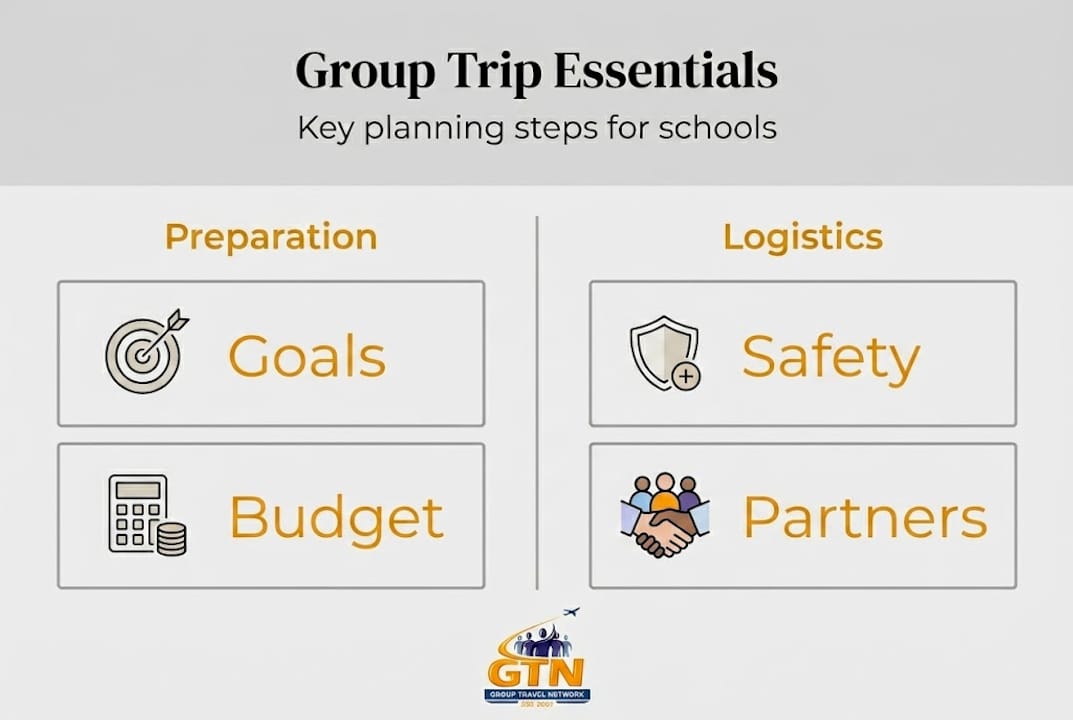
Start your planning timeline 6 to 12 months out. That window gives you time to secure vendor contracts at better rates, run fundraising campaigns, apply for grants, and allow families to spread payments over several months rather than facing a large lump sum.
Key budget items to account for early:
- Transportation (charter buses, flights, or rail depending on distance)
- Accommodation (group rates vs. individual bookings)
- Meals and dietary accommodations
- Admission fees and program costs
- Insurance and emergency funds
- Documentation costs (passports, permission forms, waivers)
Fundraising works best when it starts early and involves the students directly. Car washes, school events, and online campaigns through school-approved platforms can meaningfully offset costs and improve inclusive participation. For more structured strategies, school trip fundraising tips cover proven approaches that work at the school level.
Here are the most common mistakes coordinators make and how to avoid them:
- Last-minute bookings: Waiting too long eliminates your best vendor options and drives up costs
- Unclear parent communication: Families left in the dark become anxious and uncooperative
- Missing paperwork: A single missing permission slip can ground a student at departure
- No logistics lead: When everyone is responsible, no one is
- Ignoring dietary and accessibility needs: These surface as crises if not planned for in advance
Pro Tip: Assign one point person per major task category, transportation, accommodation, documentation, and communications. This prevents duplication and catches gaps before they become emergencies. Reviewing school trip payment strategies can also help you structure a payment plan that keeps participation rates high.
Perspective: Why equity matters most in trip planning
Most planning conversations center on destinations, budgets, and safety ratios. Those things matter. But in our experience working with schools across the country, the trips that leave the deepest marks are the ones that were designed with every student in mind, especially those for whom this trip might be the only one.
Field trips reduce achievement gaps most meaningfully for disadvantaged students. That’s not a reason to focus only on high-need schools. It’s a reason to ask whether your planning process actively removes barriers or quietly reinforces them.
Are payment plans accessible enough that no student drops out over cost? Is the destination physically accessible for students with mobility needs? Are dietary accommodations actually confirmed or just assumed? These questions sound operational, but they are fundamentally about who gets to have the experience.
When schools work with group travel agent expertise built around educational values, they get partners who ask these questions too. The goal isn’t a perfect trip. It’s a trip that was worth it for every student who stepped onto that bus.
Next steps: Plan your educational group trip with experts
Planning a high-impact educational trip requires more than a good checklist. It requires partners who understand both the learning objectives and the logistical realities that school teams face every day.

At Group Travel Network, we specialize in building student experiences that serve your curriculum, your budget, and your students’ growth. Whether you’re looking for student tour packages designed around specific academic themes, class trip inspiration to spark your planning process, or youth tour essentials that cover every logistical detail, our team is ready to support you from first concept to final debrief. Reach out today and let’s build something your students will remember for years.
Frequently asked questions
What is the recommended supervision ratio for student group trips?
Experts recommend one adult per 8 to 12 students to maintain safe, manageable oversight throughout the trip.
How far in advance should educational group trips be planned?
Planning should begin 6 to 12 months before departure to allow adequate time for funding, vendor contracts, logistics, and approvals.
Do educational trips actually improve student outcomes?
Yes. Research shows field trips boost critical thinking by 9% and historical recall by 88%, with long-term gains in college graduation rates and earnings.
What are common mistakes in educational group trip planning?
The most frequent errors include late bookings, weak safety preparation, and missing inclusive funding options that leave some students behind.