


TL;DR:
- Early, thorough planning is essential for successful school trips, especially international ones.
- Effective risk management relies on experienced leaders and dynamic safety protocols, not just paperwork.
- Professional support from travel agencies can reduce stress and improve trip quality.
A well-run school trip is one of the most powerful learning experiences a student can have. It builds community, deepens classroom lessons, and creates memories that last decades. But the difference between a trip that runs smoothly and one that spirals into confusion almost always comes down to how early and how thoroughly you planned it. Group sizes typically range from 27 to 66 students (opens in a new tab), and international trips demand planning windows of 8 to 12 months. This guide gives you a complete, actionable roadmap for every stage of group travel planning, from the first conversation with your principal to the post-trip debrief.
Table of Contents
- What you need before you start: Setting up for success
- Step-by-step group travel planning process
- Risk management in group travel planning
- Communication and participant management
- Final verification and post-trip assessment
- Why process is only half the battle in group travel planning
- Simplify your next trip with expert support
- Frequently asked questions
Key Takeaways
| Point | Details |
|---|---|
| Early planning is crucial | Start your group travel planning 8-12 months ahead for success and smooth approval cycles. |
| Risk goes beyond paperwork | True safety on trips depends on strong leadership and situational awareness, not just completed forms. |
| Effective communication is key | Consistent, clear updates with parents and staff make student travel organized and less stressful. |
| Post-trip feedback matters | Gathering feedback and reviewing outcomes helps continually improve future school group trips. |
What you need before you start: Setting up for success
Before you open a single spreadsheet, you need the right foundations in place. Jumping into logistics without these prerequisites is the fastest way to waste time and create preventable problems.
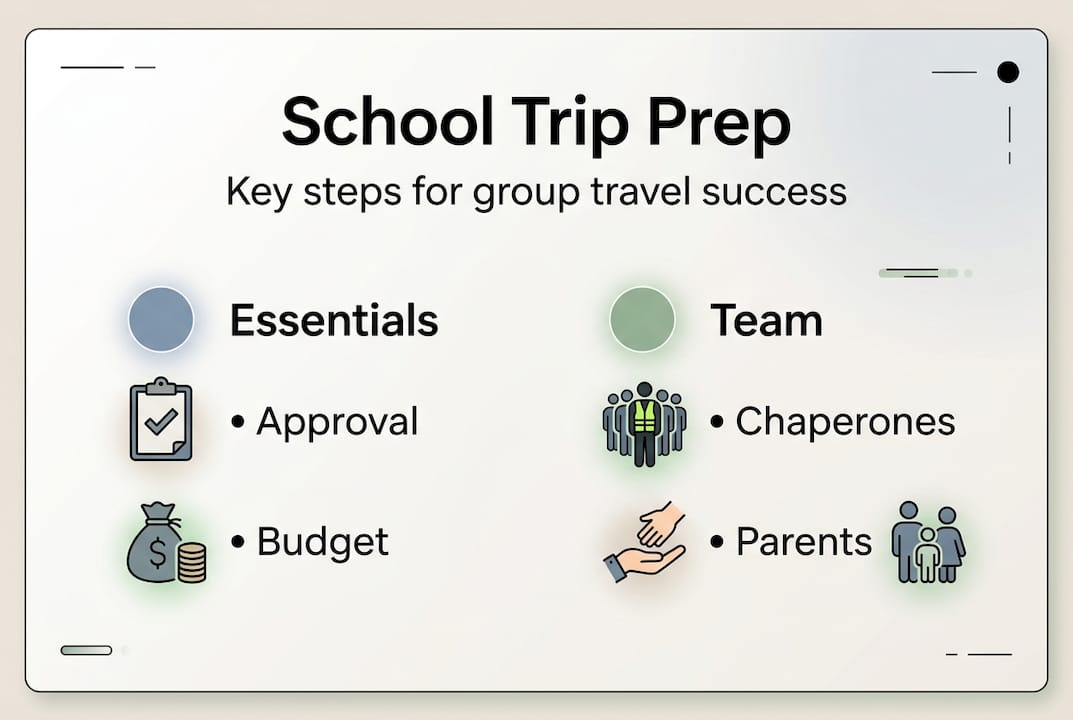
Start with three non-negotiables: administrative approval, a realistic budget estimate, and clearly defined participant criteria. Who is eligible to travel? What are the academic or behavioral requirements? What is the school’s financial ceiling? These answers shape every decision that follows.
The scale of the student travel market makes early preparation even more critical. 93% of student trips are initiated by teachers, and the market is growing at a 10.1% CAGR toward $5.45 billion by 2033. That growth means more competition for vendor availability, hotel blocks, and performance venues, which is exactly why early action matters.
Your core stakeholder group should include at least one school administrator, two to three chaperone teachers, a parent representative, and your chosen vendor or educational journey coordination partner. Each person needs a defined role before planning begins.
Here is a quick overview of planning benchmarks to keep in mind:
| Factor | Domestic trip | International trip |
|---|---|---|
| Planning lead time | 3 to 6 months | 8 to 12 months |
| Average group size | 40 to 66 students | 27 to 45 students |
| Estimated cost per student | $500 to $1,200 | $2,000 to $3,000+ |
| Key stakeholders | Admin, teachers, parents | Add: travel agency, consulate |
Beyond the numbers, conduct an early risk assessment. This is not just about paperwork. It means asking hard questions: Does the destination have a history of weather disruptions? Are there students with medical needs that require special accommodations? What is the school’s liability coverage?
Pro Tip: Build a planning calendar on day one. Work backward from your departure date and assign deadlines for every approval, payment, and communication milestone. Share it with all stakeholders so no one is surprised.
Step-by-step group travel planning process
With foundations in place, here is how to navigate every stage of student group travel planning.
- Define your objectives. What is the educational purpose of this trip? A clear goal shapes destination choice, itinerary design, and the case you make to parents and administrators.
- Choose your destination. Match the destination to your objectives, budget, and student age group. Research visa requirements, seasonal weather, and cultural considerations early.
- Select vendors and lock in contracts. Book transportation, accommodation, and activity providers. Read every contract clause, especially cancellation and refund policies.
- Complete health and safety preparation. Collect medical forms, allergy information, and emergency contacts. Confirm insurance coverage for every participant.
- Build your communication plan. Decide how you will update parents before and during the trip. Set up a group messaging platform and designate a point of contact.
- Finalize logistics. Confirm headcounts, rooming assignments, meal plans, and day-of schedules with all vendors.
Typical planning lead time for international trips is 8 to 12 months, which means steps one and two need to happen almost a year before departure for overseas travel.
One of the most important decisions you will make is whether to plan in-house or work with professionals. Here is an honest comparison:
| Planning approach | Advantages | Disadvantages |
|---|---|---|
| In-house planning | Full control, no agency fees | Time-intensive, higher error risk |
| Group travel agency | Expert logistics, vendor relationships | Requires trust and clear communication |
| Hybrid model | Shared workload, flexible oversight | Needs clear role boundaries |
For expert tips on student travel tours and a deeper look at the benefits of student tour groups, those resources can help you decide which approach fits your school’s capacity.
Pro Tip: Add a two-week buffer before every major deadline. Approvals get delayed, parents miss payment windows, and vendors need follow-up. Build that reality into your calendar from the start.
Risk management in group travel planning
Once logistics are mapped out, addressing group safety and risk is the next vital concern.
Most educators think risk management means collecting signed permission slips and medical forms. Those documents matter, but they are not a safety plan. Real risk management is dynamic, not static.
“Over-reliance on forms creates a false sense of security (opens in a new tab); real safety depends on situational awareness and qualified trip leaders.”
That insight should reshape how you think about preparing your chaperone team. A form cannot respond to a student who wanders off at a crowded venue. A trained, attentive leader can.
Here are the critical elements of a real risk management plan:
- Leader experience: Assign chaperones who have managed student groups in dynamic environments, not just familiar faces.
- Situational awareness training: Run a pre-trip briefing that covers crowd management, emergency rally points, and communication protocols.
- Emergency communication tree: Every chaperone needs to know who to call and in what order if something goes wrong.
- On-site medical readiness: Carry a first-aid kit, a list of student medical needs, and the contact for the nearest medical facility at every destination.
- Student accountability system: Use a buddy system or regular headcounts at every transition point.
- Contingency plans: Have a plan B for weather disruptions, transportation delays, and medical emergencies.
Understanding the role of group travel agents in risk planning can be valuable, and knowing the right questions to ask travel agencies about their safety protocols will help you vet partners effectively.
Communication and participant management
With risks covered, smooth communication and participant management are what prevent logistical headaches.

Parent communication is not a one-time event. It is an ongoing relationship that starts the moment you announce the trip and continues until every student is home safely. Group size and international trip factors directly affect how complex your communication needs will be. A 60-student domestic trip and a 30-student international tour require very different levels of documentation and coordination.
Here is a practical communication sequence:
- Initial announcement: Send a detailed trip overview, including destination, dates, cost, and educational purpose.
- Information night: Host a parent meeting, in person or virtual, to answer questions and build confidence.
- Consent and medical forms: Distribute and collect all required documentation with a firm deadline.
- Payment schedule reminders: Send automated reminders at each payment milestone.
- Pre-departure briefing: Share a final itinerary, emergency contacts, and packing guidelines one week before departure.
- During-trip updates: Post scheduled updates to a parent group or platform at least once per day.
Beyond communication, you need a reliable system for managing participant data. Keep a master document that includes:
- Full legal names and passport numbers (for international trips)
- Emergency contact details for every student
- Medical conditions, allergies, and required medications
- Dietary restrictions and accommodation needs
- Payment status for every participant
- Signed consent forms and photo release agreements
Trips that prioritize connection and community, like those described in resources on building community through student tours, tend to generate the strongest parent support and student engagement.
Pro Tip: Send a short, friendly update to parents two weeks before departure to rebuild excitement and remind them of any final requirements. It reduces last-minute questions and keeps energy high.
Final verification and post-trip assessment
After every detail is set, these final checks and a post-trip review are what elevate your program for next time.
The week before departure is not the time to relax. It is the time to verify everything you assumed was confirmed. Thorough pre-trip checks are directly linked to successful outcomes and provide the data you need to improve future trips.
Your final verification checklist should include:
- All medical forms collected and accessible to chaperones
- Insurance certificates printed and distributed
- All vendor bookings reconfirmed in writing
- Emergency communication tree tested with every chaperone
- Day-of logistics confirmed: departure time, meeting point, transportation
- Student rooming lists finalized and shared with accommodation providers
- All payments cleared and receipts filed
- Backup contact list for every vendor, hotel, and activity provider
Once you return, the post-trip assessment is where most schools leave value on the table. A structured debrief does more than capture complaints. It builds institutional knowledge.
Gather written feedback from students, chaperones, and parents within one week of returning. Ask specific questions: What worked well? What caused friction? Which vendors delivered and which fell short? Then update your planning templates, vendor notes, and communication scripts before that information fades.
For a broader view of how to structure student travel programs year over year, the student educational travel guide offers strong frameworks for building a repeatable, improving program.
Why process is only half the battle in group travel planning
Every planning guide, including this one, will give you checklists, timelines, and templates. Those tools are genuinely useful. But the schools that run the best trips year after year are not the ones with the most detailed binders. They are the ones with the most adaptable leaders.
Here is the practical truth most guides miss: student group travel is unpredictable by nature. Buses run late. Students get sick. A museum closes unexpectedly. The plan you built over 10 months will encounter reality, and reality does not follow a spreadsheet.
Real safety and success stem from experienced leaders, not from forms alone. The same applies to the overall trip experience. A confident, calm leader who can pivot and problem-solve in the moment will deliver a better trip than a rigid planner who panics when the schedule shifts.
Build flexibility into your leadership structure. Designate one chaperone as the logistics lead and another as the student welfare lead. Give them authority to make real-time decisions. And invest in the relationships between your team members before you leave, because trust built in advance pays off under pressure.
Explore how group travel adventures can inspire your next destination while keeping your planning grounded in what actually works.
Simplify your next trip with expert support
Ready for less stress and more learning on your next group trip? Planning a student trip is genuinely complex, and the stakes are high. Professional support does not replace your judgment. It amplifies it.

At Group Travel Network, our dedicated trip coordinators handle the logistics that consume your time, from vendor negotiations and contract reviews to payment tracking and emergency protocols. We specialize in school and performance group travel, which means we bring relationships and experience that in-house planning simply cannot match. Explore our full range of group travel services, connect with our group travel agents for personalized guidance, or start with our school group travel coordination resources to see how we can make your next trip the best one yet.
Frequently asked questions
How far in advance should I plan a school group trip?
For international school trips, begin planning 8 to 12 months ahead; for domestic trips, a minimum of 6 months gives you enough runway for approvals, payments, and logistics.
What is the typical size of a school travel group?
Most school groups range from 27 to 66 students, with international groups typically running smaller due to cost and supervision requirements.
What are the biggest risks in student group travel?
Over-reliance on paperwork creates a false sense of security; the real risks are managed through situational awareness, trained leaders, and tested emergency protocols.
How do I keep parents updated during a trip?
Use a dedicated group messaging platform and send at least one scheduled update per day, so parents have consistent, reliable information without needing to reach out individually.
Is it better to use a group travel agency?
For large or international groups, a travel agency reduces risk and saves significant planning time, which is one reason agency involvement is rising alongside a market projected to reach $5.45 billion by 2033.